
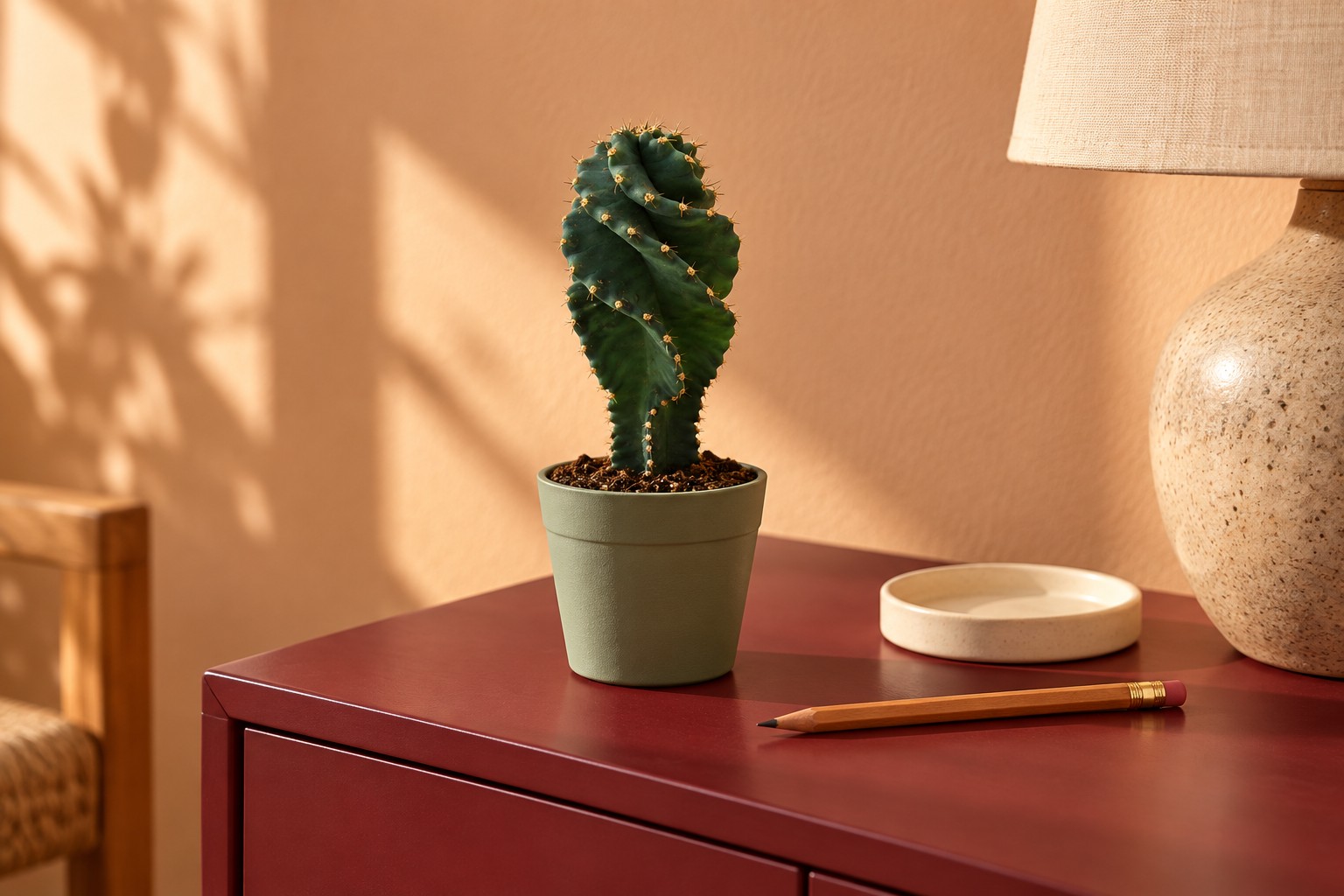
This plant at Exotenherz
Check the shop offer for current availability, price and what is included.
Check the shop for the price, current availability and what is included.
Your care table
| Topic | What to do | Why it helps |
|---|---|---|
| Light | Very bright; introduce direct sun gradually. | A young plant from sheltered cultivation may not tolerate sudden strong sun. |
| Water | During growth, water only after good root-ball drying. | Water reserves do not replace a healthy airy root space. |
| Drainage | Let all water drain and empty the outer pot. | Standing water may damage root and shoot bases. |
| Compost | Structurally stable freely draining cactus mix with mineral content. | Fine compacted compost stays wet too long in the small pot. |
| Feed | Moderately during active growth according to the product. | Pause during winter rest. |
| Winter | Bright and frost-free, watering considerably less often. | Cool wet roots are particularly at risk. |
| Shape | Do not mechanically twist the column or prune to correct the spiral. | The rib shape develops during growth. |
| Checks | Watch for mealybugs, unusually thin new growth and soft dark patches. | Early checks distinguish insufficient light or root problems from normal ageing. |
Check the compost and pot weight. The care table explains how far the compost may dry.
Water only when needed. The water should reach the root ball without spilling over the rim.
Remove surplus water from the saucer or cachepot. Then return the plant to a suitable position.
The twist belongs to the living growth form
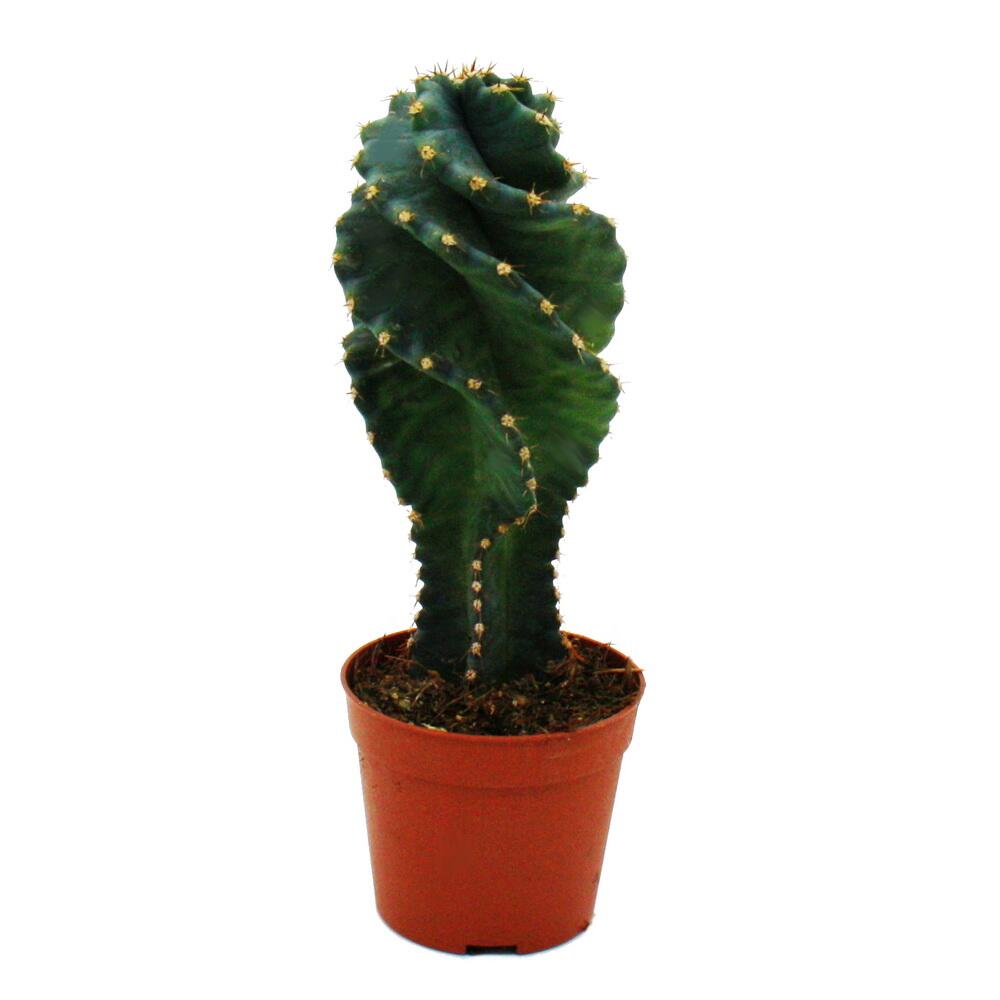
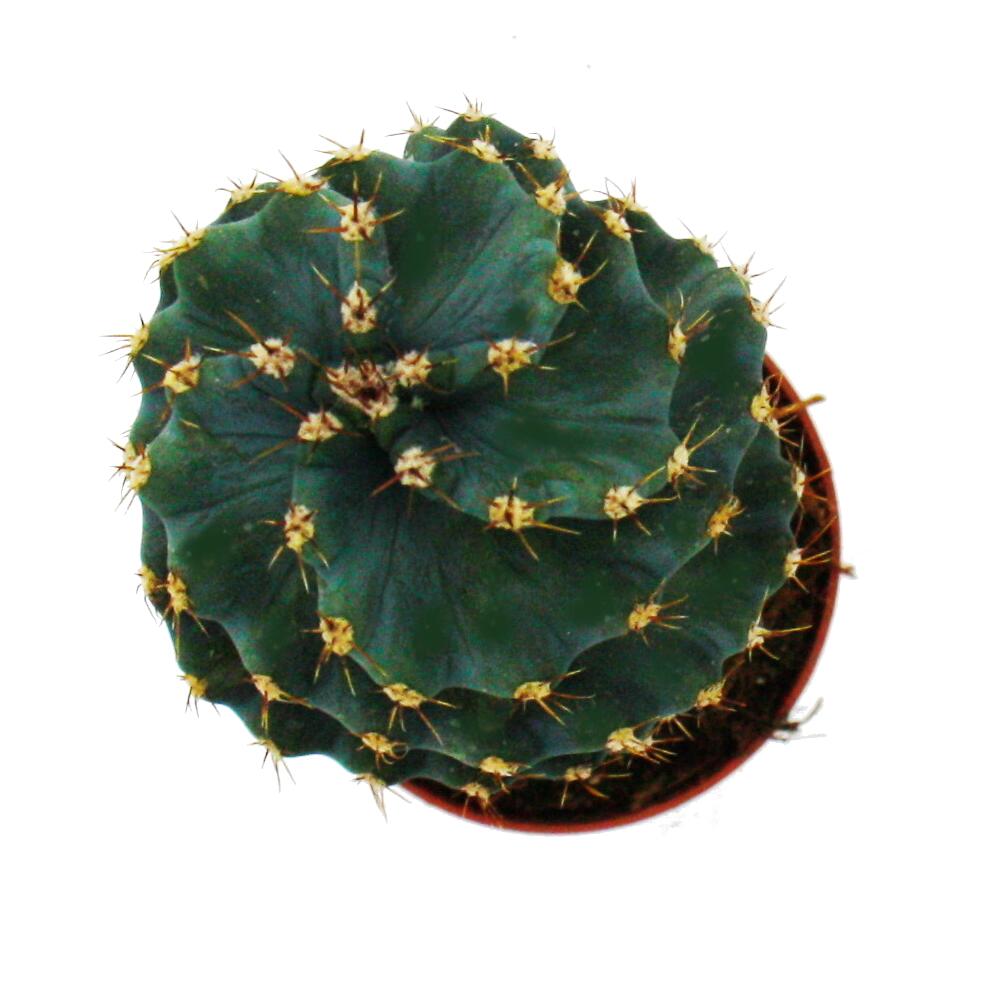
The ribs wind around the green to blue-green body, forming a clearly visible spiral. Areoles with spines sit along these ribs. Nobody needs to twist the stem by hand. The shop names Cereus jamacaru Spiralis; other suppliers use forbesii, for example. The RHS lists Cereus Spiralis with unresolved identification and several alternative names. We therefore treat Spiralis as a horticultural form within Cereus, without claiming a secure wild species or a place of origin for the clone.
A small column with potential to develop
The offer describes a 6.5 cm pot, approximately 15 to 18 cm overall height and a young plant. Accordingly, the scene shows a small column that fits on a bright surface. With good cultivation, the cactus can continue growing taller and later need more floor space. A fixed ultimate size indoors cannot be guaranteed. The strength and course of the twist can vary individually. The outer pot and furnishings shown belong to the offer only when explicitly listed.
Increase sunshine gradually and provide a secure position
A very bright to sunny position supports strong new growth. After transport or darker conditions, increase direct sun gradually. A suddenly hot south-facing pane can scorch young surfaces. In summer, ventilation and possibly a sheltered outdoor position help. Protect it there from prolonged rain and bring it indoors before cold nights. The column needs a secure base so it does not topple when touched. Occasionally turning the pot carefully can counter one-sided orientation towards light, but does not create the genetically or horticulturally maintained spiral form.
Dry phases protect the roots
During growth, water after thorough drying and let water drain completely. The next application depends on light, temperature, substrate and actual consumption. The ribs must not be read as a rigid water-level indicator. Water much less in bright frost-free winter quarters, particularly if the cactus barely grows. Constant moisture at the lower column base is unfavourable. Water the soil rather than constantly misting the twisted ribs. Remove water from the outer pot and inspect the root ball more closely if unusual softness or discolouration appears.
Protect the surface and roots
A loose, mineral-structured cactus mix suits it better than heavy potting soil that stays wet for a long time. The container needs drainage holes. If necessary, move it into a pot only slightly larger and support the column with suitable aids. Do not grip the ribs firmly or polish the surface. The blue-green sheen can become uneven through touching. Fertilise moderately during active growth according to the product instructions and pause in winter. A large reserve container with much damp soil unoccupied by roots increases the wetness risk rather than growth speed.
Observe the shape without trying to force it
A new section need not show exactly the same twist strength as the older body. Pruning or mechanically twisting to correct the shape can injure the plant. Flowers are possible on sufficiently developed specimens but are not guaranteed for the young shop cactus. Healthy shoot parts can in principle root after the cut surface dries; the single young column is not routinely shortened for this purpose. Watch for mealybugs, thin new growth in low light and suddenly soft dark areas. These changes should be assessed separately from the naturally twisted shape.
One plant, several views
Good to know
Must I turn the pot to make the spiral develop?
No. Spiralling ribs belong to the growth form. Turning the pot influences at most its orientation towards light.
Is the species jamacaru or forbesii?
The trade uses different identifications. The RHS lists Cereus Spiralis with unresolved status; this portrait therefore retains that cautious designation.
May I polish the blue-green surface?
No. Rubbing can visibly alter the natural surface.
Should I expect a flower when buying it?
No flower is guaranteed for the young plant of approximately 15 to 18 cm overall height.
Sources and editorial note
- Product and delivery contents: Exotenherz
- Royal Horticultural Society: plant and care information
- Giromagi cactus nursery: growing advice
- Royal Horticultural Society: plant and care information
Sources checked: 15 September 2026. Product information and the contents of delivery follow the linked shop offer. Care advice was checked against the cited specialist sources and should still be adapted to the plant’s condition, position and season.