
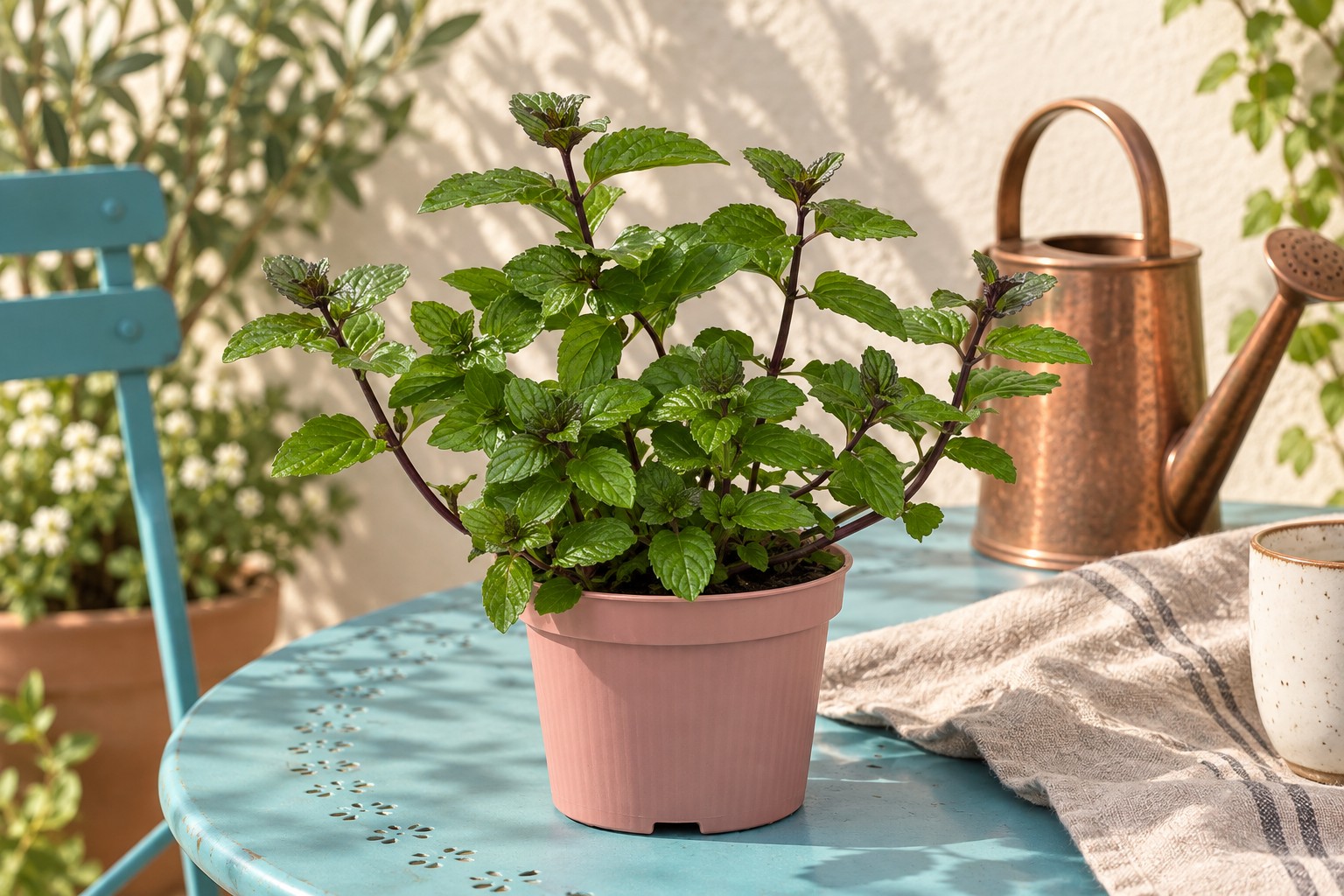
This plant at Exotenherz
Check the shop offer for current availability, price and what is included.
The linked shop is in German. Product details, availability and delivery information are provided in that shop.
Your care table
| Topic | What to do | Why it helps |
|---|---|---|
| Light | Sun to bright partial shade. | A sheltered position in intense heat can save water. |
| Water | Keep compost evenly moist and wet the root ball thoroughly. | Repeated complete drying weakens the supply of new leaves. |
| Soil | Nutritious, moisture-retentive and freely draining. | Standing water and compaction hinder healthy roots. |
| Feed | Feed moderately as needed during strong growth. | Fresh compost may already contain sufficient nutrients. |
| Harvest | Regularly cut healthy young tips in small quantities. | This encourages a branched compact structure. |
| Runners | Use its own pot and check neighbouring containers. | Mint also spreads through lateral shoots. |
| Division | Replant healthy divisions when rooting becomes dense. | Vegetative propagation preserves the existing scented form. |
| Winter | Remove dead shoots and protect small containers. | The rootstock can regrow after rest. |
Check the compost and pot weight. The care table explains how far the compost may dry.
Water only when needed. The water should reach the root ball without spilling over the rim.
Remove surplus water from the saucer or cachepot. Then return the plant to a suitable position.
Dark stems give green depth
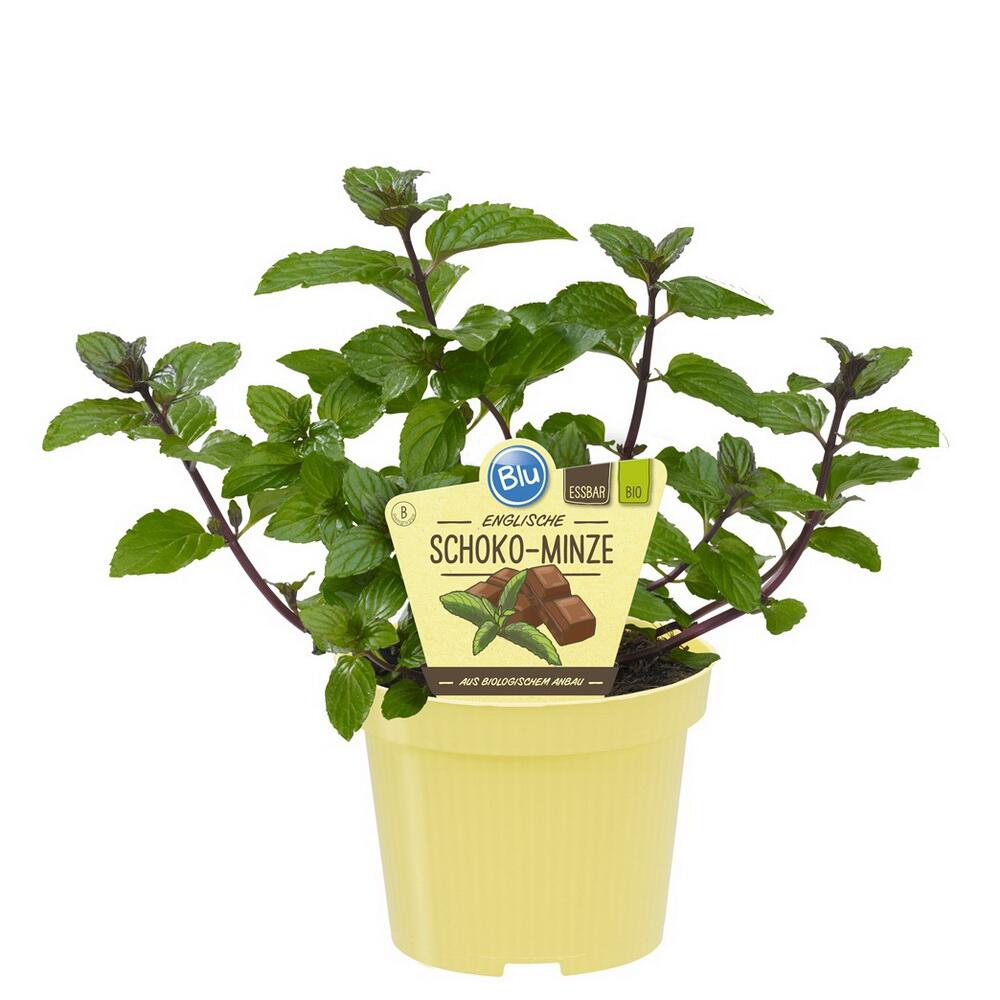
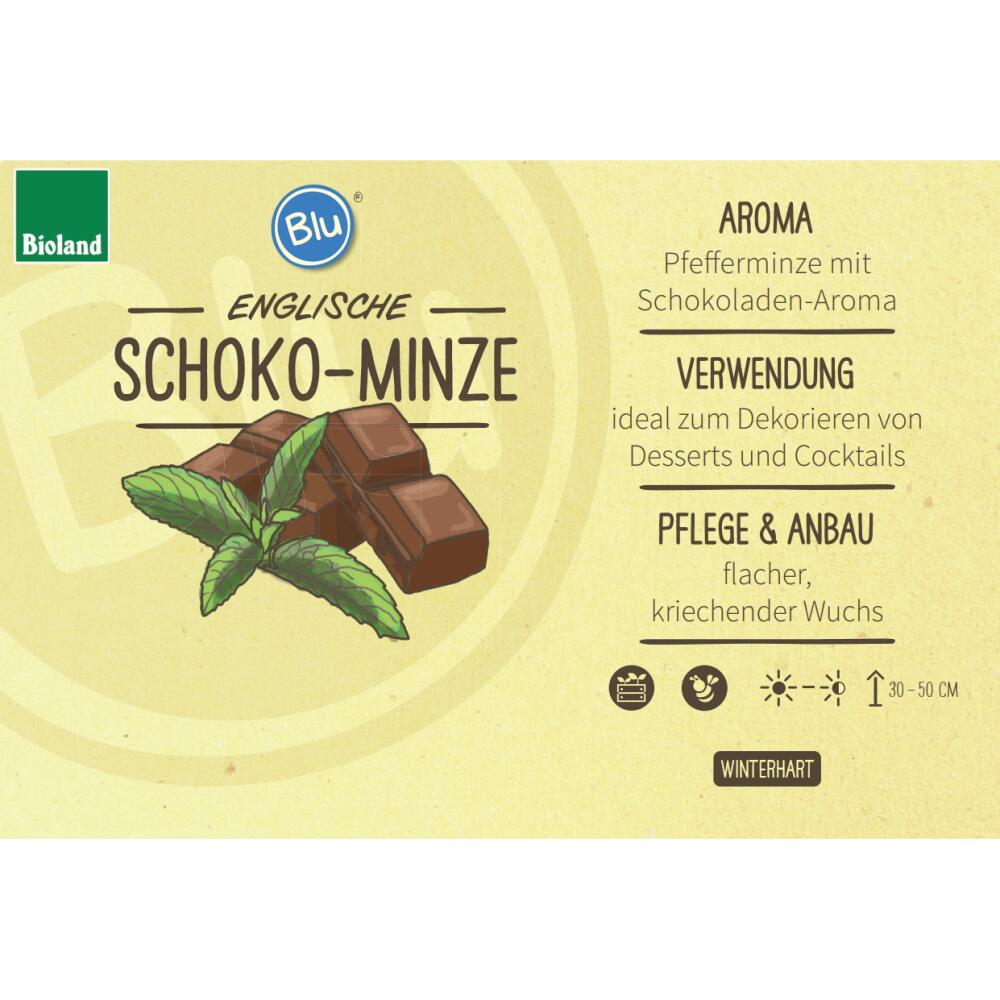
Chocolate mint is offered in the shop under Mentha × piperita and belongs to the mint family. Its darker stems and strong green veined leaves visually distinguish it from some paler mints. The aroma is described as a combination of peppermint and a chocolate-like note. How strongly you perceive this also depends on leaf age and personal taste. The plant does not contain cocoa or bear chocolate fruit as a result. It is an aromatic mint whose fresh leaves can provide interesting flavour accents, particularly in small amounts.
Its own pot makes management clearer
The offer is an organically grown plant in a 12 cm pot. The later 30 to 50 cm growing height is not a specific delivery-height statement. The original photograph shows a young branched mint with dark stems, retained in the scene. It can become considerably broader over time as underground shoots produce fresh growth. A larger herb pot of its own helps keep the plant separate from other mint varieties and weaker neighbours. For later shop variants, the precise scented form remains important; not every peppermint is automatically the same chocolate mint.
Fresh leaf growth needs moisture
Choose a sunny to bright partially shaded position. Some protection in intense summer heat can reduce water demand. Use nutritious compost that retains moisture while letting excess water drain. Check the small pot frequently and water thoroughly as needed. The mint should not regularly dry out completely. A compacted permanently wet root ball is equally unsuitable. If leaves droop, therefore check the compost first. Particularly after repotting, the new outer compost can still be moist while the original inner root ball remains drier.
Treat harvesting as part of ongoing care
Once the plant is growing well, regularly cut young healthy shoot tips. After washing, a few leaves can flavour a dessert, fruit salad or another suitable dish. Fresh mint remains the defining aroma; start sparingly. Leave enough foliage for further growth. Cutting back after flowering can renew the clump. Some flower stems may be left beforehand if you wish to enjoy the summer flowers. During strong growth, feed moderately as needed, taking into account existing supplies from fresh potting compost.
Keep runners, division and leaf health in view
Roots and underground shoots can fill a pot densely. If new growth declines despite suitable light and water, division with fresh compost is often useful. Continue growing healthy young divisions in spring or autumn. This preserves the existing aromatic form; scent and growth do not necessarily remain identical from seed. Check for mint rust, aphids and feeding damage. Do not use heavily damaged leaves in the kitchen. Trailing shoots can root in neighbouring pots, so occasional organising remains necessary even in containers.
The winter pause makes room for new shoots
Chocolate mint is perennial and offered as hardy. Above-ground parts can die back in autumn while the rootstock remains. Remove dead shoots by the start of new growth at the latest. Place small containers in shelter during severe frost and keep drainage clear. Check root-ball moisture on dry frost-free days. A bare pot in winter need not be lost; healthy roots produce new shoots in spring. Then check fresh compost and space requirements, and resume harvesting only once enough new foliage is present.
One plant, several views
Good to know
Does chocolate mint contain cocoa?
No. The name describes a perceived nuance of aroma, while the plant remains botanically a mint.
Is it the same plant as every peppermint?
No. Scented forms can differ. The specific chocolate mint is assigned separately for shop links.
Why does it keep spreading despite cutting?
Mints form underground runners. Its own pot and occasional division help limit the clump.
Is a bare pot in winter dead?
Not necessarily. Above-ground shoots can die back while healthy underground parts grow again in spring.
Sources and editorial note
- Product and delivery contents: Exotenherz
- RHS Plants: plant profile
- Royal Horticultural Society: plant and care information
Sources checked: 15 September 2026. Product information and the contents of delivery follow the linked shop offer. Care advice was checked against the cited specialist sources and should still be adapted to the plant’s condition, position and season.