
This plant at Exotenherz
Check the shop offer for current availability, price and what is included.
The linked shop is in German. Product details, availability and delivery information are provided in that shop.
Your care table
| Topic | What to do | Why it helps |
|---|---|---|
| Light | Place in sunshine after gradual acclimatisation. | Light prevents weak, stretched new growth. |
| Water | Let the root ball dry out completely between waterings. | The stem stores water. |
| Drainage | Remove leftover water from the outer pot. | Standing moisture damages the base and roots. |
| Compost | Use freely draining cactus compost with mineral components. | The compost should regain air quickly. |
| Feeding | During growth, feed sparingly according to a suitable product label. | This small specimen needs few additional nutrients. |
| Winter | Keep bright and frost-free, watering very sparingly at rest. | Cool conditions and little growth reduce consumption. |
| Repotting | Move carefully to a slightly larger pot when needed. | Spines and the plant’s body are easily damaged. |
| Safety | Do not stroke; protect your hands and keep away from children. | The pale spines look softer than they are. |
Check the compost and pot weight. The care table explains how far the compost may dry.
Water only when needed. The water should reach the root ball without spilling over the rim.
Remove surplus water from the saucer or cachepot. Then return the plant to a suitable position.
A column at its small beginning
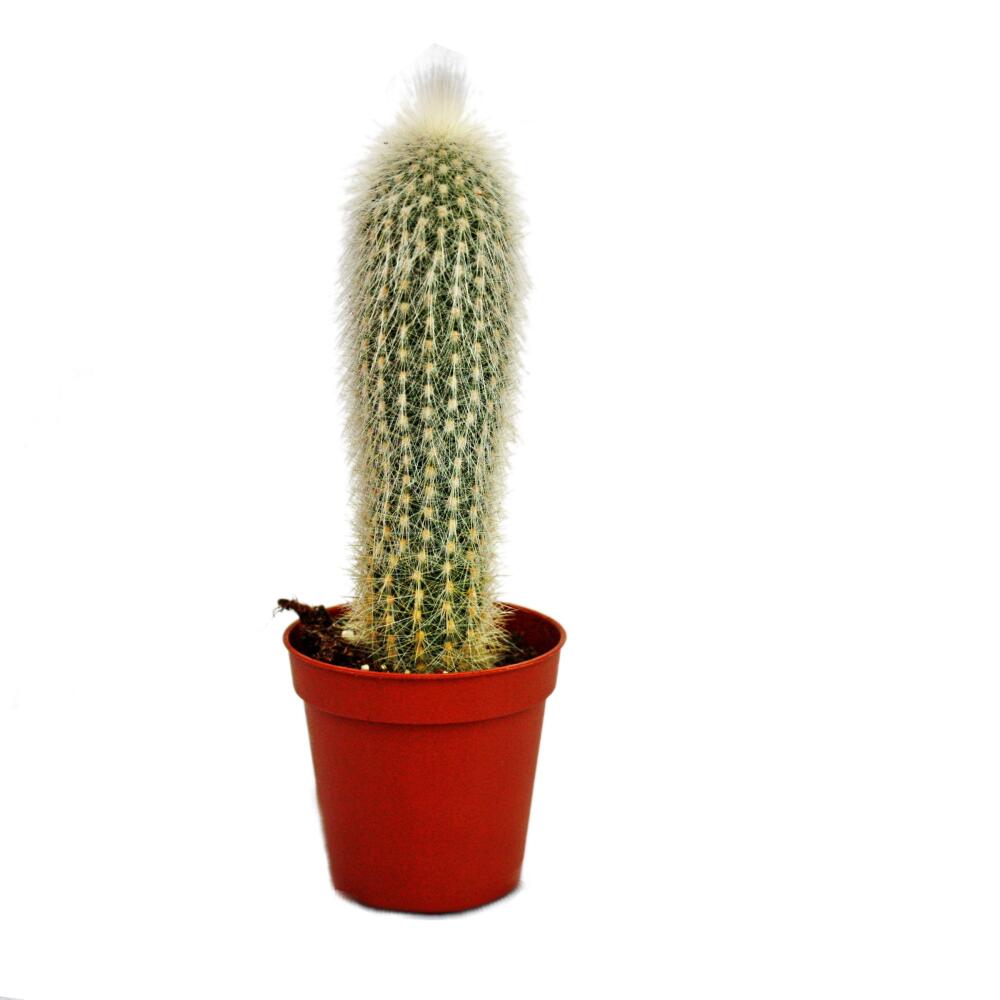
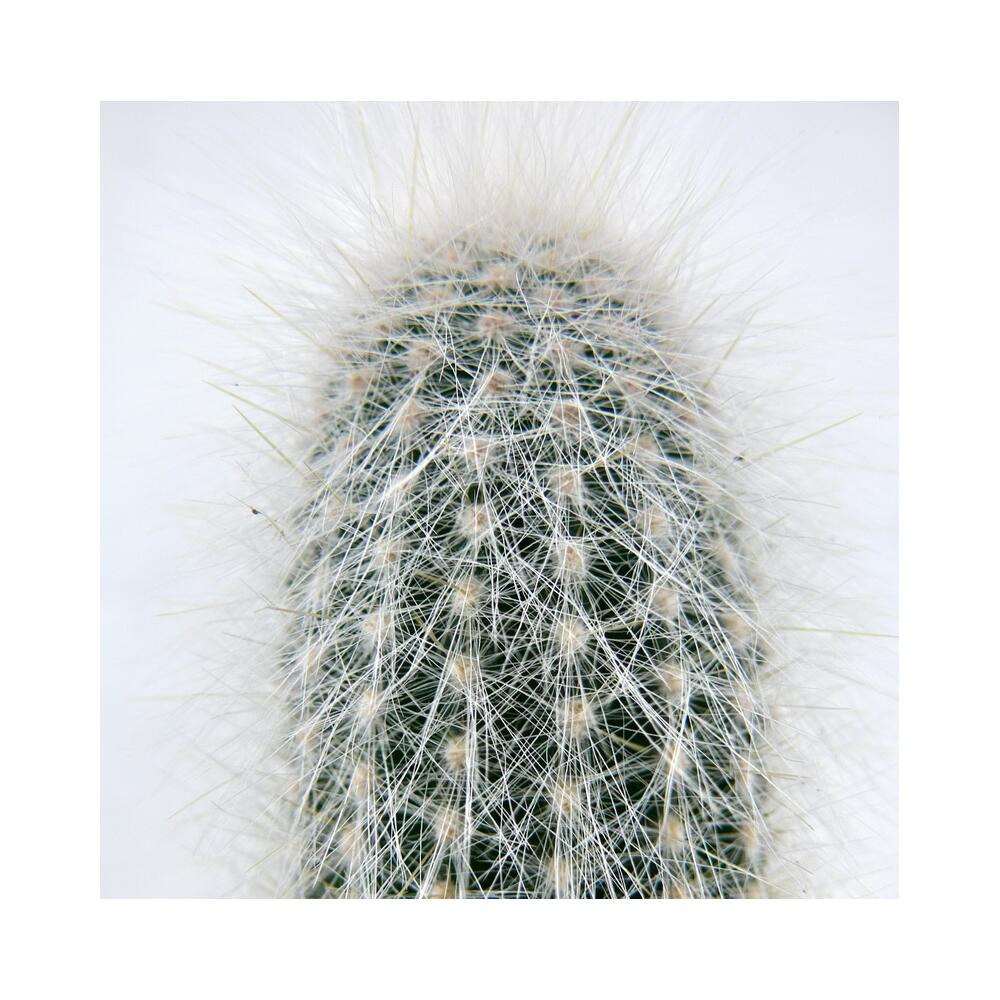
Cleistocactus strausii comes from drier areas of Bolivia. Its slender body carries many pale spines that can look soft from a distance. It is nevertheless a spiny cactus and should not be stroked. Adult plants can develop into considerably larger columns. This young shop specimen initially shows a single small stem. Possible later flowering is not part of the delivery promise; the fine spines alone make the species interesting.
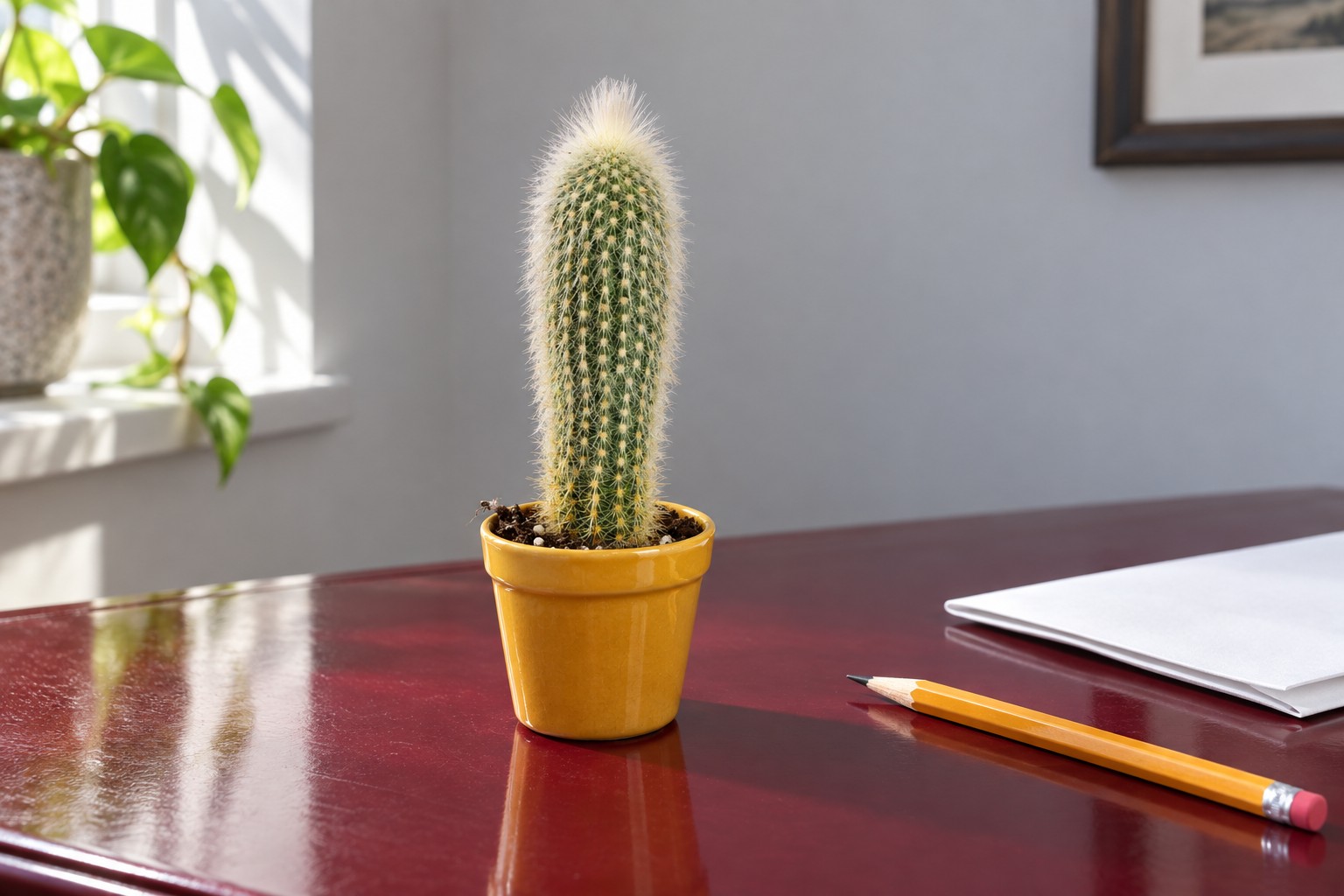
Showing its size beside everyday objects
The offer states a 5.5 cm pot and approximately 10–12 cm total height. This makes the columnar cactus small, rather than a large room divider. A very bright, safe position away from narrow walkways is suitable. The scene provides a size reference so that the slender form is not mistaken for a mature specimen. The outer pot and decoration are examples. Keep it away from children and animals that might confuse the pale spines with soft fur.
Light determines the column’s shape
Plenty of brightness and, after acclimatisation, direct sun are important. A dark position can produce thin, pale new growth. This stretched shape does not reverse later, even if the position is improved. Gradually acclimatise a newly delivered plant to strong sunshine. Air movement is useful in summer. In winter, keep it bright and frost-free, preferably with less warmth and correspondingly restrained watering.
Letting the root ball dry completely
Check the compost and the pot’s weight before watering. Once the root ball is dry, water thoroughly when needed and allow it to drain completely. Repeated little sips keep the base unnecessarily damp. Very little water is needed during a cool resting phase. Still check the small plant occasionally rather than leaving it unchecked for months. Soft spots or discolouration with a wet root ball call for investigation of the cause, not additional water.
Stable compost and protected hands
Use freely draining cactus compost with mineral components and a pot with drainage holes. Suitable tools protect you from the spines when repotting; do not crush the plant’s body. Choose a slightly larger container only when needed and maintain the previous planting depth. During active growth, feed sparingly according to a suitable fertiliser label. Account for fresh compost that already contains fertiliser. A small, slow-growing cactus does not need large quantities of nutrients.
Looking beneath the spines
Mealybugs may sit between the spines and around the base. Check regularly without constantly touching the plant. Loosen dust carefully with a soft brush; do not try to polish the spines with water. An old, firm base becoming woody should be assessed differently from new soft areas that are spreading. Cleistocactus strausii remains an ornamental plant. Its quiet growth suits care that combines a few targeted interventions with careful observation.
One plant, several views
Good to know
Does Cleistocactus strausii have soft hair?
Its pale appearance comes from spines. It should not be handled like a softly hairy plant.
How large is this version?
Approximately 10–12 cm total height in a 5.5 cm pot. It is a small, young specimen.
Why is the new tip becoming thin?
Too little light can cause stretched new growth. Improve the position rather than feeding heavily.
Does it need water in winter?
Very little during a bright, cool rest. The actual condition of the small root ball remains decisive.
Sources and editorial note
- Product and delivery contents: Exotenherz
- Royal Botanic Gardens, Kew: botanical classification
- Royal Horticultural Society: plant and care information
Sources checked: 15 September 2026. Product information and the contents of delivery follow the linked shop offer. Care advice was checked against the cited specialist sources and should still be adapted to the plant’s condition, position and season.