
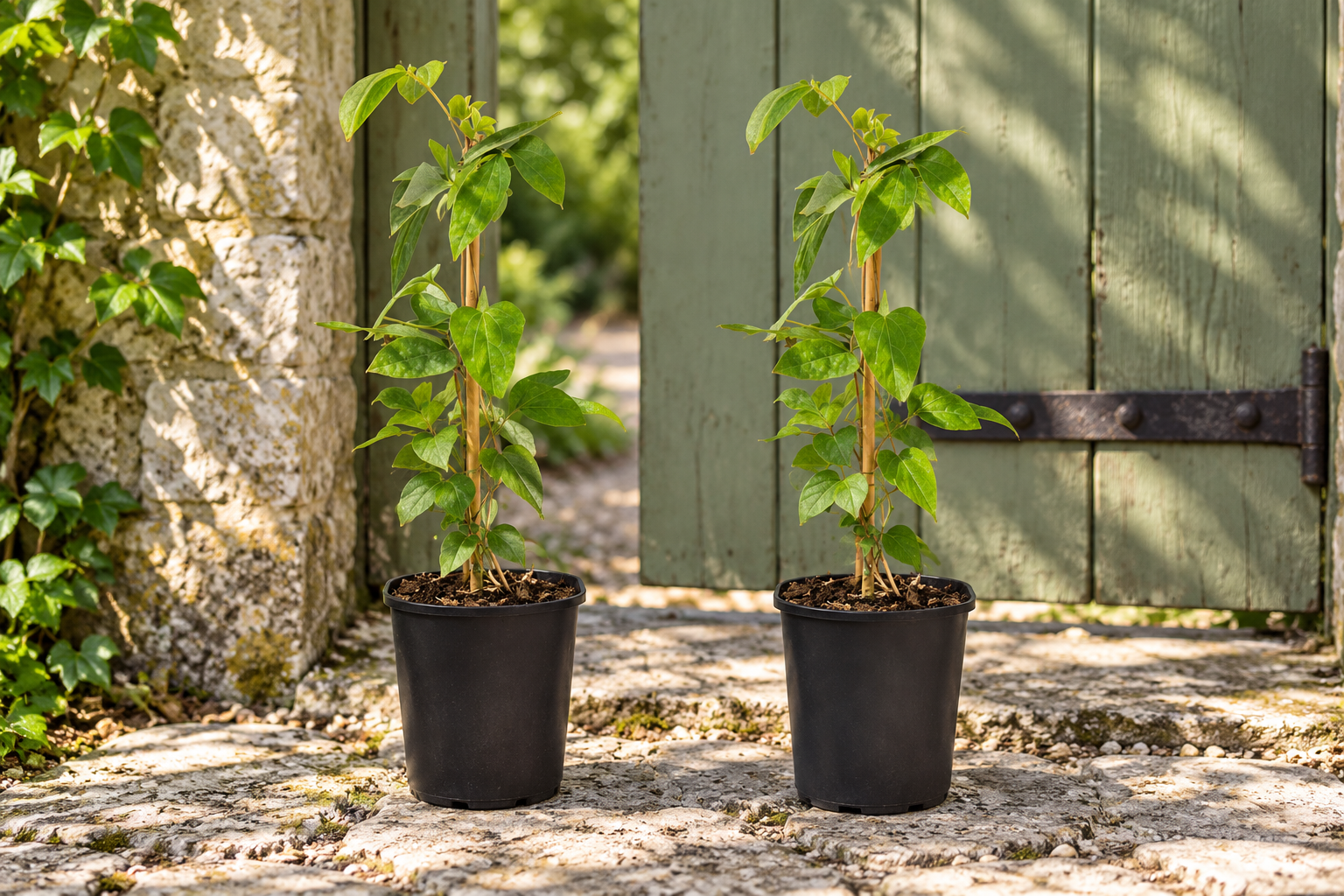
This plant at Exotenherz
Check the shop offer for current availability, price and what is included.
Check the selected shop offer for price, availability and delivery contents.
Your care table
| Topic | What to do | Why it helps |
|---|---|---|
| Light | Choose sun or bright partial shade. | Flowers and young shoots need light; the root zone should stay cool. |
| Soil | Plant in humus-rich, moisture-retentive, well-drained soil. | Prolonged dryness and waterlogging interfere with root development. |
| Planting | In frost-free soil, set the top of the rootball 5–8 cm deeper. | The large-flowered hybrid can form new shoots below ground. |
| Support | Provide thin supports and tie loosely. | Leaf stalks need reachable attachment points. |
| Water | Check rootball moisture and water thoroughly when needed. | A wet surface alone does not show the water supply at the roots. |
| Feeding | Check need in borders; feed containers during growth according to the label. | Limited substrate and fertile garden soil need different amounts. |
| Pruning | Pruning group 2: remove dead ends back to healthy buds early in the year. | Retained shoots contribute to early flowering. |
| Health | If it wilts, also check for stem breaks and soil moisture. | Wilting alone does not prove clematis wilt disease. |
| Winter | Protect container rootballs and check dryness on frost-free days. | The small pot space is at greater risk than established border soil. |
For young plants, feel the soil directly at the root ball. The surface and deeper soil may have different moisture levels.
Water thoroughly after planting; later, water according to the soil, weather and establishment rather than a fixed calendar.
Avoid standing water. For plants in containers, also check that water runs out of the drainage hole.
A pattern best seen up close
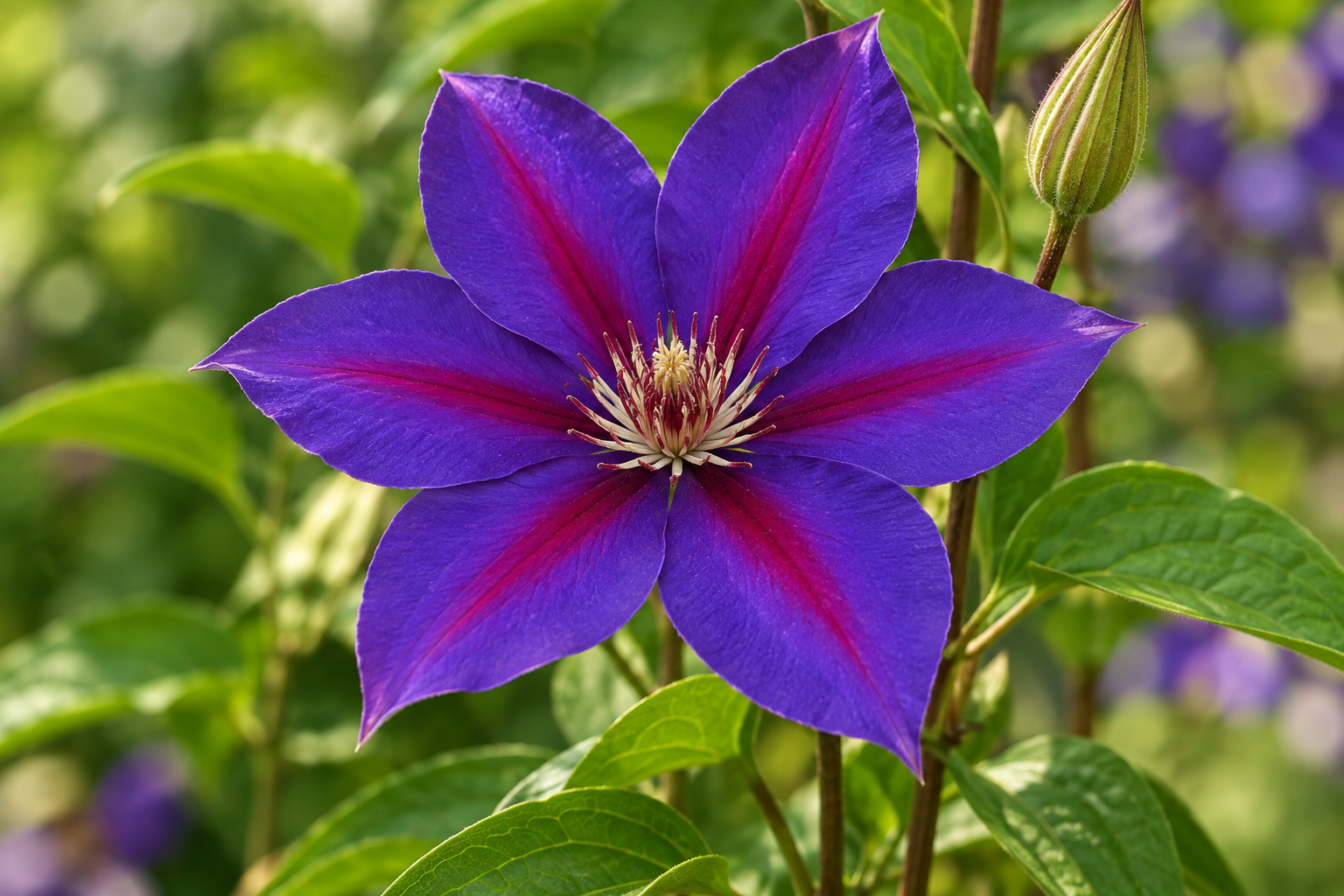
At a garden gate, a clematis does not have to cover a whole wall to stand out. With Mrs N. Thompson, one open flower is enough: red stripes point outwards from the centre against a violet background. Lighter stamens stand between them. The variety belongs to the early-flowering, large-flowered clematis group. Its name denotes a documented garden form, not an independent wild species. The leaves and thin young shoots initially look much more restrained than the later flower display. This makes an easily accessible position, where you can observe development and flowering, particularly worthwhile.
From a small set to its own garden shoot
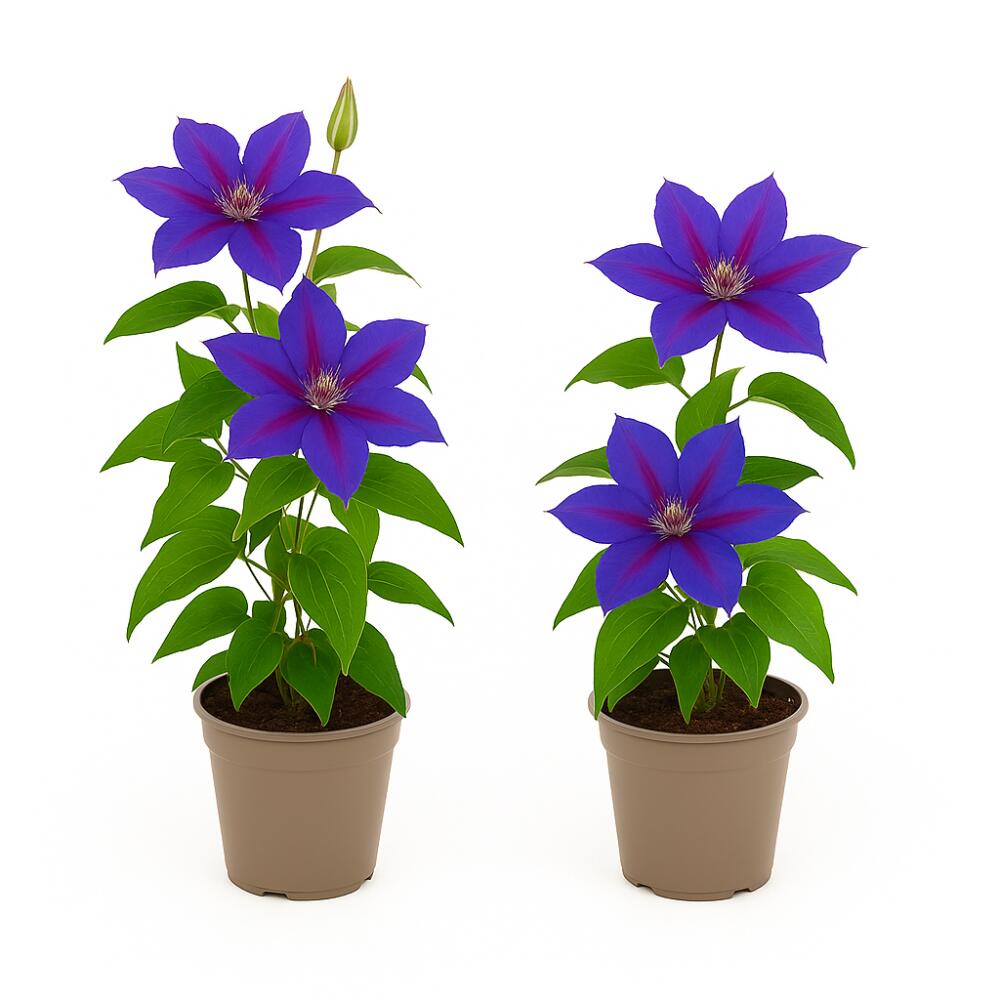
The linked offer contains two plants, each in an 11 cm pot and approximately 40 cm total height. This measurement describes the young delivery plant including its pot. An established Mrs N. Thompson can instead climb to around 1.5–2.5 m. When unpacking, keep the shoots on their support initially; thin stems break easily if pulled apart hastily. Check the rootball and water if dry before releasing the nursery pot. A plant initially without flowers is not an incorrect portrait subject: flowering, branching and later height develop with position and season.
Light above, settled soil below
Mrs N. Thompson grows in sun or bright partial shade. It is important that the root zone does not become a dry, hot strip under a roof overhang. At a wall, plant the rootball around 30–45 cm in front of its base and guide the shoots towards the support. Humus-rich soil that holds water well must also drain excess water. Improve compacted ground across the planting area rather than filling only a small hole with loose soil. Low neighbouring plants or an airy covering can shade the ground. Keep the immediate stem base clear so that it is not constantly wrapped in damp material.
Planting also means building a way upwards
Choose mild days in spring or early autumn with frost-free, workable soil. For these large-flowered hybrids, the top of the rootball may sit approximately 5–8 cm below the eventual soil surface. This encourages new shoots from below, but does not replace good drainage. Water thoroughly after planting. Thin supports, wires or a trellis give leaf stalks something to hold. The plant finds it harder to attach to a wide, smooth wooden slat. Tie new shoots loosely until they grip independently, and spread them rather than pulling them upwards in one bundle. Gloves are sensible when working, because clematis can irritate skin.
Water without overlooking wilting
In the first year, moisture in the original rootball determines establishment. Check there with a finger and water thoroughly when the soil dries. Heavy rain may still miss a planting spot beneath a wall. In a container, clematis needs attention more often because its root space is limited. A larger container with drainage holes, around 45 cm deep and wide as a growing guide, is sensible for permanent cultivation. Regular feeding is not automatically necessary in a fertile border; in a pot, a suitable fertiliser used according to its label can help during growth. Wilted shoots are not a reason to flood an already wet rootball further.
Early flowering relies on retained wood
Mrs N. Thompson belongs to pruning group 2. On an established plant, remove dead and weak shoot ends in late winter or early spring, cutting just above a healthy pair of buds. Start at the top and look for living buds. An annual cut close to the ground would remove some of the early flower growth already formed. After the first flowering flush, you can shorten individual finished shoots to strong buds below them. Building the framework of a very young, unbranched plant is a separate step: an initial low cut can encourage branching, but costs early flowers. Do not confuse it with maintenance pruning of an adult clematis.
Read the garden winter and sudden failures
This perennial variety loses its leaves. Bare winter shoots are therefore not automatically dead. In a pot, protect the rootball from freezing hard and check on frost-free days whether it has become completely dry. If shoots suddenly collapse, first examine rootball moisture, bent or broken areas and feeding damage on the stem. Clematis wilt is one possible cause, but not every wilt is a fungal infection. Cut suspected diseased parts back to healthy tissue and clean the secateurs. New basal shoots may appear later; this does not promise certain recovery. Calm observation provides more here than immediately switching between generous water and generous fertiliser.
One plant, several views
Good to know
How big is the delivered Mrs N. Thompson?
Around 40 cm total height per plant including the 11 cm pot; the offer contains two plants. Later growth of 1.5–2.5 m is a garden guide.
Is Mrs N. Thompson a separate clematis species?
No. The name denotes a documented variety from the early-flowering large-flowered group. An additional wild species assignment is not needed for care.
Why does a young plant have no flowers?
The shop presentation shows the variety’s character. Young plants may arrive without flowers depending on development and season; roots and new shoots matter first.
Can I cut everything short every spring?
For established pruning-group-2 plants, gentle pruning preserves living wood for early flowers. A low formative cut on an unbranched young plant has a different aim.
Does it need water every day?
There is no fixed watering day. Check soil and the original rootball; containers, heat and dry wall positions increase demand.
Is every wilt clematis wilt disease?
No. Dryness, wet roots, injuries and feeding damage can look similar. Check these causes before changing care and pruning.
Sources and editorial note
- Exotenherz: parent offer read directly, delivery measurements and original gallery (03.10.2026)
- Specialist reference: clematis-thompson (read directly 03.10.2026)
- Specialist reference: clematis-growing (read directly 03.10.2026)
- Specialist reference: clematis-pruning2-guide (read directly 03.10.2026)
- Specialist reference: clematis-wilt (read directly 03.10.2026)
Identity and independent profile checked against the canonical 642 entries and shared and isolated portraits and assignments. Parent offer and all associated child offers read directly on 03.10.2026 with precise URL and file hashes. Total delivery height distinguished from later growth height; sets do not count additionally. Specialist sources read directly. Text and image comparison checked in isolation; PDF and page acceptance bound to actual file hashes. No publication acceptance: Root checks the shared page build.