
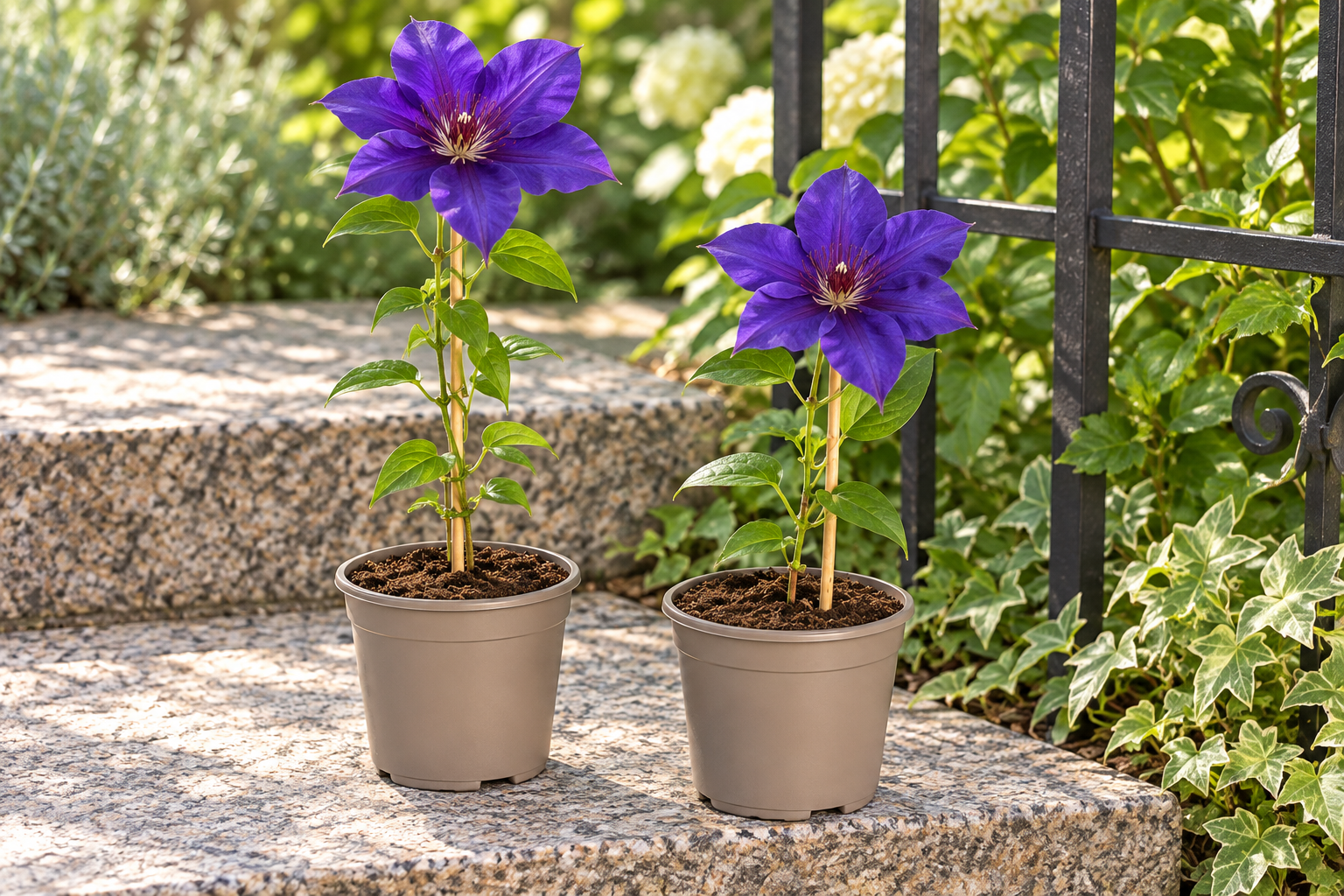
This plant at Exotenherz
Check the shop offer for current availability, price and what is included.
Check the selected shop offer for price, availability and delivery contents.
Your care table
| Topic | What to do | Why it helps |
|---|---|---|
| Light | Choose sun or bright partial shade. | A bright position supports flowers and new growth. |
| Root zone | Prepare humus-rich, moisture-retentive soil with good drainage. | Persistent dryness and standing water harm cultivation. |
| Planting | In frost-free soil, set the top of the rootball 5–8 cm deeper. | The large-flowered hybrid can form additional basal shoots. |
| Support | Spread shoots loosely over thin supports. | Leaf stalks find a grip without bending stems. |
| Water | Check containers frequently and water thoroughly when dry. | Wind, sun and leaf mass change demand. |
| Feeding | Feed containers in spring and summer according to the label. | Reserves in limited substrate are used up faster. |
| Pruning | Pruning group 2: cut back dead and weak wood early in the year. | Living shoots from last year contribute to early flowering. |
| Inspection | Examine the wilted shoot and rootball together. | Breakage, dryness and disease need different responses. |
| Winter | Protect container rootballs from severe cold and check on frost-free days. | A dormant climber still needs intact roots. |
For young plants, feel the soil directly at the root ball. The surface and deeper soil may have different moisture levels.
Water thoroughly after planting; later, water according to the soil, weather and establishment rather than a fixed calendar.
Avoid standing water. For plants in containers, also check that water runs out of the drainage hole.
Violet with a quiet second side
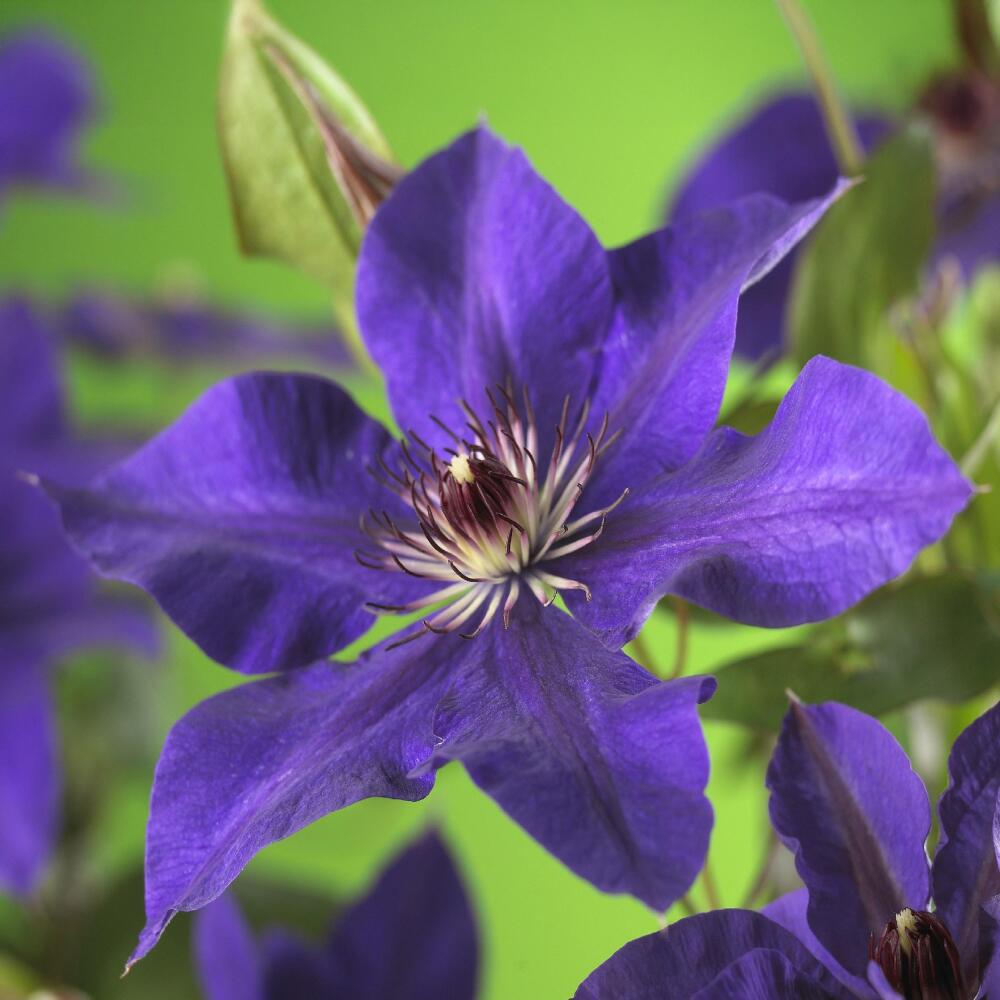
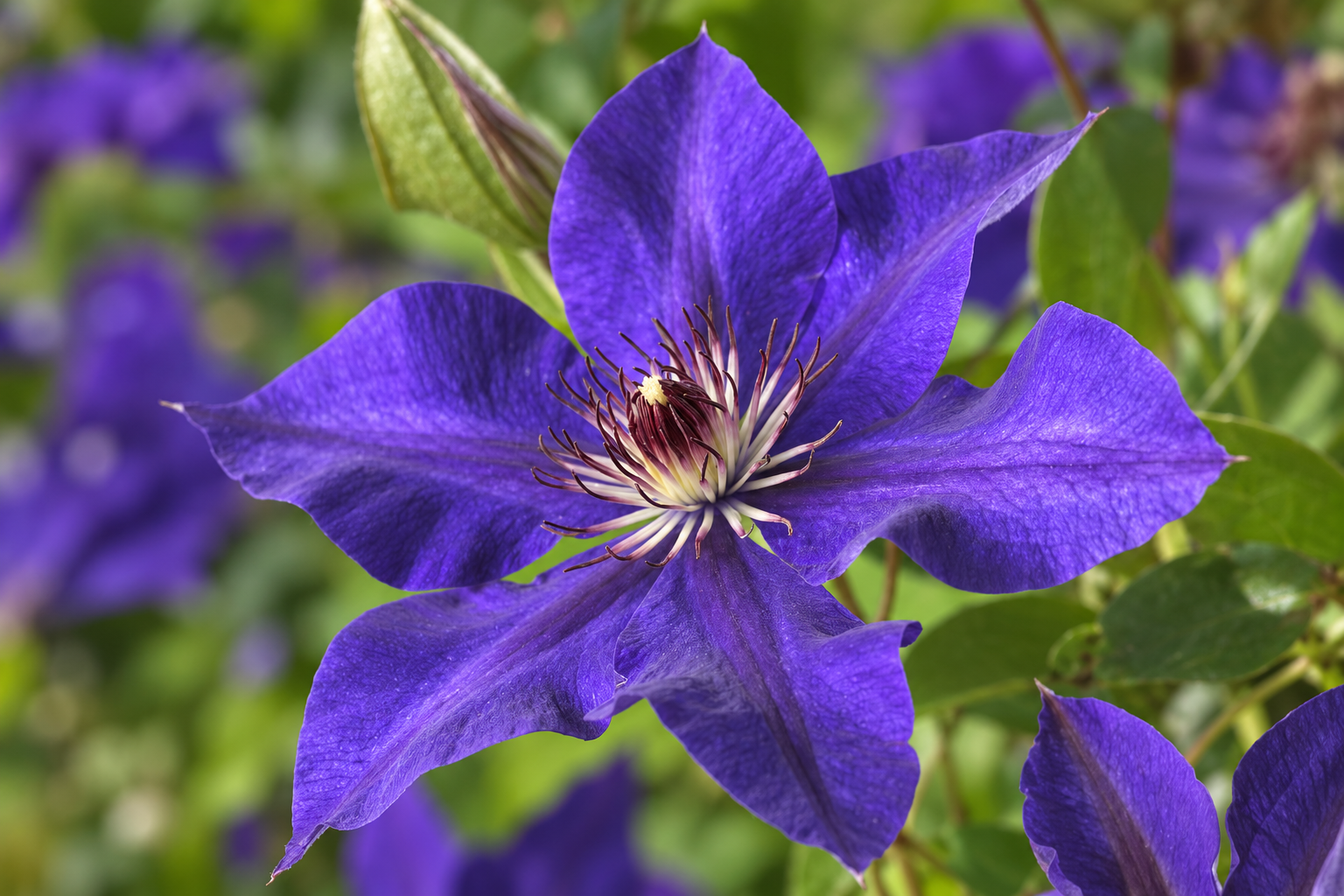
Viewed from the front, The President’s large violet-blue flowers stand out. Their broad petals overlap and create a slightly cupped shape with pink to dark red stamens at its centre. Looking at a flower from the side reveals its paler, silvery back. A developed flower can reach around 18 cm wide. This documented variety of the early large-flowered clematis group is deciduous and reaches a manageable yet still climbing size. On a trellis beside a seat, its flowers can be experienced up close without squeezing the stems into a dense curtain.
Plan the later framework with small plants
The current offer contains two plants, each in an 11 cm pot at approximately 40 cm total height including the container. The expected climbing height of 1.5–2.5 m describes a later garden planting. When opening the package, protect thin shoots from bending and check the rootball. A slender young plant initially needs water, access to its support and room for roots. The example flower images show the variety’s character. Whether a young plant is currently flowering depends on season and development. A fully covered trellis develops over time, not by arranging two small nursery pots.
A bright backdrop with a cool base
The President grows in sun or bright partial shade. A pale wall or wooden frame may emphasise its dark flower colour, but must not push the rootball into a hot, dry wall strip. Plan the planting spot around 30–45 cm in front of the wall base and lead the shoot to the support. Moisture-retentive, humus-rich soil should also drain well. In heavy soil, check whether water stands after rain; in sandy soil, improving moisture retention matters. Low companion planting can shade the soil. Leave enough distance from the new rootball so that the clematis can develop without immediate root competition.
Planting and guiding go together
A mild, frost-free day in spring or early autumn offers good conditions. For this large-flowered hybrid, the top of the rootball may sit approximately 5–8 cm below the eventual soil surface to encourage new basal shoots. Water carefully and give the thin leaf stalks a trellis with narrow supports. A thick wooden column alone is not very helpful. Soft, loose ties guide the first shoots until they grip independently. Spreading them makes growth easier to observe and gives flowers space. Wear gloves while working; clematis can irritate skin. The support should be secure before the growth pulls against it in the wind.
Container plants need a daily look, not a fixed watering instruction
For a terrace, a container around 45 cm deep and wide is a sensible long-term solution; drainage holes and a stable support are part of it. The young 11 cm pot is only the starting container. Check soil frequently during summer growth and water thoroughly once the rootball dries. This takes longer in cool weather than on hot, windy days. Let water drain from the container. During spring and summer, fertiliser according to its label may supplement the limited soil. An established plant in a fertile border does not automatically need the same feeding schedule. Generous supplies alone cannot reliably increase flower size and number.
Retain the right wood for the first flowers
The President belongs to pruning group 2. On an established plant, cut dead and weak ends back to a healthy pair of buds in late winter or early spring. Look for living buds from top to bottom. Early flowering uses retained wood from last year; a severe annual cut close to the ground would remove this advantage. Individual finished shoots can be shortened after the first flush to strong buds below. Initial formative pruning of a young plant with little branching has another aim and may cost flowers. Look at the existing framework first, then prune accordingly rather than setting the same height each year.
Healthy roots through summer and winter
If a shoot suddenly wilts, first check water balance, stem breakage and feeding damage at the base. Clematis wilt can occur, but one drooping shoot does not provide a certain diagnosis. Suspected damaged parts are removed back to healthy tissue; clean tools avoid additional spread. Leaves fall in autumn and living stems are retained for the next season. In a container, shield the rootball from severe cold and keep drainage open. Frost-free days are suitable for moisture checks. This calm seasonal rhythm is the basis for the next growth and another violet flower display.
One plant, several views
Good to know
What does The President’s actual flower look like?
Large violet-blue, slightly cupped flowers with overlapping petals and pink to dark red stamens; the backs may look silvery.
How tall is the current set?
It contains two young plants each at about 40 cm total height including an 11 cm pot. Developed garden stems may reach around 1.5–2.5 m.
Is a container possible?
Yes, with much more root space than the delivery container, around 45 cm wide and deep as a guide, drainage and a secure support.
Does it need severe pruning every year?
No. During group-2 maintenance pruning, remove dead and weak ends back to living buds. Healthy wood from last year supports early flowers.
Why do individual shoots droop?
Check rootball moisture, stem breakage and feeding damage; clematis wilt is another possibility. More water does not help if the rootball is already wet.
Does it stay green in winter?
The variety is deciduous. Bare but living stems are part of the normal winter appearance and should not be removed merely because they have no leaves.
Sources and editorial note
- Exotenherz: parent offer read directly, delivery measurements and original gallery (03.10.2026)
- Specialist reference: clematis-president (read directly 03.10.2026)
- Specialist reference: clematis-growing (read directly 03.10.2026)
- Specialist reference: clematis-pruning2-guide (read directly 03.10.2026)
- Specialist reference: clematis-wilt (read directly 03.10.2026)
Identity and independent profile checked against the canonical 642 entries and shared and isolated portraits and assignments. Parent offer and all associated child offers read directly on 03.10.2026 with precise URL and file hashes. Total delivery height distinguished from later growth height; sets do not count additionally. Specialist sources read directly. Text and image comparison checked in isolation; PDF and page acceptance bound to actual file hashes. No publication acceptance: Root checks the shared page build.