
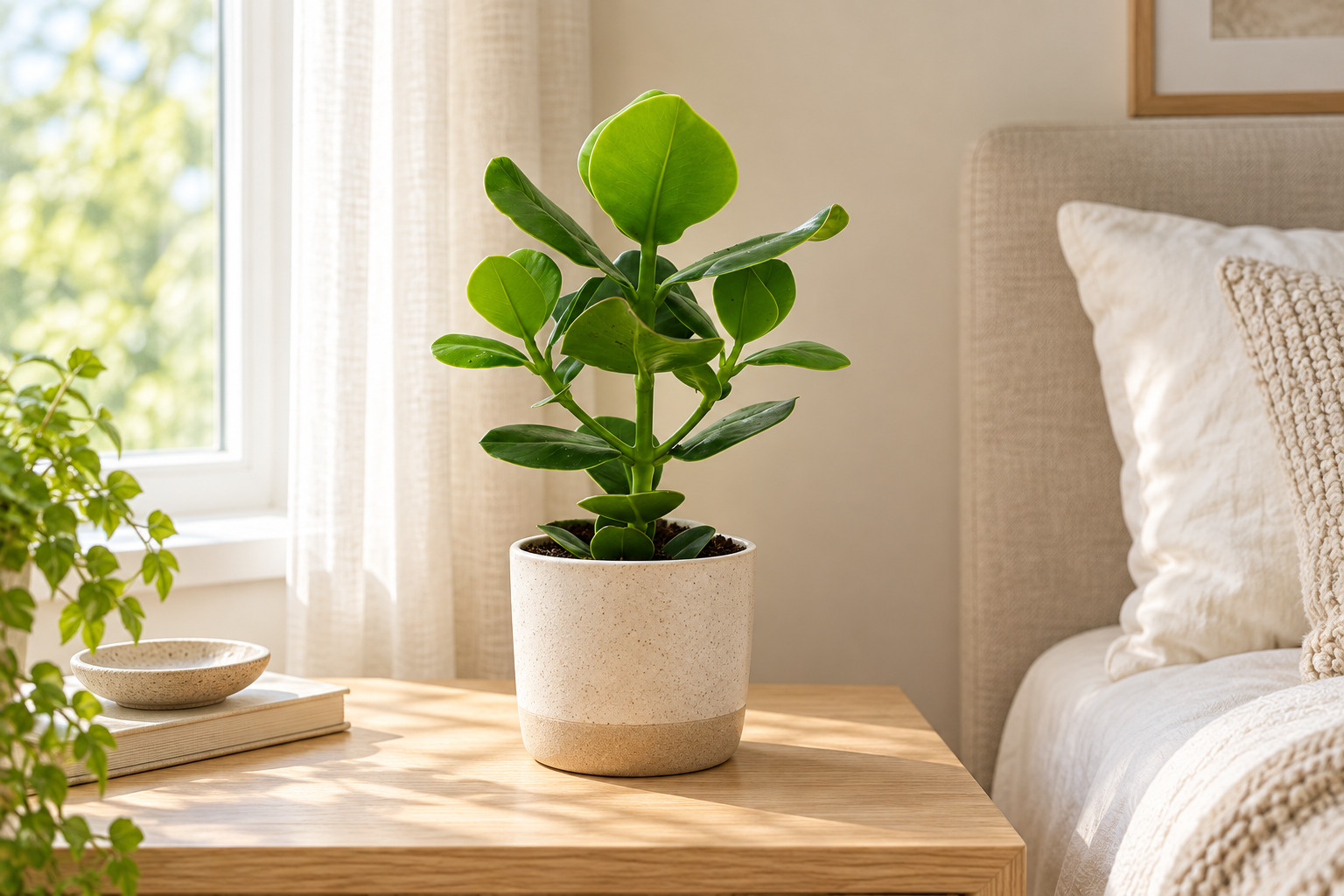
This plant at Exotenherz
Check the shop offer for current availability, price and what is included.
Check the shop for the current price, availability and offer contents.
Your care table
| Topic | What to do | Why it helps |
|---|---|---|
| Position | Bright filtered light, protected from hot window sun. | Firm leaf pairs need daylight without sudden overheating. |
| Water | Supply evenly as upper soil dries somewhat; check more sparingly in winter. | Thick leaves do not tolerate continually saturated airless roots. |
| Drainage | Pour surplus away and ensure open pot holes. | Water should drain, not stand at the stem base. |
| Soil | Choose stable peat-free houseplant soil with good drainage. | A young woody shoot needs support and air around roots. |
| Repotting | Only give little extra space with clear need, protecting roots. | Indoor Clusia is not completely repotted at short intervals as a precaution. |
| Feeding | Feed moderately in active growth according to a suitable label. | Nutrients accompany new leaf pairs without replacing light. |
| Shaping | Shorten excessively long shoots during growth if needed. | Targeted pruning may encourage bushier branching. |
| Winter | Keep warm and as bright as possible; note reduced water use. | The tropical houseplant needs no cold rest. |
Check the compost and pot weight. The care table explains how far the compost may dry.
Water only when needed. The water should reach the root ball without spilling over the rim.
Remove surplus water from the saucer or cachepot. Then return the plant to a suitable position.
Firm leaf pairs on a young shoot
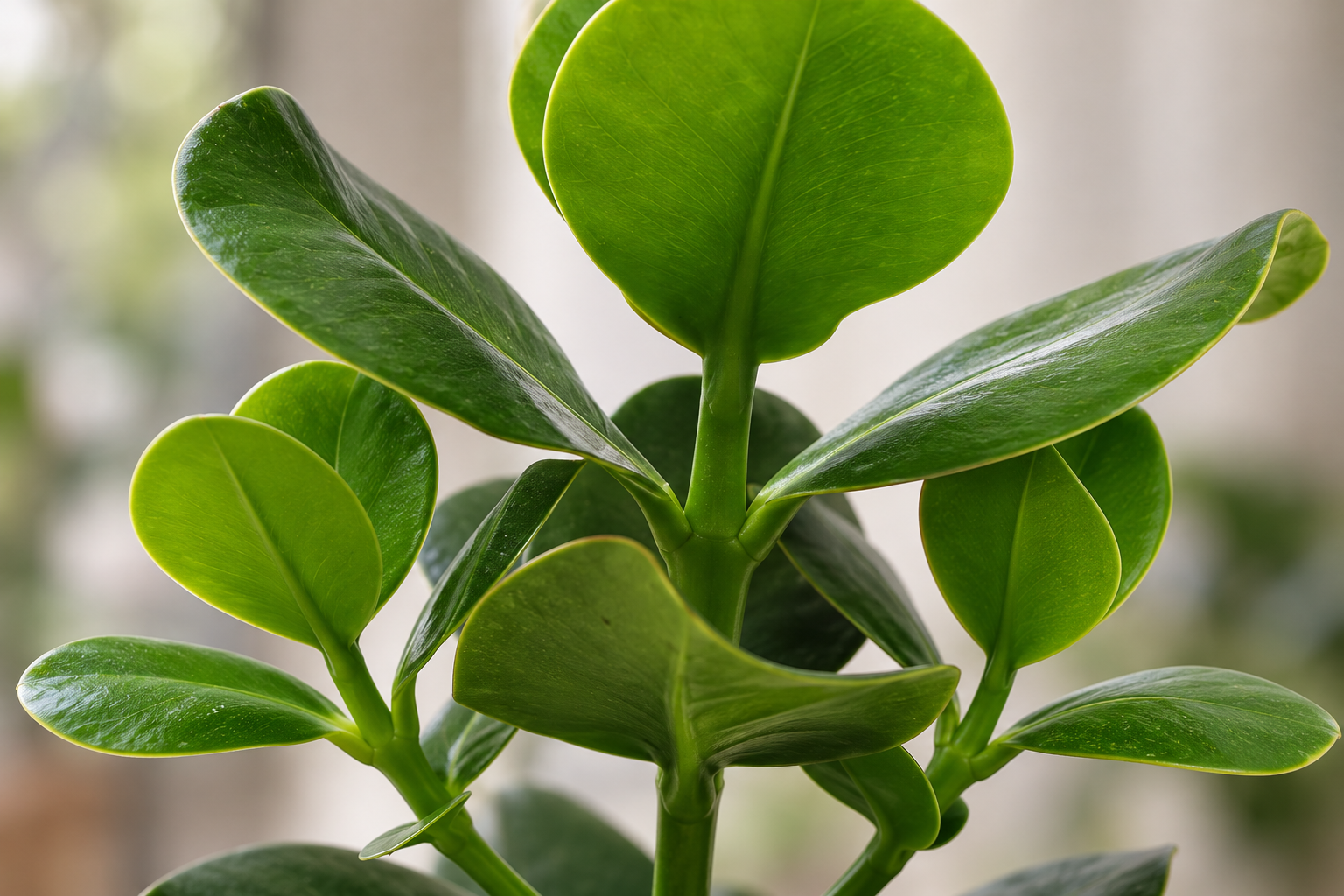
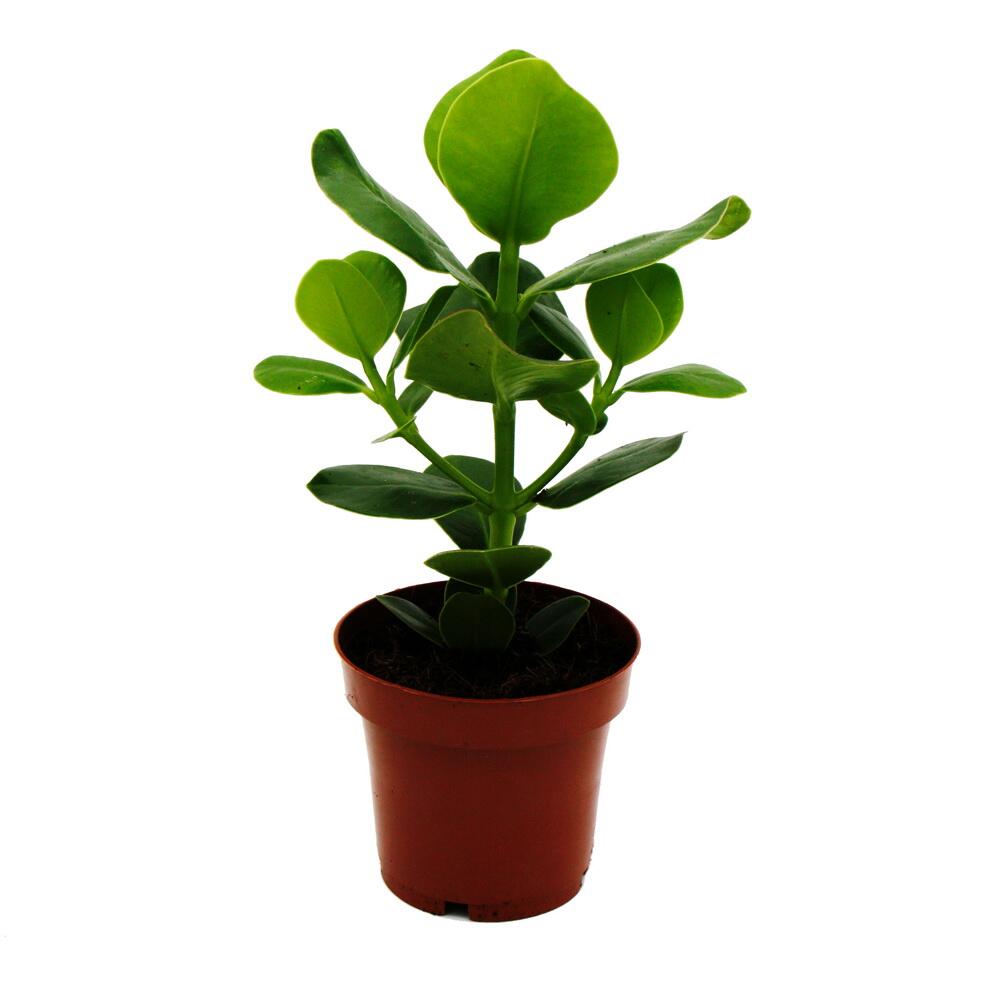
Firm foliage first catches the eye. Thick smooth green leaves stand opposite each other on a strong upright shoot. Youngest leaves at the top are still smaller and paler; older ones beneath form calm green planes. The original shows a young plant with a short trunk and a few leaf pairs. It looks manageable on a bright accessible side table. A simple outer pot reveals shape and gloss. Do not crowd leaves against a wall or use them as handles. Even firm leaves may crease if pulled at the tip. Living plants alter leaf count and position as they develop.
Read the shop name botanically carefully
The shop calls it Clusia major. RHS lists the commonly grown houseplant as Clusia rosea and explicitly marks major as misapplied in this usage. Kew separately accepts the true species Clusia major, naturally ranging from the Lesser Antilles to Trinidad. The two true species are therefore not simply declared synonyms. This portrait stays with the offered indoor Clusia at genus level and transparently names the shop designation. A foliage-only photograph cannot securely resolve that species question. Clusia belongs to Clusiaceae and includes tropical woody plants with firm foliage.
A small delivery is not a finished bush
The current description is a 12 cm pot at approximately 25–35 cm total height. This applies to the offered young potted plant. Suitable cultivation and shaping can produce a more branched structure from the upright shoot. Its speed depends on light, nutrition and developmental stage. Neither a fixed later height nor a deadline for bushiness is promised. Hold the pot when unpacking and gently release its cover. Check moisture and drainage next. A large decorative container is not an essential first step. The existing rootball can settle in the new position before genuinely necessary repotting.
A bright living space with room for leaves
Indoor Clusia suits bright filtered daylight. Hot direct sun behind glass may be excessive after shipping; a light curtain protects in strong hours. Firm leaves do not justify permanent darkness. Fresh pairs and balanced growth need real light. Choose steady warmth without cold draughts across the foliage. In winter, distance from cold glass helps too. Directly above a radiator, hot dry foliage air may combine with still-moist soil, complicating observation. Keep the pot accessible so everyday checks need no rearrangement of the room.
Water as needed and remove surplus
Let upper soil dry somewhat before evenly watering again. Check beneath it and learn pot weight. Thick leaves store water but do not make the plant a desert cactus. Prolonged complete dryness is as unsuitable as permanently saturated soil. Supply slowly and let the nursery pot drain. Pour surplus from the outer pot. A dropping or yellow leaf first calls for root, moisture and surroundings checks. Already wet soil gets no automatic extra watering. RHS describes much sparer winter provision; actual rootball drying at your position remains decisive.
Treat roots and branching gently
Stable loose houseplant soil supports the young woody stem while draining. Repot only with clear need into a little more space without unnecessarily tearing roots apart. RHS advises against routine unnecessary repotting of indoor Clusia. This serves quiet foliage cultivation, not forced flowering. If a later shoot becomes too long, targeted pruning during active growth can accompany bushier branching. Use clean tools and gloves. Suitable cuttings or air layering are propagation routes under warm conditions. Moderate nutrients following the fertiliser label support new growth; count pre-fertilised soil in dosage.
Leaf care instead of flower promises
Gently remove dust with a soft slightly damp cloth, supporting the leaf underneath. Check undersides and bases for scale, mealybugs or fine webbing. Even firm foliage can suffer sucking damage. In winter keep warm and as bright as possible, with water and nutrients following slower growth. Damaged old leaves do not become flawless again; new healthy pairs give better feedback. RHS mentions possible flowers on developed Clusia rosea but stresses their rarity in pots. Because of development and unresolved species assignment, neither flowers nor fruit are promised for this offer. Indoor Clusia is ornamental and not for consumption.
One plant, several views
Good to know
Why not simply call major the certain species?
RHS marks major in the houseplant trade as misapplied to rosea. A foliage-only photograph cannot securely establish the offered species.
Are true major and rosea synonyms?
No. Kew lists true Clusia major as accepted. Trade naming is explained separately.
How large is the delivery?
In a 12 cm pot at about 25–35 cm total height according to the current offer.
Does it remain one upright shoot?
Development and targeted shaping may allow a bushier structure. No deadline is promised.
Does it need water like a cactus?
No. Firm leaves do not allow permanent rootball dryness. Let upper soil dry somewhat then supply appropriately.
Should I repot straight away?
Only with clear need. The existing rootball may settle first; avoid unnecessary disturbance.
Is a flower or fruit delivered?
Neither is guaranteed. The checked offer and images describe a young foliage plant.
What changes in winter?
Keep warm and bright, allowing for often lower water demand after checking the rootball.
Sources and editorial note
- Exotenherz: offer and original photographs (03.10.2026)
- RHS: indoor Clusia, misapplied name and cultivation (03.10.2026)
- Kew: true accepted Clusia major separate from trade naming (03.10.2026)
Shop offer, article number, GTIN, availability and originals directly checked on 03.10.2026. Specialist sources directly read. One new portrait of the offered indoor Clusia at genus level, transparent shop major; RHS major misapplied to rosea, Kew accepts true major. No species equation, origins/flowers only for clearly assigned species. No second identity from names.