
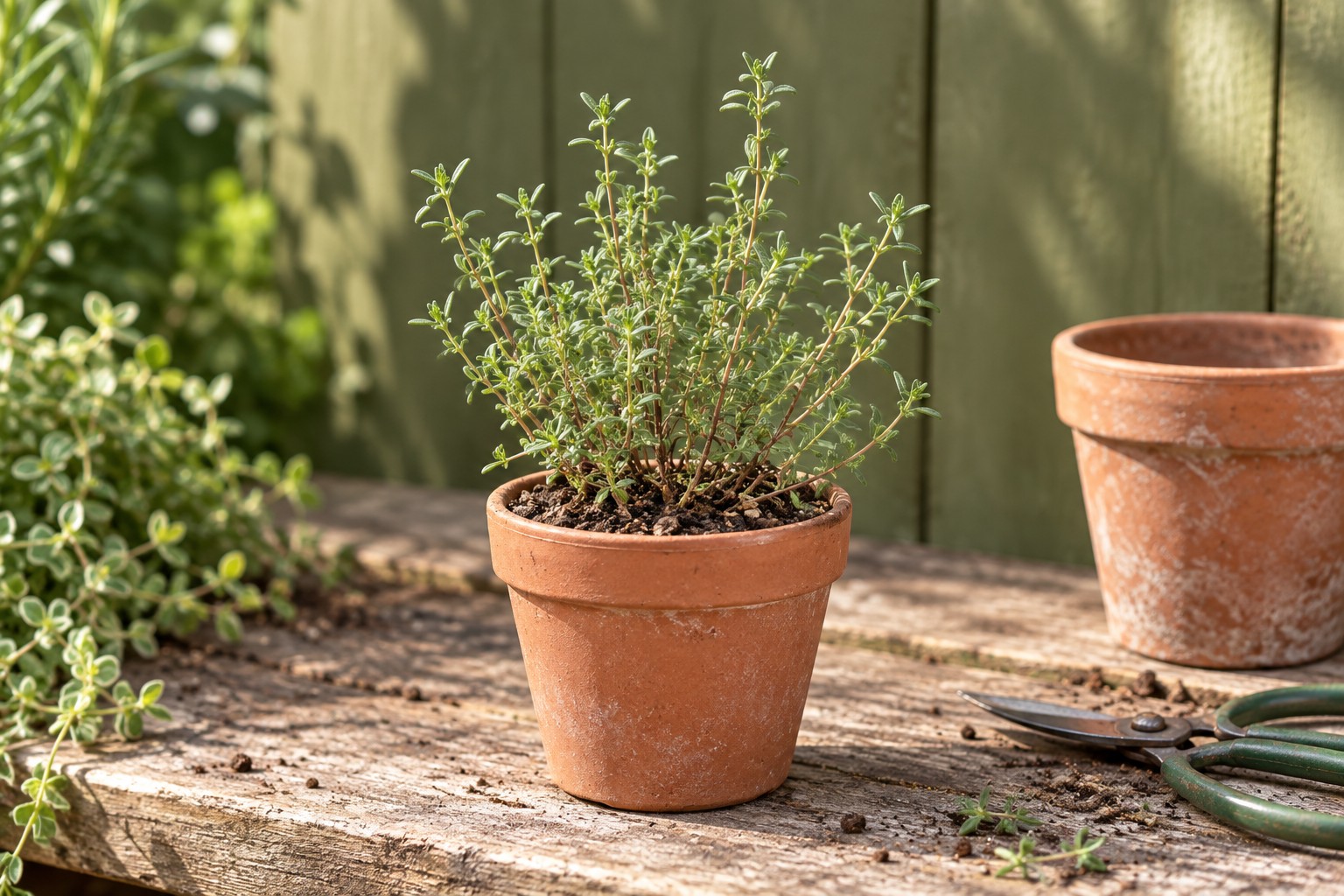
This plant at Exotenherz
Check the shop offer for current availability, price and what is included.
The linked shop is in German. Product details, availability and delivery information are provided in that shop.
Your care table
| Topic | What to do | Why it helps |
|---|---|---|
| Position | Plant in a sunny, warm position with good drainage. | Thyme develops well in bright conditions with soil that is not waterlogged. |
| Water | Check regularly while establishing, then let the soil dry well between waterings. | Young roots do not yet have a large soil reserve. |
| Container growing | Use drainage holes and an open herb compost mix. | Small containers dry faster but are also easily waterlogged. |
| Feeding | Feed only sparingly and according to need. | Too many nutrients encourage soft growth. |
| Harvesting | Take healthy young tips and leave enough greenery. | The plant needs leaf mass to regenerate. |
| Pruning | Trim lightly, without cutting deeply into bare old wood. | New growth from there is uncertain. |
| Winter | Above all, avoid wetness and shelter small pots. | Hardiness does not replace suitable root conditions. |
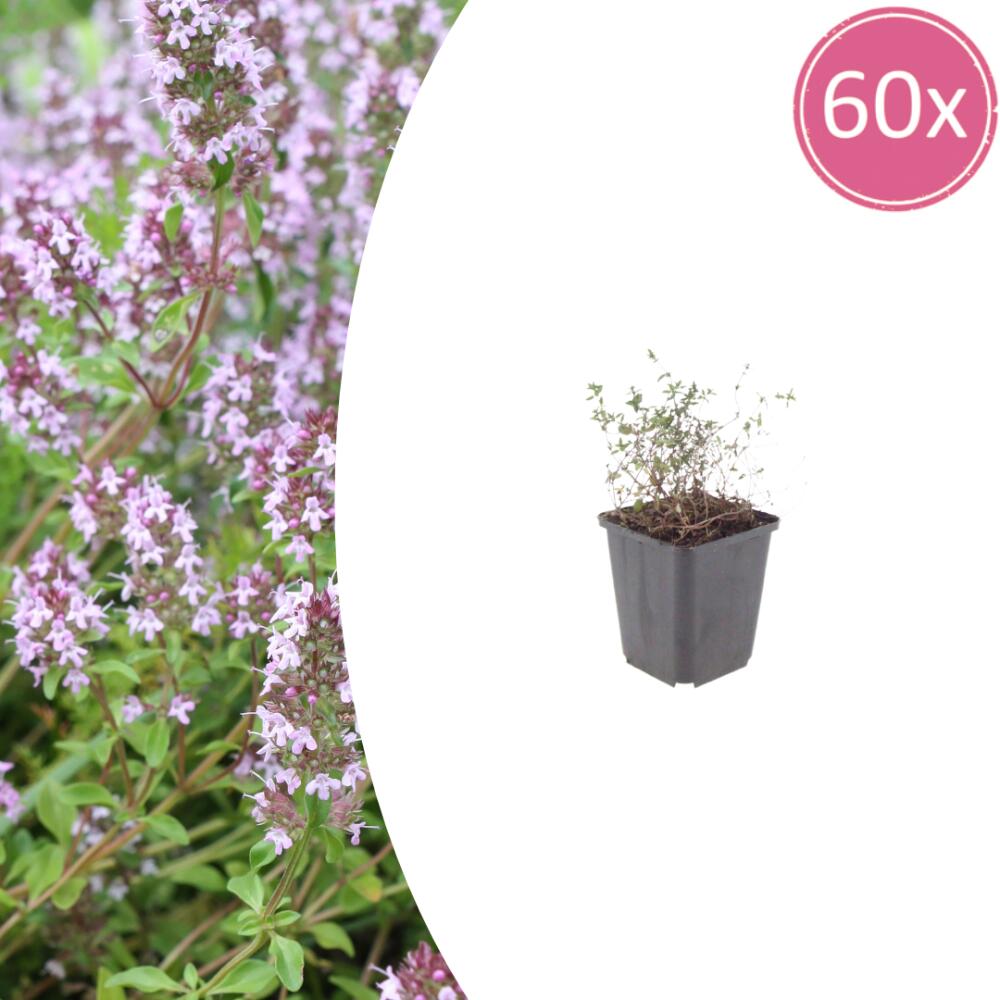
| Ordering | Choose the set size and current plant quantity in the shop. | The photos show different offer sizes. |
Check the compost and pot weight. The care table explains how far the compost may dry.
Water only when needed. The water should reach the root ball without spilling over the rim.
Remove surplus water from the saucer or cachepot. Then return the plant to a suitable position.
A little woody plant among the herbs
Common thyme forms fine stems that gradually become woody at the base. Its small aromatic leaves sit closely along them. In suitable conditions, small flowers appear that also interest flower visitors. It belongs to the mint family and is a classic culinary herb. Light and gentle trimming maintain its compact shape. A large, dense planting develops from young plants over time, not immediately from a small delivery pot.
Separating set size from plant height
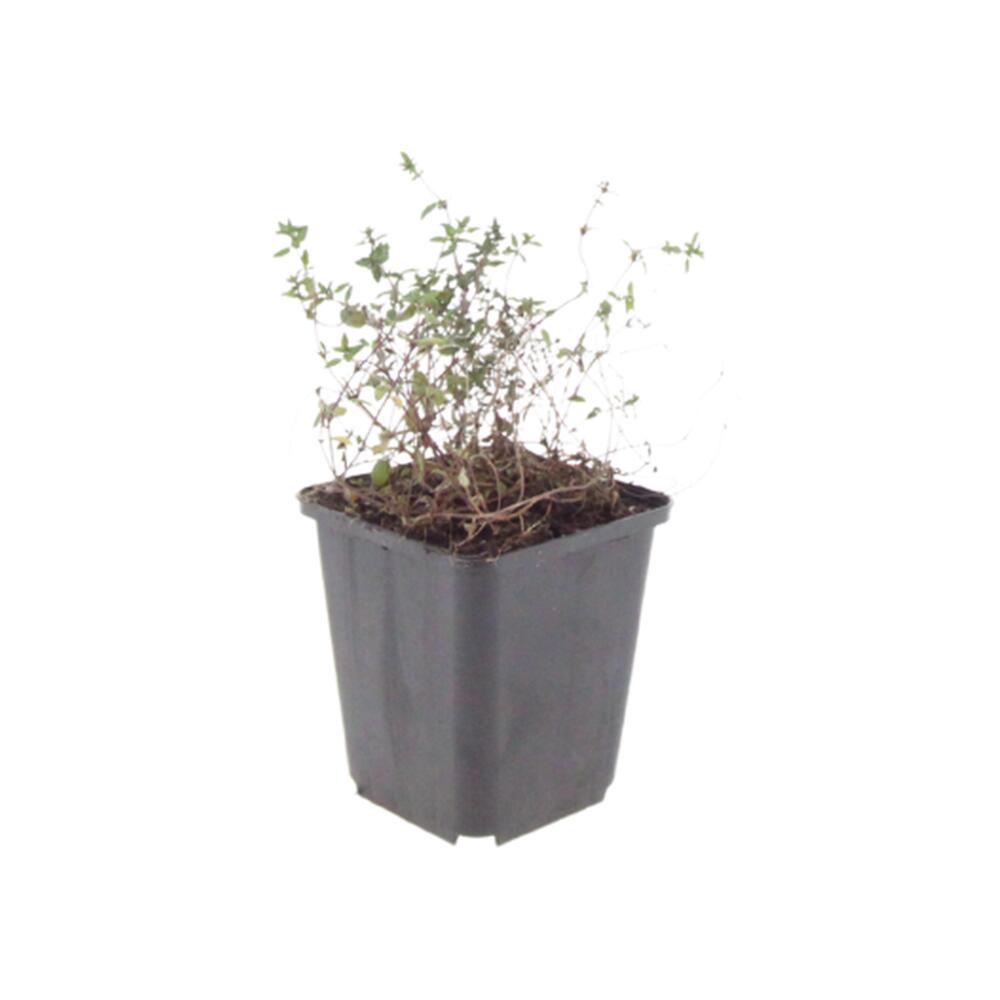
The shop offer lists thyme in 9 cm pots with approximately 10–25 cm total height and different set sizes. The quantity is chosen in the shop; a picture with a set marking does not automatically apply to every selection. The AI scene shows a single young plant as a size example. When placing several plants in a bed, allow space for their later spread. The outer pot, tools and decoration are not promised components of the plant offer.
Sunshine and freely draining soil
Choose a sunny, warm position. Heavy soil that stays wet for a long time is less suitable than well-aerated, relatively lean soil. In a pot, keep drainage holes clear and use a suitable open herb mix with mineral structure. Introduce strong sunshine gradually after transport. When planting in a bed, water the whole root ball thoroughly. Newly planted thyme is not yet as drought-tolerant as a well-established specimen.
Adjusting water to development
Check regularly during establishment and water when needed. Later, the soil may dry well between waterings. A small pot has less reserve than a bed, particularly in wind. Water thoroughly rather than merely wetting the surface every day. Remove leftover water. Yellowing or winter losses are often also linked to overly wet soil. Drought tolerance does not mean newly planted roots can manage without a water supply.
Harvesting and trimming without bare old wood
Harvest healthy young shoot tips with clean tools and leave sufficient green foliage. Light, regular trimming encourages compact growth. Do not cut deeply into completely bare old wood, where new growth is uncertain. Feed sparingly during the growing season; excessively rich care encourages soft shoots. For cooking, use positively identified plant parts suitable according to treatment instructions and clean them before use.
Considering winter soil conditions
Common thyme is generally hardy, but needs a suitable, well-drained position. Small pots are more at risk from freezing solid and wetness than established bed plants. Position them in shelter, ensure drainage and check the root ball on frost-free days. Carefully remove dried or dead parts in spring. As new growth appears, the shape can be gently adjusted. Harvesting can then accompany a fragrant planting maintained over the long term.
One plant, several views
Good to know
Will I receive one plant or a set?
The offer has different set sizes. The quantity chosen in the shop determines what is supplied.
Is thyme hardy?
Generally yes, in a suitable position. Constant wetness and unprotected small pots can be particularly problematic in winter.
How should I prune it?
Trim gently in the green growth and do not cut deeply into completely bare old wood.
Does thyme need little water?
Established plants cope with dry periods. Young plants and small pots still need regular checks.
Sources and editorial note
Sources checked: 15 September 2026. Product information and the contents of delivery follow the linked shop offer. Care advice was checked against the cited specialist sources and should still be adapted to the plant’s condition, position and season.