
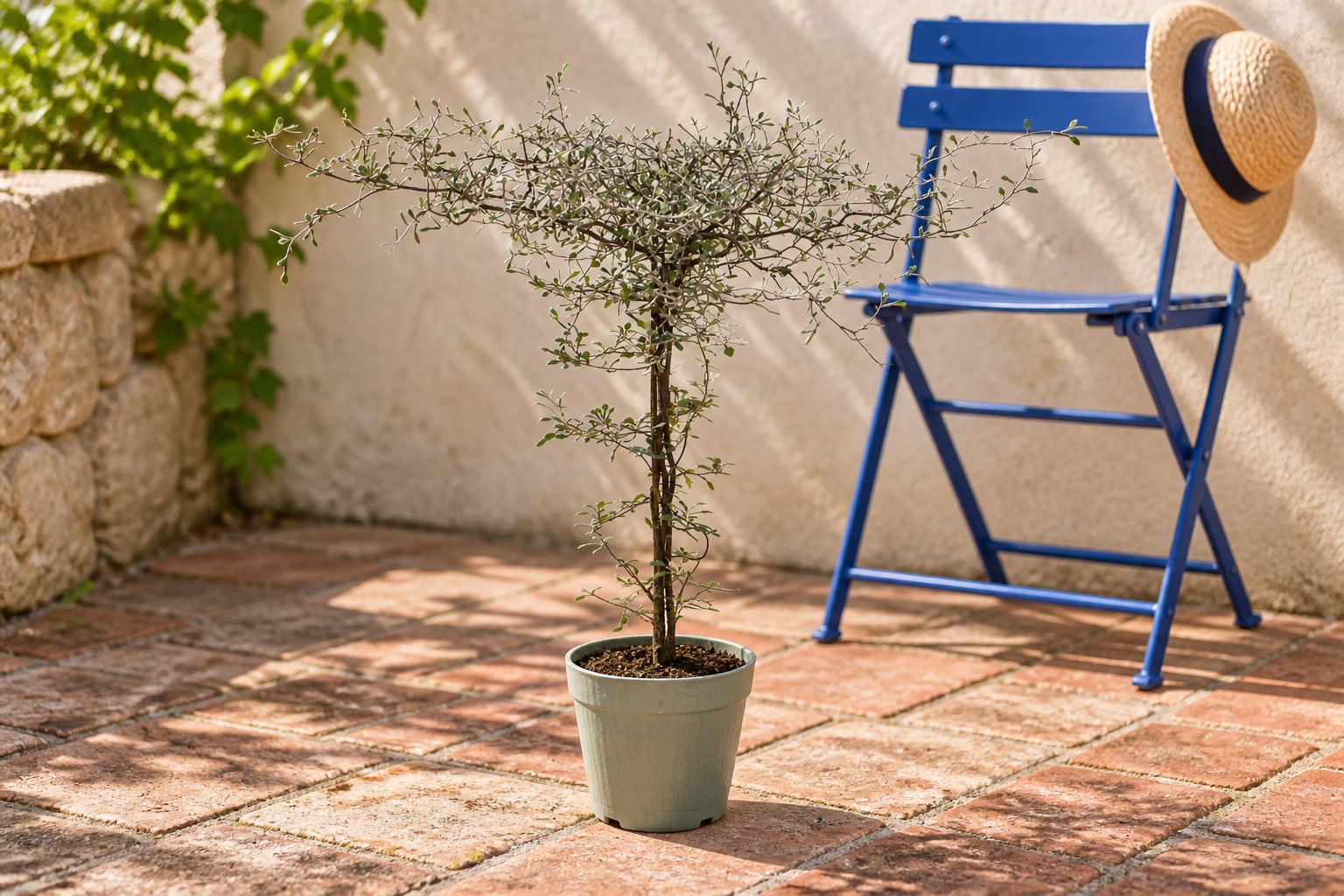
This plant at Exotenherz
Check the shop offer for current availability, price and what is included.
The linked shop is in German. Product details, availability and delivery information are provided in that shop.
Your care table
| Topic | What to do | Why it helps |
|---|---|---|
| Position | Place in a bright to sunny spot protected from cold wind. | Fine branches and small pots dry out quickly in wind. |
| Water | Let the upper compost dry and water the root ball regularly. | Repeated complete drying causes loss of foliage. |
| Drainage | Remove remaining water and keep drainage holes clear. | Constant wetness damages the roots. |
| Compost | Use free-draining container-plant compost. | The compost should retain moisture while still allowing air through. |
| Fertiliser | Feed moderately during growth, following the label. | Requirements decrease in cool winter quarters. |
| Pruning | Shorten long shoots gently while preserving the natural shape. | Its open branching is the distinctive display feature. |
| Winter | Plan a bright, cool, sheltered winter position for small pots. | Outdoor hardiness ratings do not guarantee survival in a pot. |
| Handling | Handle branches carefully; do not use the fruits as food. | This is an ornamental shrub. |
Check the compost and pot weight. The care table explains how far the compost may dry.
Water only when needed. The water should reach the root ball without spilling over the rim.
Remove surplus water from the saucer or cachepot. Then return the plant to a suitable position.
Small leaves, a striking effect
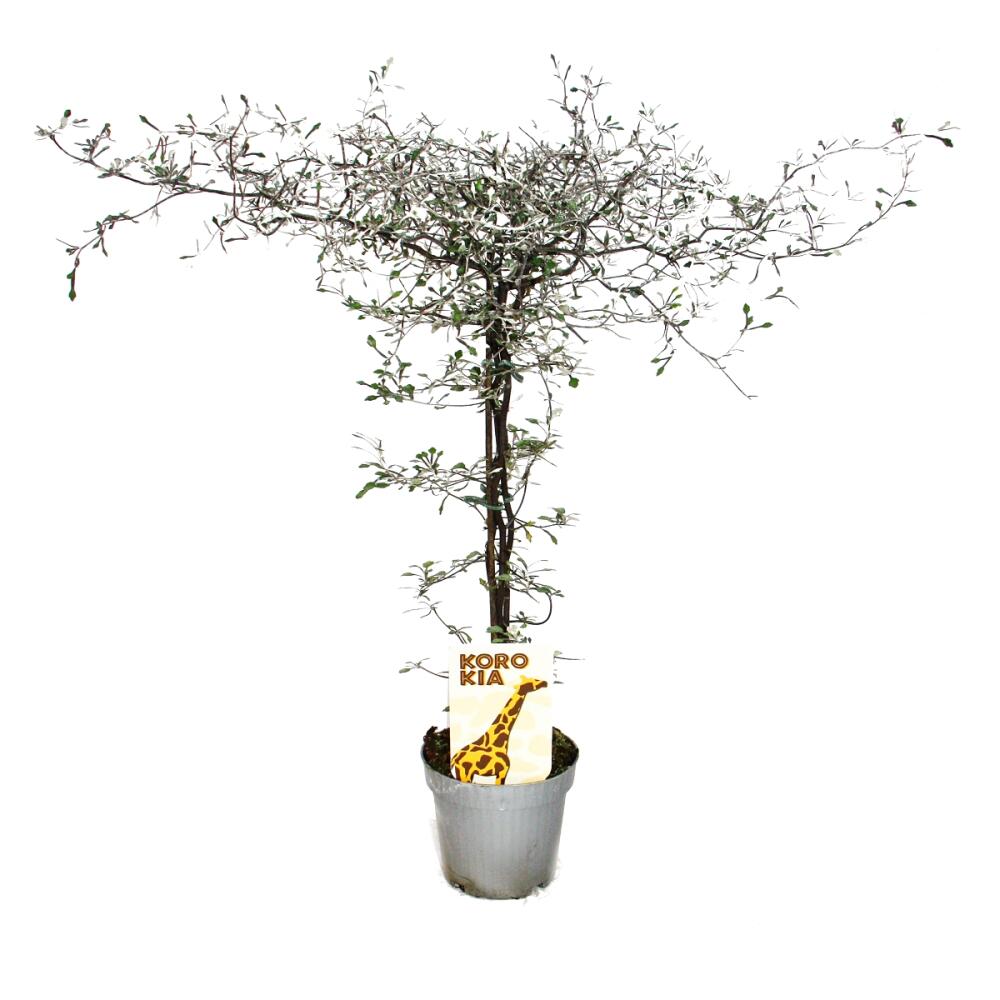
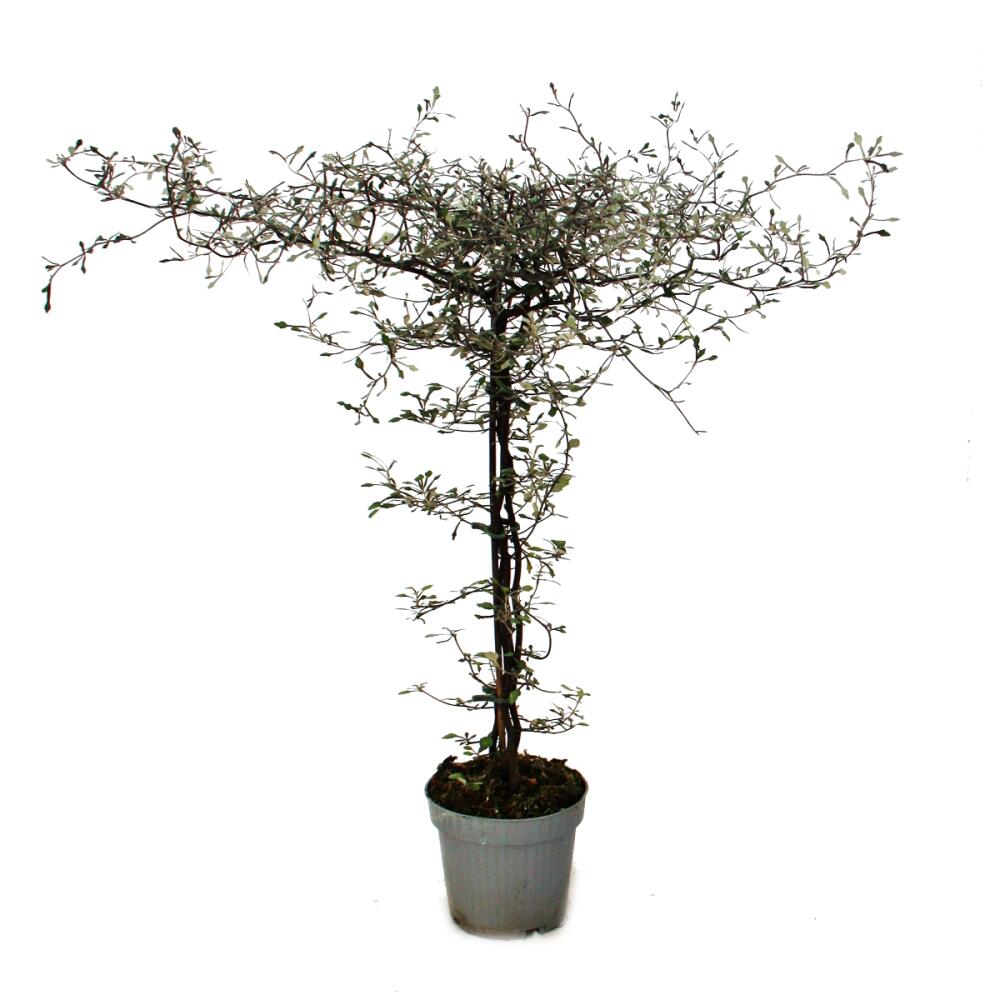
Corokia cotoneaster forms a network of thin, angular branches. Its small leaves leave much of this structure visible. Despite the name cotoneaster, it is not a member of the genus Cotoneaster, but belongs to the Argophyllaceae. Small yellow flowers and later fruits may appear on older, well-tended plants. These are not assumed to be present on a young plant at delivery. Its delicate branching already gives it a distinctive appeal.
A slender shrub for manageable spaces
The offered plant comes in a pot of approximately 12 cm and is approximately 40–50 cm tall. A sheltered terrace position or a bright outdoor entrance displays its silhouette well. The branches are not a rigid wire sculpture; rough handling can break them. Keep it out of narrow walkways. The decorative pot and accessories in the scene are examples. This shrub is not an ideal choice for a permanently heated, dark living room.
Combine sunshine with shelter
A bright to sunny position protected from cold, drying wind is suitable. Acclimatise it gradually to stronger sunshine after winter quarters. In very hot locations, check the small pot regularly because wind and sun dry it out faster than a garden bed. Gentle air movement is welcome, but a draughty balcony with an unprotected root ball may put it under strain. The right position therefore combines light and protection from the weather.
Fine branching does not mean immunity to drought
Check the compost before watering and let the top layer dry slightly. Then water the root ball thoroughly and remove remaining water. A small pot that repeatedly dries out completely may lose leaves and fine branches. Constantly wet compost is equally unsuitable. Assess leaf drop alongside root-ball moisture, wind and temperature. Water much more sparingly during cool overwintering, without letting the roots dry out completely.
Use free-draining compost and preserve the shape gently
Use free-draining container-plant compost and a pot with drainage holes. A specimen that has filled its pot with roots receives a little more room in spring. Feed moderately during active growth, following the label. Long shoots can be shortened carefully as needed to retain the natural branching. Not every corner needs to be symmetrical: the irregular lines are precisely what makes this plant interesting. First distinguish dead branches reliably from shoots that simply have few leaves.
Take a realistic view of winter hardiness in a pot
Specialist hardiness ratings refer to specific conditions and do not guarantee survival in a small pot during a German winter. A bright, cool, frost-protected position is the more reliable plan. Check for pests before bringing it inside and air its winter quarters occasionally, without directing frosty air onto the plant. Any fruits are not offered as food. Corokia remains an ornamental plant whose development can be followed over several seasons.
One plant, several views
Good to know
Is Corokia a cotoneaster?
No. Its species name resembles the genus name Cotoneaster, but botanically it is a different shrub.
Can it stay in a warm living room?
A bright, sheltered outdoor position and cool winter quarters are more suitable in the long term than a dark, warm room.
Why is it losing leaves?
Check dryness, waterlogging, wind and temperature changes. Leaf drop alone does not reveal the cause.
Is it definitely winter-hardy?
No general frost guarantee is given for the small pot. Suitable shelter is the more reliable solution.
Sources and editorial note
Sources checked: 15 September 2026. Product details and delivery contents follow the linked shop listing. Care has been checked against the cited specialist sources and should be adapted to the plant’s condition, position and season.