
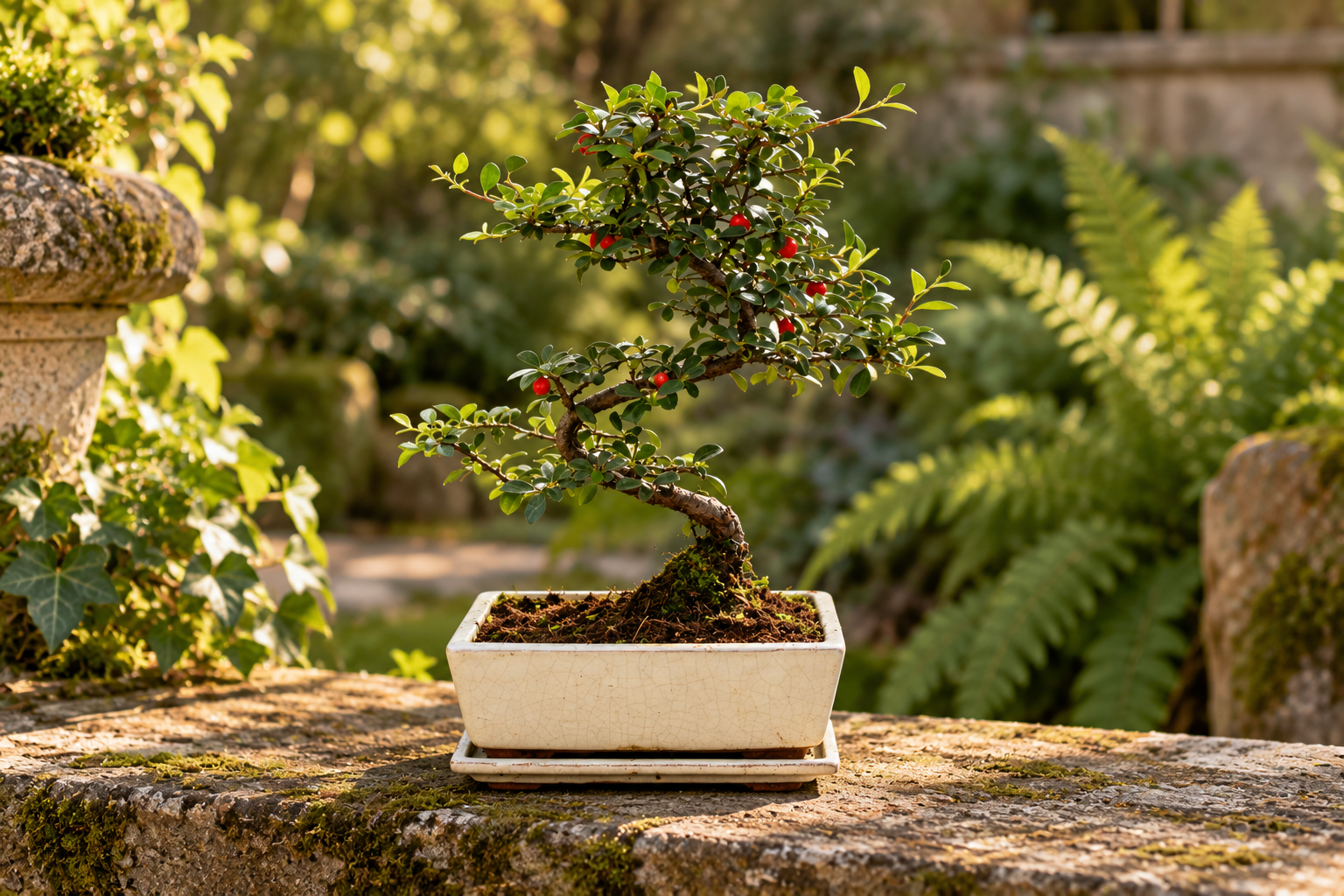
This plant at Exotenherz
Check the shop offer for current availability, price and what is included.
Check the shop for the current price, availability and offer contents.
Your care table
| Topic | What to do | Why it helps |
|---|---|---|
| Position | Grow outdoors in a bright place and acclimatise to sun. | The tree experiences its annual rhythm there. |
| Summer | Check the pot more often in heat and wind. | A small root ball has limited reserves. |
| Water | Slowly supply all the soil before it dries heavily. | Do not judge moisture from one corner alone. |
| Saucer | Remove excess after watering. | Avoid wet feet. |
| Soil | Free-draining bonsai mix and open drainage. | Roots need air. |
| Pruning | Deliberately shorten healthy extended shoots. | Examine flowering and fruiting branches first. |
| Nutrients | Feed during growth according to the fertiliser label. | Not every leaf change demands more food. |
| Winter | Cool and protected, checking the pot root ball. | Do not adopt an unproven exact frost limit. |
Check the compost and pot weight. The care table explains how far the compost may dry.
Water only when needed. The water should reach the root ball without spilling over the rim.
Remove surplus water from the saucer or cachepot. Then return the plant to a suitable position.
A small tree lets the eye wander slowly
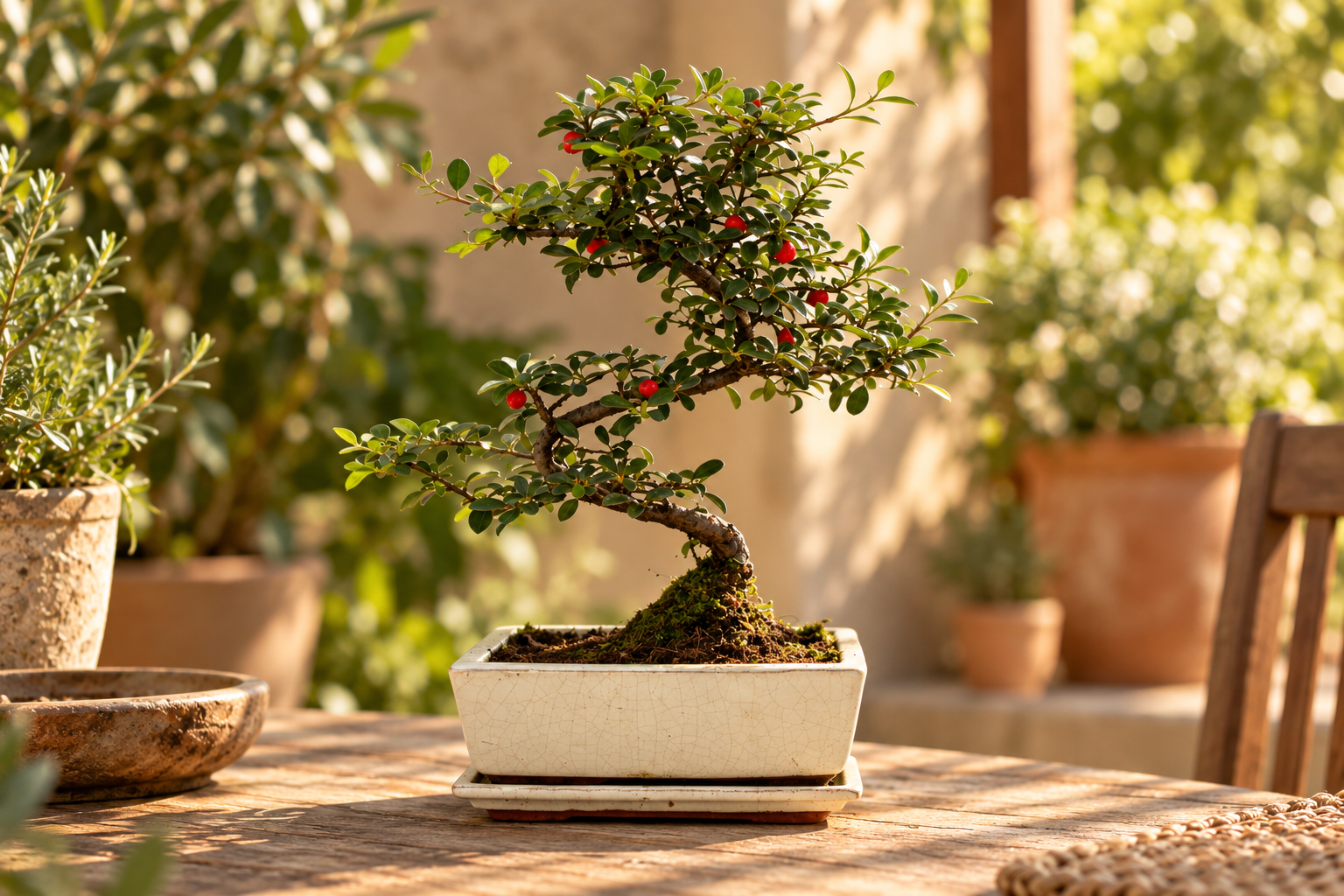
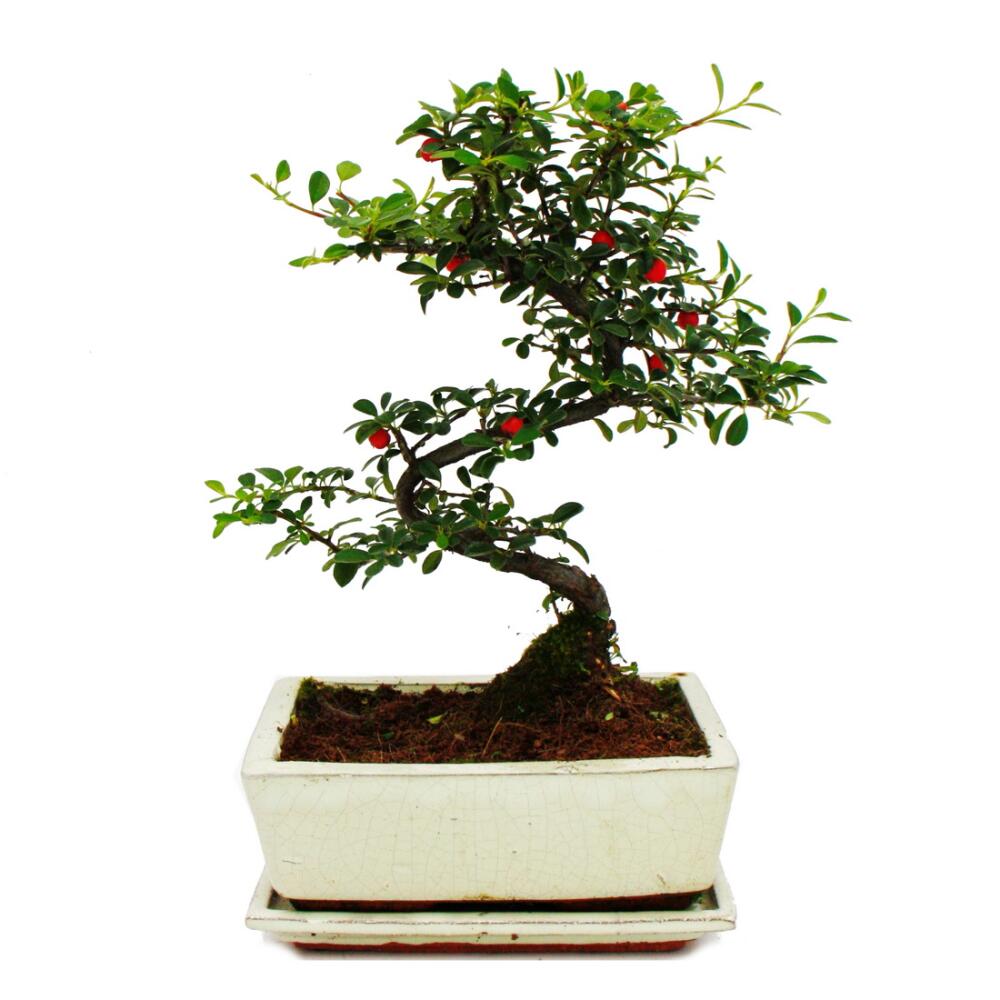
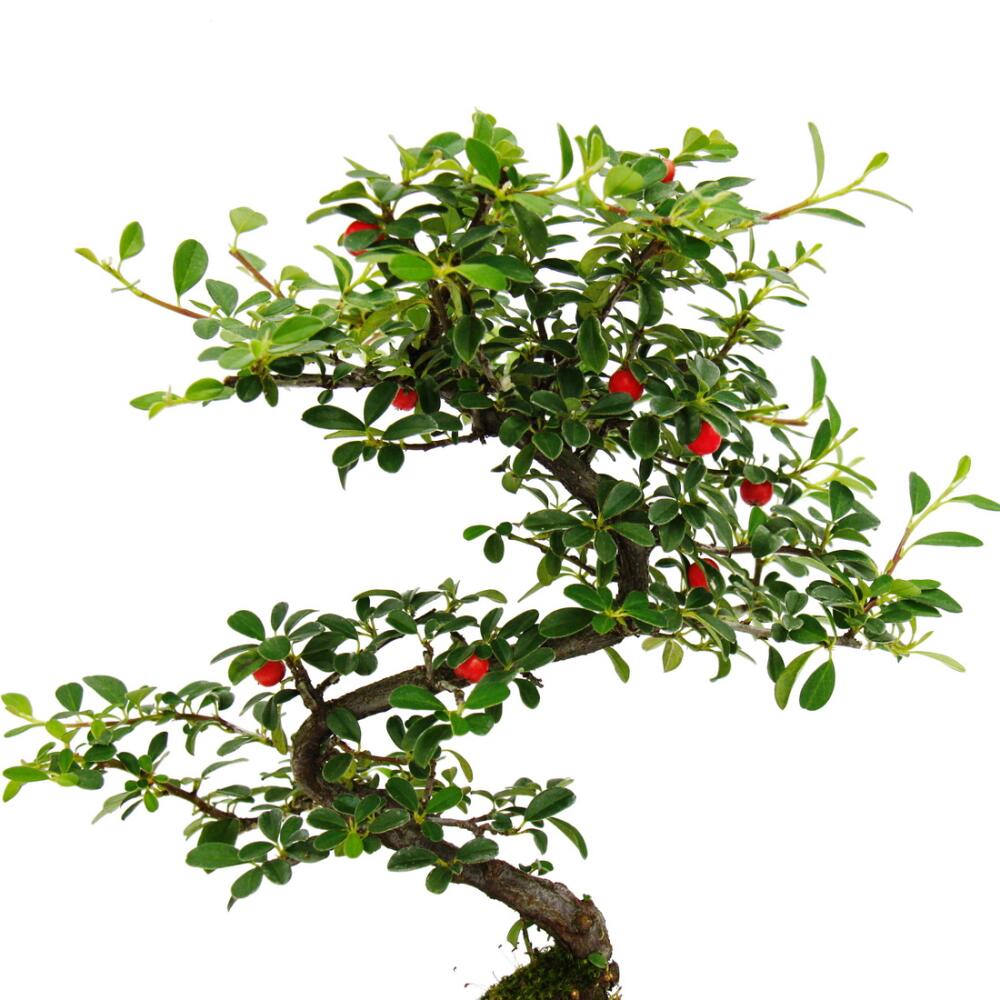
The slender trunk describes a clear movement between pot and crown. Small green leaves are distributed along the branches; a few red fruits add lively points in the original photograph. The spaces are what make this bonsai interesting. Its crown need not become a dense ball for you to recognise a tree. Cotoneaster is the botanical genus name. The offer specifies no individual species. An exact origin, fixed flowering month or reliably evergreen winter crown therefore does not belong unchecked in this portrait.
The pot is small; observation can be thorough
The shop states an approximate age of five to seven years, a pot of about 18 by 12 centimetres and twenty to twenty-five centimetres total height. These details describe the assortment plant, not an unchanging later mature size. Support the pot and its saucer when unpacking. The curved trunk is not a carrying handle. A low garden table brings the fine branches nicely to eye level if the position is bright enough and the container stands safely. Access to the soil remains free for a brief daily check too.
Outdoors the small tree grows with the weather
A bright outdoor position is sensible during growth; in strong summer heat a somewhat sheltered position away from the fiercest midday sun may help. A warm living room does not replace this annual rhythm. Gradually acclimatise the tree to stronger sun after transport and observe leaf positions. Rain often misses a covered pot, while wind can dry the small root space faster. Do not choose the place merely for its attractive background. The small crown should remain accessible and reliably supplied throughout a warm week.
Water spreads across the whole shallow pot
Check surface and root-ball moisture before the small root zone dries heavily. When water is needed, gently water across all the soil until the root ball is supplied and excess can drain. Empty the saucer afterwards. Do not hide an extra amount between dense foliage and trunk on speculation. A thin moss layer alone does not tell you how wet the soil is beneath it. Winter needs decrease but do not disappear. A dry windy week still calls for a checking look at the protected pot.
Develop the tree form gently
Free-draining bonsai compost and open drainage holes make water supply easier. Repot according to root condition, preferably at the beginning of spring growth; pot shape and real space needs count too. Feed healthy growth according to a suitable fertiliser label. Extended shoots can be shortened selectively. Decide first whether a branch’s flowers or fruits should remain. Do not force older stiff branches heavily into a desired curve. The existing trunk line already offers a good theme that quiet small steps can keep visible.
Winter rest protects the root space too
Root-ball protection is crucial for a bonsai in a small pot. A cool sheltered winter position prevents frost, drying wind and wet soil from acting together unchecked. No exact frost threshold for this unnamed offer is derived from the garden hardiness of some Cotoneaster species. Photographing the same front in different seasons is worthwhile in the plant book. Record new branches and fruits actually present. The young tree is understood as living development whose character need not match the same leaf density or red-dot count every month.
One plant, several views
Good to know
Which Cotoneaster species is it?
The specific offer names the genus but no individual species.
Are there always red fruits on the tree?
The original photograph shows fruits; condition and season can change.
Can I keep it permanently in the living room?
The portrait describes outdoor cultivation with a protected winter rest.
Why protect a garden plant in winter?
The small pot root ball is more exposed than roots in established ground.
Is the curved trunk a handle?
No. Support the pot when carrying it.
Sources and editorial note
- Exotenherz: offer and original photographs (03.10.2026)
- RHS – bonsai, pot cultivation and seasons (03.10.2026)
- Bonsai Empire – Cotoneaster in bonsai cultivation (03.10.2026)
Shop offer, article number, GTIN, availability and original images checked directly on 02.10.2026; specialist acceptance on 03.10.2026. Specialist sources read directly. SKU, original images, dimensions and orderability checked directly in the shop on 03.10.2026. Relevant specialist passages read; species profile and specific bonsai pot cultivation distinguished. Informational portrait without a purchase link. No Wawi, server or tool changes. Currently not orderable: informational portrait without a purchase link; social drafts not cleared for sending.