
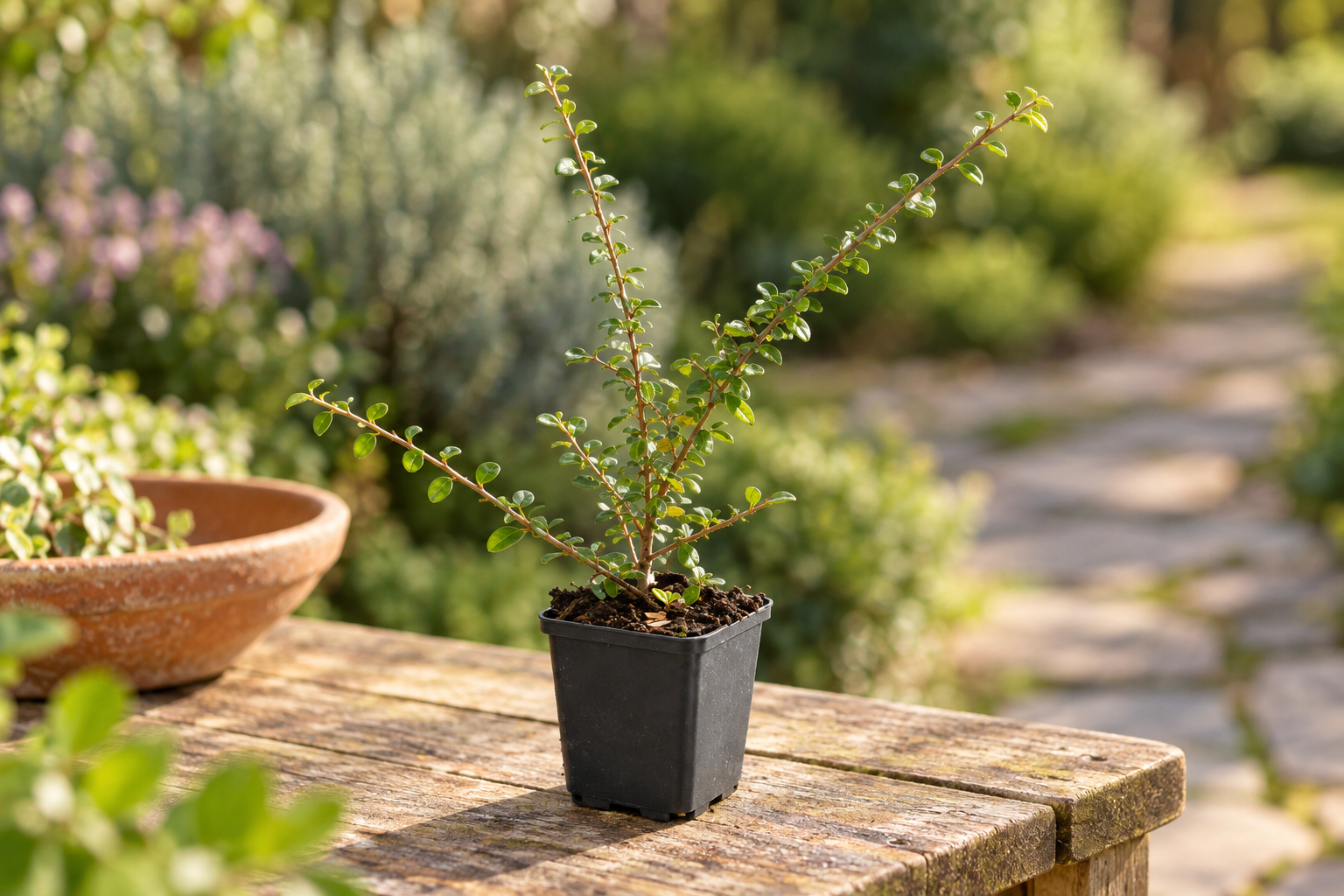
This plant at Exotenherz
Check the shop offer for current availability, price and what is included.
Check the selected shop offer for price, availability and delivery contents.
Your care table
| Topic | What to do | Why it helps |
|---|---|---|
| Light | Choose sun to partial shade with protection from cold wind. | Sufficient light supports flowers and the later fruit display. |
| Space | Allow for long-term width beside paths and neighbouring plants. | The small delivery rootball can develop into a considerably larger shrub. |
| Soil | Choose a well-drained garden spot. | Permanently wet roots are unfavourable even for a robust shrub. |
| Planting | Plant the moist rootball at the same level and water in. | The young root system needs to explore surrounding soil. |
| Water | Check rootball moisture during establishment. | Rain over the area does not always reach a dry pot rootball. |
| Feeding | Feed moderately if needed in spring according to soil and growth. | Heavy feeding replaces neither suitable soil nor light. |
| Pruning | Shorten troublesome branches individually; consider flowers and fruiting shoots. | A general shearing can reduce the later fruit display. |
| Winter | Shelter containers and check drainage and moisture in frost-free weather. | Evergreen foliage and an exposed container rootball also need winter attention. |
Check the compost and pot weight. The care table explains how far the compost may dry.
Water only when needed. The water should reach the root ball without spilling over the rim.
Remove surplus water from the saucer or cachepot. Then return the plant to a suitable position.
A variety with colour after flowering
Coral Beauty combines a calm green leaf display with warm fruit colour later. Its small leaves shine on arching branches; from some distance, the shrub’s shape is noticed first. White flowers may appear in summer. Afterwards, the orange to coral-red ornamental fruits attract attention, their colour suiting this variety well. The RHS variety profile describes this combination specifically. A detail image shows a developed branch, not a guaranteed crop on the delivery plant. If you plant the variety in an easily visible garden position, you can gradually observe the changes between young growth, flowers and fruit formation.
The name remains Coral Beauty; width needs planning
In the shop, the groundcover cotoneaster is offered as Cotoneaster suecicus Coral Beauty. RHS lists the hybrid as Cotoneaster × suecicus and also names Cotoneaster dammeri Coral Beauty as a synonym. This is the same cultivar portrait here. The plant delivered in a 9 cm pot measures around 10 to 25 cm including the pot. In the long term, RHS gives around 0.5 to 1 m height and 1.5 to 2.5 m width. That is substantially more than a small cushion. The shop planting distance of around 50 cm describes an area planting; it does not promise that every shrub remains that narrow permanently.
Consider the eventual edge before planting
Coral Beauty can develop well in sun to partial shade. Plan space in front of a wall, on a bank or beside a path so that broad branches have room later. A low wall edge may display the spreading framework, but a narrow passage needs regular attention. Also check whether cold wind hits the position strongly. The soil must drain water. A hollow that remains wet long after rain is not a favourable spot. Conversely, earth at the base of a wall may stay surprisingly dry. Look at the actual soil rather than light conditions alone.
From the small pot into garden soil
Spring and early autumn are suitable planting periods as long as soil is frost-free and not waterlogged. Moisten the rootball before carefully releasing the pot. Keep the previous planting depth. Fill soil around the rootball, firm gently and water so that it reaches the young root zone. Check precisely there during the first weeks. A vigorous shrub in a later garden image has more roots than the delivery plant. Its robustness therefore cannot be transferred to a newly planted 9 cm rootball. Support it during dryness and skip extra watering when the soil is still moist.
A container must grow with the shrub
Coral Beauty can initially also be observed in an outdoor container. Choose a sufficiently large pot with reliable drainage and well-drained soil. The variety can occupy considerable space in the long term; a small balcony container therefore does not suit every development stage. Check whether roots and branches still have enough room. Moisten the rootball when watering and remove standing water. Keep an accessible spot for moisture checks beneath a dense canopy of branches. Spring feeding follows soil and growth. A strong new shoot is not a reason to add still more fertiliser preventively.
Guide branches rather than cut off the whole shrub
The variety works well with loose, broad lines. Remove dead branches and selectively shorten shoots interfering with paths or neighbours. Look for flowers or developing fruit before pruning. Shearing the entire area evenly may remove a large proportion of them. Treat the orange to red fruits as ornamental fruits, not edible produce. If sticky leaves or dead shoot tips attract attention, inspect the affected spot closely first rather than applying several treatments simultaneously. One damaged branch does not establish a particular disease. If damage progresses, a specific expert diagnosis helps.
Check outside the main season too
An established garden shrub needs different attention from a pot on a terrace. In a container, the rootball chills more strongly but can also become too dry under cover. Position it sheltered, keep drainage open and check moisture on frost-free days. Do not add water to frozen soil. In spring, assess foliage and growth calmly. Not every weather mark needs severe pruning. If Coral Beauty grows sparsely, looking at shading, soil and space needs helps more than a rigid care calendar. The attractive fruit display comes from suitable development, not from one single action.
One plant, several views
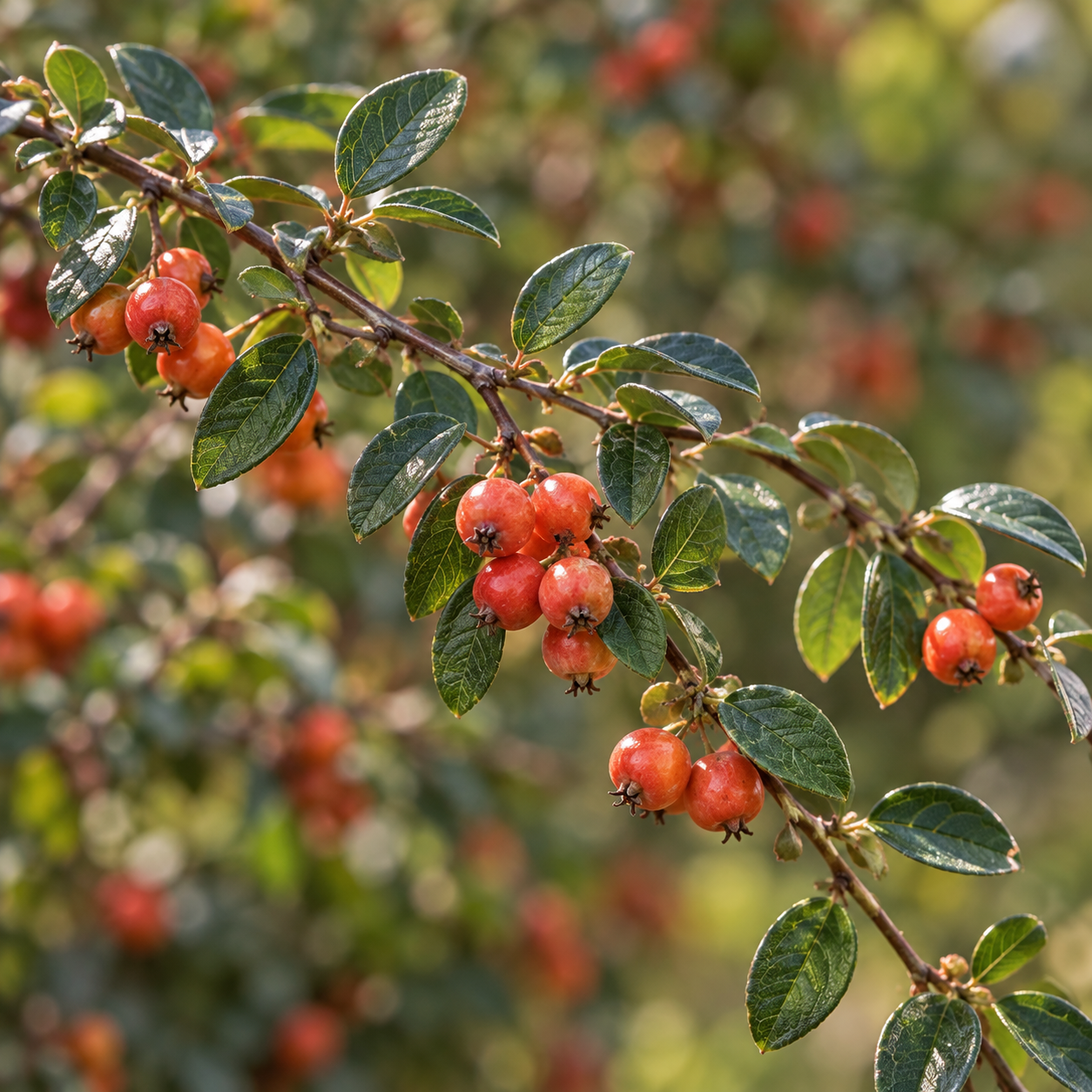
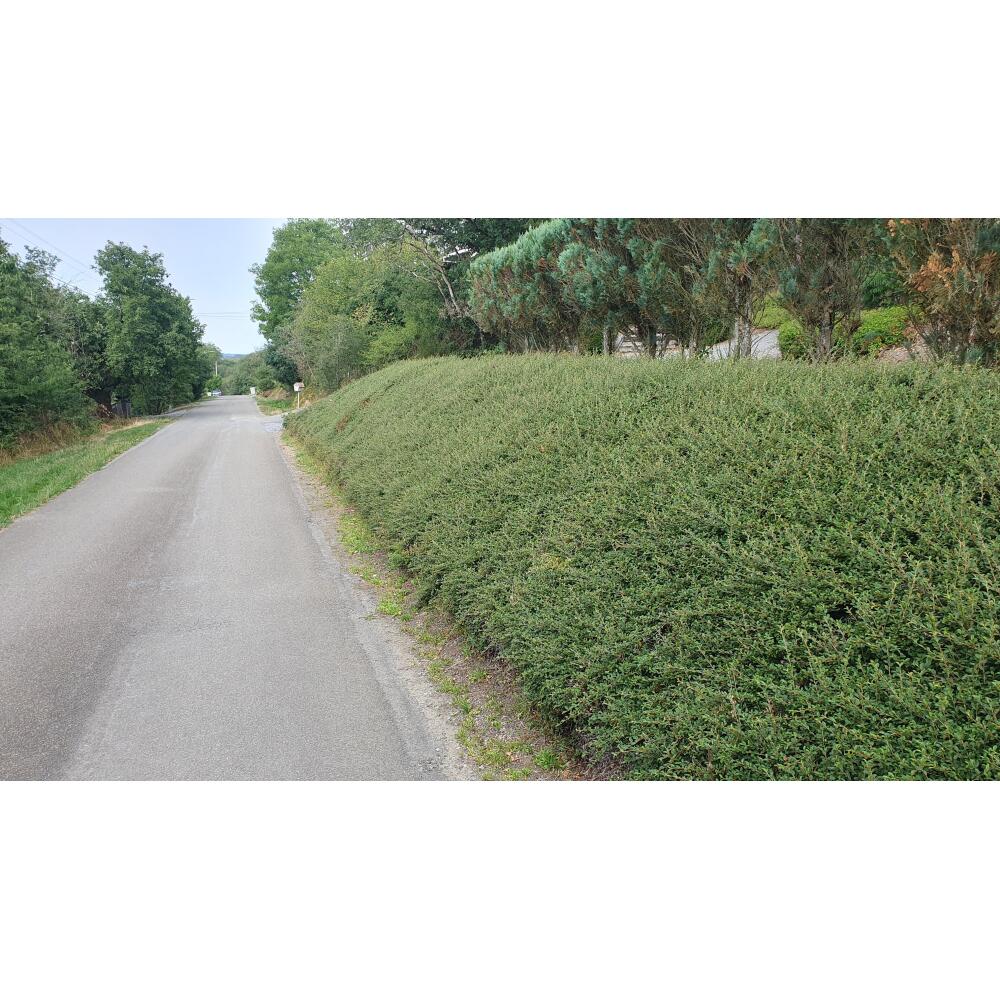
Good to know
Does Coral Beauty stay only 20 cm high?
No. The RHS variety profile gives around 0.5–1 m height and 1.5–2.5 m width for a developed shrub. Shop delivery height is separate.
What does the cross in the botanical name mean?
RHS lists the variety as Cotoneaster × suecicus. The cross denotes a botanical hybrid; the recognisable shop variety name Coral Beauty is retained.
What colour are its fruits?
RHS describes them as orange. Depending on development, they may appear coral red to orange-red; they are ornamental fruits.
Can it grow by a low wall?
Yes, if soil is well-drained and there is enough room for broad growth. Check moisture in the young root zone at the wall base.
Is 50 cm planting distance its final width?
No. That is the shop guide for area plantings. An individual shrub can spread considerably farther over time.
Why does my young plant not have fruits yet?
Flowers and fruits depend on development, season and position. Delivery includes a young plant without guaranteed fruit coverage.
Sources and editorial note
- Exotenherz: offer and original images (03.10.2026)
- RHS: Cotoneaster × suecicus Coral Beauty – variety profile (03.10.2026)
- RHS: cotoneaster in the garden – planting and care (03.10.2026)
- Exotenherz: verified 6-plant child offer (03.10.2026)
- Exotenherz: verified 12-plant child offer (03.10.2026)
- Exotenherz: verified 20-plant child offer (03.10.2026)
- Exotenherz: verified 40-plant child offer (03.10.2026)
- Exotenherz: verified 60-plant child offer (03.10.2026)
Shop offer, article number, availability and original images checked directly on 03.10.2026. Specialist sources read directly. RHS variety profile read directly: evergreen, white summer flowers, orange fruits, 0.5–1 m height and 1.5–2.5 m width, development over 5–10 years; synonyms checked. Shop offer 9 cm, 10–25 cm and about 50 cm spacing distinguished from final size. No invented exact monthly flowering sequence. All five child offers individually read freshly and documented with SKU, GTIN where present and availability; orderable quantities: 6, 12, 60. The scene shows one plant; quantity follows the selected set.