
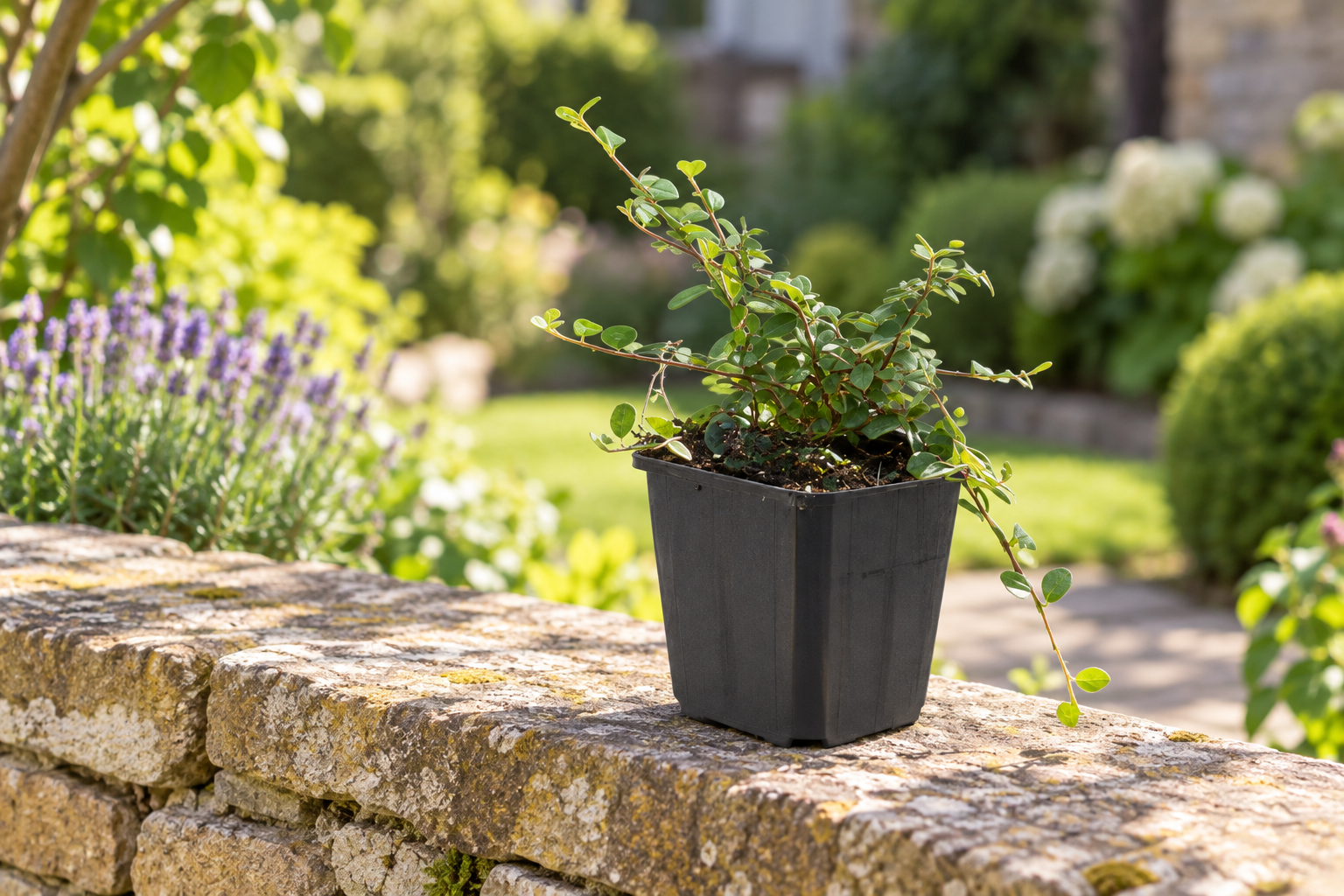
This plant at Exotenherz
Check the shop offer for current availability, price and what is included.
Check the selected shop offer for price, availability and delivery contents.
Your care table
| Topic | What to do | Why it helps |
|---|---|---|
| Position | Choose a bright garden edge with space for flat branches. | This very low plant is easily hidden beside tall perennials. |
| Planting | Plant the moist rootball at its previous level and water in. | Little roots need contact with the neighbouring garden soil. |
| Spacing | Use the shop offer’s 30–50 cm as a planning range. | A closer start closes the area earlier but leaves less space between plants. |
| Water | During establishment check moisture directly in the rootball. | The small retail pot does not yet have the root reserves of a garden planting. |
| Soil | Use well-drained garden soil; avoid compacted wet hollows. | Flat growth does not mean a preference for permanently wet roots. |
| Container | Choose a sufficiently large container with open holes. | A small pot dries faster on warm stone. |
| Pruning | Selectively remove only troublesome edge shoots and dead branches. | The natural low structure should be retained. |
| Winter | Shelter the pot rootball and check during frost-free weather. | Evergreens lose water even in winter; a frozen rootball is not watered. |
Check the compost and pot weight. The care table explains how far the compost may dry.
Water only when needed. The water should reach the root ball without spilling over the rim.
Remove surplus water from the saucer or cachepot. Then return the plant to a suitable position.
Small leaves noticed at close quarters
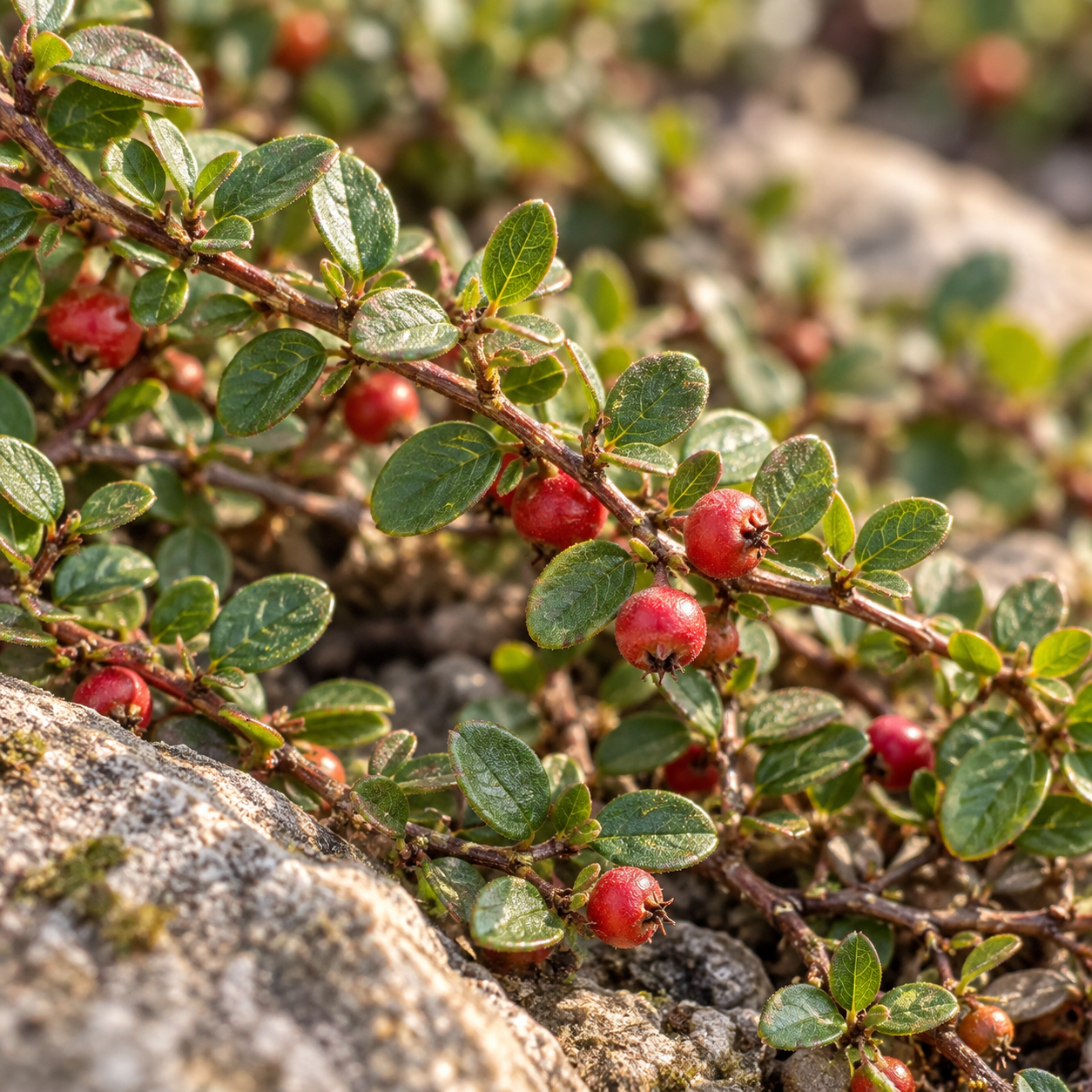
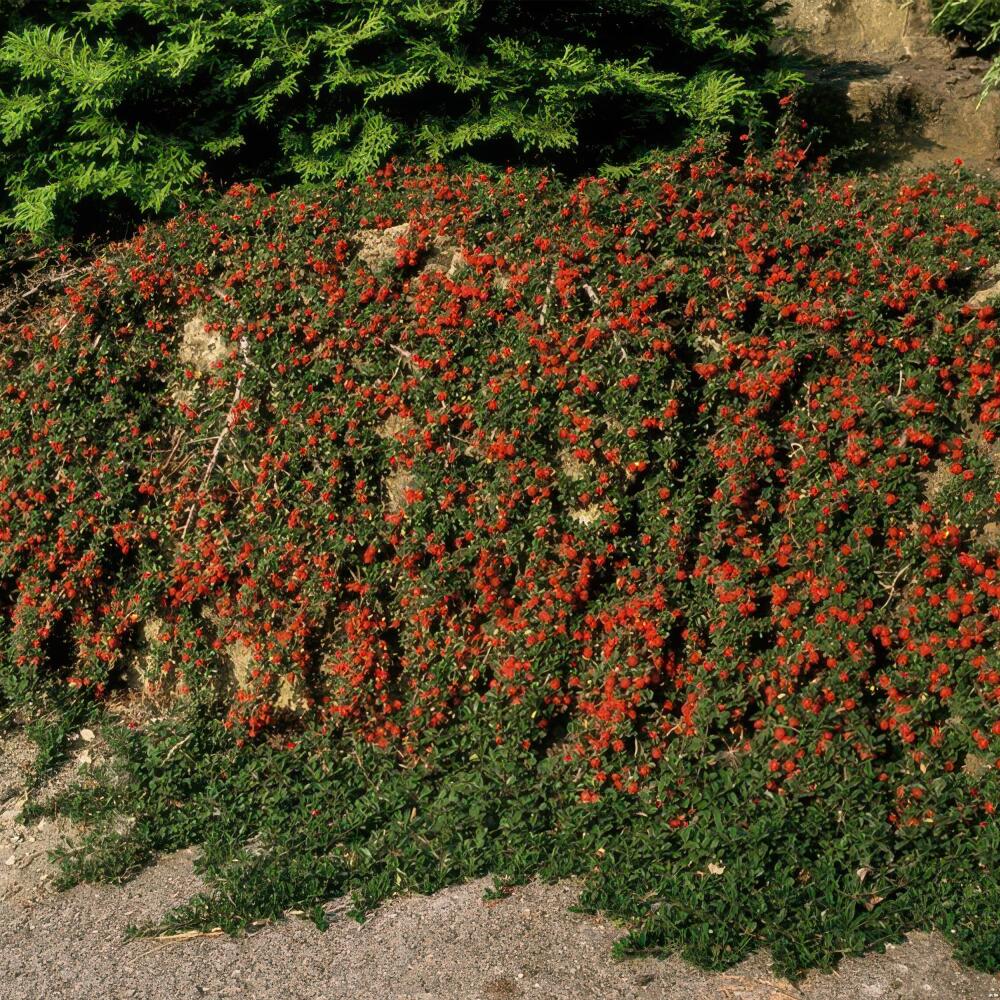
Streibs Findling is a plant for a second look. Its small dark leaves grow on fine branches and look especially clear against pale stone. It does not form a tall centrepiece but accompanies a garden edge, a low wall or an open bed boundary. White flowers and red ornamental fruits may join later. The VanDusen Botanical Garden plant catalogue lists the cultivar as a particularly low dwarf cotoneaster. This quiet appearance is its appeal: you need not stage the plant dramatically to discover something in it. A place you pass and can look at is enough.
The delivery plant is not a finished carpet yet
The shop offer comprises a young plant in a 9 cm pot at about 10 to 25 cm total height including the pot. The catalogue gives approximately 15 cm height for a developed flat planting. These figures do not conflict: the pot forms part of delivery height, and young branches may initially stand differently from older spread-out shoots. The shop gives 30 to 50 cm planting distance. Think first whether you want a dense area or individual plants between stones. A specimen planted farther apart needs time to fill its place. A small pot does not supply instantly closed groundcover.
A garden position at ground level
Give Streibs Findling sufficient light and soil that lets rainwater drain away. Its growth is easy to observe along a low stone edge. Between tall, closely spaced perennials the little shrub would quickly disappear. Therefore check not only sun at planting time but also the neighbours in summer. A dry wall margin needs attention during establishment; a wet hollow is also unsuitable. The plant belongs in the garden or a suitable outdoor container. An attractive scene on a garden step shows a planting place, not a permanent indoor position.
Begin carefully, intervene less later
Prefer planting in spring or early autumn when soil is workable, frost-free and not waterlogged. Slowly moisten a dry rootball before removing its pot. Hold the plant by pot and rootball, not by its delicate branches. After setting at its previous level, firm the soil and water thoroughly. Then check the little root zone: moisture farther out does not prove that the former pot rootball received water. Check more often on warm, windy days. Water slowly when needed instead of giving many little sips to a surface already moist.
The fine branches remain visible in a container
A broad container can display the low plant well. Choose enough root space and open drainage. The 9 cm retail pot is not a long-term solution on hot stone. Remove standing water from a cachepot or saucer. If branches later extend over the rim, moisture checks remain important; foliage can hide the soil. In spring adapt feeding to soil and new growth. Normally nourished soil does not need large precautionary fertiliser doses. First observe whether the plant grows well, and do not change water, light and feeding simultaneously.
Look at flowers and fruits patiently
The specialist catalogue lists June for the small white flowers. Weather, plant age and position may shift the actual start. The later fruit effect is also not a fixed part of delivery. Treat red fruits as ornament, not snack fruit. To limit an edge, shorten individual troublesome shoots. A broad shearing may needlessly remove flowering and fruiting branches. Before cutting, gently lift a few branches and look at their course. This keeps the low natural form visible instead of turning the little plant into a rigid clipped edge.
Support the little rootball through winter too
An established garden planting and an outdoor pot have different reserves. In a container cold affects roots more strongly; wind can additionally dry the rootball. Place the pot in shelter and check moisture on frost-free days. Do not water frozen soil and let surplus water drain. In spring inspect individual dry branches before cutting back the whole plant. With sparse growth look first at shading and root moisture. A small shrub gains its character through development. Open areas in the first year are therefore not automatically a care mistake.
One plant, several views
Good to know
How low does Streibs Findling stay?
The directly read VanDusen catalogue gives about 15 cm for the flat planting. This is a guide; individual young branches may stand differently.
Why does the shop give 10–25 cm total height?
The delivery measurement includes the 9 cm pot. It describes the young retail plant, not its eventual height above garden soil.
Which species belongs to the cultivar name?
The shop and specialist reference used list the plant as Cotoneaster Streibs Findling. No additional, unclearly confirmed species assignment is asserted here.
When do I plant it?
Spring or early autumn can be planned well. Frost-free, workable soil and reliable water during establishment are decisive.
Can I eat the red fruits?
Treat them as ornamental fruits and do not use them as snack fruit.
How closely should I plant?
The shop gives 30–50 cm. Choose within this range according to area, neighbours and desired initial density.
Sources and editorial note
- Exotenherz: offer and original images (03.10.2026)
- VanDusen Botanical Garden: plant catalogue 2017, Cotoneaster Streibs Findling, page 25 (03.10.2026)
- RHS: cotoneaster in the garden – planting and care (03.10.2026)
- Exotenherz: checked child offer, set of 6 (03.10.2026)
- Exotenherz: checked child offer, set of 12 (03.10.2026)
- Exotenherz: checked child offer, set of 20 (03.10.2026)
- Exotenherz: checked child offer, set of 40 (03.10.2026)
- Exotenherz: checked child offer, set of 60 (03.10.2026)
Shop offer, article number, availability and original images checked directly on 03.10.2026. Specialist sources read directly. VanDusen catalogue page 25 read directly: cultivar name without species assignment, approx. 15 cm, evergreen, white in June, red fruits. Shop delivery measurements and spacing kept separate; RHS genus care read directly. No unsupported species added. All five child offers freshly read individually and documented with SKU, GTIN where present and availability; orderable quantities: 6, 12, 60. Scene shows a single plant; quantity follows the selected set.