
This plant at Exotenherz
Check the shop offer for current availability, price and what is included.
The linked shop is in German. Product details, availability and delivery information are provided in that shop.
Your care table
| Topic | What to do | Why it helps |
|---|---|---|
| Light | Keep very bright and acclimatise gradually to sun. | Light supports strong, short shoots. |
| Water | Let the root ball dry out noticeably between waterings. | Fleshy leaves store moisture. |
| Drainage | Remove leftover water after watering. | Constant wetness puts the roots at risk. |
| Compost | Use a freely draining succulent mix with mineral components. | The root ball should regain air quickly. |
| Leaves | Do not rub the surface vigorously or treat it with leaf shine. | This preserves the natural leaf coating. |
| Feeding | During growth, feed sparingly according to the label. | This small specimen does not need heavy feeding. |
| Winter | Keep bright and frost-free and water considerably less. | Little growth reduces its requirements. |
| Handling | Do not eat; check leaf bases for mealybugs. | It is an ornamental plant and needs monitoring. |
Check the compost and pot weight. The care table explains how far the compost may dry.
Water only when needed. The water should reach the root ball without spilling over the rim.
Remove surplus water from the saucer or cachepot. Then return the plant to a suitable position.
A different Crassula from the classic jade plant
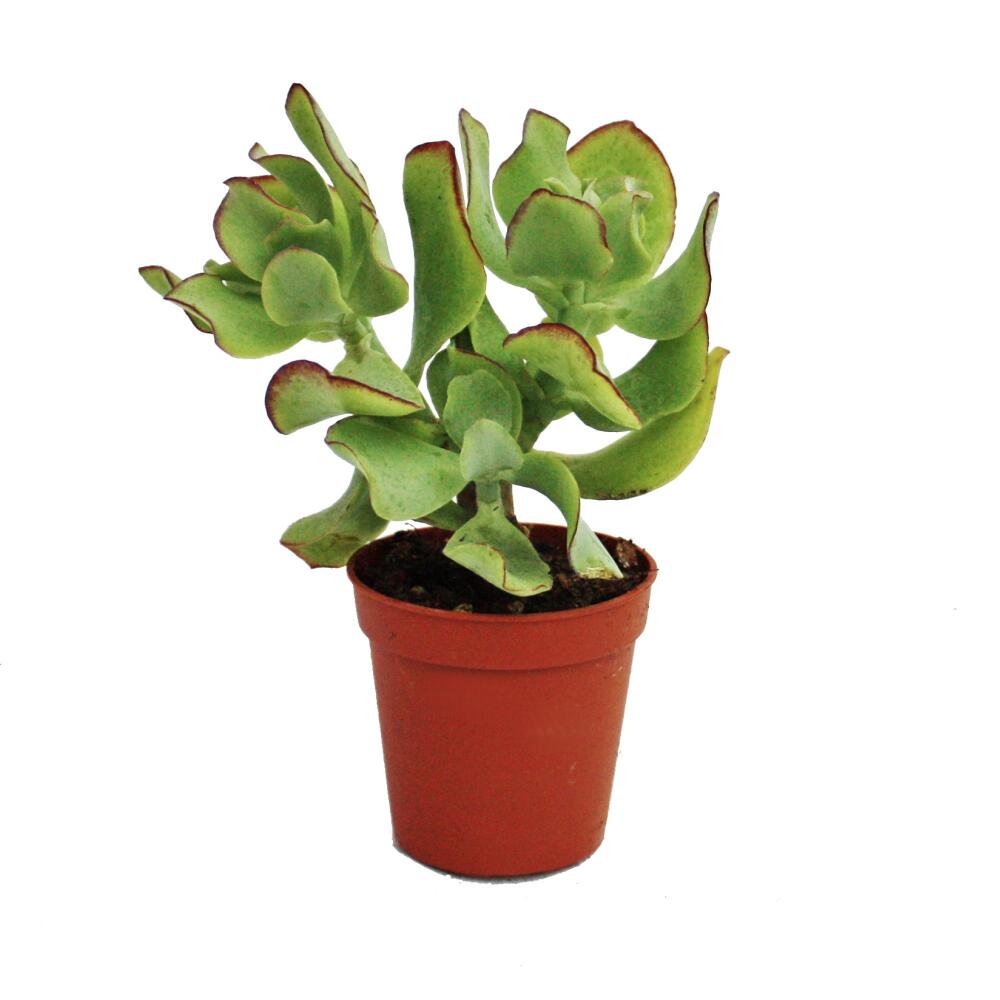
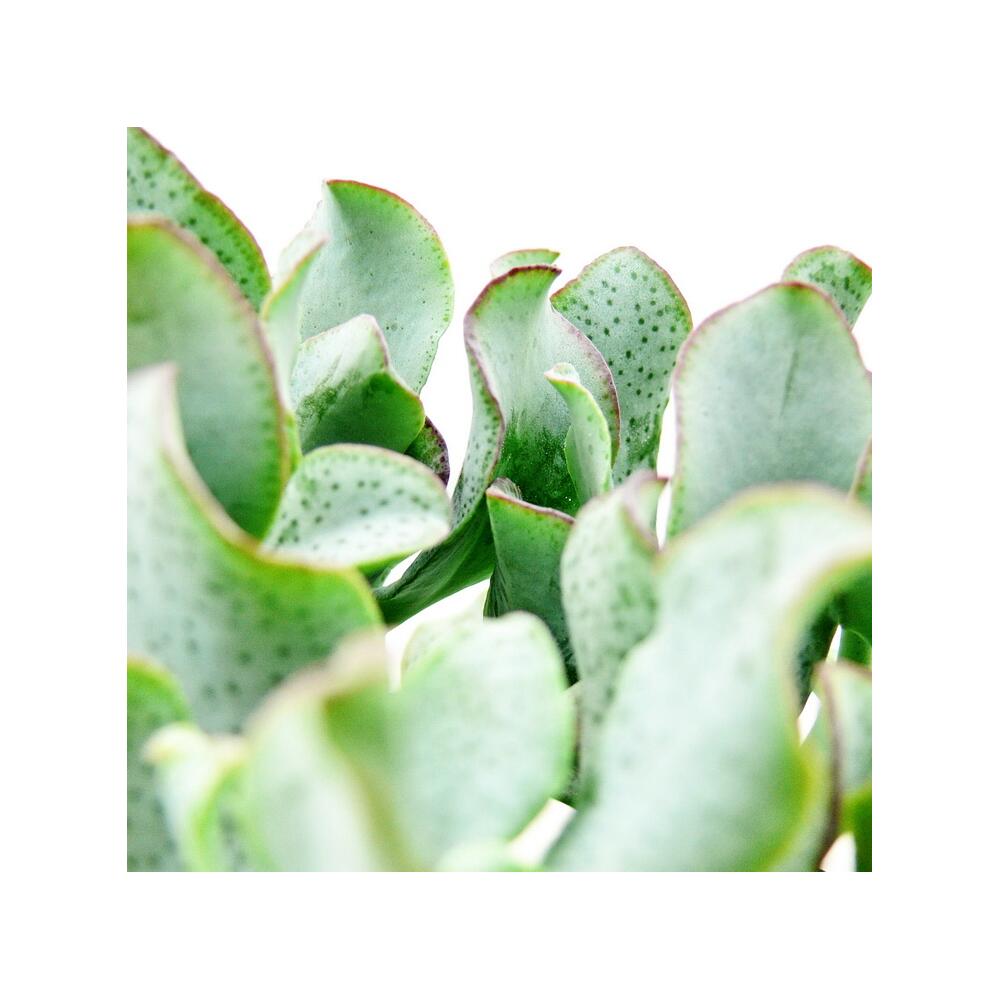
Crassula arborescens has rounded to slightly wavy, fleshy leaves with a grey-green to bluish appearance. Reddish edges can emphasise their outlines. The original photo shows a young, branching plant with wavy leaf surfaces. No particular additional variety is assigned here without verified information. Unlike the frequently offered Crassula ovata, it has its own leaf character. As it ages, the shoots become stronger and may turn woody.
A miniature is not yet a little tree
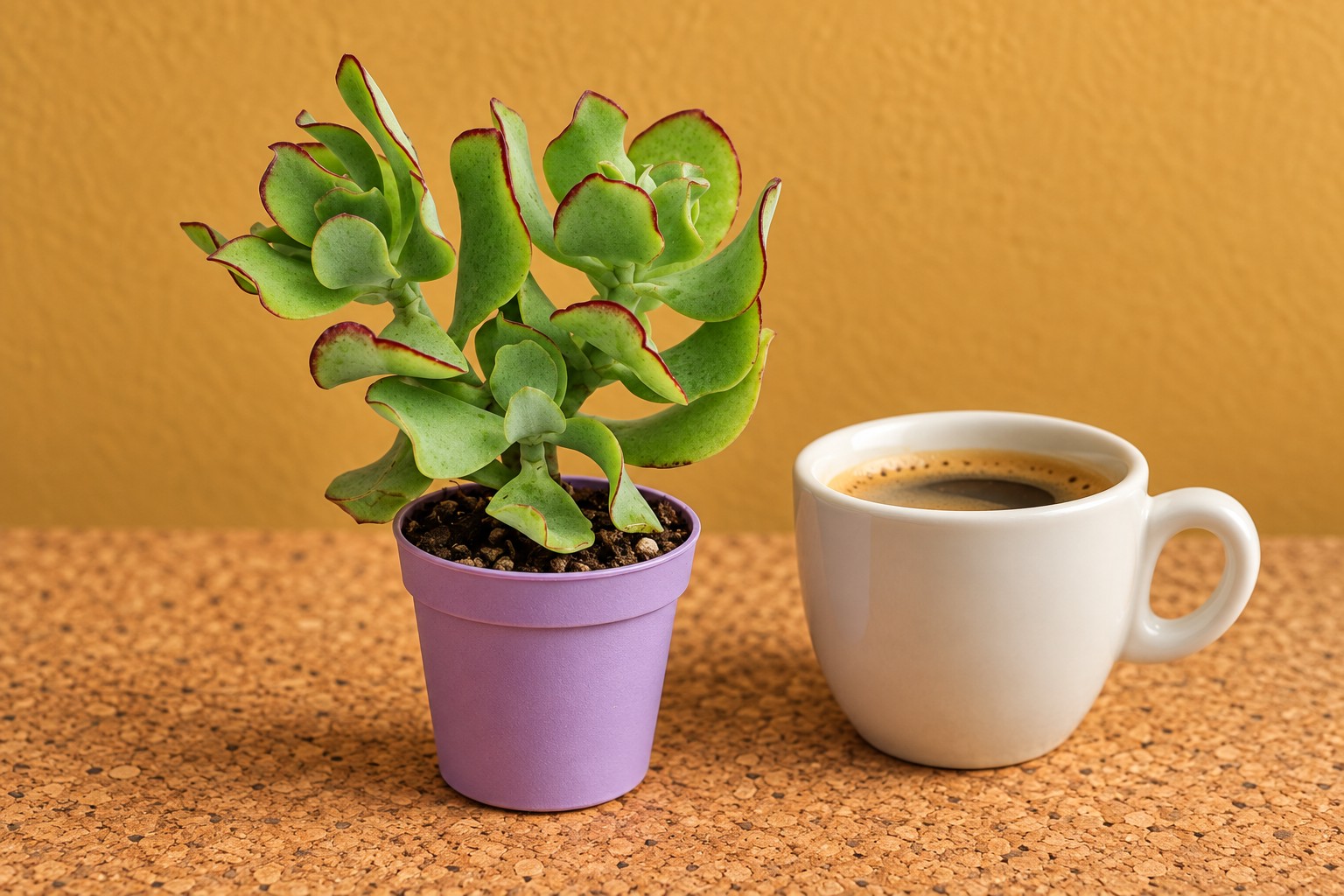
The checked version is in a 5.5 cm pot and approximately 8–10 cm tall. The interior scene therefore shows a small succulent beside a suitable size reference. Its later development needs time and a bright position. An oversized pot will not automatically make it grow faster. The outer pot and decoration are styling ideas. Leaf count, branching and edge colour vary in living plants and remain dependent on the actual condition at delivery.
Light keeps the shape strong
A very bright position is important. After transport or darker conditions, introduce direct sunshine gradually. Insufficient light tends to produce long, soft shoots with wider spaces between the leaves. Do not deliberately force intense red colouring through drought stress. If a striking change occurs, also check heat and root-ball moisture. Keep the plant frost-free. A bright, relatively cool winter position can be combined with substantially reduced watering.
Fleshy leaves are a reserve
Let the compost dry out noticeably to completely between waterings. Water thoroughly when needed, then remove leftover water. Very soft or falling leaves can occur when the compost is too wet, but severe dryness also leaves marks. Check the root ball before changing anything. The small pot should neither be kept wet daily nor left entirely unobserved. During quiet winter weeks, substantially less water is usually needed.
Protecting the leaves’ surface
Do not rub the foliage vigorously or use leaf-shine products. The natural surface is part of the plant’s protection. Remove dust gently. Freely draining succulent compost with mineral components and a pot with drainage holes provide the foundation. Repot only when needed, without burying the base more deeply. Feed sparingly according to the label during active growth; overfeeding cannot usefully accelerate the slow development of strong shoots.
Guiding branching with patience
Targeted pruning may allow a shape adjustment later, but is unnecessary for a small, healthy specimen. Healthy cut shoots can be rooted after their cut surfaces have dried; do not needlessly weaken the young parent plant for this. Check leaf bases for mealybugs. Plant parts should not be eaten and should be kept away from nibbling pets. A clean, bright position and dry intervals are the most important everyday choices.
One plant, several views
Good to know
Is this the same jade plant as Crassula ovata?
No. Crassula arborescens is a separate species with different leaf character.
Are reddish edges normal?
They can be part of its appearance. Even so, check a sudden marked change for light, heat or drought stress.
Why are leaves falling?
Check root-ball moisture and root condition in particular. Both wetness problems and severe dryness may play a part.
Must I prune the young plant?
No. A healthy miniature can become stronger first; later shape adjustments should be targeted and gentle.
Sources and editorial note
Sources checked: 15 September 2026. Product information and the contents of delivery follow the linked shop offer. Care advice was checked against the cited specialist sources and should still be adapted to the plant’s condition, position and season.