This plant at Exotenherz
Check the shop offer for current availability, price and what is included.
Check the shop for the current price, availability and offer contents.
Your care table
| Topic | What to do | Why it helps |
|---|---|---|
| Light | Very bright; increase sun slowly after transport. | The fine shoots need a growing position. |
| Water | Check the small root ball after partial drying. | Pot size and warmth alter consumption. |
| Drainage | Remove all excess. | No hidden leftover water. |
| Compost | Free-draining structured succulent mix. | Fine roots need air. |
| Pruning | Shorten healthy extended shoots when space is needed. | Dense short tips may grow. |
| Nutrients | Feed sparingly during growth according to the label. | Slow growth needs no heavy applications. |
| Checks | Inspect the dense centre for dead parts and unusual signs. | Discover changes in time. |
| Winter | Very bright and frost-free; water according to lower consumption. | Do not continue the summer amount unchanged. |
Check the compost and pot weight. The care table explains how far the compost may dry.
Water only when needed. The water should reach the root ball without spilling over the rim.
Remove surplus water from the saucer or cachepot. Then return the plant to a suitable position.
The green shoots look like fine braided cords
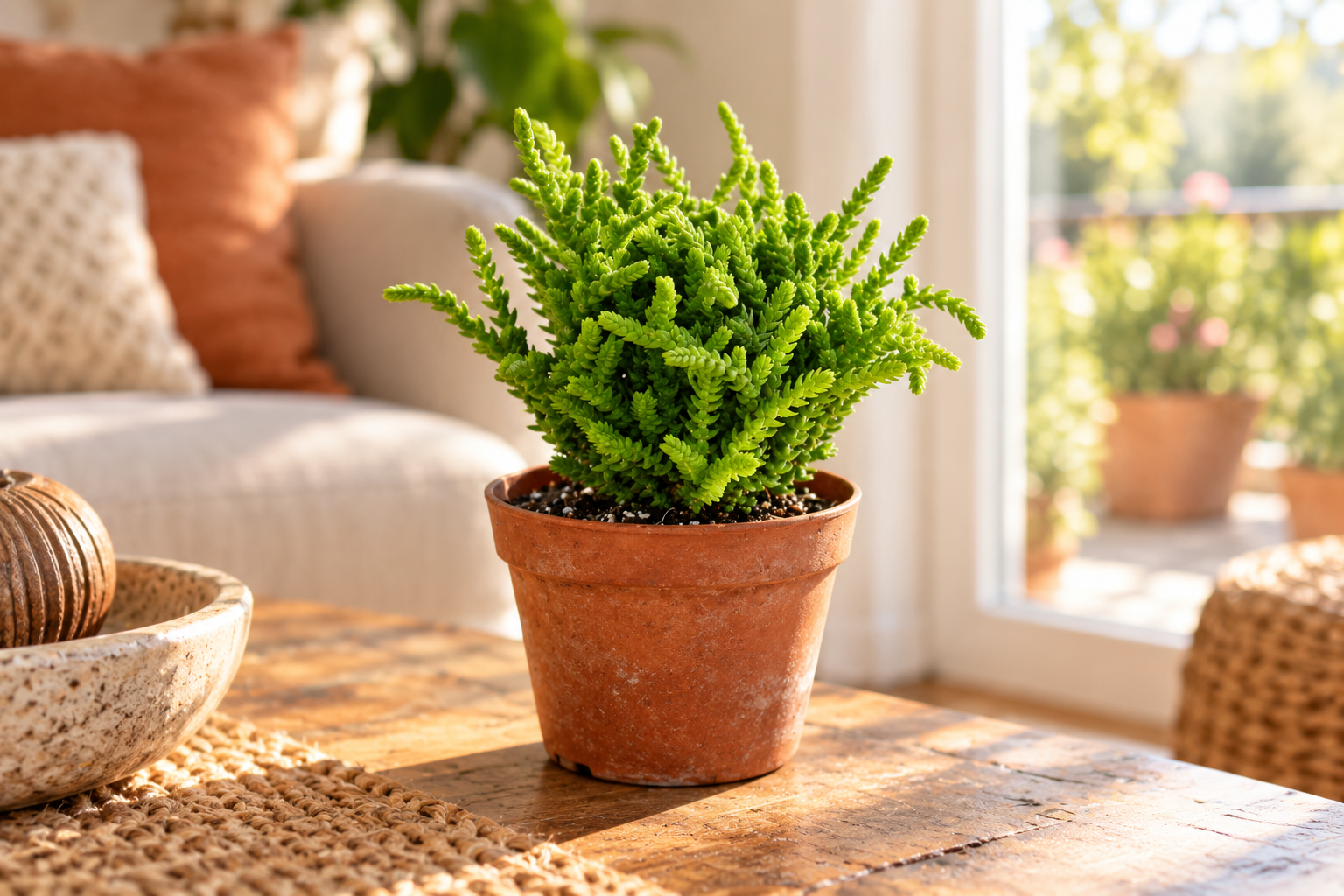
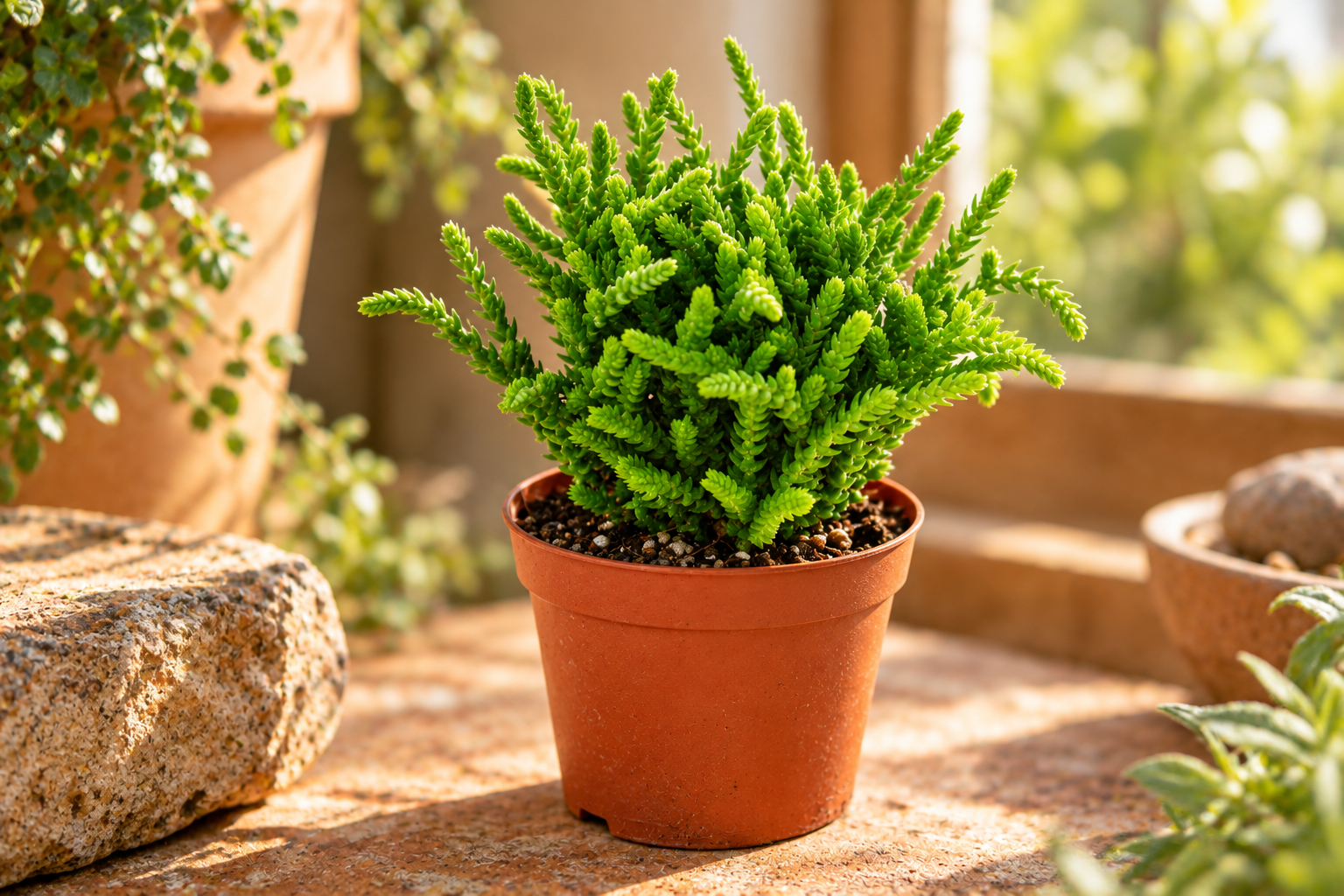
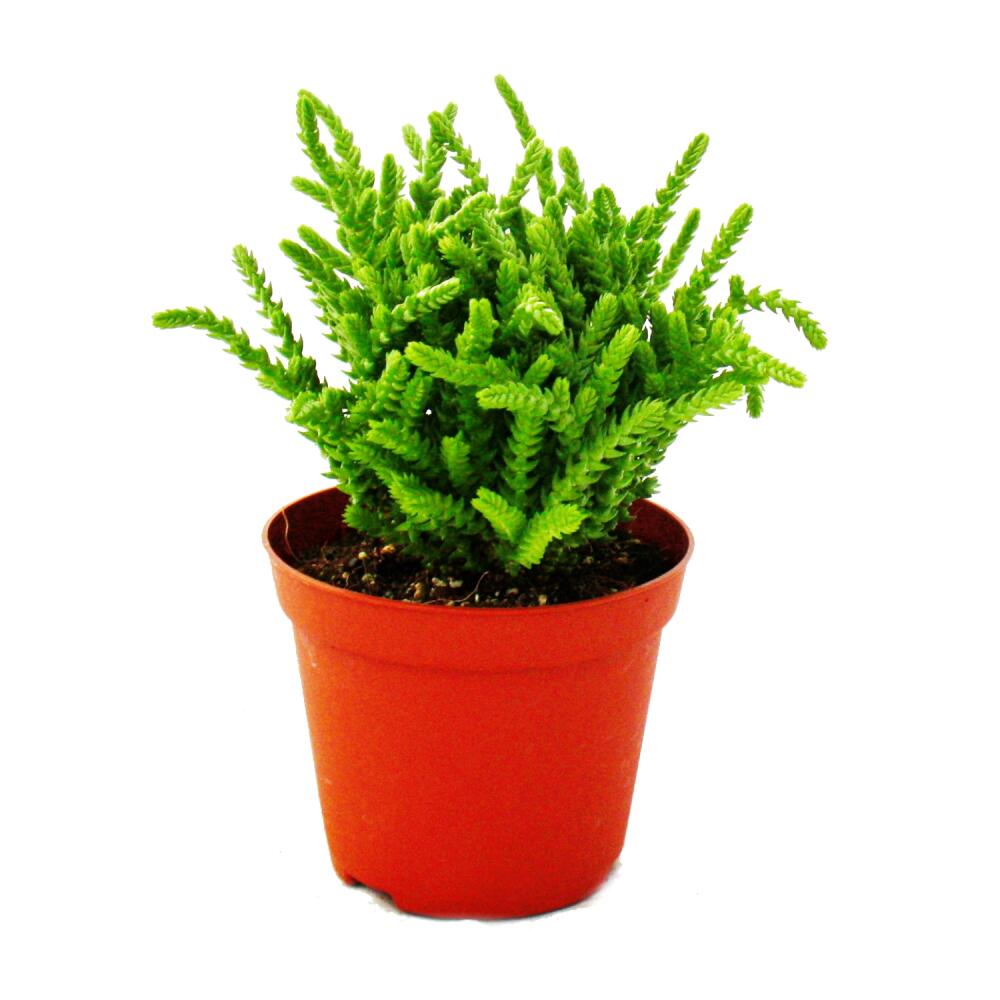
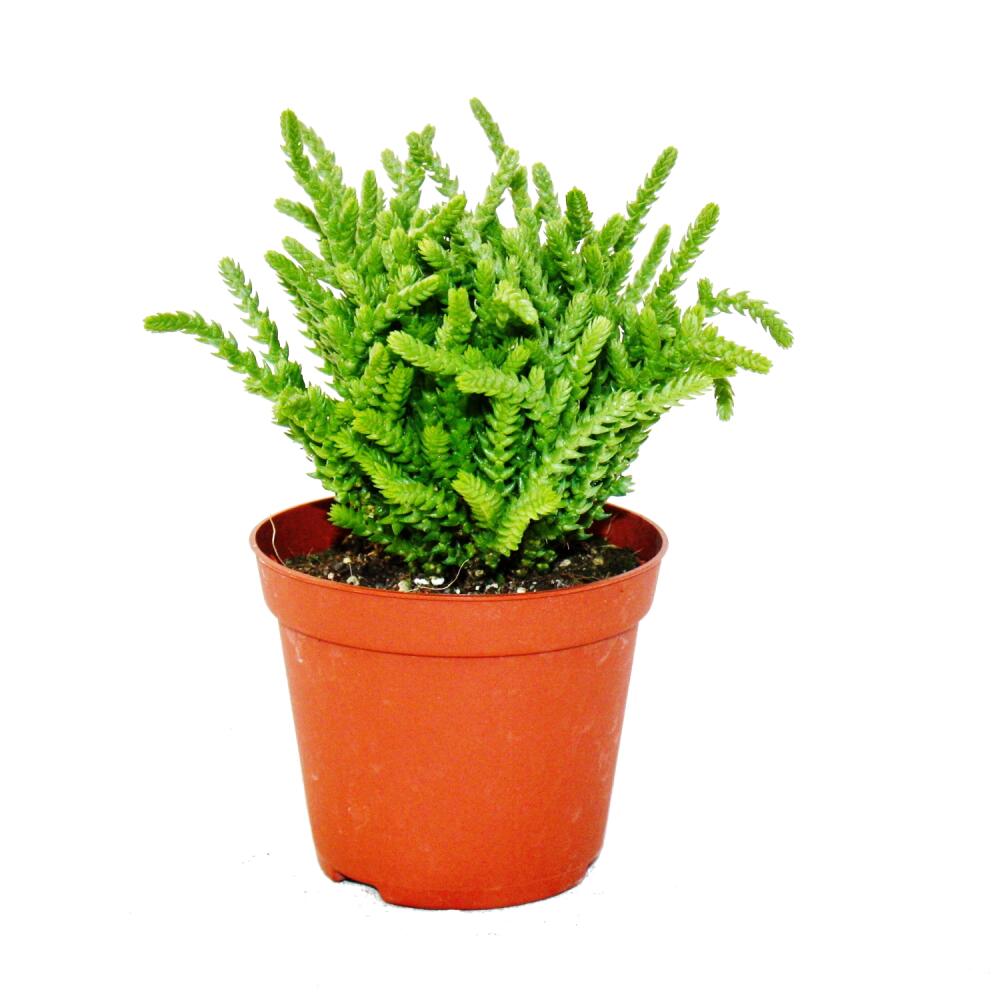
Only up close do you recognise the tiny leaves. They overlap densely on narrow green shoots, giving them an angular, almost geometric surface. Crassula lycopodioides is called mouse-tail plant in the shop. The RHS lists that name as a synonym of Crassula muscosa. It is therefore no small cypress or fern, although the dense branching recalls them. As a succulent, it forms its structure from fleshy small leaves. Even a small pot offers enough detail to discover new shoot tips repeatedly.
One size is stated; another remains open
The offer specifies eight and a half centimetres pot diameter and an approximate age of three to four years. It does not quantify total height, which is therefore not invented here from the visual impression. Support the container when unpacking and carefully free the packaging from the fine tips. The small plant needs an accessible bright position where soil and new branches can be inspected. A very large decorative pot would not automatically improve root needs. The narrow shoots may first settle quietly into their existing small root space.
Brightness keeps the scale structure clearly visible
Choose a very bright place and gently increase direct sun after transport. A sunny growing position is possible, but abrupt hot sunlight through glass stresses a small succulent too. Do not choose dark room corners merely because the vivid green would look decorative there. Observe whether new shoots grow noticeably looser or strongly one-sided. An occasional small turn of the pot may support the shape, but does not replace light. A sheltered mild outdoor position may suit after acclimatisation in summer; bring the plant back frost-free before cold nights.
The small root ball decides the watering
Let the soil dry out partly between waterings and check how far moisture has actually decreased. Water evenly when needed and remove excess. The narrow pot can dry faster on warm days than a large container. Fine shoots nevertheless do not justify constant daily sips. If soil stays wet for a long time, postpone the next watering and check drainage. Assess brown soft sections alongside moisture and light. A suddenly different condition is not explained solely by a general word such as easy-care.
Preserve a branching group with few interventions
A structured free-draining succulent mix and open drainage holes suit cultivation. Feed healthy growth sparingly according to a suitable fertiliser label. Extended shoots can be shortened cleanly when space is needed; healthy short tips require no continuous shaping. A pot change follows root condition and is planned only moderately larger. Check the dense centre too. Do not leave dead parts and unusual cotton-like accumulations hidden among green foliage. At the same time, do not constantly tear the fine natural structure apart during checks or treat it with shine products.
It stays interesting without conspicuous flowers
The species can develop small green-yellow flowers that are easily missed among the tiny leaves. They are not promised in the current delivery state. In winter keep the plant bright and frost-free and adapt water to slower growth. More food does not put a dark winter position right. An enlarged detail beside the whole pot plant is worthwhile in the plant book. It shows the difference between actual small size and the rich pattern of individual shoots. Note which new tips appear and how the group branches.
One plant, several views
Good to know
Is Crassula lycopodioides the same as Crassula muscosa?
The RHS lists lycopodioides as a synonym of Crassula muscosa.
Are the green scales real leaves?
Yes. Tiny overlapping leaves sit densely along the shoots.
What total height is delivered?
The specific shop gives no number; the portrait adds no invented height.
Must I prune a perfect ball?
No. The natural fine branching may develop.
Are large conspicuous flowers necessary?
The small green-yellow species flowers may remain unobtrusive; shoot structure is already the main subject.
Sources and editorial note
- Exotenherz: offer and original photographs (03.10.2026)
- RHS – cacti and succulents, light and free-draining root space (03.10.2026)
- RHS – Crassula muscosa, synonym and care (03.10.2026)
Shop offer, article number, GTIN, availability and original images checked directly on 02.10.2026; specialist acceptance on 03.10.2026. Specialist sources read directly. SKU, original images, dimensions and orderability checked directly in the shop on 03.10.2026. Relevant specialist passages read directly; trade names and species relationships distinguished. No Wawi, server or tool changes.