
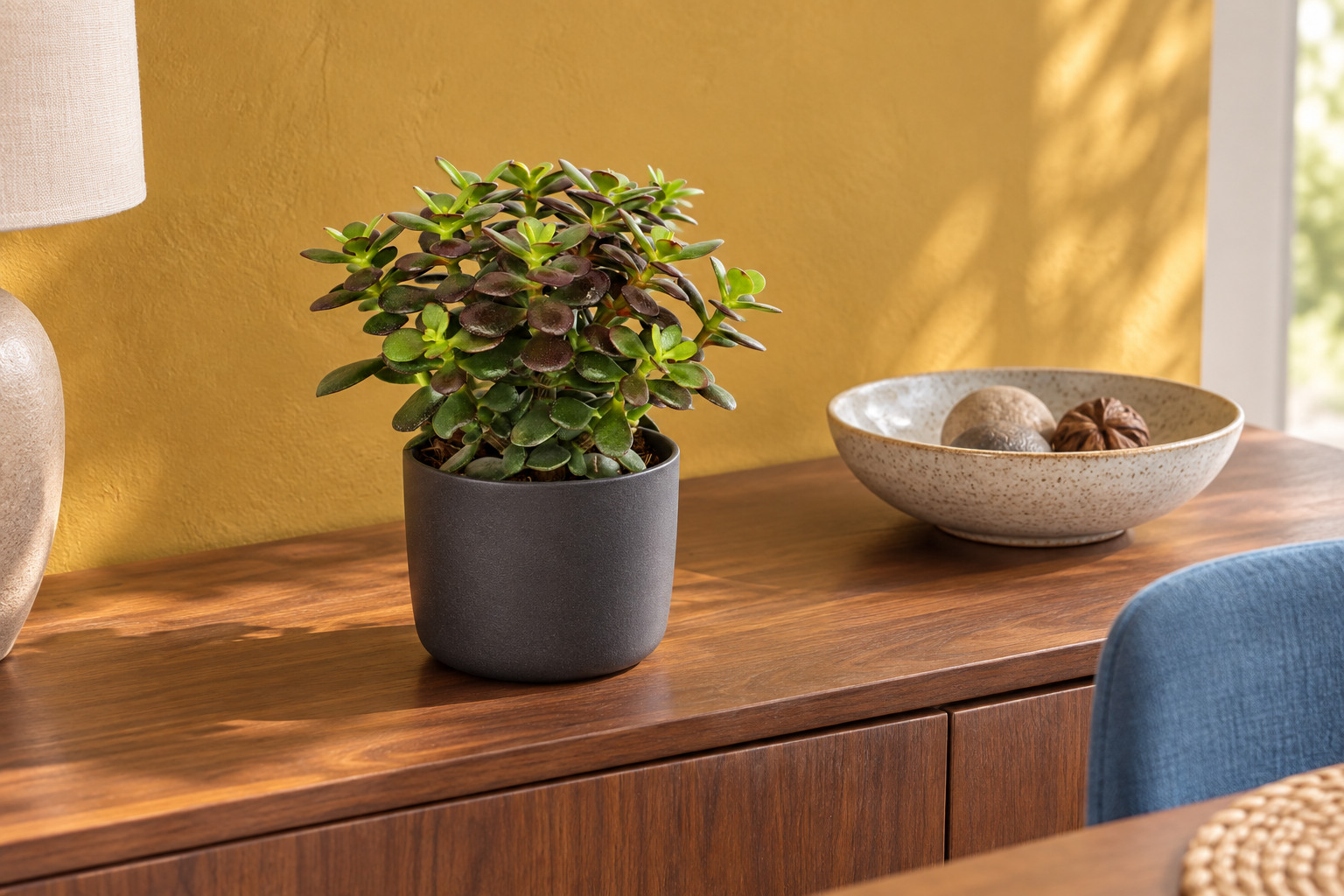
This plant at Exotenherz
Check the shop offer for current availability, price and what is included.
Link to the offer in German. Check the shop for the current price, availability and delivery contents.
Your care table
| Topic | What to do | Why it helps |
|---|---|---|
| Light | Place in very bright light; increase stronger sun gradually after a change of position. | Sufficient light supports short, strong growth. |
| Watering | Let compost dry well between waterings and pour away excess water. | The fleshy leaves store water; roots need air. |
| Compost | Use well-drained succulent compost and keep drainage openings clear. | Compacted, constantly moist compost raises the risk of root damage. |
| Fertiliser | During active growth, feed moderately according to the instructions of a suitable fertiliser. | Very vigorous growth is not the aim for a compact shape. |
| Pruning | In spring, selectively shorten overlong shoots at an appropriate branching point. | Thoughtful pruning retains the outline and can encourage branching. |
| Repotting | When roots fill the ball or the plant becomes top-heavy, move to a suitable, stable container. | Over time the heavy leafy crown needs a secure position. |
| Winter | Keep bright and frost-free; water less when growth declines. | Winter wetness is particularly unfavourable; dark warmth encourages weak growth. |
| Checks | Inspect shoot forks and leaf bases for mealybugs and sticky areas. | Early unusual signs are easily hidden in the dense crown. |
Check the compost and pot weight. The care table explains how far the compost may dry.
Water only when needed. The water should reach the root ball without spilling over the rim.
Remove surplus water from the saucer or cachepot. Then return the plant to a suitable position.
Why this little tree has so much presence
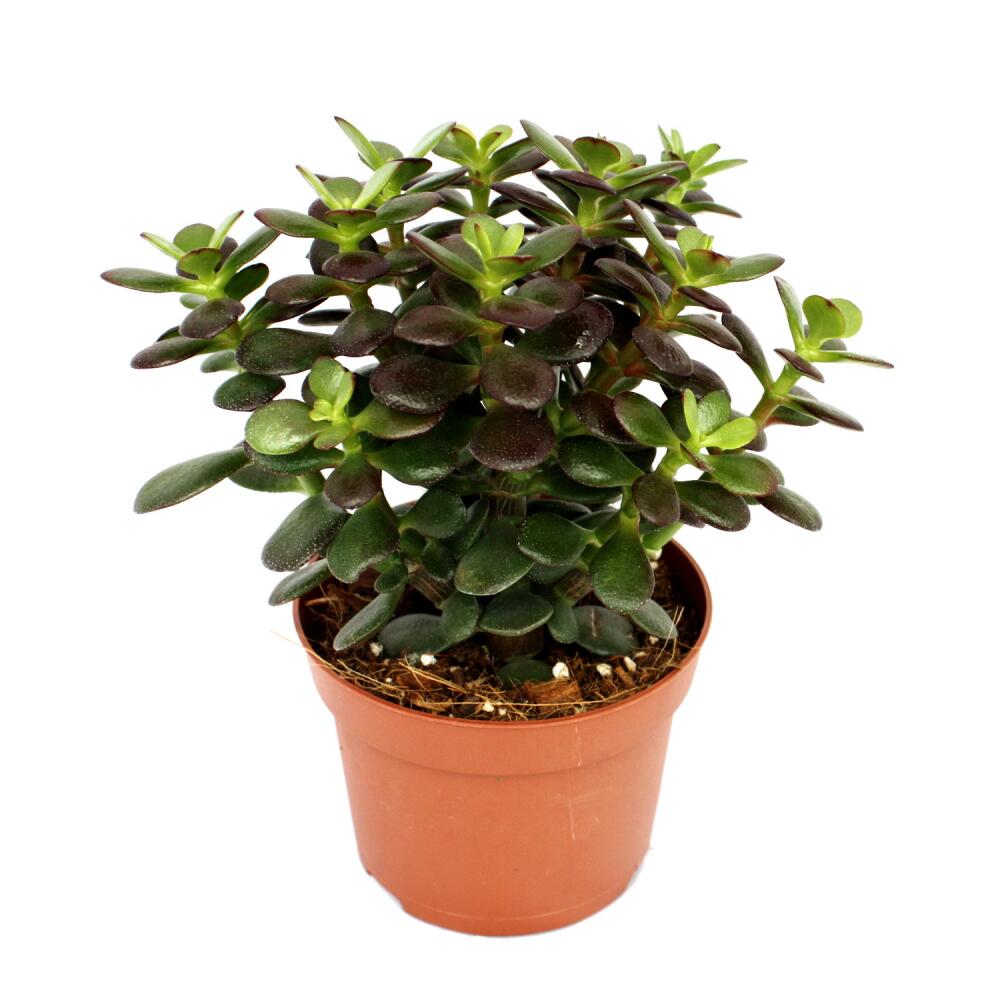
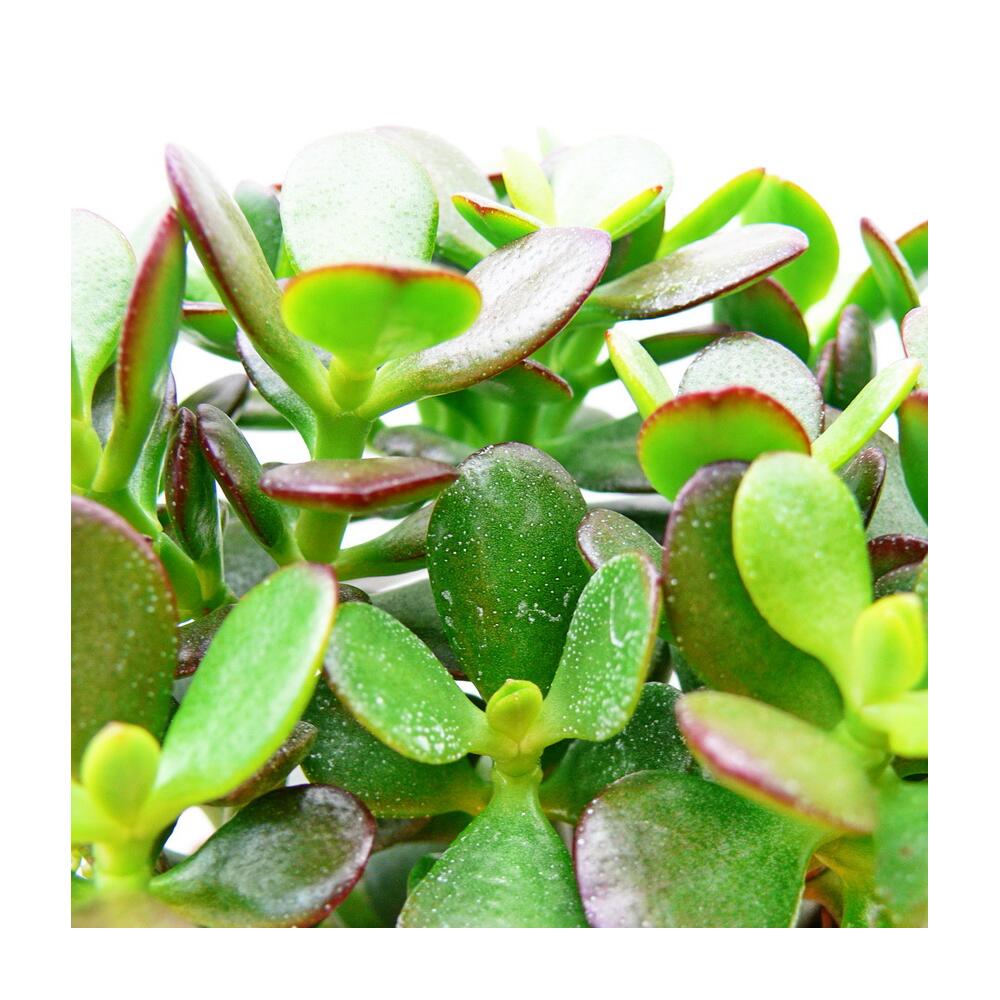
Even a young jade plant looks like a small woody plant with its short branches and fleshy leaves. Older shoots can become woody over the years. The leaves sit in pairs and store water. With good light, reddish to coppery tones can appear without the plant being ill. The species Crassula ovata comes from southern Africa. The compact trade form Minor remains finer in structure than many large-leaved jade plants. Its slow development is part of the pleasure: one new branch changes the whole little crown.
Understand the trade name and sizes
The shop lists the plant as Crassula portulacea minor. Botanically it is assigned to Crassula ovata; the RHS also lists Minor in connection with the compact form Minima. This portrait groups the sizes explicitly labelled minor. The pictured 12 cm version measures approximately 18 to 25 cm overall. The 8.5 cm pot is listed at approximately 12 to 18 cm. A 20 cm version offered as a specimen has approximately 45 to 50 cm overall height. Other Crassula varieties and Portulacaria do not automatically belong to this size family.
Light keeps the crown in shape
A very bright window position is the best foundation for a compact jade plant. A permanently dark place can encourage long, soft-looking shoots. Position it so that not only can we see it well, but its leaves can also receive enough light. After transport or a darker winter position, acclimatise gradually to direct sunshine. Occasionally turn the pot a little if the crown leans strongly towards the window. Turning does not replace sufficient light, however. A photo every few weeks makes changes in growth easy to recognise.
Give water when it is needed
Check compost and pot weight before watering. A jade plant can dry well between waterings. When the compost is dry, water the root ball evenly and allow it to drain. Constant small top-ups can make actual moisture unclear. No water should remain in the decorative pot. At the same time, succulent does not mean waterless: severe prolonged dryness stresses this plant too. If leaves are wrinkled, check the root ball. If roots are already wet and damaged, extra water would be the wrong answer.
Summer days outdoors, then back inside in good time
A bright, sheltered outdoor position is possible in summer. Accustom the jade plant slowly to sun and check its pot after rain. The heavy crown should not tip over in the wind. The plant is not intended for persistent autumn wetness or frost. Before bringing it inside, inspect densely packed leaves and branches. Choose the brightest suitable place indoors again. Note when water needs change: especially when moving from an airy outdoor place to a windowsill, compost can dry much more slowly.
Winter care without fixed dry months
During the low-light season, a jade plant often grows more slowly. Reduce water and fertiliser accordingly. A bright, frost-free place away from cold draughts is crucial. The cooler and darker the conditions, the more carefully you must watch compost that stays wet for a long time. A heavily heated dark corner cannot be compensated for with extra fertiliser. Keep checking regularly instead of setting a blanket watering pause lasting months. Small pots and large specimen plants respond differently. The right amount depends on your plant’s condition and its actual position.
Keep a lovely shape with a few cuts
Its natural structure may remain visible. If some shoots become too long or the crown is unbalanced, plan moderate pruning, preferably in spring. Look at the plant from several sides first and decide which branches to keep. Cut with clean, sharp tools at an appropriate branching point and avoid many major interventions at once. Healthy short shoots do not need constant trimming. Keep leaf and shoot pieces out of reach of children and pets; clean tools and hands afterwards. Later branching shows how the plant responds.
Approach repotting and cuttings calmly
If the root ball is tight or the plant becomes more top-heavy, a pot change is worthwhile. Choose free-draining compost and a stable container with drainage that is only moderately larger. Too much unrooted growing medium makes drying harder. Healthy shoot sections can be used as cuttings. First let their cut surface dry before placing them in loose succulent mix. A small pot and restrained moisture help rooting. Leaves can also form new plants, but a densely branched crown does not develop overnight. Patience is part of this plant’s care.
Leaf drop, patches and unwanted visitors
Some old leaves inside may fall. Sudden heavy leaf loss calls for a closer look: was the root ball wet for a long time, very dry or exposed to cold? White cotton-like clusters at branching points may indicate mealybugs. Initially isolate an unusual-looking plant and inspect it in good light. Do not randomly combine sprays or home remedies; fleshy leaves can react sensitively. Old dry patches will not turn green again. What matters is whether new damage appears and the next growth stays healthy.
Flowers are a gift, not a care certificate
Older jade plants can bear small pale star-shaped flowers. Indoors they do not flower reliably, however. Season, light and the rest period influence flowering. A compact, healthy plant without flowers is therefore not a failure. Do not try to force flowers with severe dryness or cold. The jade plant is a lovely companion with its leafy crown too. As an ornamental plant it is not for eating and should be out of reach of nibbling animals. Watching its development usually reveals enough small changes between the major care appointments.
One plant, several views
Good to know
Is a jade plant the same as a money tree?
These names are used differently in the trade. Here we specifically mean the small-leaved form Crassula portulacea minor, botanically Crassula ovata Minor.
Why do the leaves turn coppery?
Reddish or coppery tones can occur in good light. Dry patches, soft areas or sudden changes should be checked separately.
Can I expect a tall bonsai from the small plant?
The pictured plant is a compact, branched jade plant. A more tree-like form develops over a longer period with suitable care; it is not a delivery feature of the small version.
Can the pot be very large?
A pot suited to the root mass makes moisture checks easier. A much-too-large container can retain wet compost around the root ball for a long time.
Why is my jade plant not flowering?
Houseplants often flower irregularly. Age and growing conditions work together. Healthy growth is the more important measure.
Sources and editorial note
- Product and delivery size: Exotenherz
- Smaller version in an 8.5 cm pot
- Specimen plant in a 20 cm pot
- NC State Extension: Crassula ovata
- Wisconsin Extension: Jade Plant
- RHS: compact form Minor / Minima
Sources checked: 14 September 2026. Delivery sizes and trade names come from the shop; botanical information and care have been assessed using the linked specialist sources. Adapt care to the plant’s condition, position and season.