
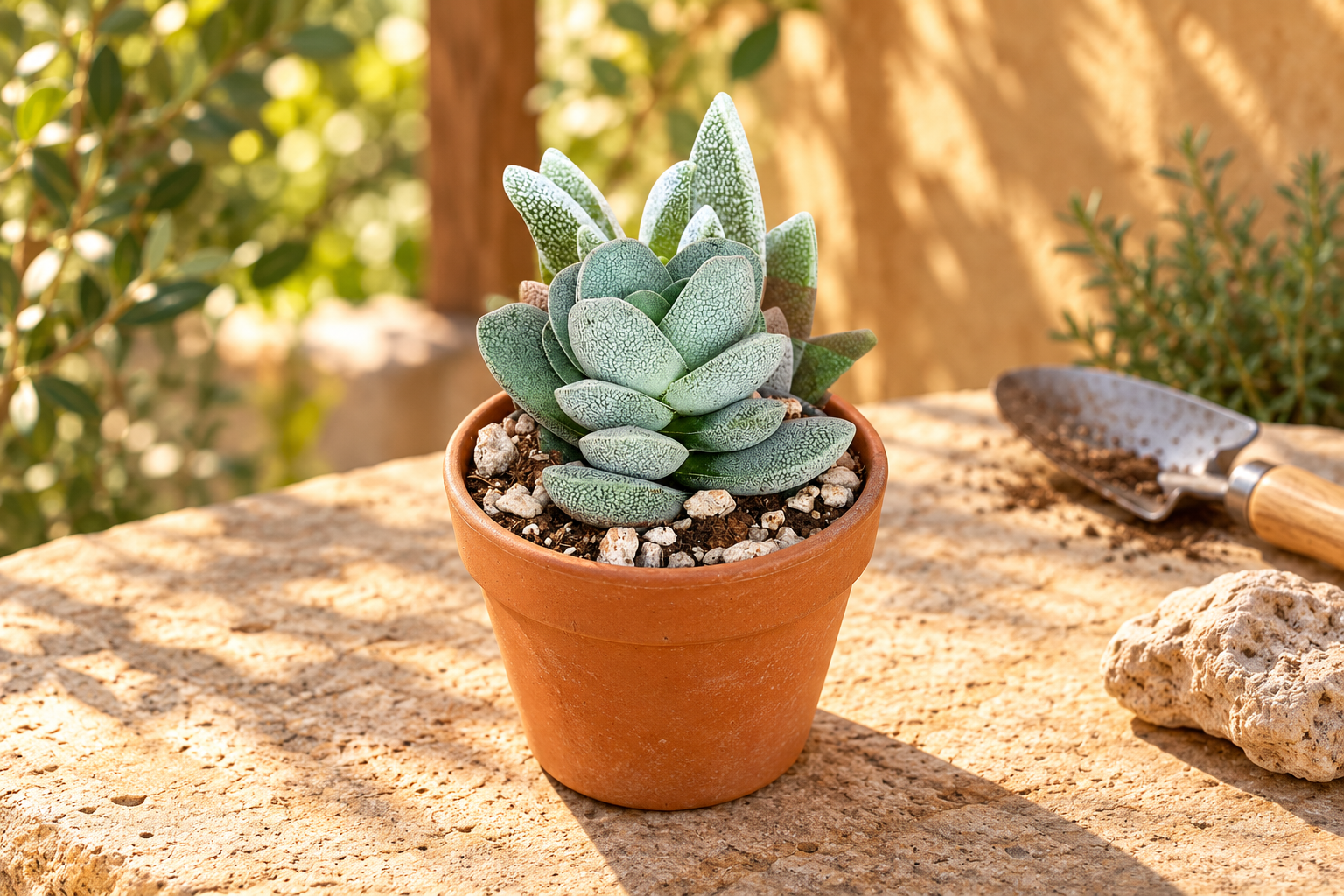
This plant at Exotenherz
Check the shop offer for current availability, price and what is included.
Product details, availability and delivery information are provided in the shop offer.
Your care table
| Topic | What to do | Why it helps |
|---|---|---|
| Light | Keep bright and gradually introduce strong direct sun after a move. | Light keeps growth compact; abrupt change can stress the leaf surface. |
| Pot | Choose a container with free drainage and remove excess water. | Water must not collect in the small root zone. |
| Growing medium | Grow in loose very free-draining medium with mineral components. | Roots need air again between waterings. |
| Watering | Check growing medium, water thoroughly as needed then allow to dry. | Fleshy leaves store water; constant wetness does not suit them. |
| Repotting | Only once roots fill the pot, preferably in spring, into a slightly larger size. | An oversized pot easily stays moist longer than roots can use the water. |
| Feeding | Give succulent fertiliser sparingly during visible growth. | Heavy supply is unnecessary for slow squat growth. |
| Summer place | A sheltered bright outdoor position is possible; introduce rain and sun slowly. | Weather changes can affect a pot faster than a steady indoor place. |
| Winter | Keep bright, frost-free and drier with low activity. | Less light and growth usually mean less water consumption. |
Check the compost and pot weight. The care table explains how far the compost may dry.
Water only when needed. The water should reach the root ball without spilling over the rim.
Remove surplus water from the saucer or cachepot. Then return the plant to a suitable position.
A leaf as if finely drawn
Crassula tecta is a plant that makes us slow down and look closely. Thick opposite leaves carry many tiny light raised points. These create the unusual rough pattern behind the German name “lizard-skin crassula”. The shop offers a young potted plant. The surface is particularly easy to study in a small specimen. We choose a bright position where it does not disappear among other plants’ large leaves.
Change brightness in measured steps
From South Africa’s Little Karoo comes a plant adapted to light and freely draining soils. Indoors we keep it bright. But straight from a delivery box or greenhouse, do not put it immediately in the strongest midday sun. A few days in a bright gentler position, followed by gradual acclimatisation, is calmer. If gaps between new leaves become conspicuously long, check light first. Compact structure is a better guide than a rigid position name such as south or west window.
Water should pass through the pot
Fleshy leaves can store water, but roots still do not want permanent wetness. Before watering, feel how far the growing medium has dried. When water is needed, thoroughly moisten the small root ball and let all excess drain. No puddle may remain in a decorative pot or saucer. After moving it, watch leaf firmness, pot weight and soil rather than fixing a weekday. A small pot dries differently from a larger container; winter light and growth change demand again.
Mineral room for the roots
When roots have filled the original pot well, preferably repot in spring. A slightly larger container with drainage and loose succulent growing medium containing mineral components helps balance water and air. Do not plant deeper than before, and firm the mixture only lightly. Watch particularly after repotting: a large reserve of moist soil around a small root ball is no benefit. Feeding is a small supplement during visible growth for this squat habit, not a substitute for light and a suitable root space.
A summer place is an option, not a necessity
In the warm part of the year Crassula tecta can spend time outdoors if the place is bright, sheltered and not constantly exposed to rain. Acclimatise in stages here too, since direct sun, wind and changing wetness act differently from indoors. Bring the small pot under protection before cool nights. The species is not a bed plant for a German winter. If you prefer keeping it indoors all year, simply provide plentiful light and fresh air without a cold draught.
Its surface is its ornament
The original photograph clearly shows how light papillae texture the leaf surfaces. Avoid rubbing unnecessarily or applying polishing products. Dust can be loosened very gently with a soft dry brush if needed. This species can flower, but for indoor care we promise neither a fixed date nor flowers on the young delivery plant. Our first aim is healthy compact growth with the special pattern preserved.
One plant, several views
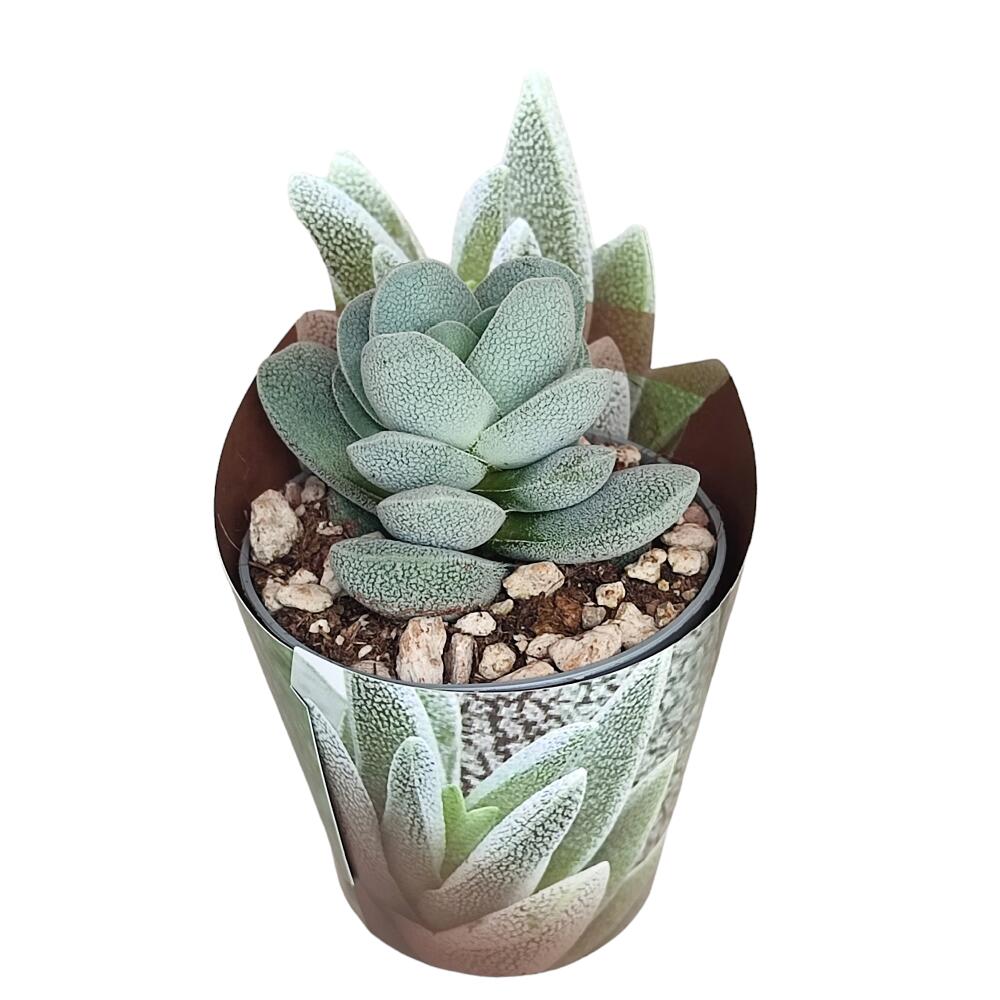
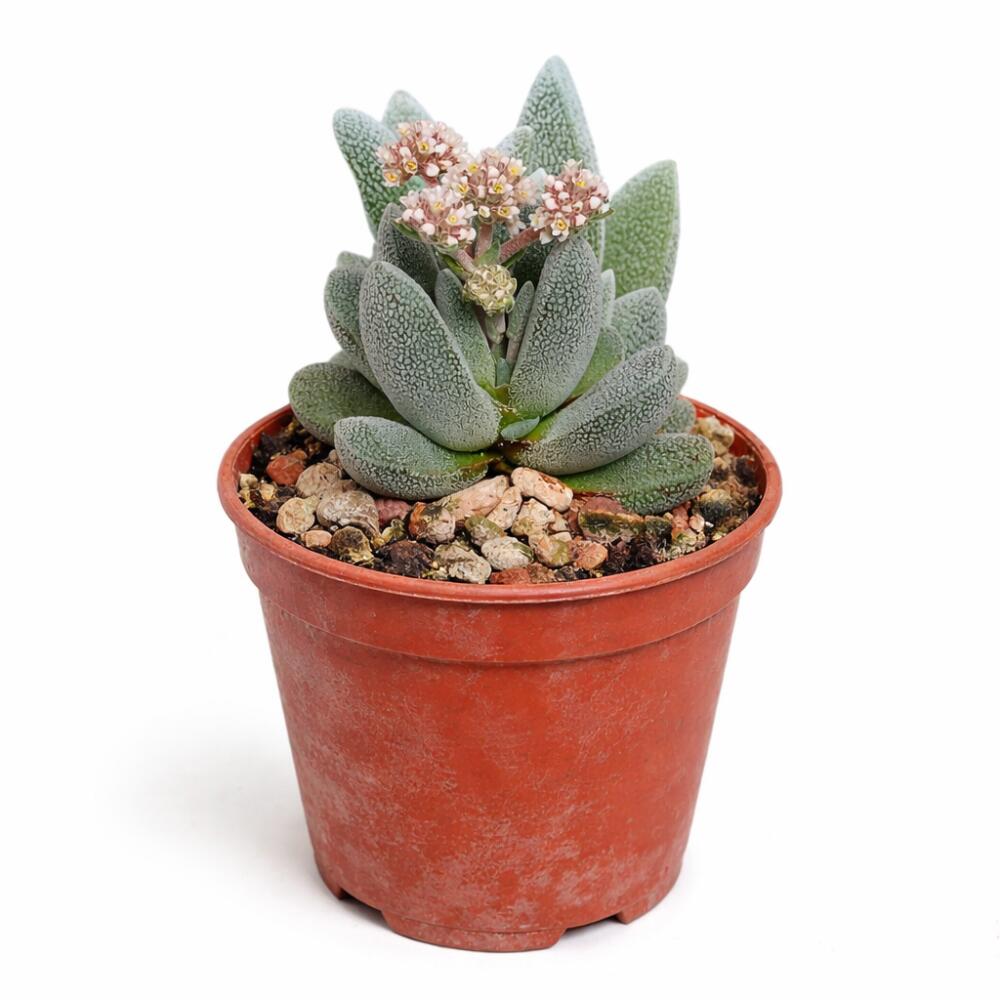
Good to know
How often should I water Crassula tecta?
There is no suitable fixed weekly rhythm. Check the small root ball, water thoroughly as needed and allow excess water to drain completely.
Can it receive direct sun?
Plenty of light suits. After shipping or a move, however, introduce strong direct sun gradually.
Can it overwinter in the garden?
No, for our winters keep it in bright frost-free quarters; in cool dim conditions it usually needs less water.
When is a bigger pot needed?
When roots fill the small nursery pot well. Choose only a slightly larger size with drainage and free-draining growing medium.
Are light dots a disease?
The finely light-textured leaf surface is typical of Crassula tecta. New soft or rotten patches are different and should be checked together with moisture and position.
Sources and editorial note
- Exotenherz: exact shop variant and delivery size
- Royal Botanic Gardens, Kew: Crassula tecta, species name and origin
- SANBI Strelitzia 29: Crassula tecta, leaf features and habitat
- Royal Horticultural Society: caring for succulents as houseplants
Shop article and original photograph checked on 30 September 2026; SKU 2089105042026. Product title states 6.5 cm / 15 cm, description 5 cm / 10–12 cm. The publication therefore contains no specific delivery size; clarify in the shop before ordering. Kew confirms species name, SANBI leaf features and origin; RHS supports general container culture.