

This plant at Exotenherz
Check the shop offer for current availability, price and what is included.
The linked shop is in German. Product details, availability and delivery information are provided in that shop.
Your care table
| Topic | What to do | Why it helps |
|---|---|---|
| Light | Filtered daylight; avoid harsh direct sun. | Broad fronds can scorch in hot sunshine. |
| Water | Water when the surface starts to dry. | The fern cannot tolerate long periods with a dry root ball. |
| Water quality | Use low-lime water at room temperature where possible. | Sensitive frond edges benefit from suitable watering. |
| Drainage | Remove remaining water and keep drainage holes clear. | Moist roots still need oxygen. |
| Room conditions | Keep warm, free from draughts and away from dry radiator heat. | Balanced conditions protect the fronds. |
| Compost | Use a humus-rich, loose, free-draining mix. | Moisture must not turn into standing water. |
| Fertiliser | Feed sparingly during growth, following the label. | Excessive salts put strain on the fern. |
| Checks | Distinguish spore clusters from pests. | Not every brown structure on the underside is damage. |
Check the compost and pot weight. The care table explains how far the compost may dry.
Water only when needed. The water should reach the root ball without spilling over the rim.
Remove surplus water from the saucer or cachepot. Then return the plant to a suitable position.
A fern without feather-like fronds
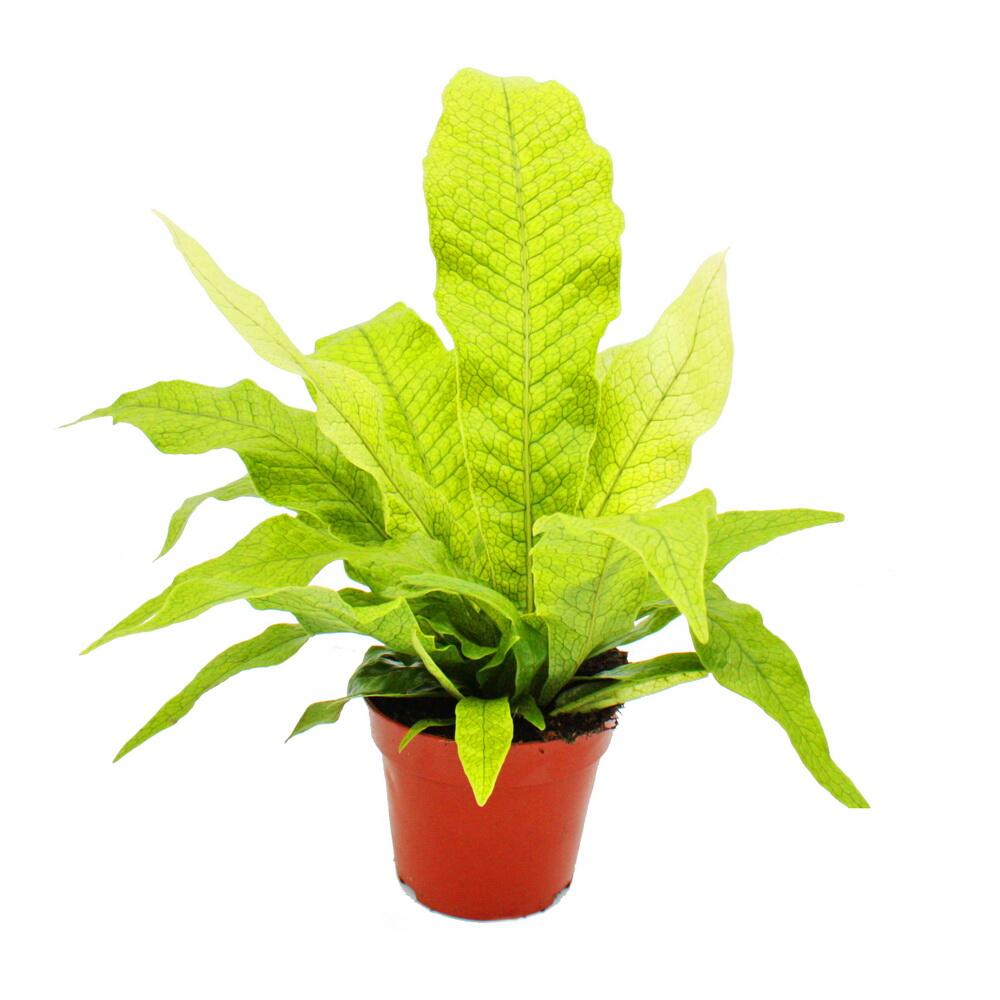
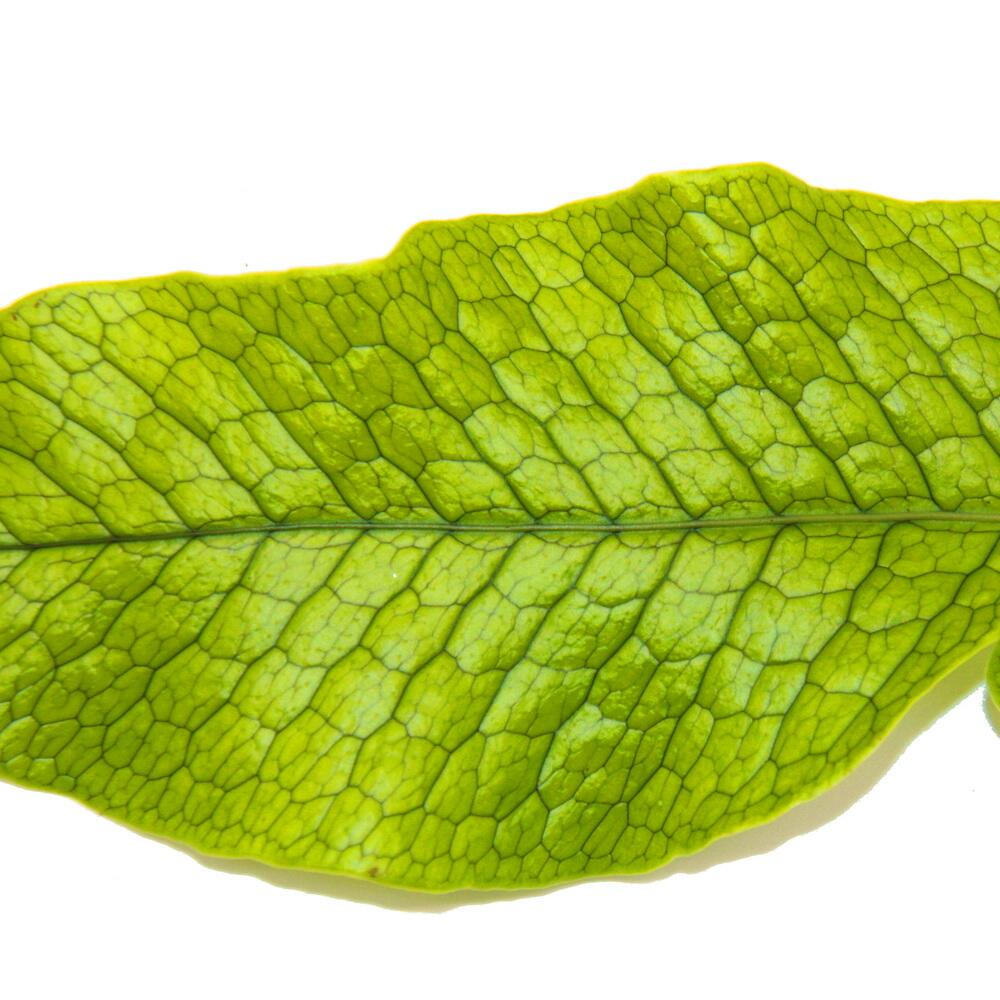
Crocodile fern fronds are not divided into many small leaflets. Broad green surfaces show a darker network of veins reminiscent of a reptile-like texture. Microsorum musifolium also grows on trees in tropical habitats without taking nourishment from them. It belongs to the ferns and does not produce flowers. Spore clusters on the underside may be part of a natural development stage and must be distinguished from actual pests.
A young size, with larger fronds later
The Crocodyllus listing comes in a 12 cm pot and is approximately 20–25 cm tall. A bright bathroom position can suit it, provided there is real daylight. Higher humidity does not make a windowless bathroom a suitable plant position. The offered size is a beginning; later fronds may need more room. In the scene, plant and container remain at a realistic general scale. Decorations and the decorative pot are not automatically included.
Gentle light and consistent conditions
Bright, indirect light is suitable, and less bright positions with daylight are also possible. Harsh direct sun can scorch the fronds. Keep the fern warm and protected from cold draughts. Dry heat from a radiator is unsuitable. Balanced humidity supports leaf quality, but constantly wet fronds in still air may develop spots. A suitable room matters more than frequent brief sprays.
Do not let the root ball dry out completely
Water as the surface just begins to dry. Keep the compost evenly slightly moist, but never standing in water. Low-lime water at room temperature is suitable. Check pot weight, especially when a decorative cover hides the nursery pot. Brown edges may be linked to dry periods, water quality or dry air. Assess several conditions together before increasing the amount of water.
Loose compost and gentle repotting
A humus-rich, structurally stable, free-draining mix holds moisture without depriving the roots of air. A pot with drainage holes is necessary. Once the pot is clearly filled with roots, gently move it to a slightly larger container in spring, keeping the same planting depth. Feed sparingly during active growth, following the fertiliser label. Account for fresh, pre-fertilised compost. Division is suitable only for sufficiently strong, well-rooted plants, not a routine procedure for small specimens.
Observe fronds rather than treating too quickly
Check undersides and frond bases for scale insects, mealybugs or spider mites. Regular spore clusters belong to fern development; irregular deposits that wipe away or moving animals should be checked separately. Remove dead fronds cleanly. Do not shorten healthy fronds merely because they need more space at the sides. Water use decreases during darker months, but the compost must still not dry out completely. This keeps the new network of veins beautifully visible, frond by frond.
One plant, several views
Good to know
Is it suitable for a windowless bathroom?
No. High humidity does not replace daylight or suitable plant lighting.
Why are the edges turning brown?
Check dry compost, water quality, proximity to heating and humidity. The cause is not always the same.
Does crocodile fern flower?
No. Ferns reproduce through spores and do not form flowers.
Can the compost dry out completely between watering?
Prolonged complete drying is unsuitable. Water as the surface starts to dry and avoid waterlogging.
Sources and editorial note
Sources checked: 15 September 2026. Product details and delivery contents follow the linked shop listing. Care has been checked against the cited specialist sources and should be adapted to the plant’s condition, position and season.