
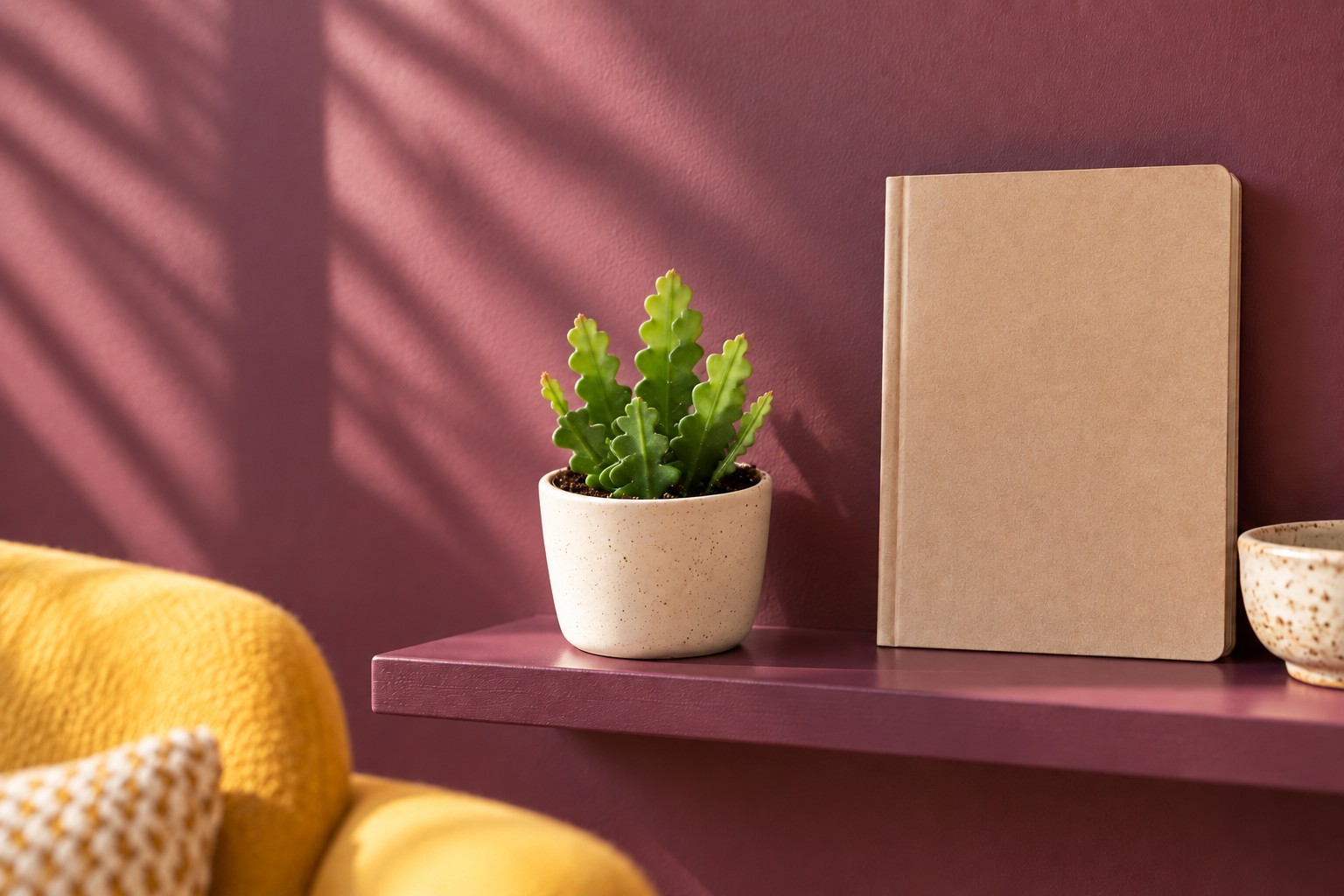
This plant at Exotenherz
Check the shop offer for current availability, price and what is included.
The linked shop is in German. Product details, availability and delivery information are provided in that shop.
Your care table
| Topic | What to do | Why it helps |
|---|---|---|
| Light | Bright with filtered light or light partial shade. | Flat forest-cactus stems can burn in scorching sun. |
| Water | During growth, water after slight drying. | Avoid weeks of complete dryness as for resting desert cacti. |
| Compost | Humus-rich, structurally stable and airy. | Roots need moisture without being short of air. |
| Drainage | A pot with an outlet; remove remaining water. | Permanently wet outer pots encourage root damage. |
| Feed | During growth, weak doses about every 4–6 weeks according to the product. | Stop during winter rest. |
| Winter | Bright at around 12–15 °C with less water. | A cooler position lowers demand but does not mean frost. |
| Growth | Allow room for trailing stems later. | Young upright shoots become looser as they lengthen. |
| Checks | Inspect stem bases and undersides for pests. | Early treatment starts with reliable observation. |
Check the compost and pot weight. The care table explains how far the compost may dry.
Water only when needed. The water should reach the root ball without spilling over the rim.
Remove surplus water from the saucer or cachepot. Then return the plant to a suitable position.
Green stems rather than ordinary leaves
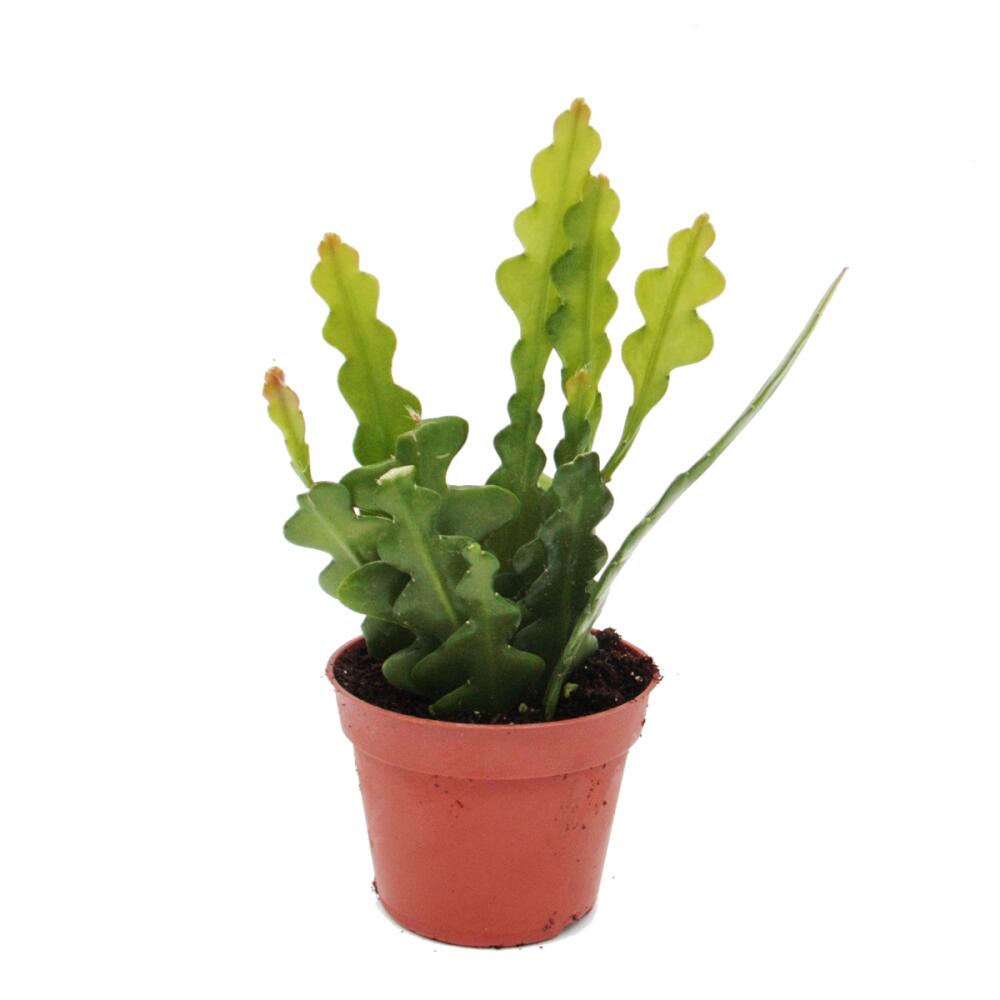
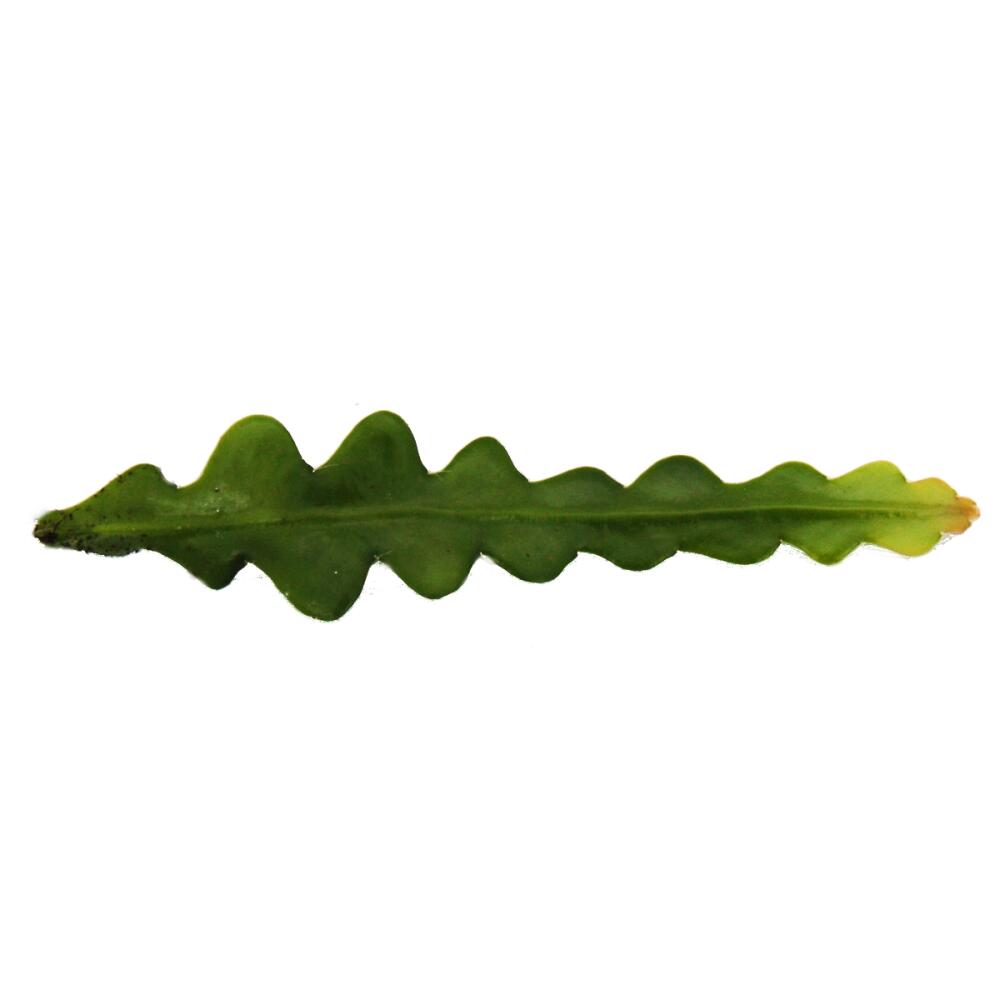
The jagged green ribbons are flat stems. Their rounded notches explain names such as fishbone, saw-blade or crocodile-tail cactus. Disocactus anguliger comes from Mexico and is still widespread in the trade as Epiphyllum anguliger. Young shoots may initially appear narrower or more upright. The typical trailing structure develops as they lengthen. Do not hastily cut off every differently shaped young stem: development is best assessed over several growing weeks. This plant is defined by its natural movement, not strictly identical shapes in every stem.
From a small pot to a loose hanging plant
The shop offer states a 9 cm pot and around 15 cm overall height, at an age of one to two years. This is a young plant with still-short stems. A bright shelf position can suit its beginning; later, the pot needs room beyond its rim so the stems can grow freely. With a hanging basket, plan watering access from the start. If it hangs so high that the root ball can scarcely be checked, care suffers despite the attractive effect. Walls and furniture should allow dry air circulation around the plant.
Bright diffused light suits it better than scorching midday sun
Choose a bright position with filtered light. Strong midday sun behind hot glass can damage the flat stems. A bright spot beside a suitable window is often easier to manage than an unprotected south-facing pane. In summer, a wind-sheltered stay outdoors in partial shade is possible. Acclimatise it gradually and bring it in before cold weather. More humidity can be helpful, but does not replace water supplied through the roots. A permanently wet closed glass container is therefore not a suitable shortcut.
Plant in airy compost and supply growth reliably
Loose humus-rich forest-cactus compost is suitable, for example with structural bark and mineral ingredients. Pure heavy wet potting compost compacts unfavourably. During growth, water after slight drying so the root ball is supplied again while water drains freely. Stems kept completely dry for weeks may shrivel. Constant moisture without air at the roots, however, produces a similar limp appearance. Check the compost and pot first before responding to soft stems with more water. The rhythm depends on brightness, warmth and root-ball size.
Support winter and flowering with patience
The shop recommends a bright cooler position around 12 to 15 °C in winter. Then water considerably less without allowing the small root ball to become completely dry for long periods. Do not feed while the plant rests. Fragrant pale flowers may develop later; a young plant first needs to become strong enough. Flowering time and success depend on development and cultivation. A tight but healthy root space is not a reason for constant repotting. When new space is necessary, a moderately larger container with reliable drainage is usually sufficient.
Preserve stems, propagate and watch changes
Do not press brittle stems against a wall when moving the plant. Individual damaged pieces can be removed with clean tools. Healthy stem sections can later be used as cuttings: first allow cut surfaces to dry, then insert into airy compost. Keep gently moist until rooted. During vigorous growth, give weak feed according to the product instructions. Check bases and undersides for mealybugs, aphids or fine webbing. A new narrow stem shape alone is not an infestation. Additional signs and the plant’s subsequent development are decisive.
One plant, several views
Good to know
Are the zigzag ribbons leaves?
Botanically, they are flat stems. They perform the plant’s visible green work.
Can I keep it as dry as a ball cactus?
During growth, this forest cactus needs a more dependable supply after slight drying. Constant wetness is still unsuitable.
Why are my small plant’s stems not trailing yet?
Young shoots are often more upright. The trailing appearance develops as they lengthen.
Is the plant called Epiphyllum or Disocactus?
Disocactus anguliger is Kew’s current classification. Epiphyllum anguliger remains a widespread trade name.
Sources and editorial note
- Product and delivery contents: Exotenherz
- Royal Horticultural Society: plant and care information
- Royal Botanic Gardens, Kew: botanical classification
- Royal Horticultural Society: plant and care information
Sources checked: 15 September 2026. Product information and the contents of delivery follow the linked shop offer. Care advice was checked against the cited specialist sources and should still be adapted to the plant’s condition, position and season.