
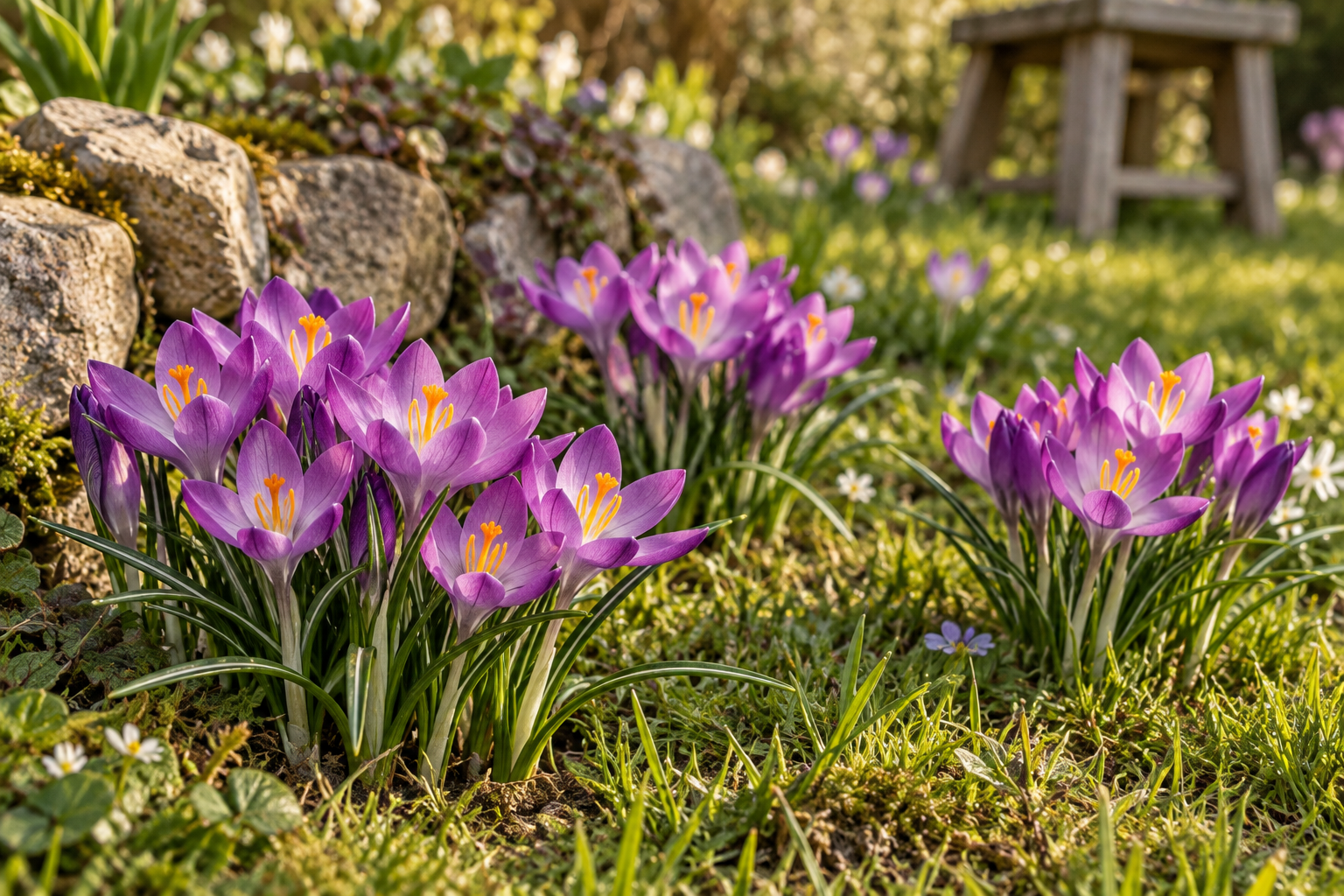
This plant at Exotenherz
Check the shop offer for current availability, price and what is included.
Check the selected shop offer for price, availability and delivery contents.
Your care table
| Topic | What to do | Why it helps |
|---|---|---|
| Place | Plan for sun and drainage. | Low flowers need light at ground level. |
| Planting | Autumn in unfrozen soil; point upward. | Corms start establishing their root area before spring. |
| Depth | About 8–10 cm; follow package and soil. | The actual corm counts, not a commercial size grade. |
| Spacing | About 5 cm in loose bed groups. | The group should work together without tight stacking. |
| Water | Water during dryness in growth; check pots. | The leaf phase needs supply after flowering too. |
| Nutrients | Account for soil and substrate, supplement as needed. | More fertiliser does not replace light. |
| Foliage | Preserve until natural yellowing, mow later. | The narrow leaves supply the corm. |
| Dormancy | Mark position and maintain drainage. | Plants that disappear above ground remain beneath the soil. |
For young plants, feel the soil directly at the root ball. The surface and deeper soil may have different moisture levels.
Water thoroughly after planting; later, water according to the soil, weather and establishment rather than a fixed calendar.
Avoid standing water. For plants in containers, also check that water runs out of the drainage hole.
Little cups open the garden
Ruby Giant stands out while many perennials are still barely visible. Violet flower cups rise above very narrow green leaves with a pale centre line. Golden-yellow stamens appear in open flowers. The plant remains about ten centimetres tall in bloom and therefore belongs at the front, where it can be seen close up. A low stone edge or loose lawn area can accompany its colour. In late winter and early spring the scene changes with daylight: cups open in bright weather and may remain closed at night and in rain.
Fifty corms make room for several groups
The shop offer contains 50 pieces for planting, not flowering pots. Botanically, crocuses are corm plants: their solid storage organ differs from a true bulb with scales. In trade they are nevertheless often offered alongside flower bulbs. Distribute the corms in several loose groups before planting. About five centimetres spacing is a horticultural guide for this little plant. Leave room beside the path so nobody steps on later shoots. The number of visible flowers in a scene image is no fixed promise for the first garden year.
Sun must reach the low flowers
Choose a sunny garden position with drainage. A free area beside tall evergreen shrubs may still lie in shade at ground level for a long time. Therefore check spring light movement. More light may reach beneath deciduous woody plants before they leaf out; dense root competition there changes soil conditions, however. A wet hollow is not a good choice. Loosen compacted areas as a whole before the little corms disappear. On a terrace, a container with clear holes suits if you plan later leaf care and its position during dormancy too.
Plant carefully in autumn
Plant in autumn in unfrozen workable soil; September to November is a usual guide, not an obligation independent of weather. The specialist supplier gives about eight to ten centimetres depth. Consider the actual corm, soil and directions on the delivered package. Its point faces upward. Settle soil carefully and water a little after planting if soil is dry. A commercial size grade does not say how tall the actual corm is. Mark groups unobtrusively. You can then plant other things in summer without damaging dormant crocuses when digging.
Water follows the active phase
Emergence and leaf growth need moisture without permanently wet soil. In the garden, spring rain often provides much of the supply; add water during prolonged dryness. A little pot loses moisture faster and needs checking even after the last violet flower has disappeared. Account for nutrients from soil or substrate and supplement only as needed according to the fertiliser label. A high dose does not force longer flowering. During later dormancy a container is managed differently from active growth; clear drainage holes remain important throughout the year.
Lawn care comes after the leaf phase
Crocuses among grass look relaxed but demand a suitable mowing plan. Fine leaves should continue receiving light after flowering and only then yellow naturally. Do not mow affected places right after the last flower day. A small unmown island is easier to plan than many scattered individual corms. Remove dead leaf remains later as needed. A photo of emergence and a note on the first mowing date are useful in the plant book. They help fit spring care better alongside other gardening work next year.
Accompany a little planting over several years
Under suitable conditions, Ruby Giant can stay in place and accompany you in further springs. This depends on light, soil and an undisturbed leaf phase. With weak flowering, first check competition, dryness during growth and persistent wetness. A dense group can be redistributed during dormancy when needed. Place winter containers protected from prolonged wet periods and strong freezing through. Keep drainage clear. Early flowering remains a weather event in your garden: late frost or a cold spring may shift timing without automatically meaning the loss of the entire planting.
One plant, several views
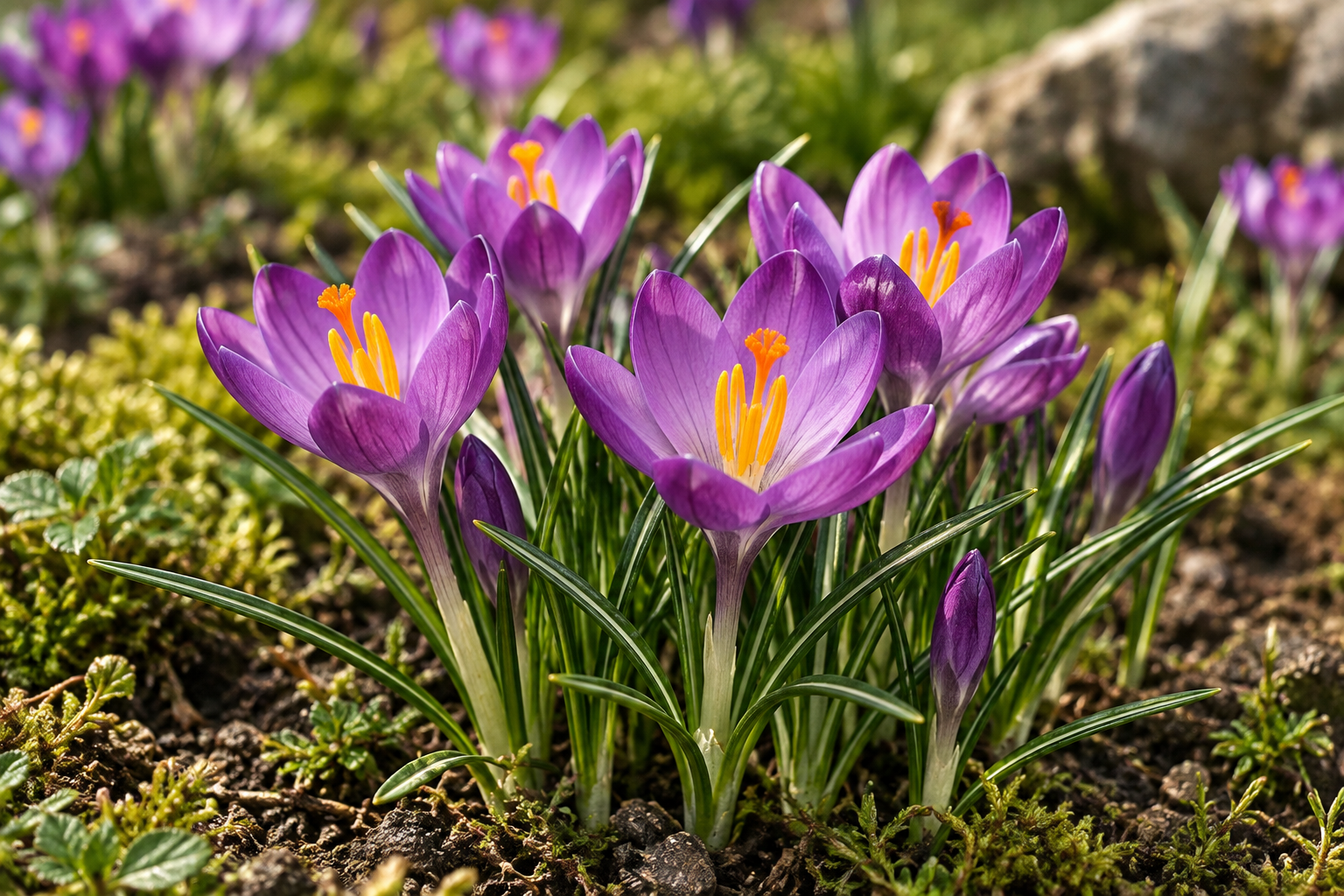
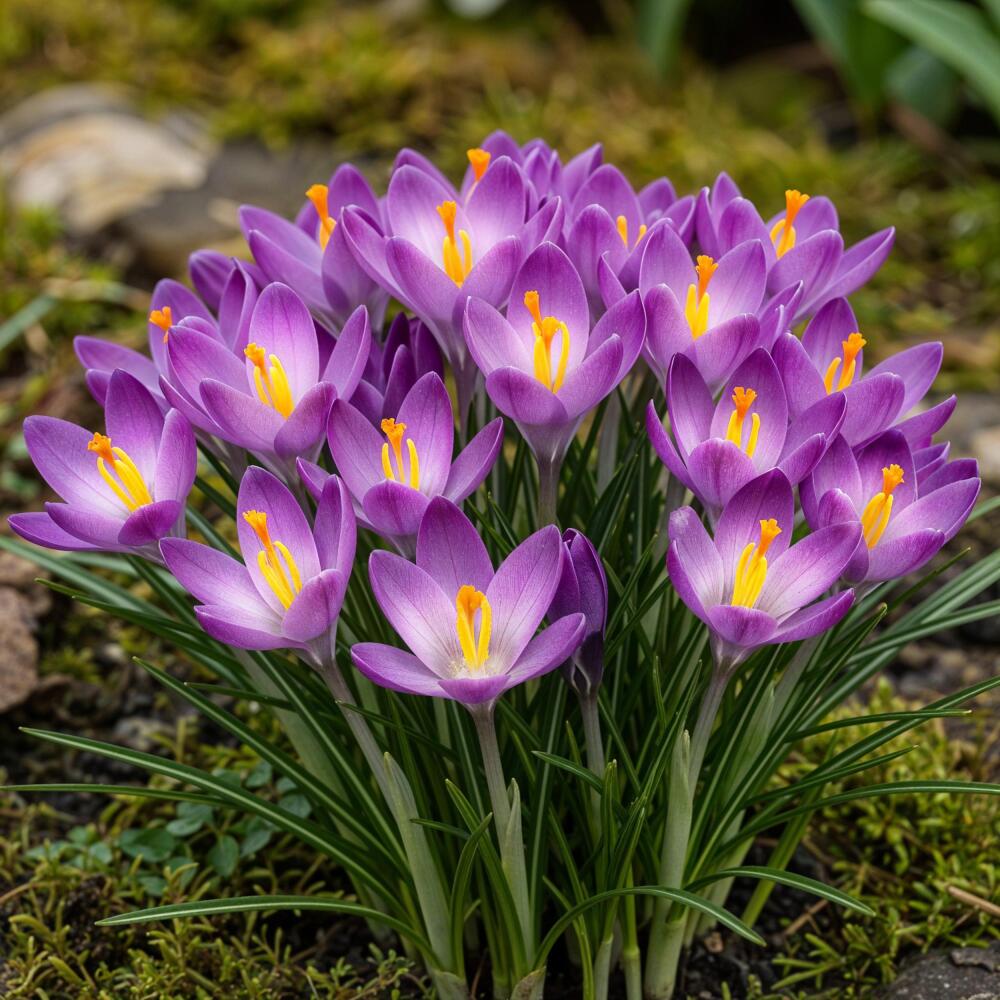
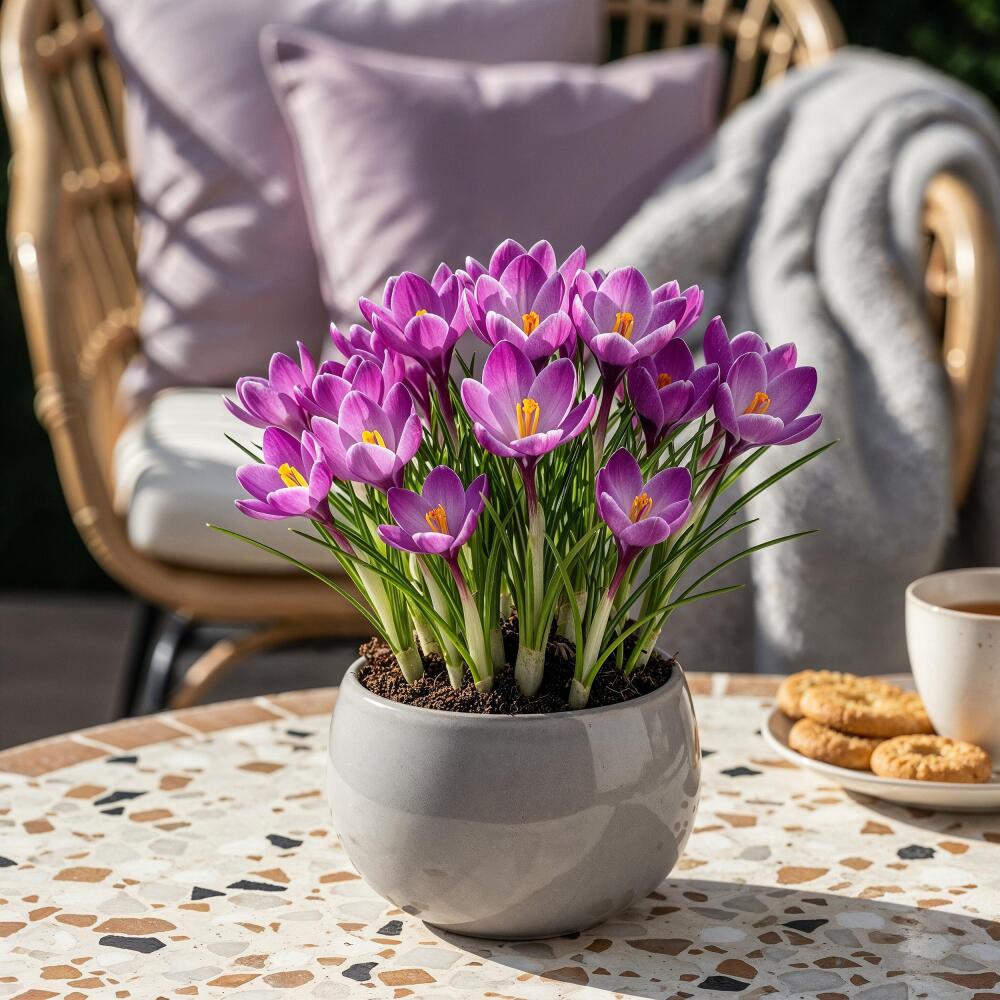
Good to know
What is delivered?
50 corms to plant, not a ready flowering group.
Are crocuses true bulbs?
Botanically they have solid corms; in trade they often belong to the flower-bulb assortment.
When does Ruby Giant flower?
Often in February and March; weather and position shift the date.
Why do flowers sometimes stay closed?
The cups respond to light and weather and may remain closed at night or in rain.
Does the variety suit a lawn?
Yes, if foliage can remain after flowering until it yellows.
Is ten centimetres the delivery height?
No. It is a guide for the later flowering plant.
Sources and editorial note
- Exotenherz: offer and original images (03.10.2026)
- de Jager – Ruby Giant: flowering, height and planting (03.10.2026)
- RHS – Bulbs and corms through the garden year (03.10.2026)
Shop offer, article number, GTIN, availability and original images checked directly on 02.10.2026; specialist acceptance 03.10.2026. Specialist sources read directly. Shop variant, quantity, SKU, current orderability and both original shop images checked directly. Specialist sources read on 03.10.2026. Images show later flowering, not delivery state. Commercial size grades not adopted as measured bulb or corm diameter. Specialist acceptance using published Pflanzenwelt portraits; no tool or Wawi changes.