
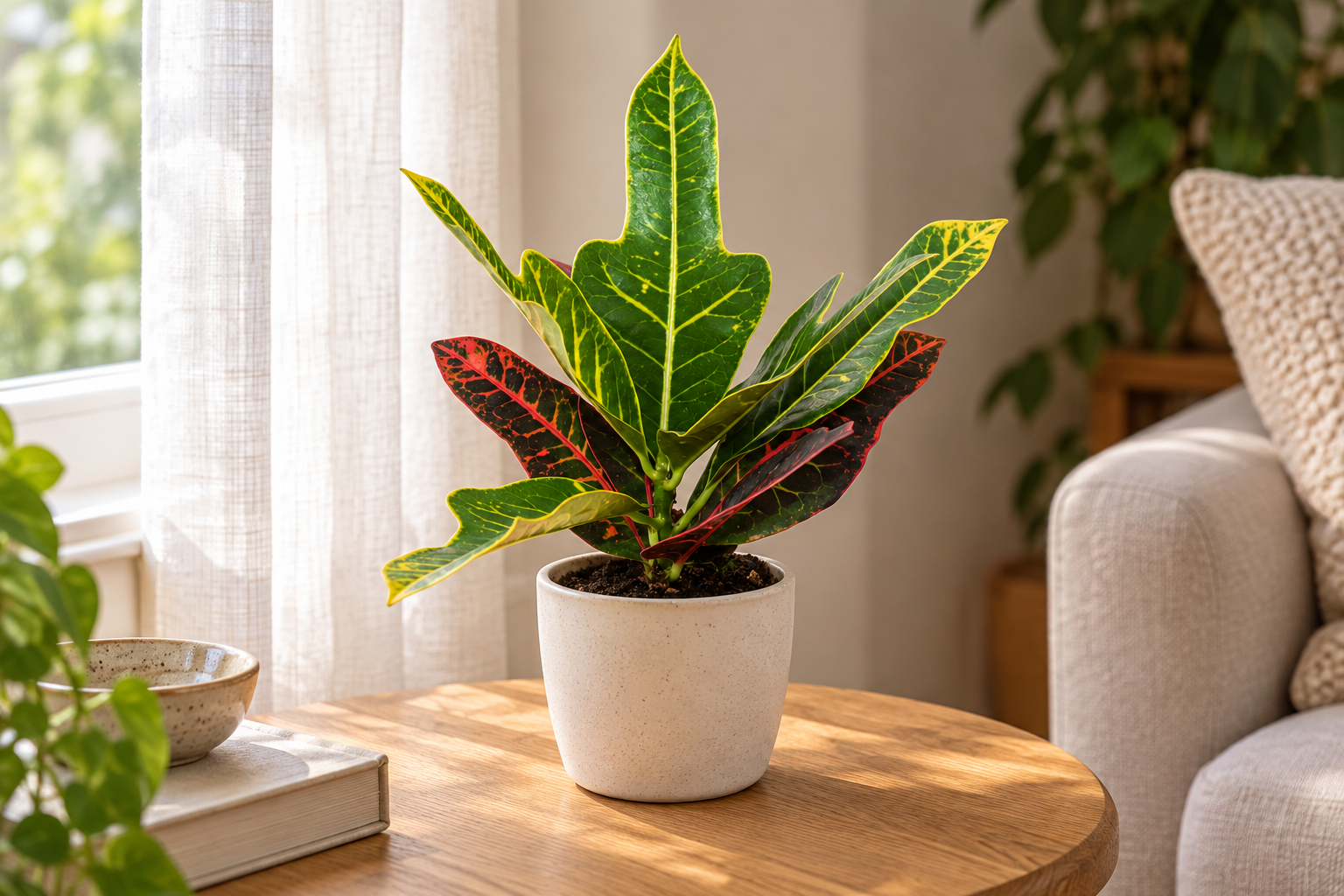
This plant at Exotenherz
Check the shop offer for current availability, price and what is included.
Check the selected shop offer for price, availability and delivery contents.
Your care table
| Topic | What to do | Why it helps |
|---|---|---|
| Position | Choose bright filtered light and protection from hot summer sun behind glass. | The colourful lobed foliage needs brightness but should not suddenly scorch. |
| Temperature | Choose an evenly warm spot without cold draughts. | Temperatures below about 15 °C and rapid changes can cause leaf loss. |
| Watering | When the upper soil starts drying, water the rootball with room-temperature water. | The small pot should neither dry out completely nor stay wet continually. |
| Drainage | Let all excess water drain away and empty the cachepot. | A small delivery rootball needs oxygen as well as moisture. |
| Soil | Use loose, slightly acidic substrate with good moisture retention and drainage. | Dense wet soil disturbs roots and makes water checks difficult. |
| Air humidity | Avoid direct heating air and monitor very dry room air. | Dry air can stress the foliage and favour spider mites. |
| Feeding | Feed moderately during growth according to a suitable fertiliser label. | A 9 cm rootball does not need concentrated feeding instead of light. |
| Repotting | Only when well rooted, give slightly more pot space during growth. | A substantially oversized pot keeps unused soil wet for a long time. |
Check the compost and pot weight. The care table explains how far the compost may dry.
Water only when needed. The water should reach the root ball without spilling over the rim.
Remove surplus water from the saucer or cachepot. Then return the plant to a suitable position.
Lobed leaves rather than a smooth oval
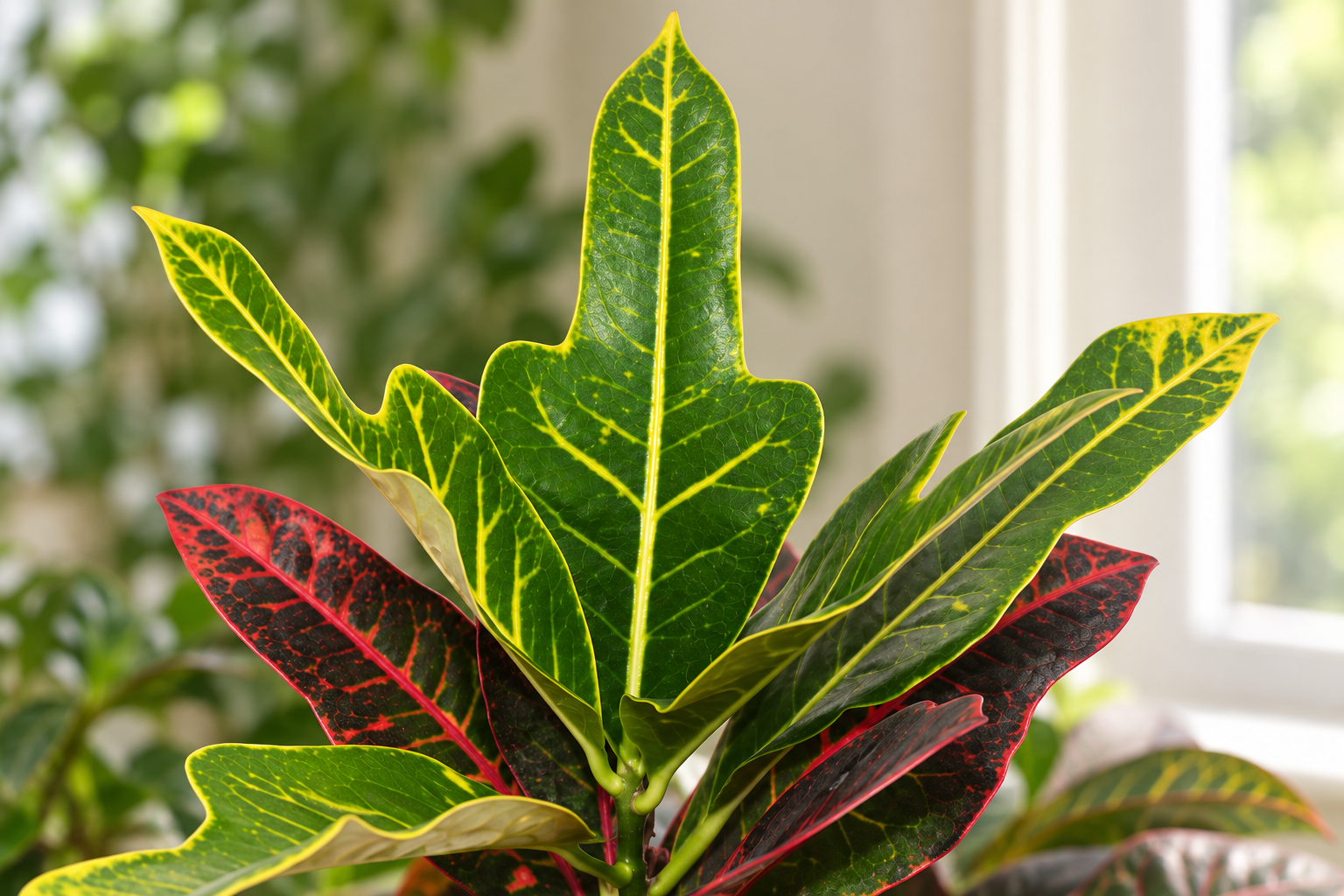
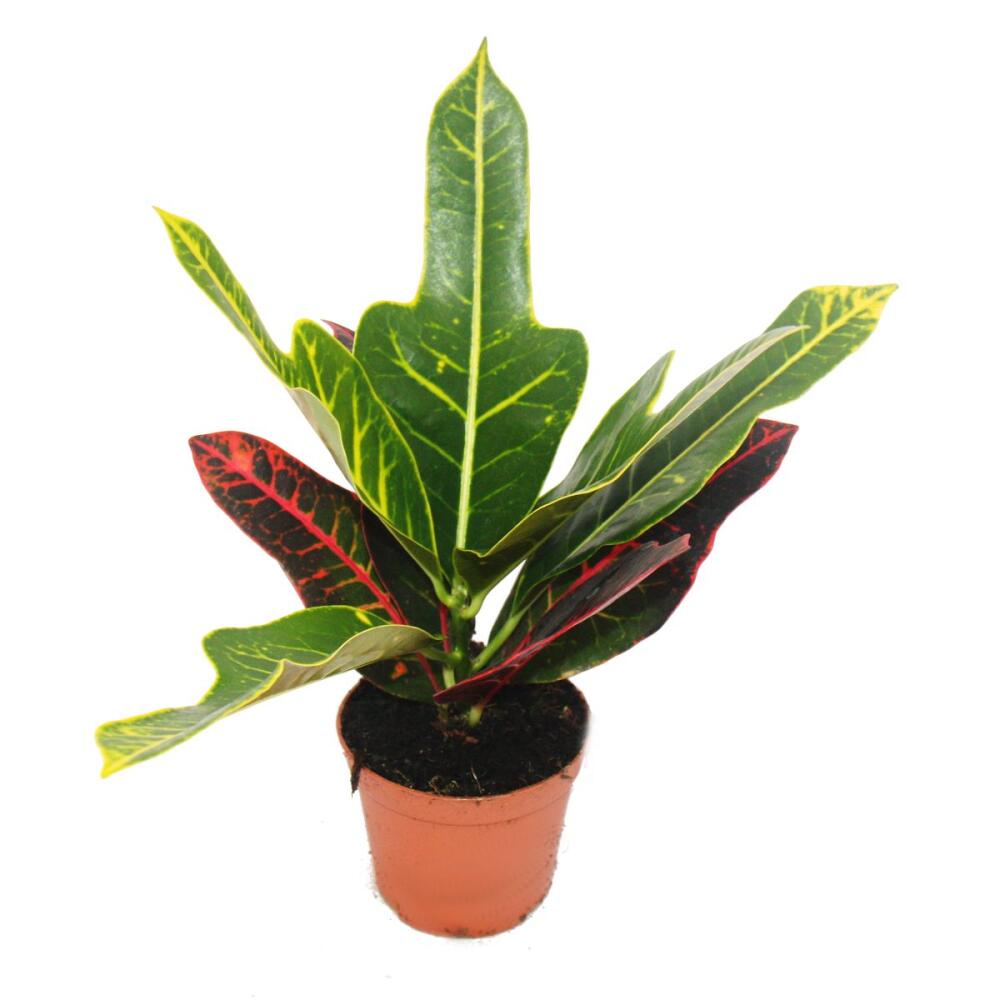
Excellent has a distinctive silhouette. A longer central leaf section is accompanied by side lobes, while strong veins run across the surface in yellow or warm tones. The clean associated original photograph shows this lobed foliage on the young croton. Green parts sit beside darker and reddish areas; not every leaf has the same colour. On a bright console, the shape can be recognised from some distance. A plain container directs attention to the leaf edges. The firm surface and upright shoots give the small plant a clear structure, but the long leaf tips remain delicate during handling and should not be used to hold it.
Excellent is a named selection
Botanically, croton belongs to Codiaeum variegatum in the family Euphorbiaceae. Excellent denotes a selection of this species. RHS lists the older combination Codiaeum variegatum var. pictum Excellent as an accepted name and names Croton Excellent as a common synonym. Croton is a familiar trade group name anyway; it does not become a separate species of the botanical genus Croton here. The species has its tropical background in Southeast Asia and the western Pacific. Individual selections differ in leaf shape and pattern. Excellent is therefore not equated with Petra merely because a leaf is colourful. What matters is the directly documented offer name and the matching lobed original foliage.
A small delivery rootball continues growing
The offer is a 9 cm pot at approximately 20 cm total height. This is the current delivery guide, not a fixed final size. The young croton can continue developing, branch more strongly and become woody under suitable indoor cultivation. No specific final size for Excellent is promised from the sources read. Shape and growth depend on light, warmth, root space and pruning. When unpacking, hold the pot and carefully release the wrapping from the lobes. Bent leaves do not restore their shape afterwards; new leaves form on the growing shoot. On arrival, check moisture and position first. A small pot needs attention but not an immediate move into an oversized container.
A bright indoor position with warmth around it
A bright position with filtered daylight helps croton develop its colourful foliage. Hot summer glass and a sudden move into full sun can still cause damage. Acclimatise Excellent gradually to stronger lighting and shade when needed. At a dim end of the room, development often declines. Even warmth is just as important; avoid temperatures below about 15 °C. During winter ventilation, keep the plant out of the cold draught. On a cold stone windowsill, the rootball may also chill even though the room air feels comfortable. A bright, sheltered indoor position is therefore better judged by its entire surroundings than by distance from a window alone.
Check moisture in a 9 cm pot
Check the upper soil regularly and learn the weight of the small pot. As the surface begins to dry, water thoroughly with room-temperature, preferably soft water. Supply the whole rootball; excess water then drains through clear pot holes. Empty water left in the cachepot. A small rootball may dry faster than a large plant in bright, warm conditions, but may also stay moist for a long time in low light. A fixed weekly rhythm is therefore unreliable. Loose, slightly acidic substrate holds moisture and lets air reach the roots. Neither repeated complete drying nor constant saturation suits this balance. Leaf loss calls for inspection, not automatic extra water.
Do not force colour with fertiliser
During visible growth, feed moderately according to a suitable fertiliser label. Pre-fertilised substrate already counts. More fertiliser does not replace missing daylight or make leaf colours more intense at the push of a button. If the pot is clearly well rooted, provide slightly more room and fresh suitable substrate in spring or early summer. Keep the planting depth unchanged. Remove dust with a soft, slightly damp cloth, supporting the lobed leaves. If a long shoot needs shortening, cut cleanly above a leaf attachment and retain enough healthy area. Gloves are sensible because escaping milky sap can irritate. Do not eat plant parts; keep the position out of reach of children and pets.
Winter and leaf inspection belong together
Excellent does not need a cool winter rest. Continue cultivation warmly and as brightly as possible, but water the rootball less often when growth slows. Direct proximity to heating combines dry air with warm substrate and can complicate care. Higher room humidity supports cultivation; constantly wet soil does not compensate for dry air. Occasionally check leaf undersides for fine webs, pale feeding marks or other deposits. Spider mites occur more easily in dry conditions. Brown tips, yellow leaves and leaf loss have several possible causes. Compare moisture, temperature and light and look at the next shoot. A healthy new lobed leaf shows development better than trying to preserve every older leaf unchanged.
One plant, several views
Good to know
How does Excellent differ from Petra?
The associated Excellent offer shows distinctly lobed foliage. Petra has broader elongated to oval leaves in the documented offer.
Is Croton Excellent a different plant?
Croton is the common trade name. It means the same named selection of Codiaeum variegatum.
Does Excellent stay about 20 cm tall?
No. That is the delivery guide for the 9 cm article. Later size and shape depend on cultivation.
Why is not every leaf red?
The selection shows different green, yellow and warm tones. Age and light affect the pattern; uniform colour is not promised.
May the small rootball dry out completely?
Avoid repeated complete drying. Once the upper soil begins to dry, water evenly and remove excess.
Should I choose a large pot immediately?
Only give slightly more room once clearly well rooted. Lots of unused soil staying wet for a long time makes care harder.
Does it need cold winter days?
No. The tropical plant stays warm and bright; cold and draughts can trigger leaf loss.
Can I simply cut the leaves off?
Intervene selectively and only if needed. Wear gloves, keep milky sap away from skin and eyes and do not eat the plant.
Sources and editorial note
- Exotenherz: offer and original images (03.10.2026)
- RHS: accepted Excellent selection and synonym (03.10.2026)
- RHS: croton cultivation at the stated date (03.10.2026)
- NC State: species characteristics and handling (03.10.2026)
Shop offer, article number, GTIN, availability and original images checked directly on 03.10.2026. Specialist sources read directly. Excellent accepted by RHS; clean lobed original gallery1 used. Differing unlobed/rolled gallery2 retained internally only, not public and not a generation reference.