
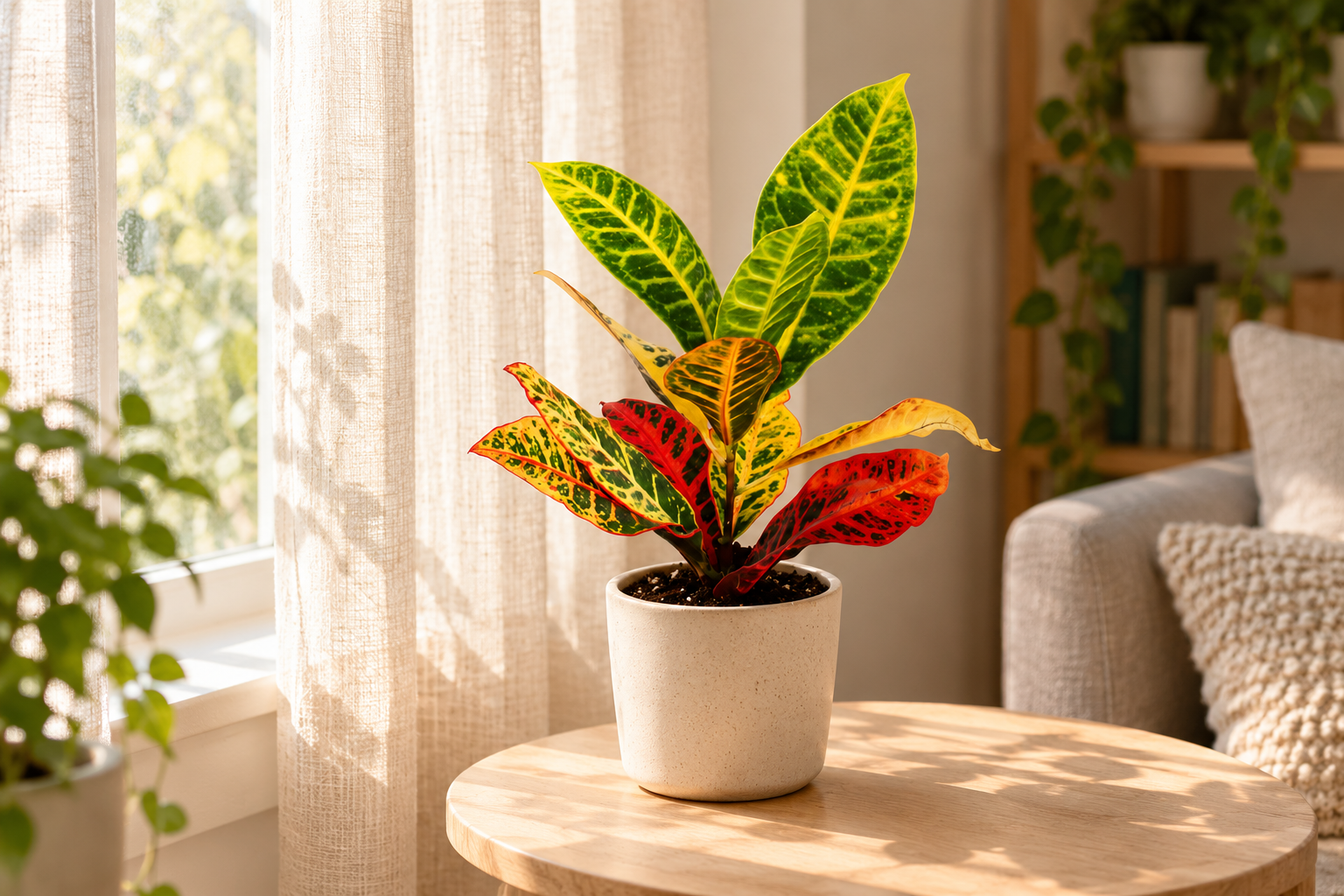
This plant at Exotenherz
Check the shop offer for current availability, price and what is included.
Check the selected shop offer for price, availability and delivery contents.
Your care table
| Topic | What to do | Why it helps |
|---|---|---|
| Position | Choose very bright filtered light and protection from hot summer sun behind glass. | Good light supports leaf colours, but sudden strong sun can still scorch. |
| Temperature | Keep evenly warm; do not let it fall below around 15 °C. | Cold and sudden temperature changes can trigger leaf loss. |
| Watering | After the upper soil begins to dry, water thoroughly with room-temperature water. | The rootball should stay moist and not repeatedly dry out completely. |
| Drainage | Remove water left in the cachepot after watering. | Permanent wetness stresses roots even in a tropical foliage plant. |
| Soil | Use loose, slightly acidic potting soil with good drainage. | Roots need both moisture and air. |
| Air humidity | Avoid direct proximity to heating and improve very dry air. | Dry warm air stresses the foliage and favours spider mites. |
| Feeding | Feed moderately during active growth according to a suitable fertiliser label. | Colour cannot be forced with arbitrarily high nutrient doses. |
| Leaf care | Carefully wipe dust off with a damp cloth; prune if needed using gloves. | Clean leaves receive light while irritant milky sap stays away from skin and eyes. |
Check the compost and pot weight. The care table explains how far the compost may dry.
Water only when needed. The water should reach the root ball without spilling over the rim.
Remove surplus water from the saucer or cachepot. Then return the plant to a suitable position.
Colour begins at the leaf veins
Petra carries broad elongated to oval leaves whose firm surface reflects light calmly. Yellow, orange or red veins run across green areas; some older leaves show stronger warm patches. This creates a changing play of colour within a single plant. A plain container and pale background make the pattern particularly effective. The leaves sit on upright shoots that can become woody with time. Petra needs no flowers for this impression. The offer shows a young leafy croton with differently coloured individual leaves. Identical colour distribution from leaf to leaf or plant to plant should not be expected in living material.
Croton and the Petra selection
The botanical name is Codiaeum variegatum; Petra denotes the named selection. In horticultural trade, Croton is often used even though the plant belongs botanically to Codiaeum. The older assignment Codiaeum variegatum var. pictum Petra also appears in the RHS profile. Its name status there is unresolved, while the profile and current growing guide describe Petra as a named selection. The documented cultivar name is therefore used here without claiming an additional confirmed botanical variety rank. The species belongs to Euphorbiaceae and has its tropical background in Southeast Asia and the western Pacific. This background explains warmth and moisture needs, but not a fixed later indoor height or the production location of the offer.
What the small delivery article shows
The directly available article is in a 12 cm pot and offered at approximately 30 cm total height. The clean original photograph shows Petra’s broad, colourfully veined leaves. Delivery height describes the current young article; it does not promise a permanent final size. As a woody plant, Petra can keep growing and branch more strongly under suitable cultivation. Room light, root space and any desired pruning influence its shape. Hold the pot when unpacking and do not use the firm leaves as handles. Transport can stress leaves and branches. Check rootball moisture first, find a suitable spot and let the plant settle before making further interventions.
A bright position with even warmth
Petra needs plenty of brightness for a well-developed colour display. A bright indoor spot with filtered light suits it, while hot summer sun directly behind glass can damage leaf surfaces. Acclimatise the plant to stronger lighting rather than moving it abruptly from a darker setting into full sun. A dim end of a room is unfavourable in the long term. Even warmth also helps; avoid temperatures below about 15 °C. When ventilating, keep it out of cold draughts and consider the cold window in winter. A warm bright spot a few steps beside a radiator is better than the direct dry airflow above it. Leaf edges and new growth show how the plant is accepting its surroundings.
Water for the rootball, air for the roots
Once the upper soil dries a little, water the rootball thoroughly and allow excess water to drain. Room-temperature, preferably soft water suits it; clean rainwater can be used. The rootball should not repeatedly become completely dry. Constant wetness in the cachepot is not a suitable alternative, however. Loose, slightly acidic soil holds moisture and lets water drain well. Lift the pot occasionally and check deeper if the surface seems contradictory. Leaf loss may follow cold, a change of position or a disturbed water supply. Check the actual situation first before watering more. A moist rootball with falling leaves does not automatically need another watering.
Care for firm leaves gently
Dust can be removed with a soft, slightly damp cloth. Support each leaf underneath and do not press on sensitive new growth. This keeps the leaf surfaces clean and able to use the available light. During active growth, feed moderately according to a suitable fertiliser’s instructions, taking pre-fertilised soil into account. When clearly well rooted, provide slightly more pot space in spring or early summer. If a shoot is too long, a selective cut above a leaf attachment is possible. Wear gloves and keep escaping milky sap away from skin and eyes. The plant is for looking at, not eating, and should stand out of reach of children and pets.
Winter care follows the light
Petra stays warm and bright in winter too. A deliberately cool resting phase is not useful for this tropical croton. With little daylight, development may slow and soil may stay moist longer. Water amounts and intervals continue to follow the rootball. Very dry heating air cannot be compensated for by permanently wet soil. Check leaf undersides for fine webs or feeding marks and shoot bases for other deposits. Spider mites may appear in dry conditions. One discoloured leaf is not a certain diagnosis. Observe temperature, moisture and development of the next leaf together; healthy new foliage is useful feedback on care.
One plant, several views
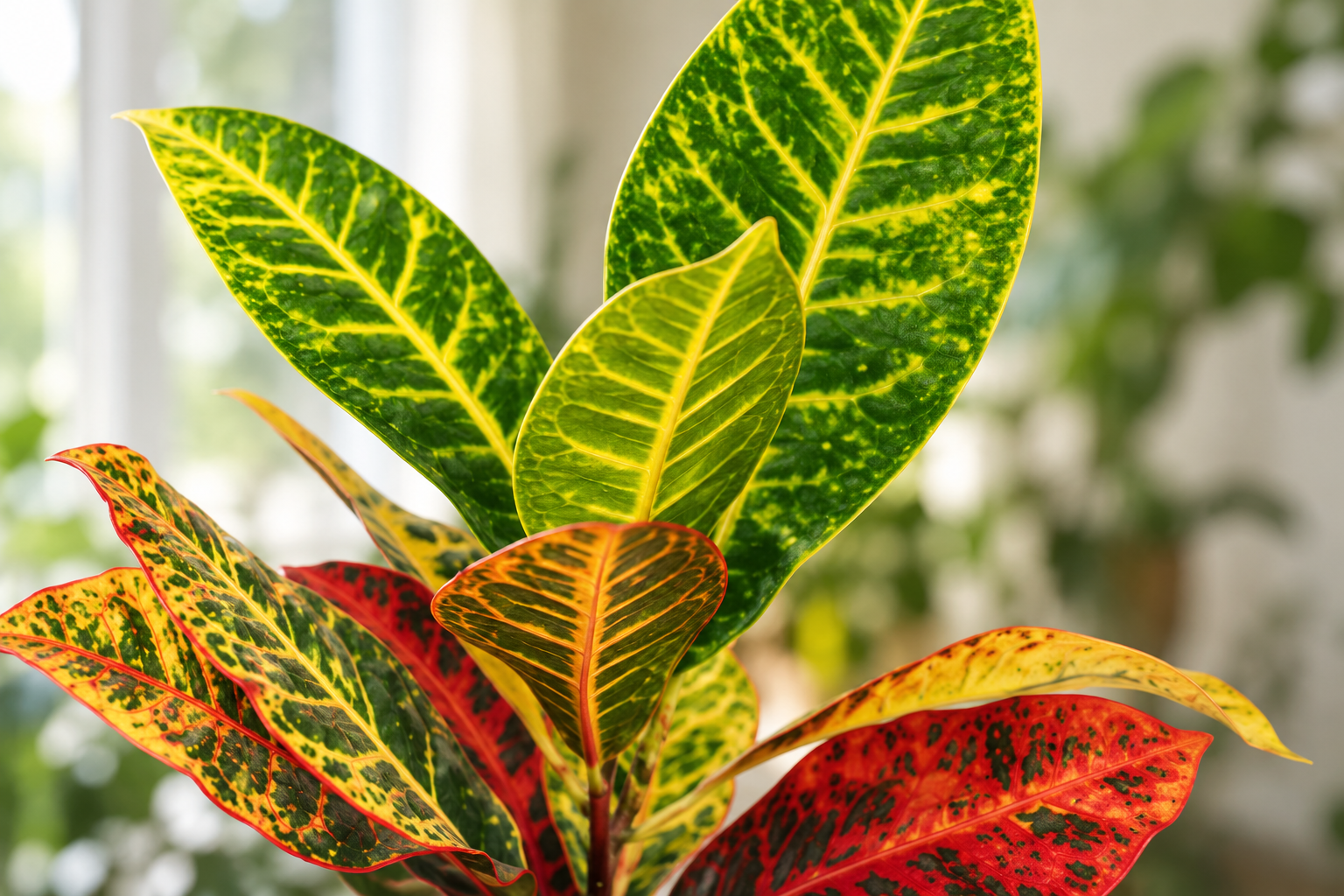
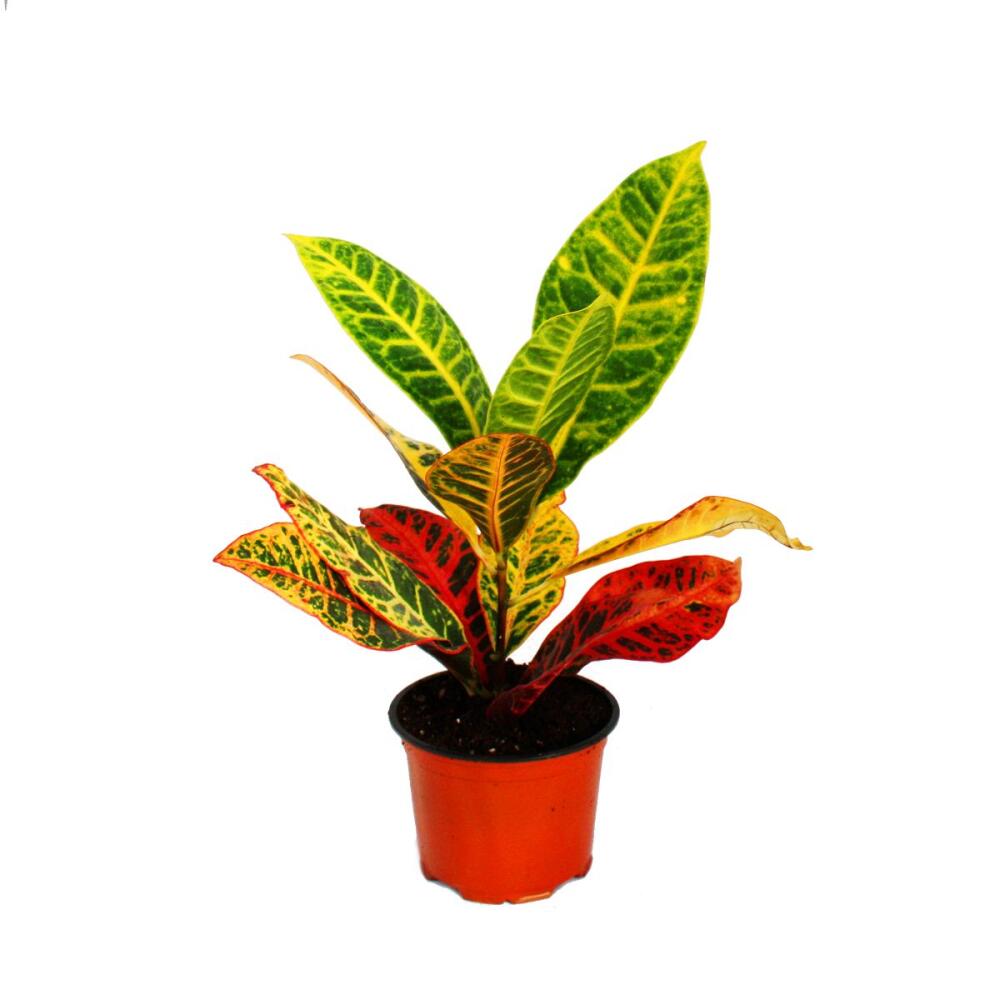
Good to know
Is Petra a Croton species?
Croton is a common trade name. Botanically it is Codiaeum variegatum with the named selection Petra.
Why is var. pictum missing from the main name?
The older assignment appears at RHS, where its name status for this Petra profile is unresolved. The documented cultivar name remains without confirming an additional rank.
Do all the leaves turn red?
No. Age, light and individual development affect colour. A uniformly red crown is not promised.
Is the delivery height a final height?
No. Approximately 30 cm total height describes the offered young article. As a woody plant, Petra can continue growing.
Can it go straight to a hot south-facing window?
Strong summer sun behind glass can harm it. Position brightly, shade if needed and acclimatise gradually to more light.
Why do leaves fall after moving it?
A change of position, cold and disturbed rootball moisture are possible causes. Check the cause rather than generally adding more water.
Does it need a cool winter rest?
No. Continue cultivation warmly and brightly; allow for lower water needs when growth slows.
What matters when cutting?
Wear gloves and keep milky sap away from skin and eyes. Do not eat the plant and keep it out of reach of children and pets.
Sources and editorial note
- Exotenherz: offer and original images (03.10.2026)
- RHS: Petra profile and leaf characteristics (03.10.2026)
- RHS: croton cultivation at the stated date (03.10.2026)
- NC State: species, light and plant sap (03.10.2026)
Shop offer, article number, GTIN, availability and original images checked directly on 03.10.2026. Specialist sources read directly. Petra variety name documented; RHS var. pictum Petra NameUnresolved status disclosed transparently. No identical colour or fixed final size guaranteed.