
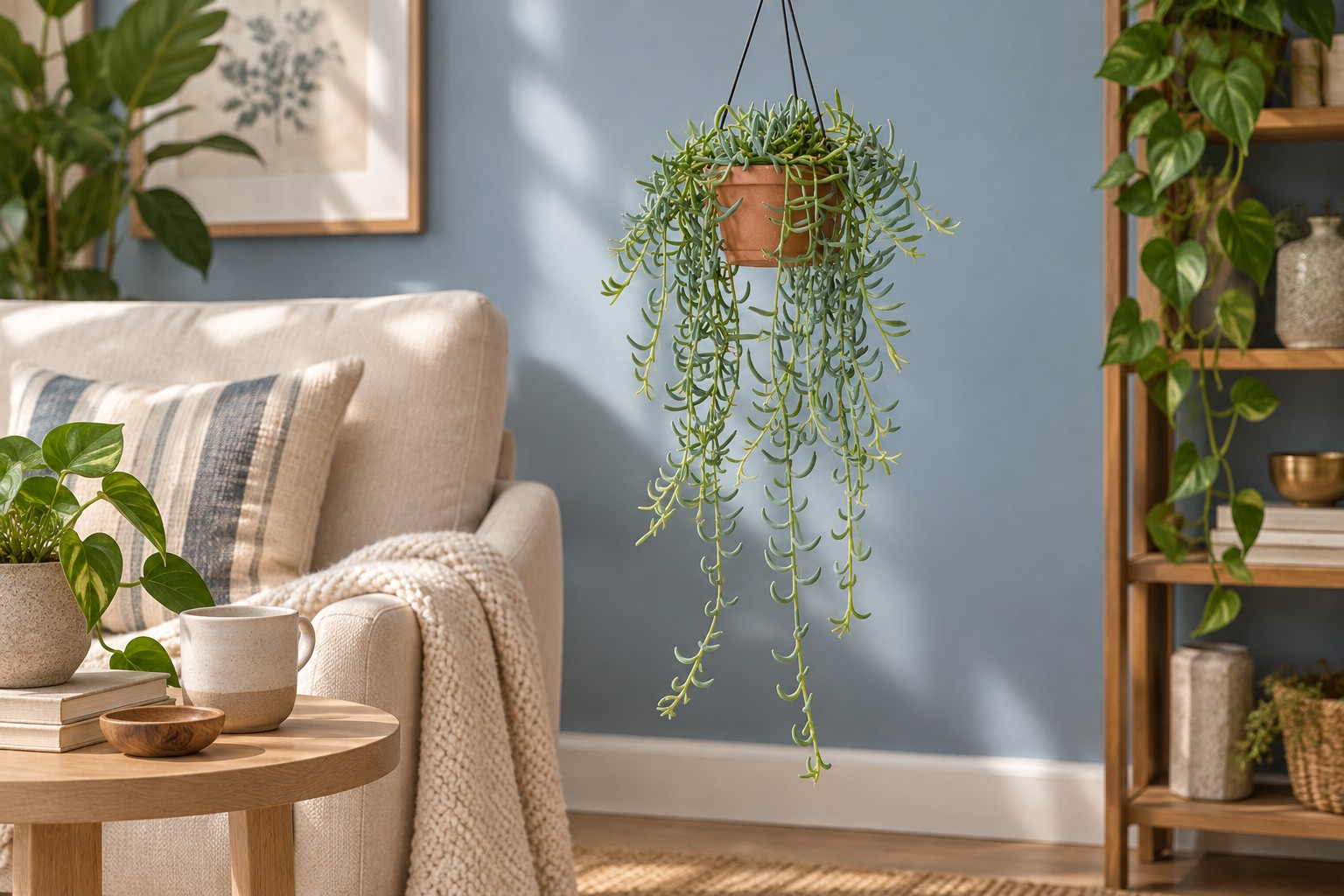
This plant at Exotenherz
Check the shop offer for current availability, price and what is included.
Product details, availability and delivery information in the shop.
Your care table
| Topic | What to do | Why it helps |
|---|---|---|
| Light | Bright; gentle sun after acclimatisation. | The upper hanging-pot area needs light too. |
| Water | Water after drying; do not leave completely dry for long. | Water-storing leaves buffer intervals, but not unlimited drought. |
| Drainage | Let residual water drain away. | Stems and roots can rot when wet. |
| Compost | Airy, free-draining succulent mix. | A compact root ball remains easier to monitor. |
| Winter | Bright and frost-free; water less often. | Water use decreases in lower light. |
| Fertiliser | Moderately during growth, following the label. | Heavy applications are unnecessary. |
| Pruning | Remove individual overlong or damaged shoots. | Healthy sections can serve for rejuvenation. |
| Propagation | Carefully root the nodes of healthy shoot pieces. | This species can root along the ground. |
Check the compost and pot weight. The care table explains how far the compost may dry.
Water only when needed. The water should reach the root ball without spilling over the rim.
Remove surplus water from the saucer or cachepot. Then return the plant to a suitable position.
The bananas are its leaves
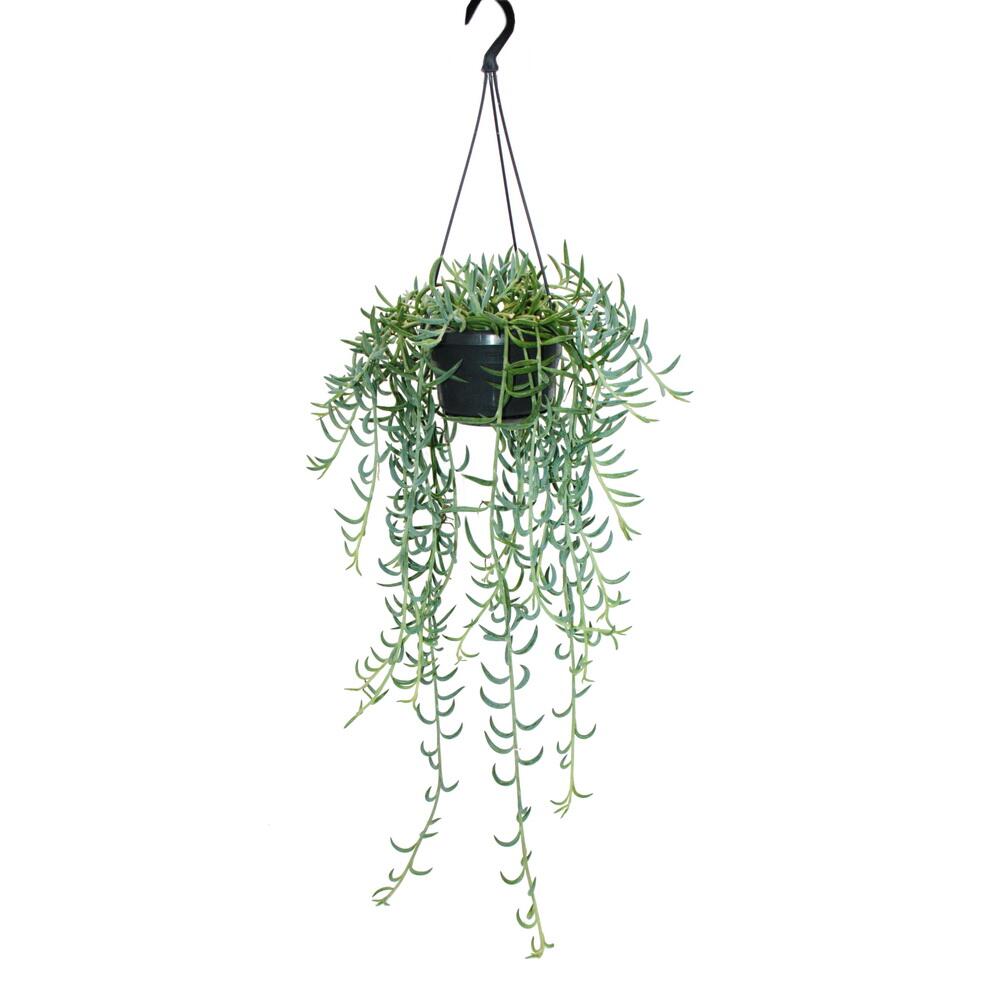
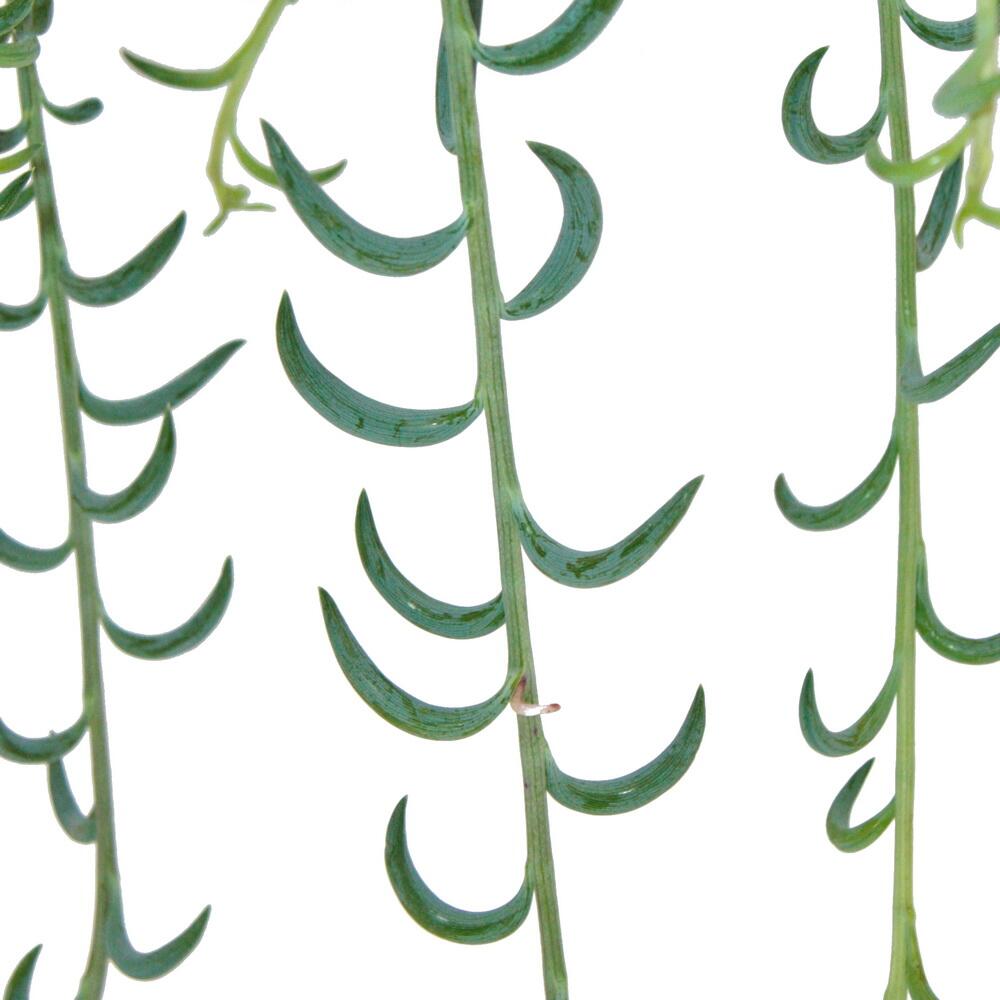
Fleshy curved leaves sit on thin green stems. Their shape gave the plant its string-of-bananas name. They are not small fruit. The offer comes in a 14 cm hanging pot with approximately 50–60 cm trailing length. The hanger is not included in this length. The scene allows individual shoots to hang freely and stays with this measurement. A dense, metre-long plant curtain would exaggerate the young delivery size.
A daisy-family plant with succulent reserves
Curio radicans, formerly Senecio radicans, belongs to the Asteraceae family. The species comes from southern Africa. Its shoots can creep along the ground and form roots on contact with suitable compost. In a hanging pot this becomes trailing growth. The small water-storing leaves help through drier periods. Occasional pale flower heads consist of many small individual flowers, but flowers are not a promised delivery feature. The regular sequence of curved leaves is already ornamental.
A bright hanging position needs light from above
Position the plant so that the top of the pot also receives enough daylight. Too high beneath a ceiling or deep in a room, it may become sparse at the top. Very bright light and gentle sun after acclimatisation are favourable. Avoid hot, intense afternoon sun in midsummer, particularly for newly moved plants. A warm summer position outdoors sheltered from rain is suitable. Indoors, the hanging pot must remain easily reachable so that watering and inspection do not become laborious exceptions.
Dry intervals with timely watering
Allow the root ball to dry between waterings, then water evenly. Let excess drain away. The plant tolerates dry intervals but should not regularly remain completely dried out for a long time. Severely shrunken leaves show that reserves may be lacking. If the compost is wet at the same time, soft leaves are instead a reason to inspect roots. Fixed weekdays are therefore less helpful than moisture and weight. During the darker part of the year, water use decreases and intervals lengthen.
Gently fill gaps
An airy, free-draining succulent mix and drainage holes remain important. Repot when roots or old compacted compost require it. A much larger pot is not an automatic improvement. Healthy shoot pieces can be carefully rooted on suitable compost after the cuts dry briefly. Contact at the nodes helps without burying leaves deeply. This can make an older hanging plant denser again. Guide long existing shoots carefully rather than pulling tangled ends.
Through winter and small care mistakes
Overwinter in bright, frost-free conditions and water substantially less when cooler. Feed moderately according to the label during growth. If the pot centre becomes bare, check light and roots together. Watch for mealybugs and scale insects at leaf bases. Individual damaged shoots can be selectively removed. Dark, soft shoot bases above a wet root ball are more serious than a broken end piece. Successful care shows in firm leaves and healthy new growth, not in length forced as rapidly as possible.
One plant, several views
Good to know
Does it grow real bananas?
No. The name describes the shape of the water-storing leaves.
Can I hang it directly beneath the ceiling?
Only if enough daylight also reaches the top and care remains accessible.
Why do the leaves shrink?
With a dry root ball, water may be lacking. In wet compost, look for root problems first.
Can I save a broken shoot?
A healthy piece can often be carefully rooted after the cut surface dries.
Sources and editorial note
- Product and delivery contents: Exotenherz
- SANBI PlantZAfrica: plant profile and cultivation
- Royal Horticultural Society: plant and care information
Sources checked: 16 September 2026. Product information and the contents of delivery follow the linked shop offer. Care advice was checked against the cited specialist sources and should still be adapted to the plant’s condition, position and season.