
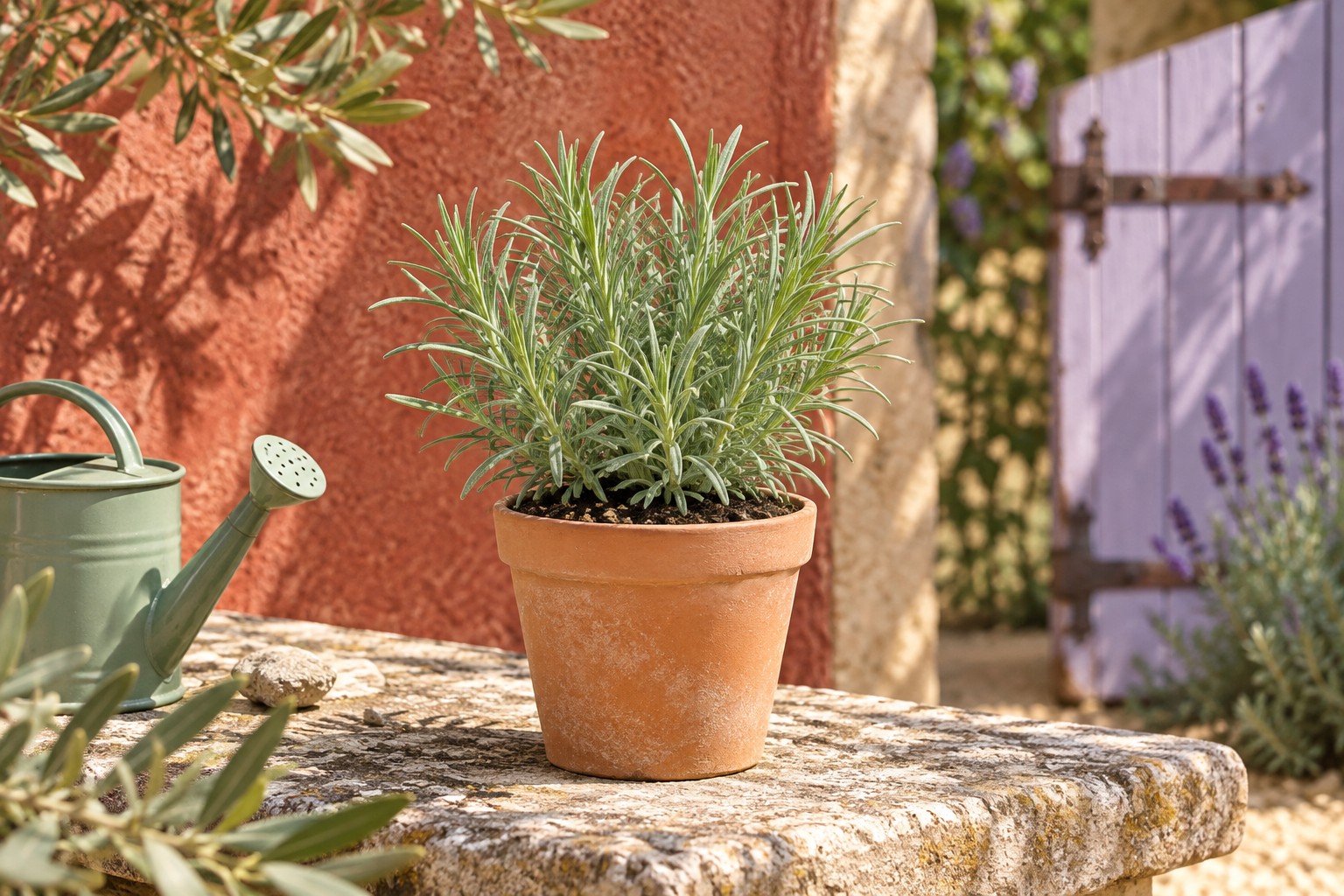
This plant at Exotenherz
Check the shop offer for current availability, price and what is included.
Link to the offer in German. Check the shop for the current price, availability and delivery contents.
Your care table
| Topic | What to do | Why it helps |
|---|---|---|
| Position | Keep sunny, warm and with good drainage. | The Mediterranean plant cannot tolerate constantly wet soil. |
| Water | Check during establishment; later let it dry noticeably between waterings. | Established plants have better drought reserves. |
| Compost | Use loose, relatively lean herb compost with mineral structure. | Permeability keeps the root area airy. |
| Drainage | Remove remaining water and ensure rainfall can drain. | Winter waterlogging is particularly unfavourable. |
| Fertiliser | Feed only sparingly according to need. | Oversupply encourages soft growth. |
| Pruning | Shorten gently in leafy areas. | Bare old wood does not reliably produce new shoots. |
| Winter | Protect small pots from wetness and severe frost. | Winter protection depends on position and container. |
| Use | Follow product and treatment guidance for seasoning herbs. | Scent alone does not provide general permission to eat it. |
Check the compost and pot weight. The care table explains how far the compost may dry.
Water only when needed. The water should reach the root ball without spilling over the rim.
Remove surplus water from the saucer or cachepot. Then return the plant to a suitable position.
The scent explains its name
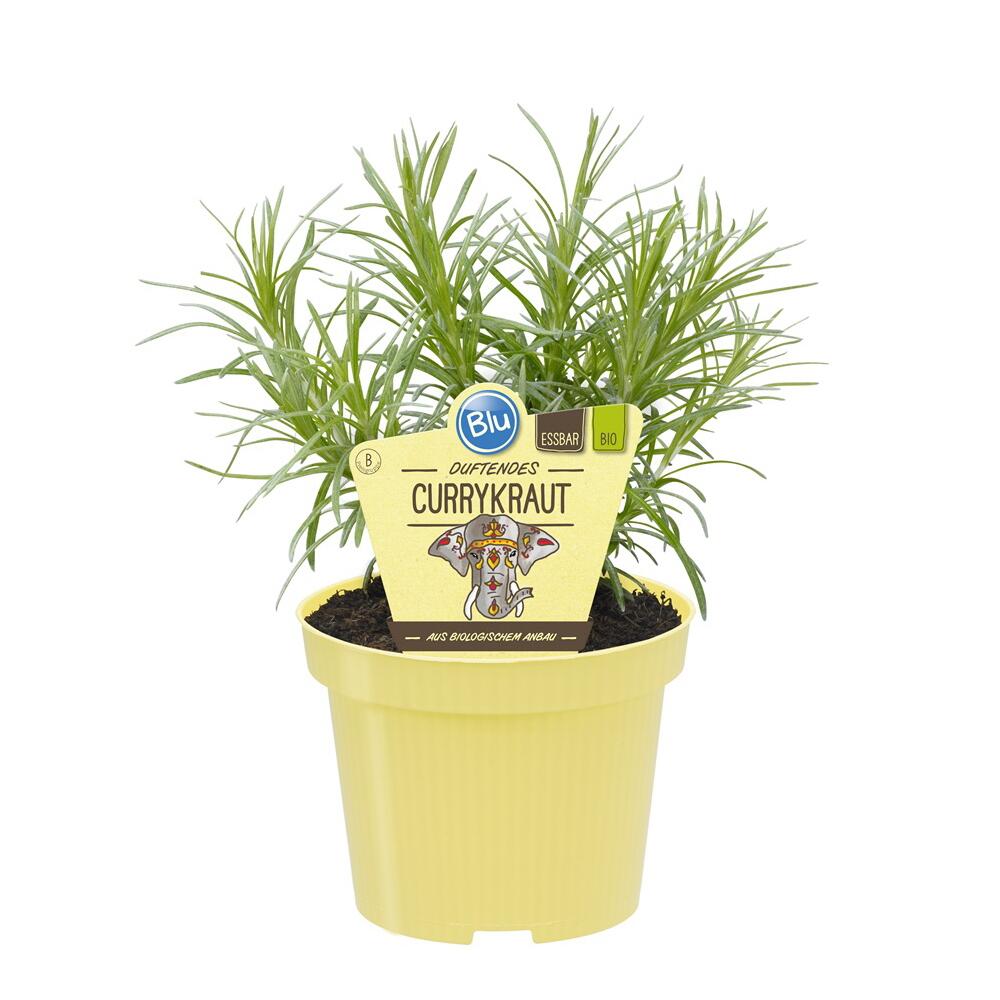
Curry plant carries narrow silvery-green leaves and can form small yellow flower heads. Its spicy scent recalls curry, but the plant is neither part of every curry mixture nor the tropical curry leaf tree Murraya koenigii. Botanically it is listed as Helichrysum italicum. The shop uses the older trade name Helichrysum angustifolia; Helichrysum angustifolium is classified botanically as a synonym. These names are brought together in the Pflanzenwelt entry so the plant can be found again.
An herb for sunny displays
The particular offer states organic quality and a 12 cm pot. No confirmed overall height is available; the scene follows the young plant in the original photograph. In a border or container, fine silvery foliage provides an attractive contrast to broader green leaves. Later size depends on position and pruning. Decorative pot and decoration are examples. The organic statement is associated only with the shop offer actually described that way.
Sun and a lean root environment
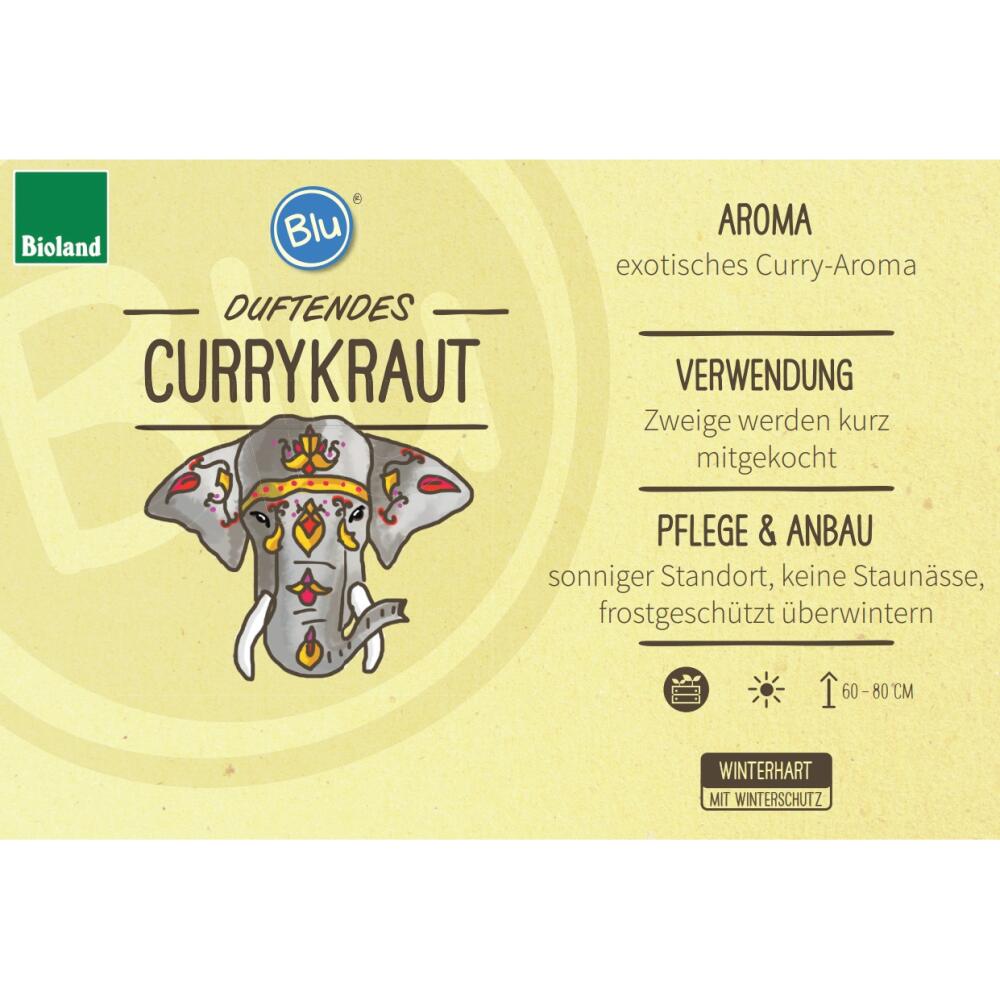
A sunny, warm position with free-draining soil is favourable. Heavy, constantly wet soils suit poorly. In a pot, use a loose herb compost with mineral structure and ensure drainage. After delivery, gradually acclimatise to strong sun. The plant does not need constantly damp neighbours. When combining it with other herbs, therefore choose similar light and soil requirements.
Establishment is its own care phase
Check a newly planted specimen regularly at first and provide water when needed. Only a well-established plant copes better with dry spells. In a pot, compost may dry noticeably between waterings, and leftover water is removed. Grey foliage does not mean no water is needed at all. Assess limp or dry shoots together with the root ball. More watering does not help wetness problems.
Keep bushy with light trimming
When needed, shorten carefully within still-leafy growth and retain enough green tissue. A deep cut into bare old wood is risky. Feed only sparingly during growth; excessive nutrients encourage soft shoots. For use as a seasoning herb, follow the particular offer’s guidance and subsequent treatment instructions. Use only reliably identified, suitable plant parts. No medical applications, oil recipes or health effects are inferred from its scent here.
Winter wetness often decides the outcome
The shop offer states winter hardiness with winter protection. The root area in a small pot is more vulnerable than in an established plant in a suitable border. Choose a sheltered position and particularly avoid prolonged wetness; in harsh areas, plan a suitable cool shelter. Check the root ball on frost-free days. In spring, assess vitality first, then remove dead parts and gently reshape. This keeps the young herb a well-maintained small subshrub.
One plant, several views
Good to know
Is curry plant the curry leaf tree?
No. Helichrysum italicum is a Mediterranean subshrub; the curry leaf tree belongs to a different plant group.
Why does the shop use a different botanical name?
The older trade name is still used. The Pflanzenwelt entry links it with Helichrysum italicum.
Can I cut hard into old wood?
It is better not to. Light trimming that leaves green foliage is more dependable.
Is it winter-hardy without protection?
The offer mentions winter protection. Especially in a small pot, position, frost and prolonged wetness must be considered.
Sources and editorial note
- Product and delivery contents: Exotenherz
- RHS Plants: plant profile
- Royal Botanic Gardens, Kew: botanical classification
Sources checked: 15 September 2026. Product information and delivery contents follow the linked shop offer. Care has been checked against the stated specialist sources and remains subject to plant condition, position and season.