

This plant at Exotenherz
Check the shop offer for current availability, price and what is included.
Link to the offer in German. Check the shop for the current price, availability and delivery contents.
Your care table
| Topic | What to do | Why it helps |
|---|---|---|
| Position | Outdoors all year, sunny to partly shaded and sheltered. | The deciduous tree needs a natural yearly rhythm. |
| Water | Supply evenly and check daily in warmth. | The shallow shared bowl holds a small water reserve. |
| Compost | Moisture-retentive and also well-drained. | The root ball needs air as well as water. |
| Fertiliser | During active growth following product instructions. | Do not feed in winter. |
| Pruning | Organise individual crowns selectively and distribute light. | Three trees should not strongly crowd each other out. |
| Leaf fall | Allow copper-brown autumn colour and bare winter branches. | The species is a deciduous conifer. |
| Winter | Give the bowl extra protection during severe frost. | Exposed roots are more sensitive than a large garden tree. |
| Spring | Watch new growth and protect from severe late frost. | Fresh soft shoots are particularly sensitive. |
A small forest with a great botanical history
Metasequoia glyptostroboides belongs to the cypress family and is naturally native to China. Its soft oppositely arranged leaves make it an unusual conifer: green turns copper-brown in autumn and falls away. Fresh new shoots develop in spring. This species is not equated with North American redwoods; the shop’s USA origin statement needs botanical correction. In unrestricted growth, dawn redwood can become very large. Here, a shaped forest planting shows its yearly cycle in a small space.
Three trunks share a bowl
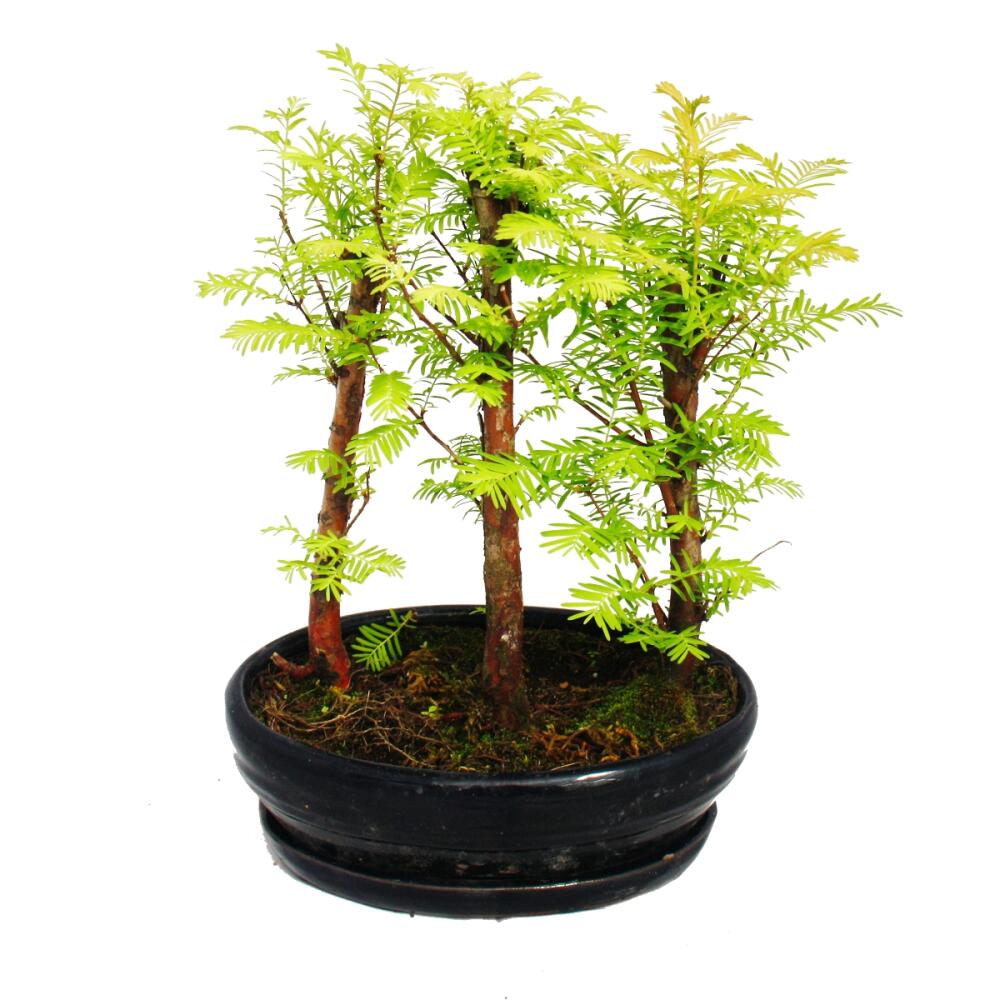
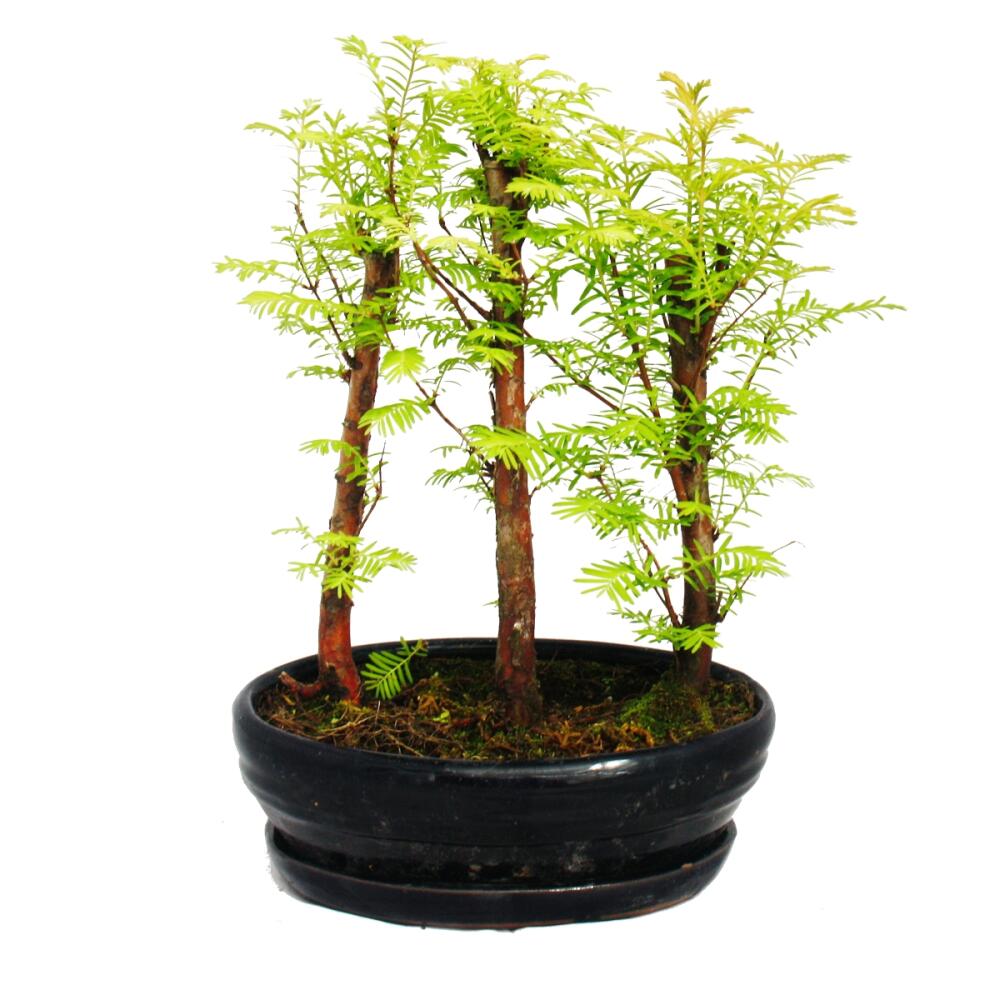
The offer contains three dawn redwoods together in a bowl approximately 18 × 10 cm. Overall height is described as about 20 to 30 cm. This is a forest planting, not three separately delivered pots. Different trunk heights and open branches create a sense of depth. The precise design and bowl colour may differ. In winter, the planting may appear without green foliage. The original photograph of a leafy stage does not promise the same appearance in every season.
Outdoors preserves the yearly rhythm
Choose a sheltered outdoor position throughout the year, sunny to partly shaded. Wind and intense midday heat increase the small bowl’s water consumption; a somewhat sheltered position makes care easier. This tree is not a permanent living-room plant. Warm interiors do not suit its yearly rhythm, particularly during winter rest. Set the forest planting securely and ensure rainwater and watering water can drain. An open terrace is not automatically evenly moist: roof overhangs or sheltered corners may remain dry even during rain.
A moisture-loving tree within limited root space
Dawn redwoods prefer a good water supply. In the shallow bowl, daily checks may be necessary in warm weather, with correspondingly frequent thorough watering. The root ball should not dry completely. Bonsai cultivation is nevertheless no reason to leave roots permanently in a closed bowl of water. Structurally stable well-drained compost and clear base holes combine moisture with air. Water slowly and thoroughly; with a dense root mat, check whether water really enters the root ball. A fixed weekly plan is insufficient in changing weather.
Guide growth and preserve the forest character
Feed during active growth according to product instructions. The species may grow vigorously, so regularly compare development of the individual trunks. A particularly strong tree should not shade the others completely. Shorten young shoots selectively and remove dead parts without shaping every crown into an identical ball. When repotting, the shared arrangement remains part of the design. Larger root work needs suitable timing and experience. Wire and ties must not grow in; they need especially close checks during strong thickening growth.
Winter leaf fall and root protection go together
Leaves turning brown and falling in autumn belong to the natural cycle. Carefully remove loose foliage from the bowl. During severe frost, exposed roots need extra protection, such as sheltered positioning and insulation of the container. Drainage must stay open. Check moisture on dry frost-free days, because even a resting tree must not dry completely. Do not feed in winter. Watch for fresh spring shoots and temporarily protect young growth if late frost threatens. The bare winter forest is part of its beauty.
One plant, several views
Good to know
Will I receive three separate plants?
It is a shared forest planting of three trees in a bowl approximately 18 × 10 cm.
Why does a conifer lose its leaves?
That is normal for dawn redwood: it colours in autumn and grows new shoots after winter rest.
Can the bonsai forest remain permanently in the living room?
No. It belongs outdoors throughout the year, with suitable protection for the small bowl in severe frost.
Does this redwood come from the USA?
The natural origin of Metasequoia glyptostroboides is in China. It should be distinguished from North American redwood species.
Sources and editorial note
- Product and delivery contents: Exotenherz
- NC State Extension: plant profile
- Royal Horticultural Society: plant and care knowledge
Sources checked: 15 September 2026. Product information and delivery contents follow the linked shop offer. Care has been checked against the stated specialist sources and remains subject to plant condition, position and season.