

This plant at Exotenherz
Check the shop offer for current availability, price and what is included.
The linked shop is in German. Product details, availability and delivery information are provided in that shop.
Your care table
| Topic | What to do | Why it helps |
|---|---|---|
| Light | Bright to moderately bright, protected from hot midday sun. | Provide sufficient daylight for balanced growth. |
| Water | Let the top roughly two centimetres dry slightly, then water according to need. | Let excess drain and do not keep the root ball permanently wet. |
| Compost | Use a loose, humus-rich mix in a pot with drainage holes. | Combine aerated roots with even moisture. |
| Feeding | During active growth, feed moderately according to product instructions. | Account for pre-fertilised compost and slower winter growth. |
| Temperature | Keep warm and sheltered from draughts, not below 15 °C according to the shop. | Avoid cold windowpanes and chilled pot bases. |
| Leaf care | Remove dust gently with a damp cloth without keeping leaves constantly wet. | Inspect leaf surfaces regularly for changes. |
| Repotting | When clearly well rooted, choose only a suitably larger pot. | Oversized containers dry slowly. |
| Safety | Keep out of reach of children and pets; wear gloves when pruning. | Sap is strongly irritating, particularly to eyes and mucous membranes. |
Check the compost and pot weight. The care table explains how far the compost may dry.
Water only when needed. The water should reach the root ball without spilling over the rim.
Remove surplus water from the saucer or cachepot. Then return the plant to a suitable position.
A leaf pattern with living transitions
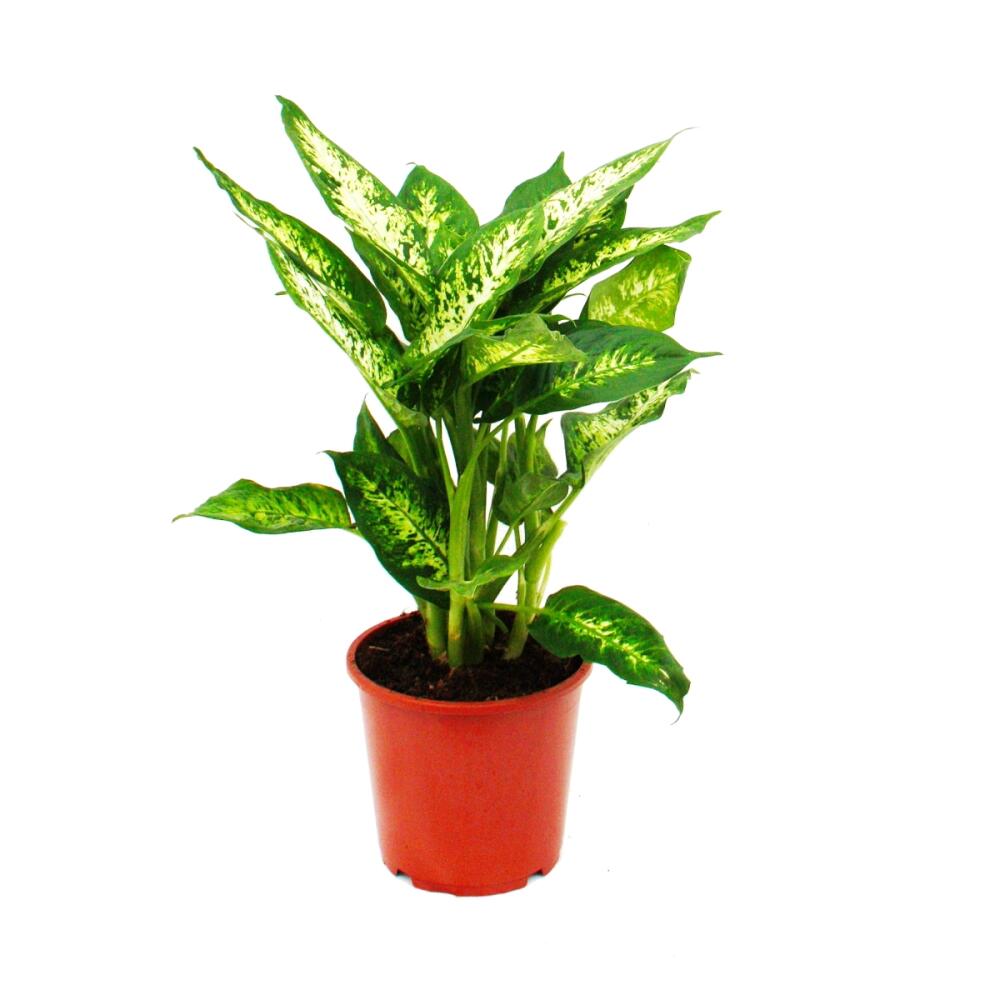
In Compacta, pale leaf centres are accompanied by green margins and irregular green markings. Each leaf is a little different. Dieffenbachias belong to the arum family and form strong, upright stems with soft-looking foliage. Compacta here denotes the cultivated form offered in the shop, not a separate botanical species. The specialist profile for Dieffenbachia seguine helps with general growing requirements; the particular markings and delivery size come from the shop offer.
Compact does not mean permanently unchanged
The offered plant is in a 17 cm pot and measures approximately 55 cm total height. Its leaf pattern can be appreciated on a spacious desk or low cabinet. Over the years, stems may grow taller and lose older lower leaves. The space around the eventual crown therefore also matters when choosing a position. Because its sap is strongly irritating, this beauty belongs only where children and pets cannot reach it.
Choosing warm, filtered light
A bright position without hot, direct midday sun maintains balanced growth. Moderate brightness is tolerated, but a dark room is not a substitute. The shop recommendation states at least 15 °C; avoid cold draughts and chilled roots in particular. A bathroom is suitable only with sufficient daylight. Higher humidity may help, but constantly wet leaves in still air are not a care objective. Protect the plant from a cold airflow when ventilating.
Managing moisture through the root ball
Let the top roughly two centimetres of compost dry slightly and check moisture underneath. Then water thoroughly onto the compost as needed and let excess drain away. A light pot helps you judge the situation; a rigid weekly schedule does not account for temperature or growth. The plant usually needs less water during the dark season. Yellow foliage in wet compost calls for checking roots and drainage, whereas a dry, light root ball needs a different response.
Open compost and restrained interventions
A humus-rich, airy potting mix with good drainage supports the fleshy roots. Repotting is worthwhile when the root ball is clearly well rooted; an unnecessarily large container retains water too long. During active growth, feed moderately according to product instructions and account for fertiliser already present. Remove dust carefully with a soft, slightly damp cloth. Overlong stems can in principle be cut back, but cut surfaces and tools require particular care because of the irritating sap.
Considering leaf health and safety together
Regularly check leaf undersides and axils for mealybugs, scale insects or fine webbing. Observe new plants separately at first. Brown edges can have several causes, including dry air, root damage or salt accumulation. Careful checks are more useful than switching treatments on guesswork. Wear gloves when removing dead leaves and keep sap away from eyes and mouth. The plant provides a green indoor experience; no specific medicinal or air-purifying promises are derived from this.
One plant, several views
Good to know
Is Compacta a separate species?
Compacta here denotes the offered cultivated form. General care follows dieffenbachias, and the particular appearance follows the shop photo.
Is it suitable for a windowless bathroom?
Not without sufficient suitable plant lighting. High humidity cannot replace missing light.
Why is a lower leaf turning yellow?
Individual old leaves can age naturally. If several leaves are affected, also check root-ball moisture, temperature and pests.
Can it stand near pets?
Only safely out of reach. The plant is toxic and its sap strongly irritating.
Sources and editorial note
Sources checked: 15 September 2026. Product information and the contents of delivery follow the linked shop offer. Care advice was checked against the cited specialist sources and should still be adapted to the plant’s condition, position and season.