This plant at Exotenherz
Check the shop offer for current availability, price and what is included.
Check the shop for the current price, availability and offer contents.
Your care table
| Topic | What to do | Why it helps |
|---|---|---|
| Light | Bright open position with gentle daylight. | The top of the pot must also get enough light. |
| Water | Let the upper compost layer dry slightly. | Fleshy leaves are no reason for months of drought. |
| Drainage | Allow to drain after watering and empty the sleeve. | Water must not stand unnoticed beneath the root ball. |
| Compost | Keep very loose and structured. | Its epiphytic lifestyle calls for airy root conditions. |
| Air | Combine pleasant humidity with some air movement. | Permanently wet foliage in still air is unfavourable. |
| Food | Feed sparingly during growth following product instructions. | A small hanging plant needs no heavy blanket applications. |
| Handling | Hold the container and free the trailing shoots. | The fine shoots are sensitive to pulling. |
| Winter | Keep bright, warm and draught-free. | Less light changes water consumption. |
Check the compost and pot weight. The care table explains how far the compost may dry.
Water only when needed. The water should reach the root ball without spilling over the rim.
Remove surplus water from the saucer or cachepot. Then return the plant to a suitable position.
A curtain of little green coins
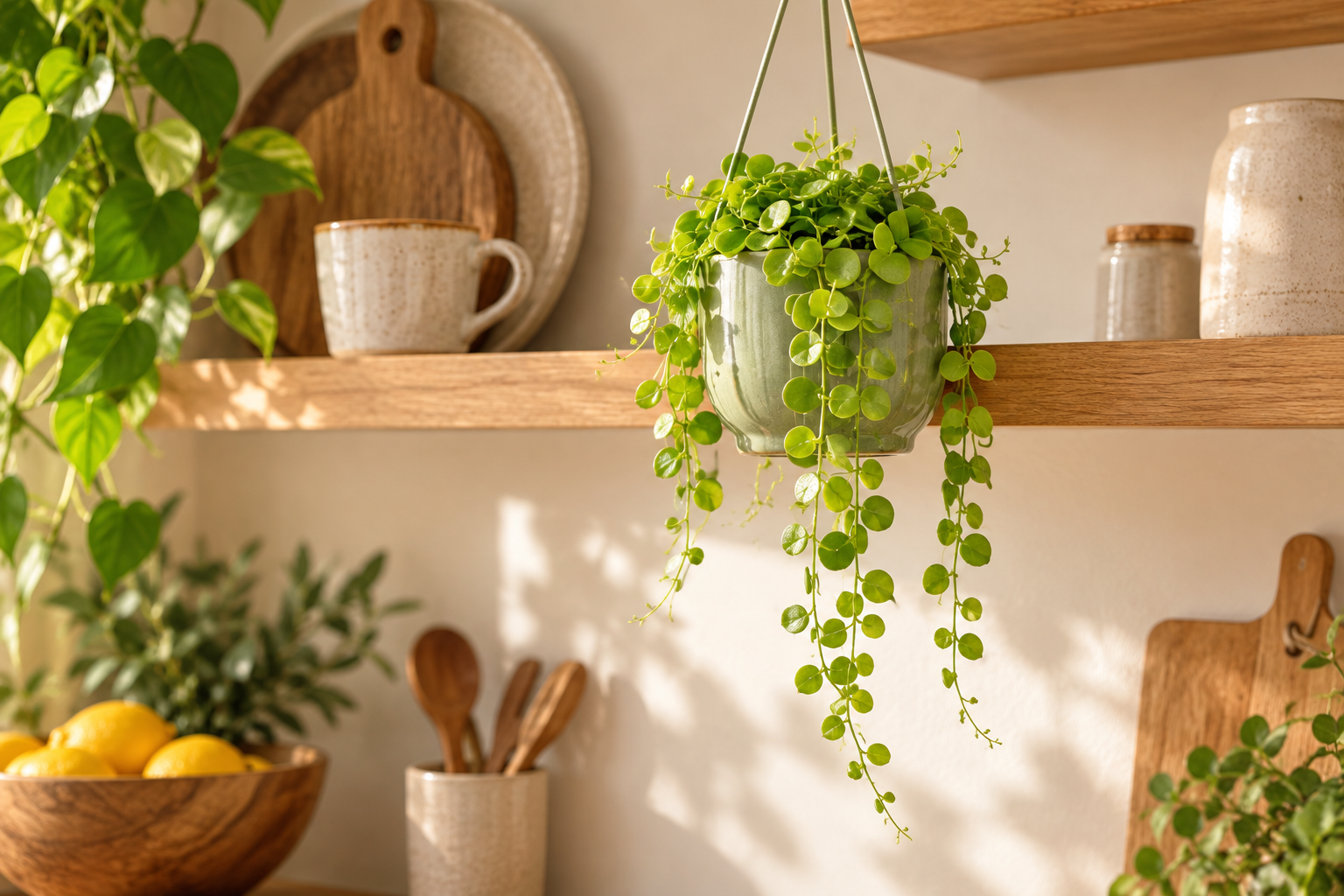
String of Nickels describes the foliage of Dischidia nummularia vividly. Small round fleshy leaves sit on thin shoots, together looking like a loosely strung green curtain. Its effect comes from many fine details, not a particularly large leaf. I like placing the hanging plant where it remains visible close up: by a bright open kitchen shelf or beside a quiet seat. The shop states fourteen centimetres pot size and about twenty-five to thirty-five centimetres excluding the hanger. The scene follows this handy format and allows the delicate shoots to fall freely over the rim.
An epiphyte needs air at its roots
Dischidia grows as an epiphyte in its natural surroundings. Indoors this does not mean it can manage without water or care. It does help explain why a dense mass of permanently wet soil is a poor fit. Roots need a loose, structured foundation where water arrives and air has room again afterwards. When repotting I look at that behaviour rather than only the name of a ready-made mix. A slightly larger container is enough if needed. Long shoots are not automatically proof that the small root ball immediately needs substantially more soil.
Daylight must not stop at the shelf
A bright open position with filtered daylight gives the hanging plant a suitable setting. In a deep shelf, however, the top of the pot may be heavily shaded. Some shoots then hang in light while new growth at the base receives little. I check both areas. Hot direct sun is assessed gradually after a change of position and softened if necessary. The small leaves are no assurance that the plant will grow equally well everywhere in the room. If new shoots remain noticeably thin, brightness goes on the checklist ahead of extra fertiliser.
Water with a feel for the root ball
The upper compost layer may dry a little before watering again. At the same time, moisture in the rest of the root ball is considered. If needed I take the hanging plant down and check its weight. A warm bright position dries the soil differently from a grey winter day. A fixed weekly rhythm therefore does not reliably suit every room. The fleshy little leaves provide some reserve but should not repeatedly collapse severely. When watering, compost receives water evenly. A hard jet through the delicate shoots is unnecessary; a narrow watering can makes supply easier to control.
Look beneath the pot after watering
The nursery pot can drain completely before returning to its decorative sleeve. Afterwards the outer pot’s bottom is checked again. Especially above eye level, residual water can easily collect unnoticed. Fine shoots are not trapped under rims when moving it. I hold the plant by its container, not an easily reached trailing stem. Beside drawers or doors the overhang also deserves some clearance. A small change in position can achieve more here than repeatedly removing broken tips later, even though watering itself is already well adjusted.
Calm growth needs no drastic intervention
During visible growth feeding is restrained, with any existing fertiliser accounted for. More food does not replace a bright position or airy compost. Individual overlong or damaged shoots can be shortened with a clean tool without cutting the whole hanging plant back hard. Pleasant humidity may help, but foliage is not kept permanently wet. Some air movement suits it better than an enclosed damp corner. Small flowers may occur in dischidias; the main ornament of this portrait remains the coin-like foliage. No particular flowering or fixed date is promised for indoor cultivation.
When a few coins are lost
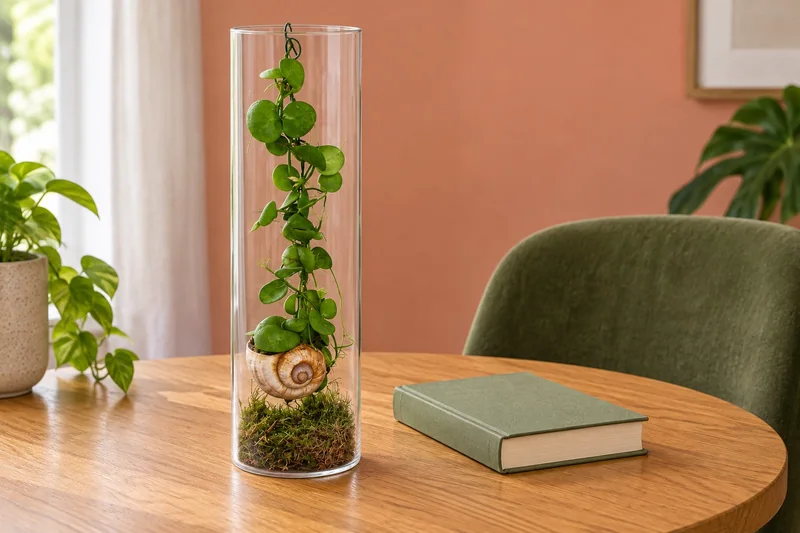
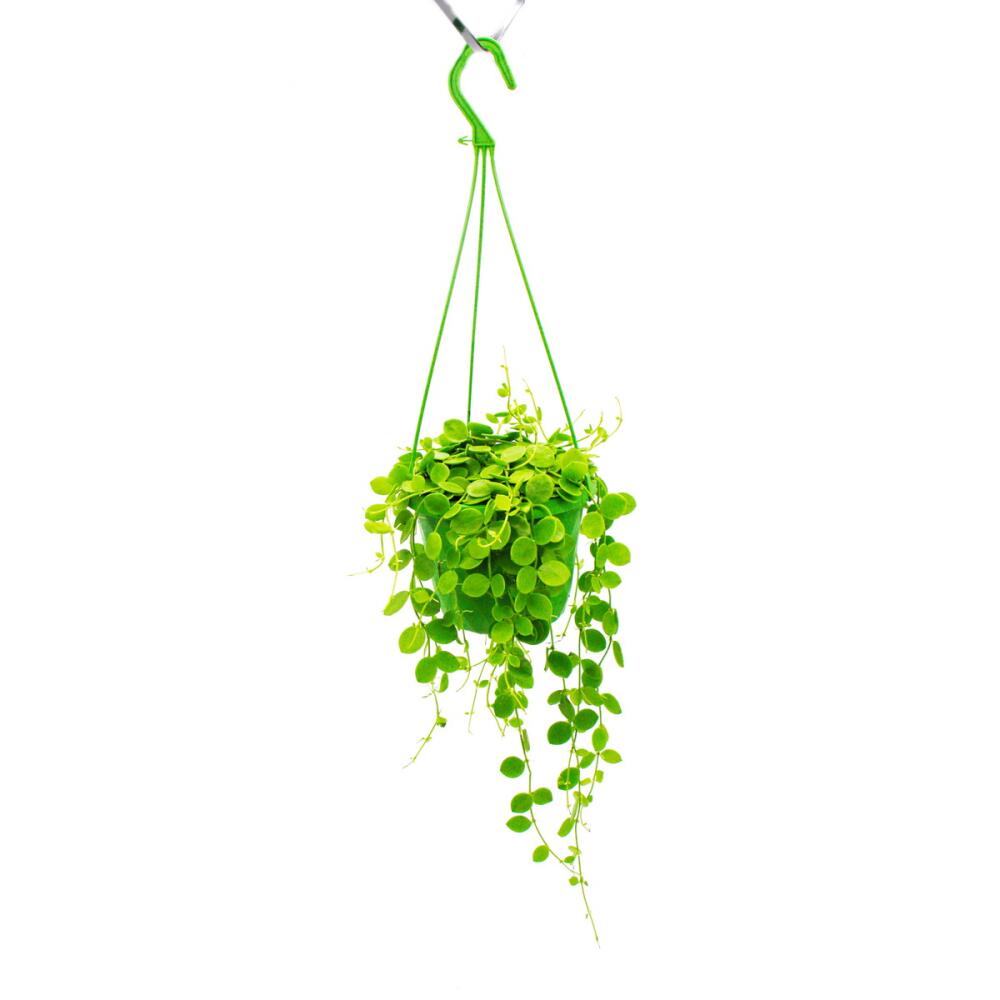
Leaf loss is considered alongside conditions. A light dry root ball calls for a different response from wet soil in a cold position. Draughts and damaged shoots are checked too. I address an identifiable cause specifically rather than simultaneously watering more, feeding heavily and cutting the whole plant. Brightness and warmth remain important in winter. The designed kitchen scene shows one possible use; the unchanged original gallery photograph records the actual offered starting plant. This keeps the design idea clearly distinct from real shop growth.
One plant, several views
Good to know
Why is it called String of Nickels ?
The small round leaves resemble coins.
Is it the same plant as Hoya ?
No. Dischidia is a separate genus with related but not identical plant classification.
Must the soil stay permanently wet ?
No. The upper layer may dry slightly; residual water is removed.
Can it hang on a dark shelf ?
An adequately bright open position is needed.
Does it need a lot of soil ?
Not automatically. Root-ball development determines the need for a pot change.
What helps prevent torn shoots ?
Hold the container and keep shoots away from rims, doors and handles.
Where can I find current offer information for Dischidia nummularia?
Check the linked shop offer for the current price, availability and delivery terms.
Sources and editorial note
Shop offer, SKU, GTIN and availability checked live on 01.10.2026. Original photograph unchanged. Our own researched gardening texts and individually accepted scene.