
This plant at Exotenherz
Check the shop offer for current availability, price and what is included.
Product and delivery details are given in the individual offer.
Your care table
| Topic | What to do | Why it helps |
|---|---|---|
| Light and climate | Sunny, bright and rather cool; protect from severe frost. | Persian buttercups are frost-sensitive cultivated plants. |
| Starting cultivation | Start protected in autumn or frost-free in spring. | Planting time and temperature change flowering progress. |
| Planting | Soak a few hours, claws downwards, cover with about 4–5 cm. | Storage roots absorb water and must not lie wet for days. |
| Spacing and soil | Around 10–15 cm apart, freely draining soil and free pot holes. | Leaf rosettes need room; tubers cannot tolerate waterlogging. |
| Watering | Keep moderately moist during growth; check before watering. | Rain, leaf mass and pot position alter use. |
| Nutrients | Feed during active growth according to label, counting existing feeding. | An extra dose solves neither wetness nor insufficient light. |
| Flowers and cutting | Remove faded flowers; harvest cut stems shortly before full opening. | Further buds remain visible; healthy foliage stays. |
| Rest and household | After foliage dies back store dry, cool and frost-free; gloves for cutting. | Repeat flowering is possible but not guaranteed; sap may irritate skin. |
Check the compost and pot weight. The care table explains how far the compost may dry.
Water only when needed. The water should reach the root ball without spilling over the rim.
Remove surplus water from the saucer or cachepot. Then return the plant to a suitable position.
Many fine petals form a flower rosette
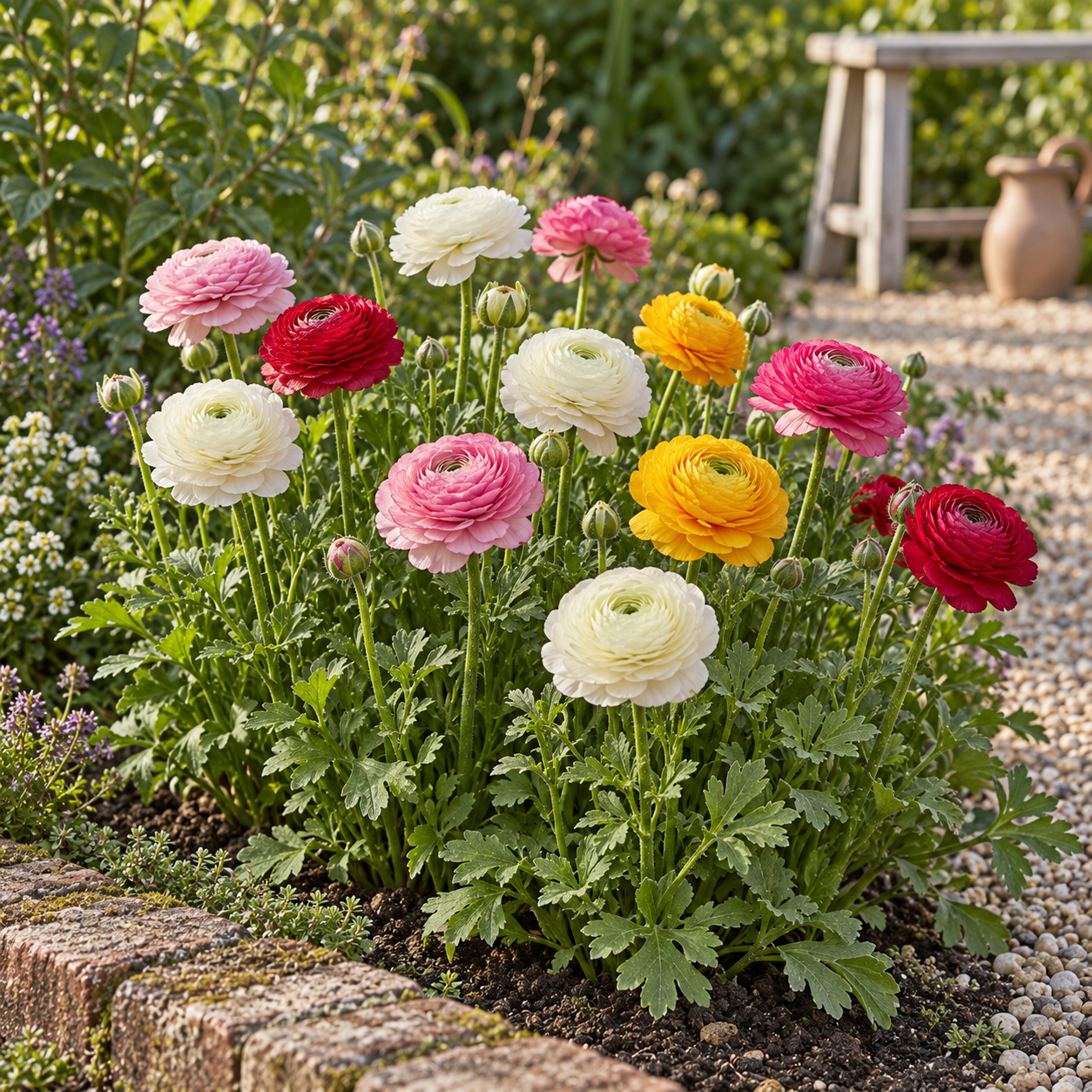
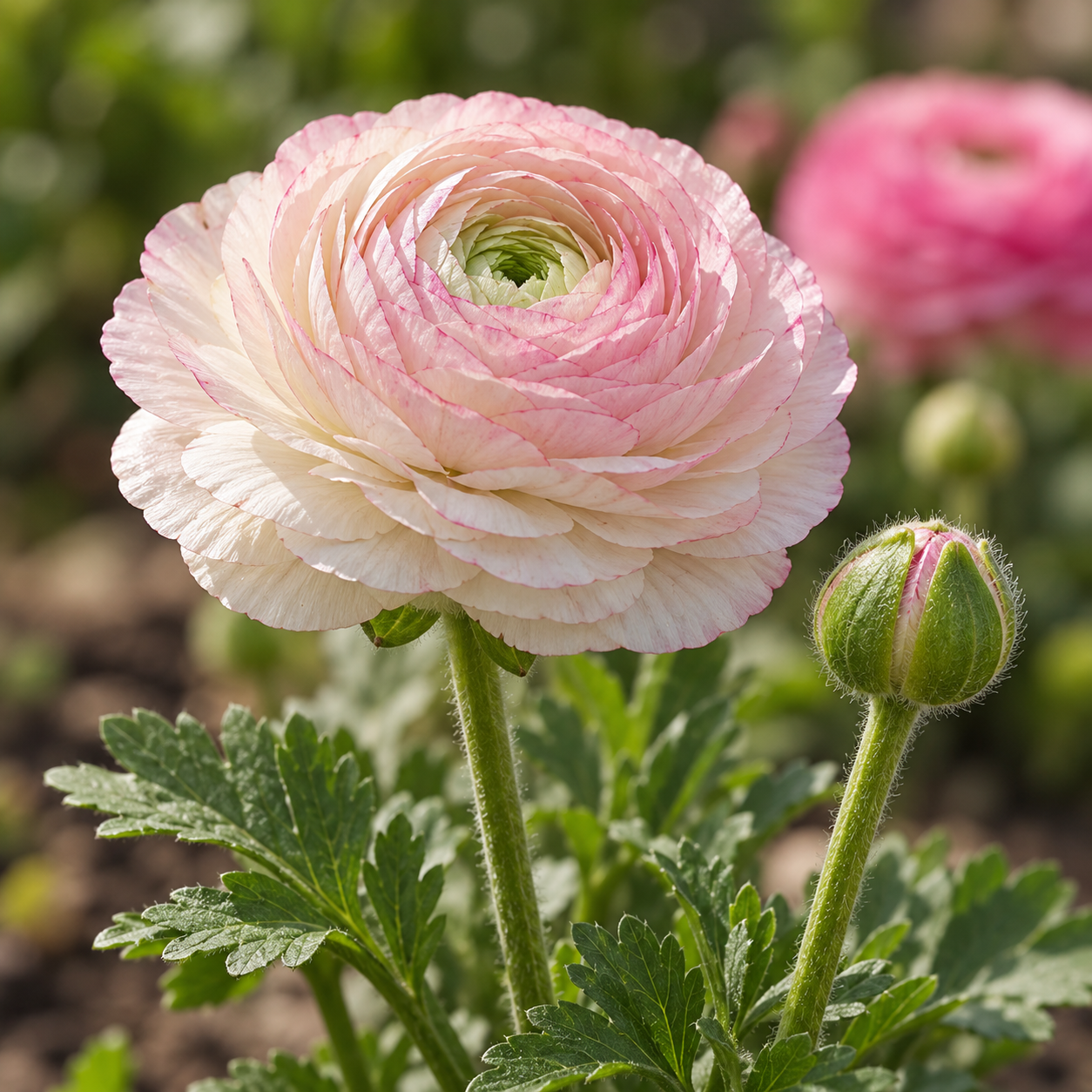
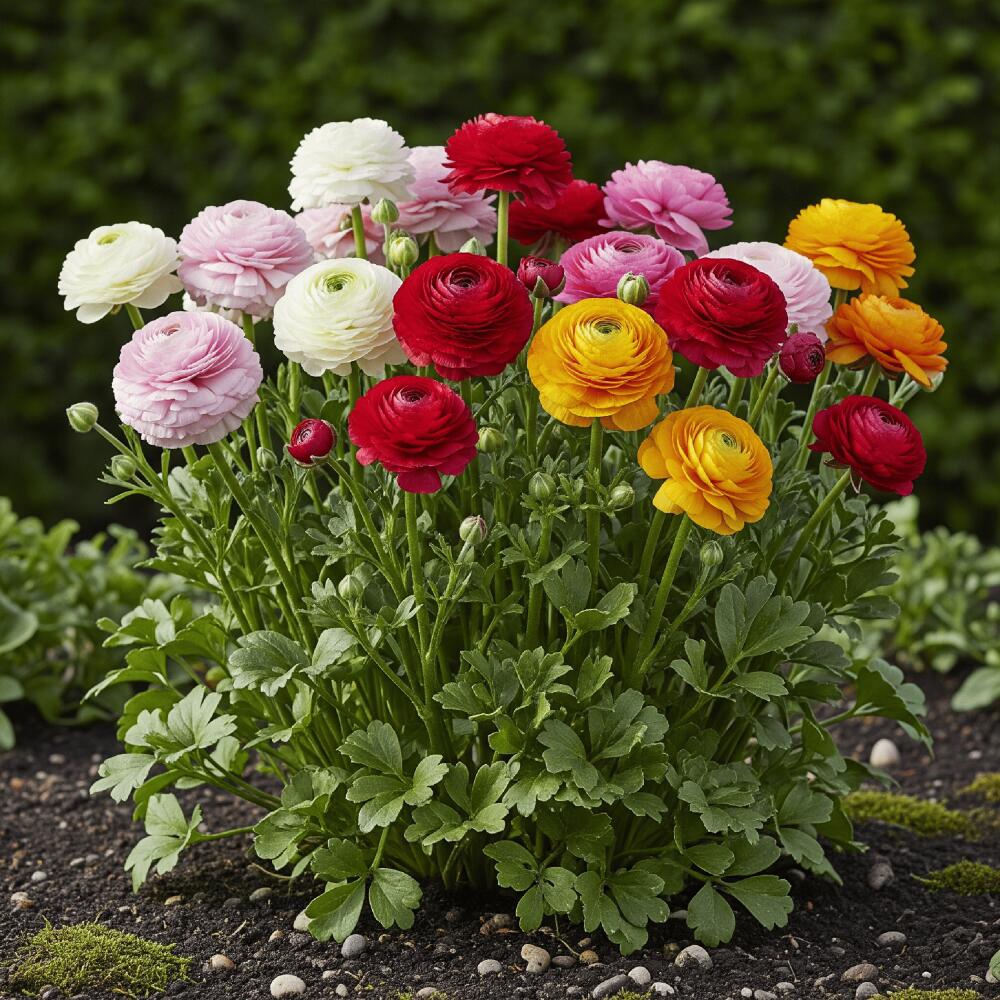
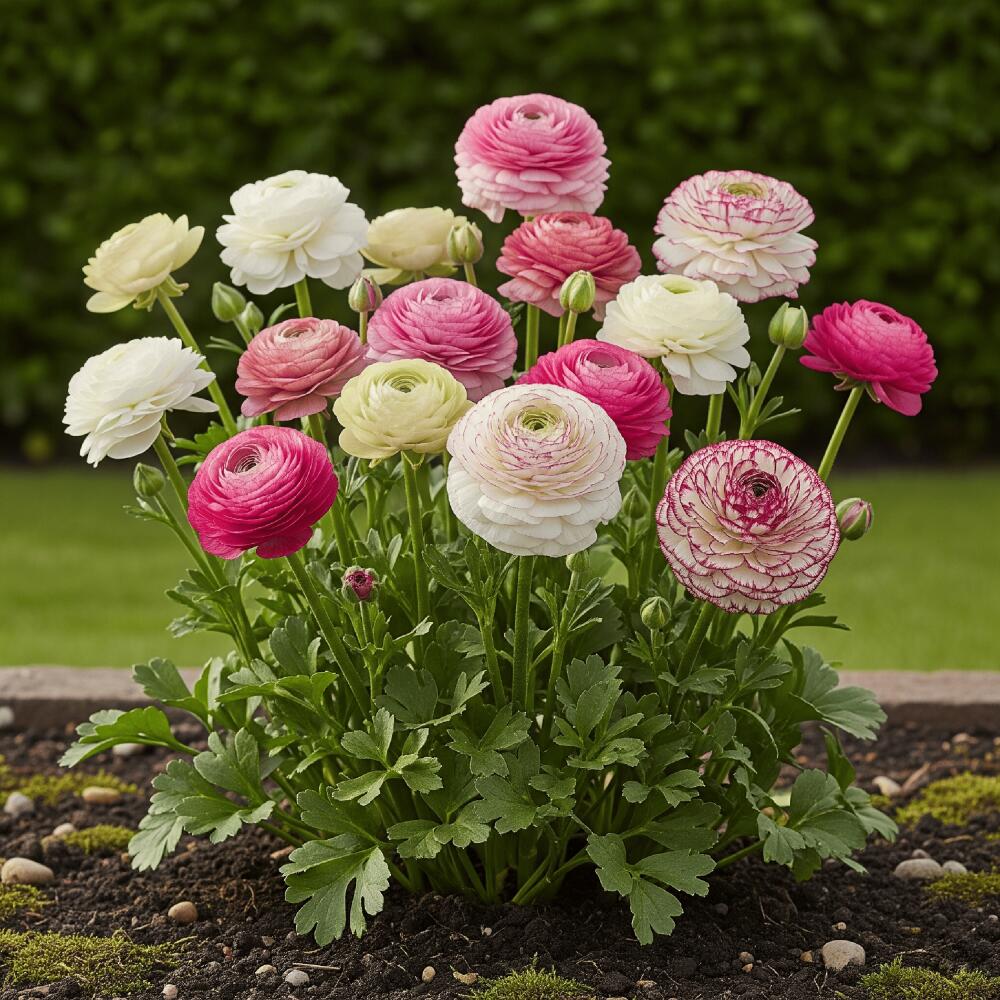
A ranunculus flower looks as if many paper-thin petals have been carefully nested together. Inside remains a tight sometimes greenish centre; outside layers open into a round bowl. Several slender stems carry flowers and closed buds above green foliage. Deeply divided leaves form a loose green background. These are double garden forms of Ranunculus asiaticus, Persian buttercups. They belong to the buttercup family with roots in the eastern Mediterranean. Garden mixtures may combine strong colours or softer pastels. An individual colour does not spread according to a fixed bed plan. Differently opened flowers bring a small group to life. Beside a pale path fine layers can be viewed from the side rather than only looking down at heads.
The package provides tubers to raise yourself
Colour Mix and Pastel Mix offers each contain 40 dormant planting tubers, not flowering potted plants. The commercial tuber size is 5–6 cm; this describes no delivered plant measurement and sets no later flower size. Typical ranunculus has small claw-shaped storage roots whose narrow parts face downwards when planting. Handle gently while unpacking and do not pull dry tips apart. Sort out damaged, softened or mouldy pieces. Follow the respective offer name for colours without expecting an exact mixture ratio or specific named cultivar. The shop gives around 25–35 cm for later plants; other cultivation accounts allow approximately 40 cm. These are flowering-phase guides. Dormant tubers do not yet have such height. Starting a few in an easily monitored pot makes learning simpler.
Combine bright cool cultivation and a frost-free start
Persian buttercups grow best in mild conditions and abundant light. They do not tolerate severe frost. Autumn planting in frost-prone areas therefore needs a bright cool frost-free protected place. A well-ventilated greenhouse suits this better than a dark cellar. For simpler outdoor starting, raise protected in spring and move outdoors once frost risk ends. Choose sunshine with good soil drainage; some protection from strongest afternoon sun may help in hot positions. Flowering occurs at different times depending on start, temperature and cultivation. Early-raised plants may flower in spring or early summer; late planting shifts progress. The mixture therefore promises no fixed flowering week. Ventilate regularly during growth and do not crowd the pot among other plants in warm moist air.
Claws downwards, loose soil above
Before planting soak dry tubers in water for a few hours, following supplied packaging. Plant promptly afterwards rather than holding them in water for days. Point claws downwards and cover with about 4–5 cm soil. Around 10–15 cm spacing gives later leaf rosettes room. In pots use freely draining structurally stable compost with mineral content, keeping drainage holes free. In beds especially check drainage below the planting site: a loose-looking surface above wet heavy soil does not protect tubers. Avoid deep depressions collecting rain. Gently water in and mark the place. Small emerging shoots are then easier to distinguish from nearby seedlings. Divide a full forty mixture across several sites so young groups do not immediately grow crowded.
Even moisture supports flower development
While leaves and flowers grow, soil should remain moderately moist. This means regular checks rather than stored water. First lift a pot and check soil, then water; excess must drain. In a bed a pause often makes sense after heavy rain while a sunny pot may already need water again. Feed according to label during active development, counting nutrients in pre-fed soil. Extra fertiliser compensates for neither waterlogging nor a dark position. Regularly remove faded heads with clean scissors. For a vase cut individual stems shortly before fully opening. Foliage remains on the plant and some flowers may remain outside. A bright place near seating makes new buds and fine flower layers easy to view from different angles.
Summer rest is its own care phase
After flowering increasing warmth can bring plants into rest. If foliage gradually yellows, adapt care to the phase and reduce watering stepwise. Do not cut everything while leaves remain healthy green. Only after they die back lift tubers gently, dry and store cool, dry and frost-free. A colour or pastel label distinguishes groups at the next start. During storage check soft spots and mould and remove damaged pieces. Ranunculus asiaticus is perennial in principle but often grown for one garden season. Repeat flowering depends on healthy tubers and suitable conditions. Remaining outdoors in wet winter soil is no reliable overwintering. A second attempt begins again with healthy dormant tubers and protected starting conditions.
Keep enjoying flowers, narrow down problems early
Drooping leaves first call for a soil check. If dry, water thoroughly and controllably; if very wet do not immediately add more but inspect drainage. Brown soft tuber-zone areas differ from individual dry petals. In protected rooms watch for bud aphids and grey mould with crowded moist cultivation. Remove affected material and space plants more airily. Wear gloves when cutting because sap may irritate skin. Do not eat plant parts and keep beyond reach of nibbling children and animals. A small group beside a bright path or a pot with accessible soil and drainage suits styling. Strong and soft flower colours can receive the same care. Enjoyment lies in changing rosettes and their development rather than every tuber exactly reproducing a ready-made mixture picture.
One plant, several views

Good to know
Are Colour Mix and Pastel two species?
Both offers belong to double garden forms of Ranunculus asiaticus. They differ in offered colours and are cared for together here.
Which way do I plant tubers?
After soaking a few hours point claw-shaped parts downwards and cover with about 4–5 cm soil. Follow package instructions.
Do flowers arrive already?
No. Each offer contains 40 dormant planting tubers. Flowering groups show possible later development.
Are these ranunculus hardy?
They do not tolerate severe frost. Plan protected frost-free autumn cultivation or start protected in spring, moving outdoors after frost risk.
Why do leaves yellow after flowering?
Gradual dieback may belong to rest. Very wet soil, soft tubers or sudden collapse instead call for damage checks.
Can I store the tubers?
Lift after natural dieback and store dry, cool and frost-free. Further flowering is possible but depends on tuber health and cultivation.
Sources and editorial note
- Exotenherz: exact tuber offer 1518030102025
- Exotenherz: exact tuber offer 1518130102025
- JUB Holland: X 40 Ranunculus Mix NJ, item323870
- RHS Growing Guide: culture, frost protection and care
- NC State Extension: botanical features and cultivation-specific care
Named horticultural group, one portrait, no extra identity per colour/quantity. All27 own originals actually read/viewed; clean flower1/2 public, charts/brand/decorative bulb delivery excluded. Shop5–6cm neutral trade size only, no circumference-to-diameter conversion or delivery height. JUB generic season/hardiness not blindly applied; RHS specific Freesia/R.asiaticus controls frost/temperature/prepared unknown. RanuncFarb body pastel copy line noted internally; no exact palette or cultivar guarantee. Stock timestamps preserved03.10, no fresh product HTTP claimed04.10. Later-bloom caption consistent across assets.