
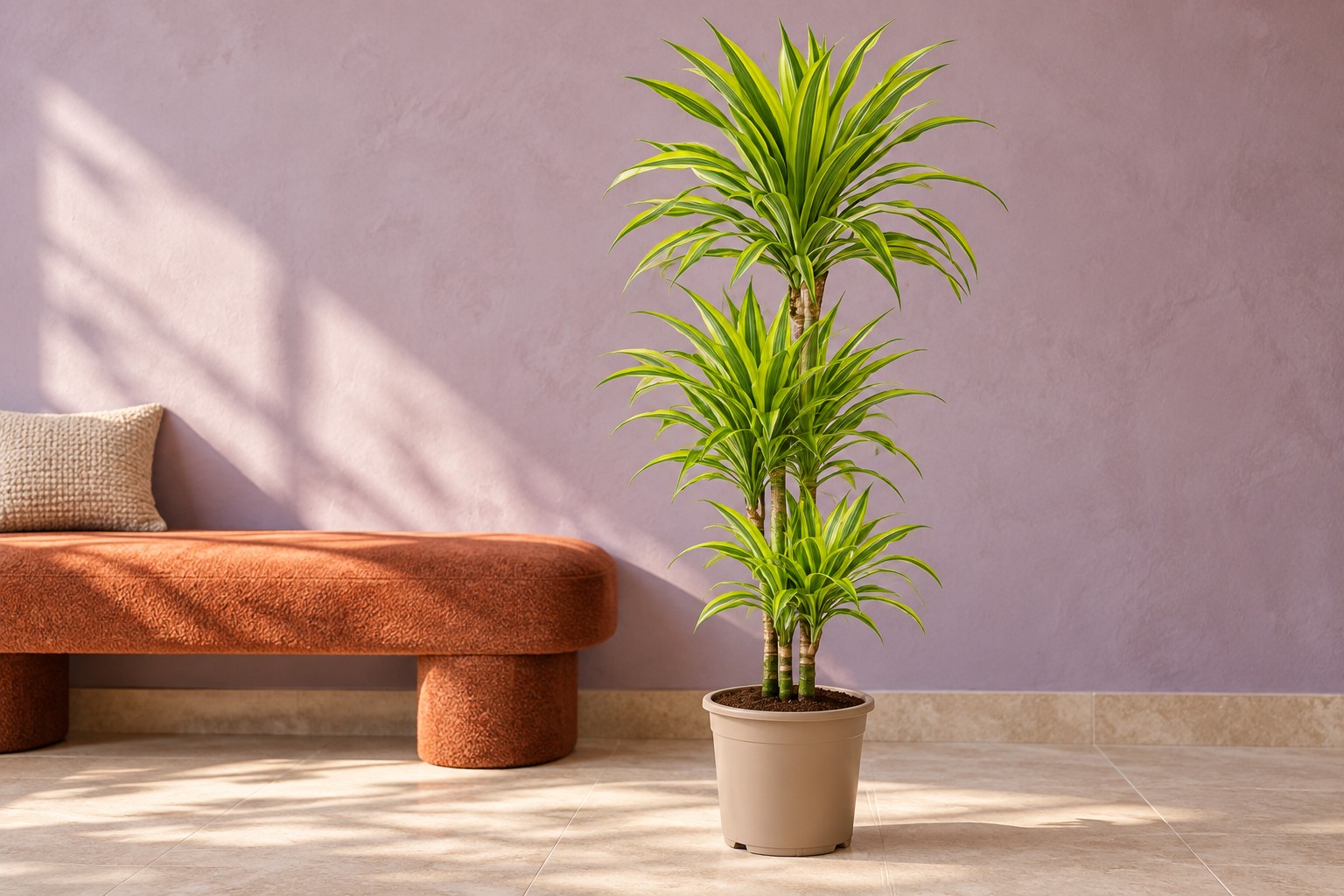
This plant at Exotenherz
Check the shop offer for current availability, price and what is included.
The linked shop is in German. Product details, availability and delivery information are provided in that shop.
Your care table
| Topic | What to do | Why it helps |
|---|---|---|
| Light | Keep bright with indirect light; avoid hot sunshine initially. | The coloured longitudinal stripes benefit from sufficient brightness. |
| Water | Let surface compost dry slightly and check the root ball underneath. | Naturally curved leaves are not a reliable sign of thirst. |
| Compost | Use a loose, well-drained potting mix. | Avoid constant wetness in the root zone. |
| Nutrients | During growth, feed moderately according to product instructions. | Excessive salts can affect sensitive leaf tips. |
| Winter | Keep warm, bright and sheltered from draughts; reduce water according to need. | Large containers dry more slowly at this time. |
| Leaf care | Gently remove dust with a damp cloth. | Support the leaves and do not scrub their coloured surfaces. |
| Monitoring | If tips turn brown, check water quality, fertiliser and roots. | Dry air or pests may also contribute. |
| Space | Allow sufficient lateral room for the chosen height. | The broad leaf arches extend beyond the pot. |
Check the compost and pot weight. The care table explains how far the compost may dry.
Water only when needed. The water should reach the root ball without spilling over the rim.
Remove surplus water from the saucer or cachepot. Then return the plant to a suitable position.
Longitudinal stripes with their own character
Lemon Lime belongs to Dracaena fragrans and is assigned to the Deremensis Group. The older name Dracaena deremensis and different spellings also occur in the trade. The broad, strap-like leaves carry pale yellow-green edge zones and darker green areas. As they mature, they curve softly outwards, giving the crown more width than the narrow leaves of the Madagascar dragon tree. Both suit an indoor setting, but their appearance is distinctly different.
An offer with selectable sizes
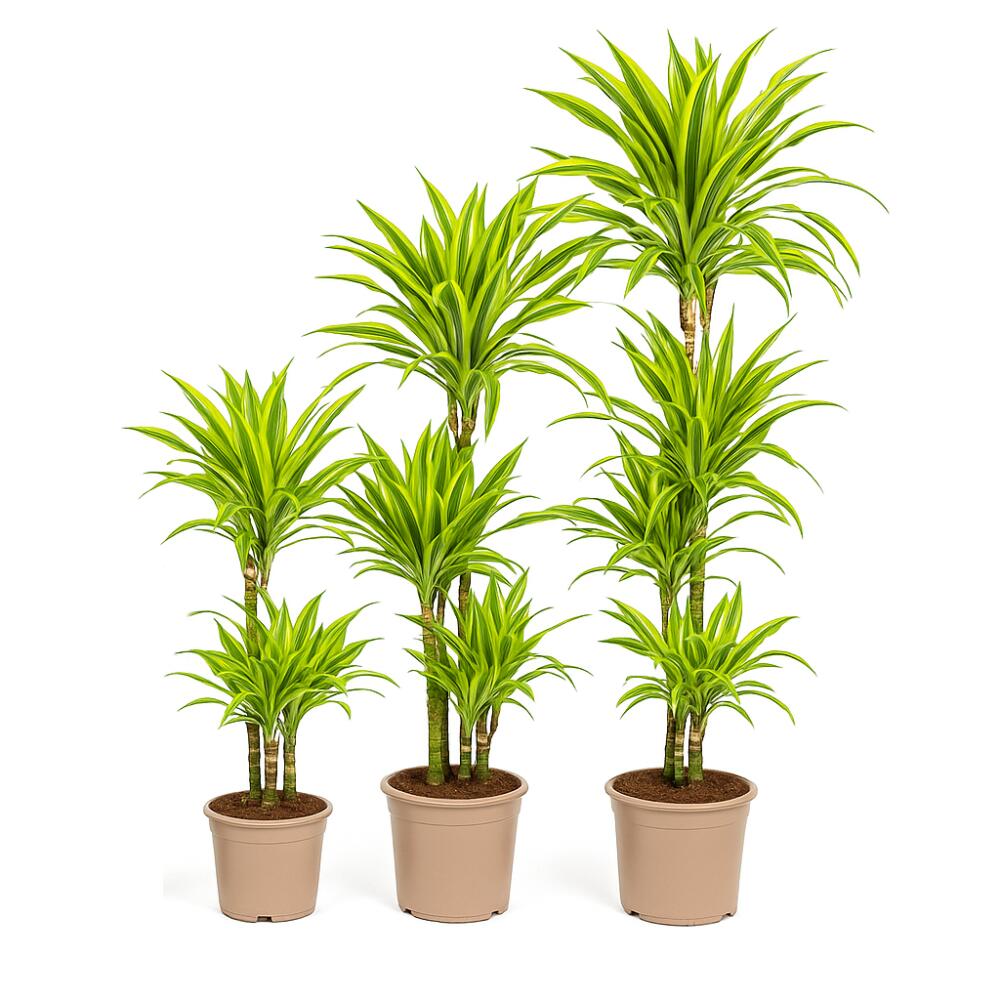
The selected shop offer includes height variants of 70–90, 90–110 and 130–150 cm. Our interior scene follows a specimen from the largest group. The original photo shows several comparison sizes that are not supplied together. Plan for the leaf arches as well as height so they do not rub against furniture edges. The specific variant determines delivery. Because the combined offer does not establish a uniform pot diameter, no general centimetre figure is deliberately stated here.
Stripes need useful light
Choose a bright position with indirect light and protect freshly delivered leaves from hot, direct sun. A somewhat less bright position is tolerated but may change growth and the expression of leaf markings. It remains a tropical indoor plant needing warmth and protection from cold draughts. A place beside a bench can work well if sufficient daylight reaches the crown. Room decoration and attractive wall colours do not replace this actual light requirement.
Not every leaf arch means thirst
The leaves naturally grow slightly overhanging. Check the compost before watering rather than judging leaf shape alone. Let the upper layer dry slightly, then water evenly when needed. Excess must drain from the growing pot and be removed from the outer pot. Winter requirements often fall considerably. Do not water a large root ball that is still wet inside merely because the visible surface has become paler.
Less salt, good structure and calm care
A loose potting mix with stable, air-carrying components helps the roots. Repot only when clearly well rooted and do not skip several pot sizes. During growth, feed moderately according to product instructions, reducing accordingly during rest. Dracaena fragrans can be sensitive to fluorides and high salt levels. With recurring brown tips, therefore also check watering water and fertilisation. A single brown area does not justify changing every aspect of care indiscriminately.
Maintaining a healthy crown and spotting problems early
Remove dust carefully with a soft, damp cloth, supporting the leaf from below. Leaf-shine products can be avoided. Check axils and undersides for mealybugs, scale insects or spider mites, particularly during dry periods with indoor heating. Fully dead foliage can be removed; older lower leaves may also age naturally. Shaping through pruning is possible when needed, but new shoots take time. Keep the plant away from nibbling pets and make sure a heavy pot stands securely without tipping.
One plant, several views
Good to know
Is Lemon Lime the same plant as Dracaena deremensis?
Lemon Lime is now assigned to Dracaena fragrans, Deremensis Group. The older trade name remains widespread.
Why do the leaves hang in curves?
The broader leaves naturally grow in arches. A care problem can only be judged alongside root-ball moisture and other changes.
Does the scene show all the plants supplied?
The scene shows a large example plant. The desired individual size variant is selected in the shop.
How can I keep the leaf pattern attractive?
A bright, indirectly lit position, moderate supplies and healthy, dust-free leaves provide good foundations.
Sources and editorial note
- Product and delivery contents: Exotenherz
- NC State Extension: plant profile
- Royal Horticultural Society: plant and care information
Sources checked: 15 September 2026. Product information and the contents of delivery follow the linked shop offer. Care advice was checked against the cited specialist sources and should still be adapted to the plant’s condition, position and season.