
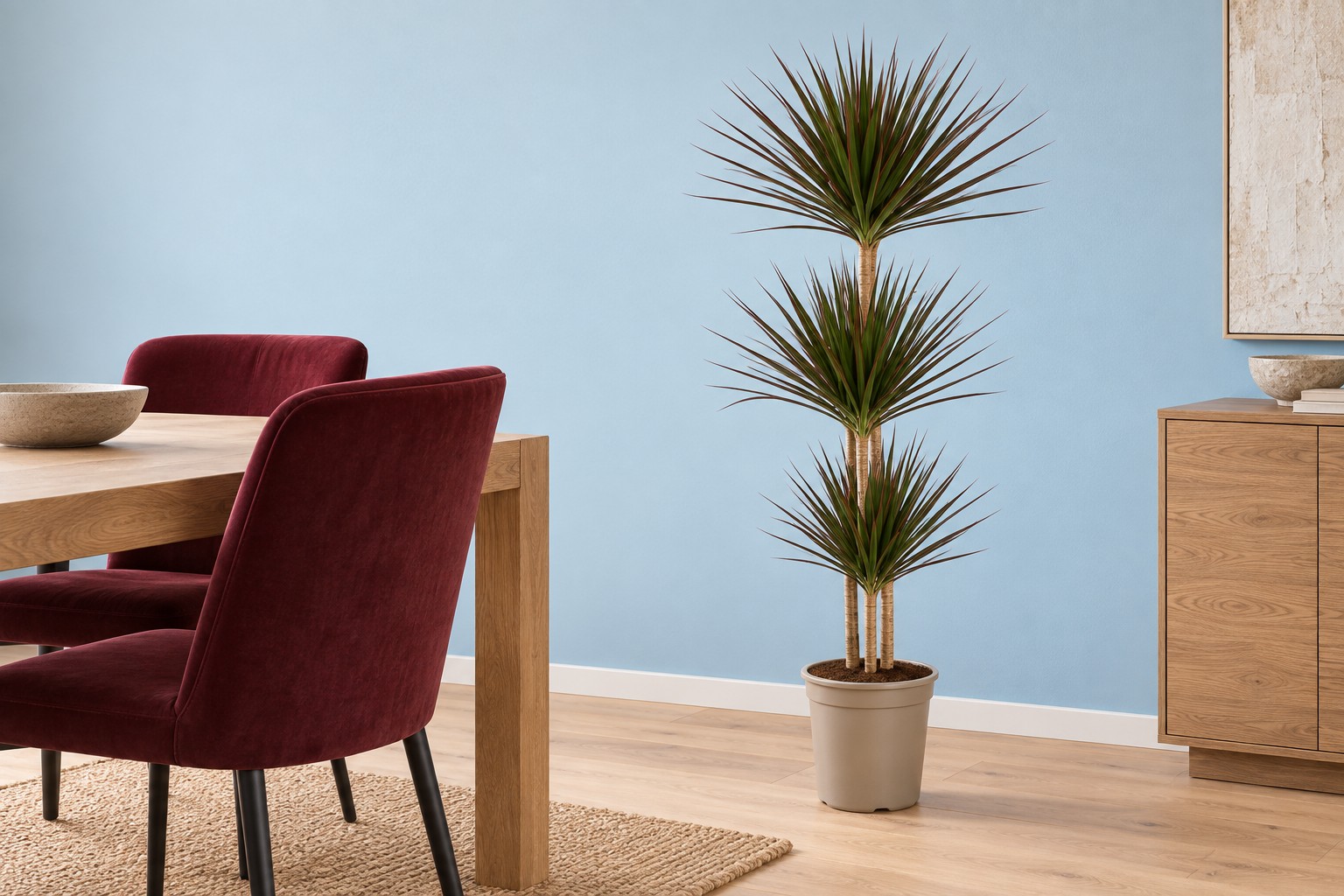
This plant at Exotenherz
Check the shop offer for current availability, price and what is included.
The linked shop is in German. Product details, availability and delivery information are provided in that shop.
Your care table
| Topic | What to do | Why it helps |
|---|---|---|
| Light | Bright to moderately bright, protected from sudden hot sun. | Less light means slower growth and lower water needs. |
| Water | Let the root ball dry somewhat between applications, then water evenly. | Remove hidden leftover water from the outer pot. |
| Compost | Use a loose, structurally stable mix with free drainage. | Root aeration protects against constant wetness. |
| Feeding | During growth, feed sparingly according to product instructions. | High salt levels can damage leaf tips. |
| Winter | Keep bright and frost-free and water less with little growth. | Moisture in a large pot lasts longer than at the surface. |
| Leaves | Remove dust gently and assess brown tips in context. | Water quality, roots, air and pests can play a part. |
| Pruning | When needed, cut back under good growing conditions. | New branches develop only gradually. |
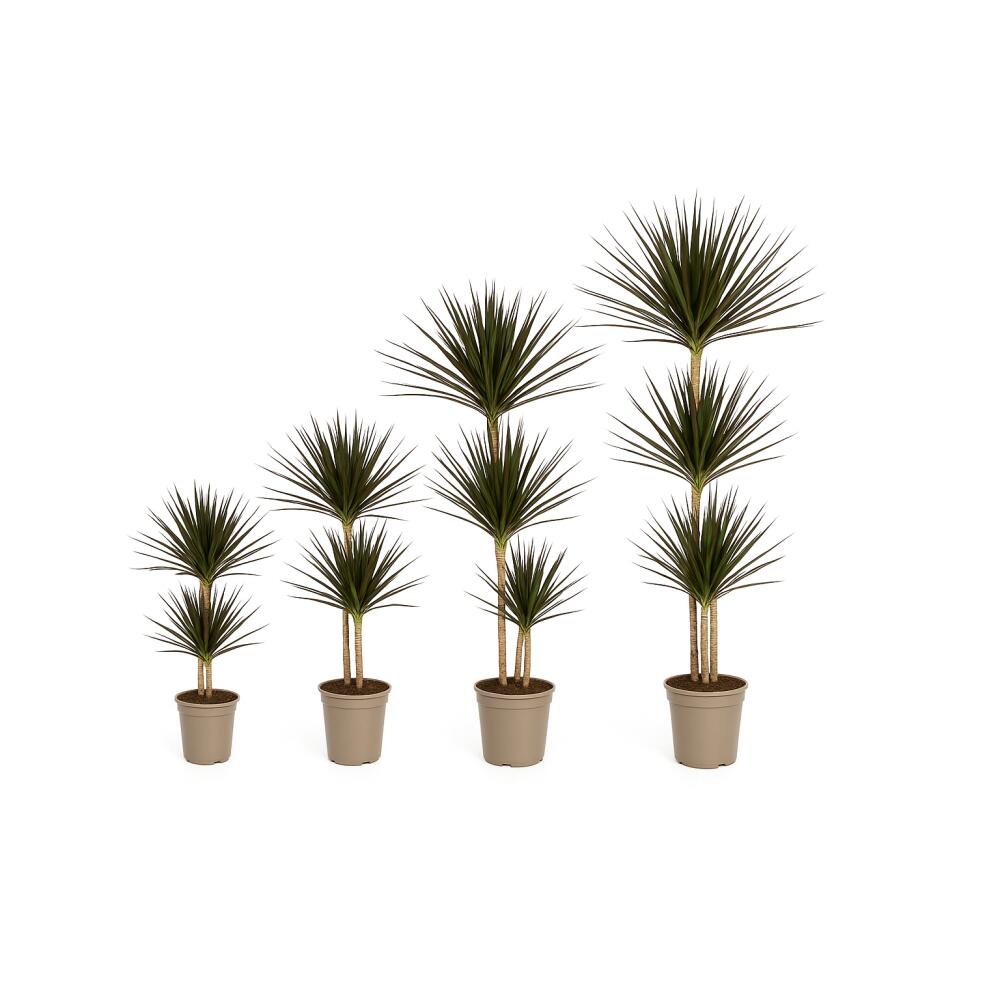
| Choosing size | Select the specific height in the shop. | The group picture shows several variants, not delivery of multiple plants. |
Check the compost and pot weight. The care table explains how far the compost may dry.
Water only when needed. The water should reach the root ball without spilling over the rim.
Remove surplus water from the saucer or cachepot. Then return the plant to a suitable position.
A silhouette of lines and rosettes
The Madagascar dragon tree is usually called Dracaena marginata in the trade. The specialist profile used lists it under Dracaena reflexa var. angustifolia. Magenta is the offered form here, with narrow dark-green leaves edged in reddish to magenta tones. They sit in rosettes on woody shoots. Older lower leaves are gradually shed while the tips keep growing. This is part of the plant’s development and explains the stem sections that become visible over time.
Choosing the right height deliberately
The linked offer lists sizes from 50–70 to 130–150 cm. The scene shows an example of the large variant, not several trees supplied together. The original shop photo presents different sizes side by side. A low form can stand on furniture, while the large one belongs more naturally on the floor. Before ordering, check the selected variant and its current details: a single pot diameter cannot reliably be stated for the entire range of sizes.
Brightness without constant moves
Bright indirect light provides a good foundation for even rosettes. Moderate brightness can also be suitable; the dragon tree then grows more slowly and uses less water. This does not automatically make a dark hallway appropriate. Avoid sudden hot midday sun after delivery. Turn the pot slightly from time to time if it grows strongly towards the light. Draughts, proximity to radiators and very cold panes disrupt an otherwise quiet position and make leaf problems harder to assess.
Judging compost as it becomes drier
Let the root ball dry out somewhat between waterings without neglecting it completely for a long time. Do not check only the surface: larger containers stay damp inside for longer. Water evenly as needed and then empty the outer pot. The darker and cooler the winter position, the more slowly water is used. A soft stem and wet compost are warning signs; extra watering would then be precisely the wrong response.
Considering tips, salts and the root zone
Dragon trees may respond to unsuitable water quality and high salt concentrations with brown tips. Use suitable water with a low contaminant load where possible, and feed sparingly during growth according to product instructions. A loose, well-drained mix is more important than frequent repotting. When the root ball becomes cramped, choose a suitable next pot size. Remove dust carefully and check leaf undersides for sap-sucking pests. Brown tips alone, however, prove neither a lack of water nor a particular problem with tap water.
Shaping growth without overtaxing the plant
If a shoot becomes too tall, cutting back under good growing conditions can encourage branching below the cut. This development needs time and is not an instant shape correction. Use clean tools and postpone major changes to a weakened plant. Dead lower leaves can be removed gently; keep living rosettes. The dragon tree is ornamental and should be out of reach of nibbling pets. Its quiet form looks particularly effective with enough space around neighbouring objects.
One plant, several views
Good to know
Why does the dragon tree have two botanical names?
Dracaena marginata is the widespread trade name; the specialist profile lists it as Dracaena reflexa var. angustifolia. Magenta denotes the offered cultivated form.
Will I receive every size shown in the picture?
No, the original picture compares sizes. You order the selected variant of the offer.
Do brown tips always mean thirst?
No. Besides dryness, salt accumulation, root problems or unsuitable air conditions may be involved, for example.
Can a tall stem be shortened?
Cutting back can encourage branches. It requires suitable growing conditions and patience while the new structure develops.
Sources and editorial note
Sources checked: 15 September 2026. Product information and the contents of delivery follow the linked shop offer. Care advice was checked against the cited specialist sources and should still be adapted to the plant’s condition, position and season.