
This plant at Exotenherz
Check the shop offer for current availability, price and what is included.
Check the selected shop offer for price, availability and delivery contents.
Your care table
| Topic | What to do | Why it helps |
|---|---|---|
| Light | Position very brightly and introduce sun slowly. | A dense rosette needs more light than a dark surface offers. |
| Water | Let root ball dry between waterings. | Fleshy leaves store water. |
| Rosette | Water soil rather than leaf centre. | Water should not remain between leaves. |
| Substrate | Choose free-draining succulent soil with mineral components. | An airy root space makes drying easier. |
| Pot | Use a suitable container with clear holes. | A large wet soil volume suits a little rosette poorly. |
| Nutrients | Give moderately according to label during growth. | Overfertilisation does not care for leaf colour. |
| Season | Overwinter frost-free and reassess water need. | Little winter light often lowers use. |
| Inspection | Examine rosette and leaf bases. | Mealybugs or soft areas may initially stay hidden there. |
Check the compost and pot weight. The care table explains how far the compost may dry.
Water only when needed. The water should reach the root ball without spilling over the rim.
Remove surplus water from the saucer or cachepot. Then return the plant to a suitable position.
The shape is as interesting as the red
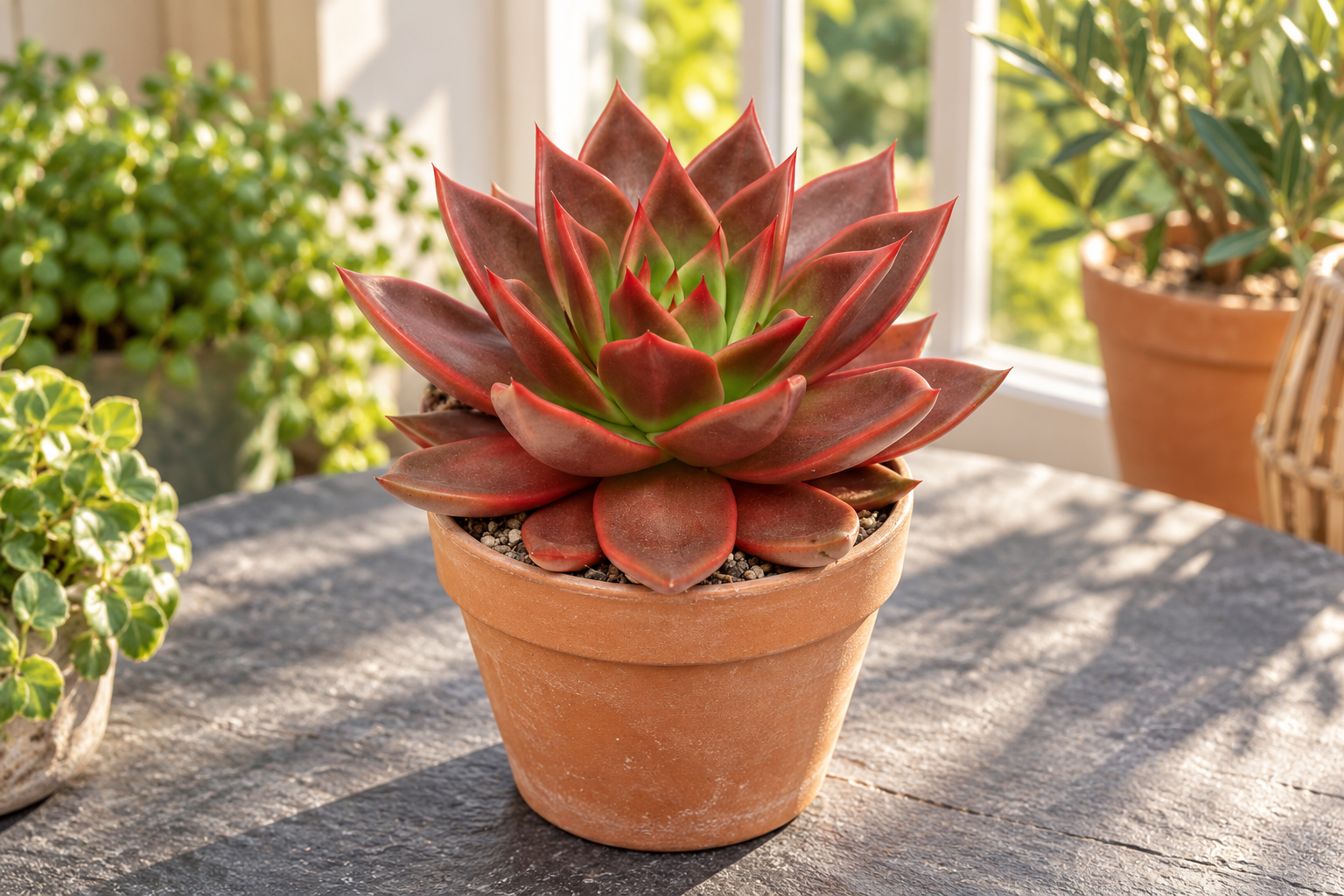
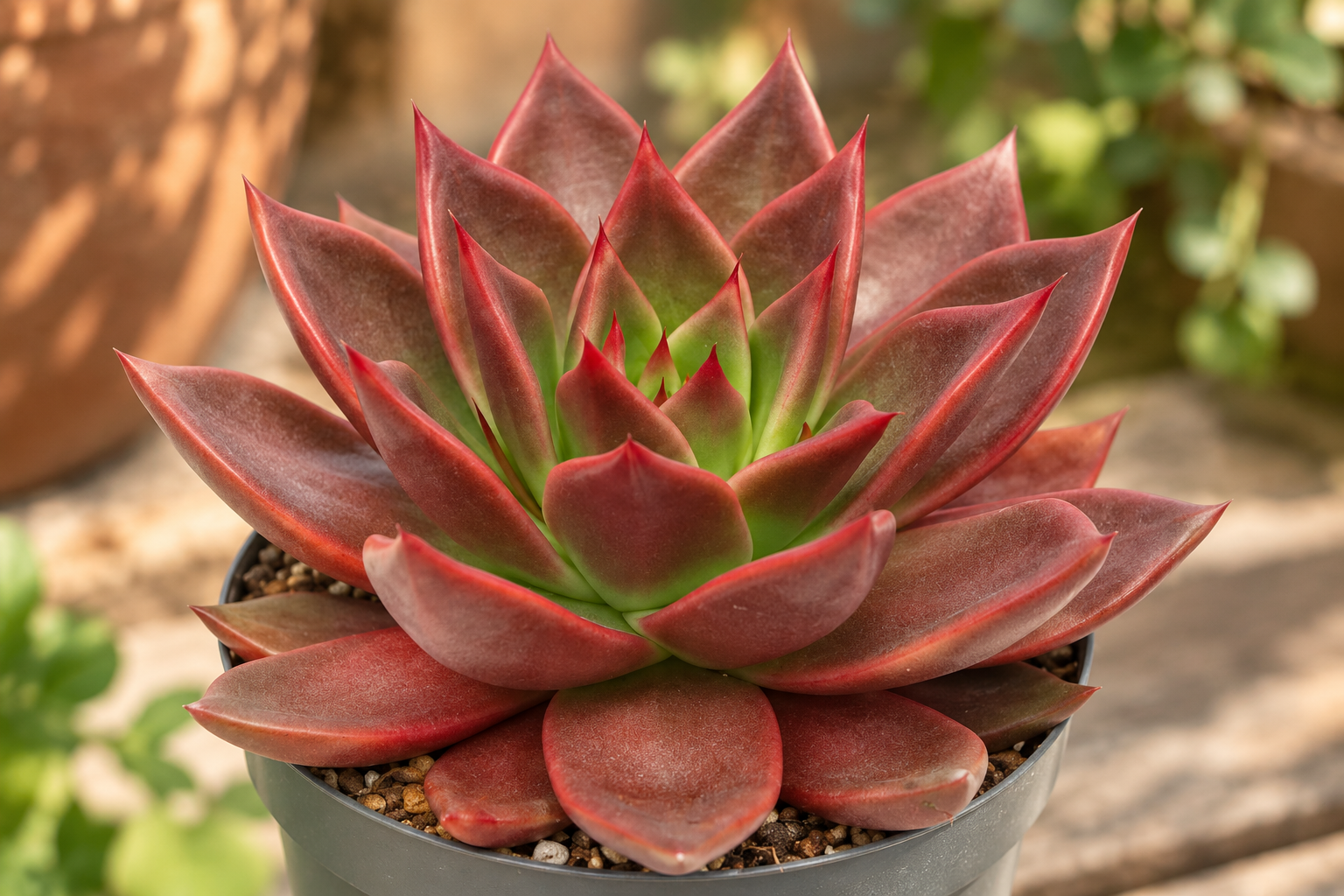
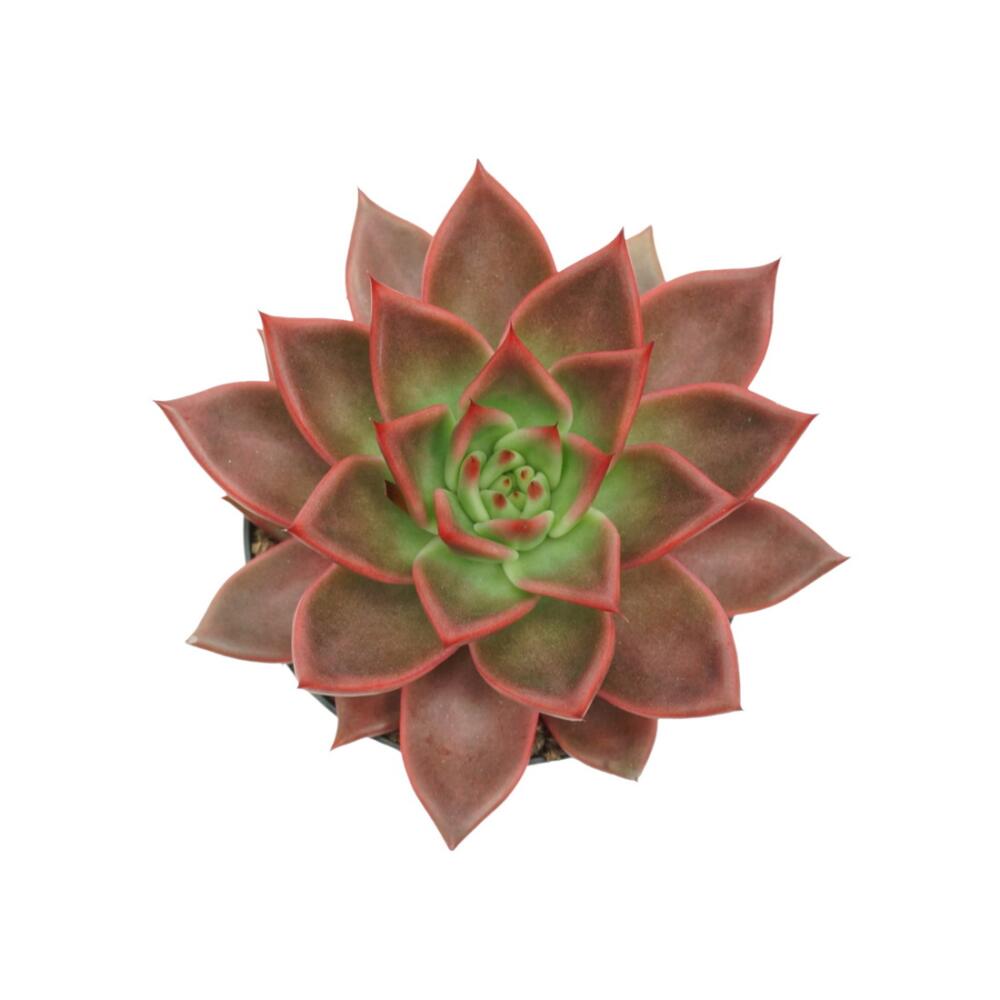
Antaris layers thick triangular leaves into a tight rosette. Their tips look clearly outlined without bearing true spines. Outer surfaces and edges show reddish to wine-red tones, while greener areas remain towards the centre. A glance from above already reveals the regular structure. A simple small container on a bright potting table makes the form clear. The trade name follows the shop offer; general care guidance refers to Echeveria agavoides and growing succulent rosettes.
A little container preserves proportion
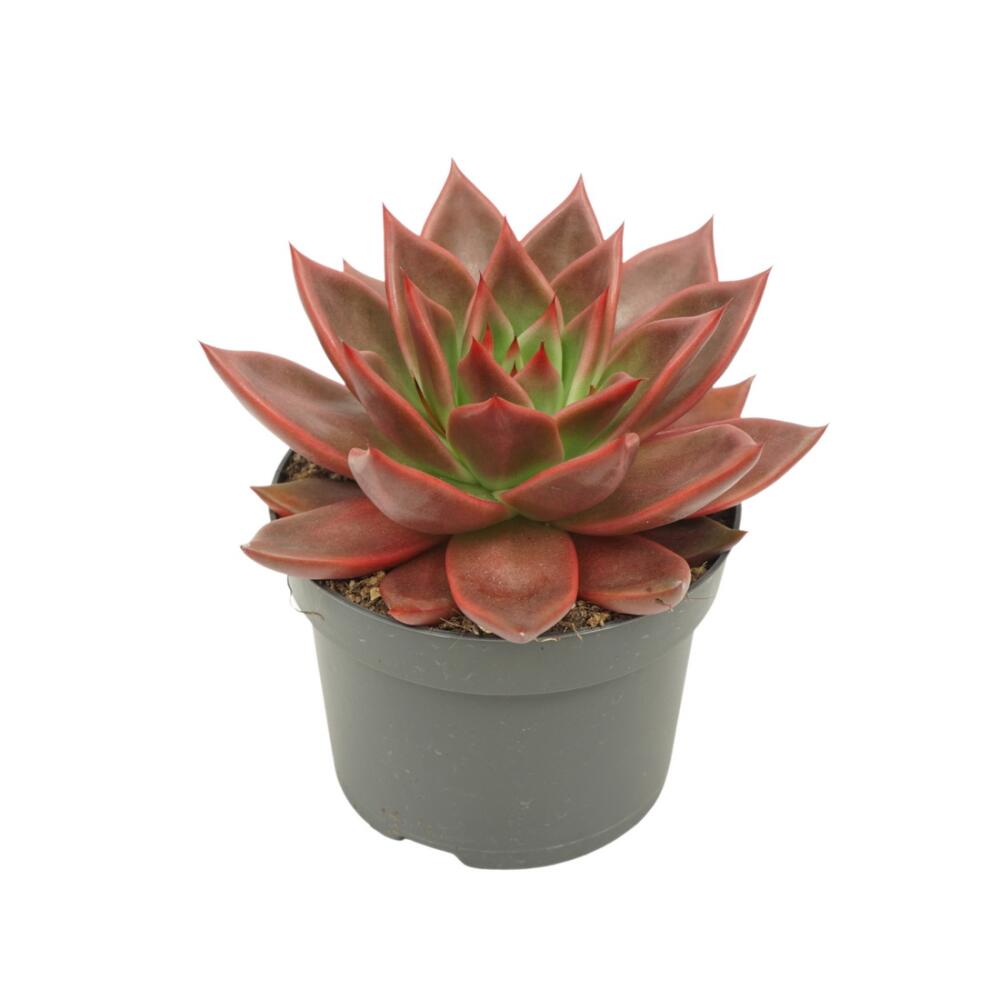
The assigned specimen stands in a 12 cm pot and is about 15 cm tall including pot. It is therefore a little rosette plant, not a large agave for the terrace floor. A slightly broader decorative rim may frame the rosette without hiding it. When unpacking, hold the pot rather than brushing leaf surfaces unnecessarily. Small differences in position and tone remain possible. A photo from above helps track development of the green centre and new leaves in the plant book later.
Light maintains the closed shape
A very bright position matters more to the rosette than the most dramatic background colour. Introduce direct sun gradually after shipping to give time to adapt. A bright glazed porch can suit; a deep bookcase without sufficient daylight probably not. If new leaves stretch unusually and the rosette looks looser, first check light conditions. Red tones alone are no reliable measuring instrument for overall care. Healthy growth matters more than the strongest possible colouring.
Water the soil and observe the centre
Check the root ball before each new watering. It may dry between waterings. Then aim onto soil rather than filling the tightly layered leaf centre with water. Excess drains and does not stand in a cover. Fleshy leaves can bridge a dry phase but do not solve constantly wet root-space problems. If lower leaves soften, first distinguish dry and wet. Include the container underside in your check; blocked holes are easily overlooked from above.
Grow without a large serving of new soil
Free-draining succulent soil with suitable mineral components supports growing. Repotting needs a healthy justified next step, not an immediate jump into a large tub. If much soil remains unrooted, moisture becomes harder to judge. During active growth, supply moderately according to fertiliser label. Existing pre-fertilisation counts too. The rosette needs no shape pruning. Remove only dead material carefully without injuring healthy leaf bases. A later side shoot may first develop before you consider separation.
A bright winter position continues care
Indoor growing stays frost-free. With less winter growth, water more sparingly and reassess the root ball each time. A warm dark place with unchanged high watering is not a good combination. While caring, check especially leaf bases and rosette base for soft spots or cottony deposits. A flower stalk may appear above the rosette later; it is not promised for the young assortment plant. Record light position, watering observations and new leaves in the plant book rather than only a fixed interval.
One plant, several views
Good to know
Is Antaris a cactus?
No. It is an Echeveria, a succulent rosette plant from the Crassulaceae family.
Does the plant have spines?
Leaves are pointed but do not form true cactus spines.
Can I water the leaf centre?
Better aim onto the soil and let excess drain.
Why does the rosette become looser?
Check actual light supply and new growth especially.
Must the rosette be pruned for shape?
No. Intact leaves and the healthy centre are retained.
Sources and editorial note
- Exotenherz: offer and original images (03.10.2026)
- RHS – Echeveria agavoides: form and culture (03.10.2026)
- RHS – Care for indoor cacti and succulents (03.10.2026)
Shop offer, article number, GTIN, availability and original images checked directly on 02.10.2026; specialist acceptance 03.10.2026. Specialist sources read directly. Specific shop article, SKU, dimensions and both unchanged original views checked on 03.10.2026. Currently not orderable: knowledge portrait without purchase connection or social sending approval. Specialist sources read directly; trade name and general species care separated. Accept text and image against published reference portraits. No Wawi or tool changes. Currently not orderable: knowledge portrait without purchase link; social drafts not approved for sending.