
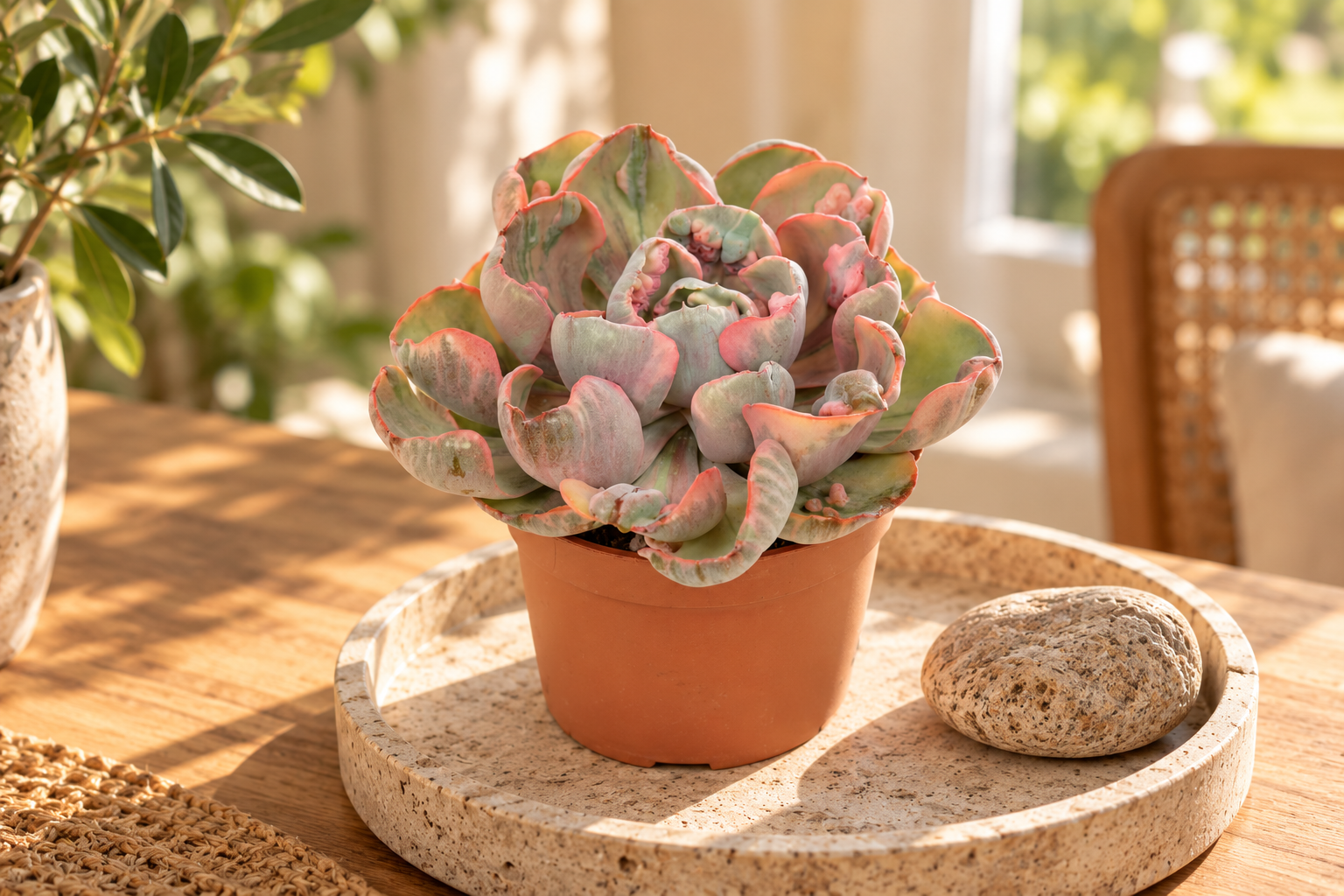
This plant at Exotenherz
Check the shop offer for current availability, price and what is included.
Check the selected shop offer for price, availability and delivery contents.
Your care table
| Topic | What to do | Why it helps |
|---|---|---|
| Place | Position very brightly, increase sun slowly. | Observe new growth. |
| Moisture | Let substrate dry largely before another watering. | Pot weight supplements looking at the surface. |
| Water | Onto soil instead of between tight leaves. | No puddles in folds and centre. |
| Drainage | Remove excess, keep container holes open. | Avoid lasting wetness. |
| Substrate | Free-draining succulent soil with mineral structure. | Air belongs in root space. |
| Leaves | Handle matt surfaces and ruffled edges gently. | No polish or repeated rubbing. |
| Supply | Sparingly according to label during growth. | Leaf-edge colour is no reliable fertiliser indicator. |
| Winter | Bright and frost-free with suitably low water need. | Season changes consumption. |
Check the compost and pot weight. The care table explains how far the compost may dry.
Water only when needed. The water should reach the root ball without spilling over the rim.
Remove surplus water from the saucer or cachepot. Then return the plant to a suitable position.
A leaf edge brings the entire rosette to life
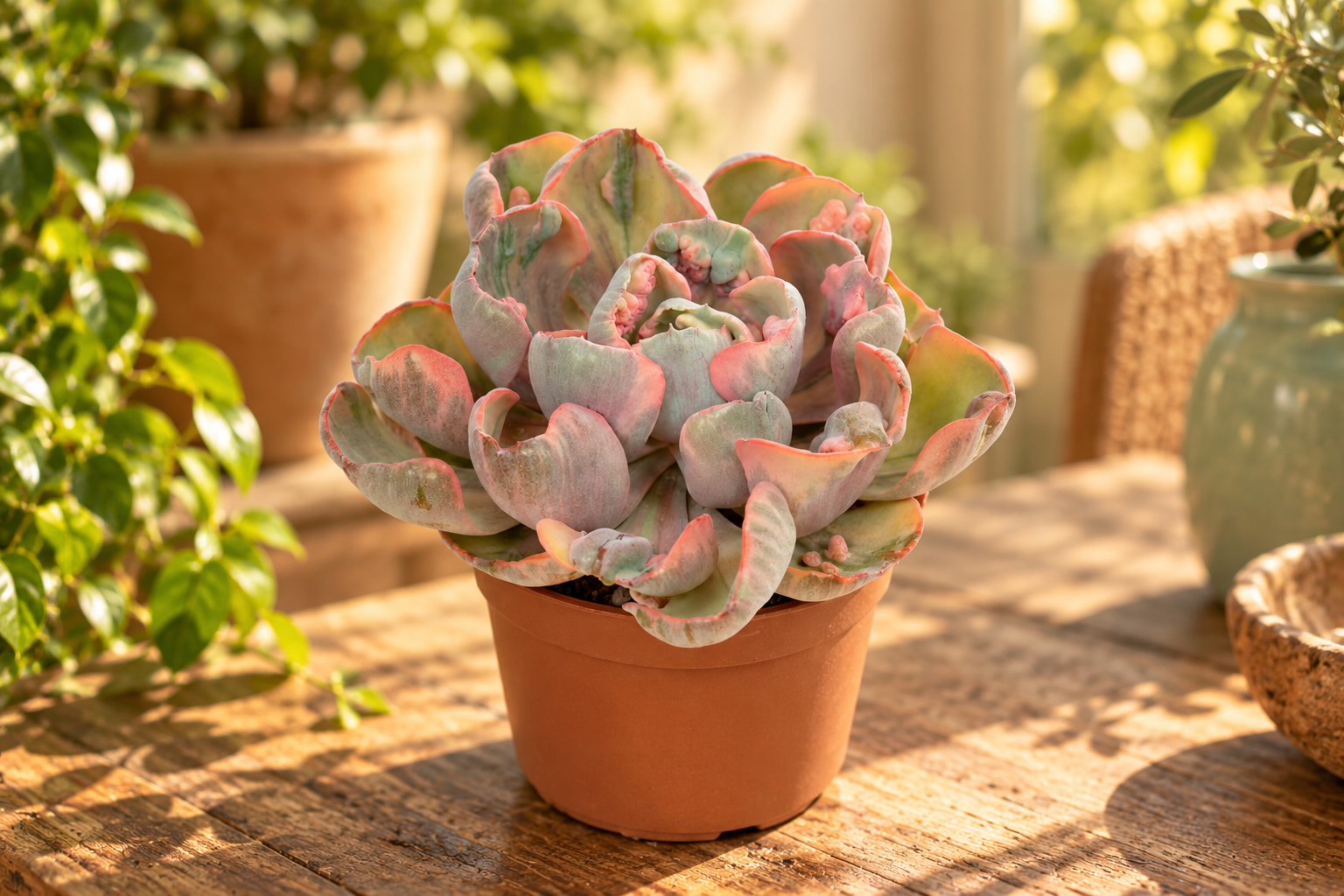
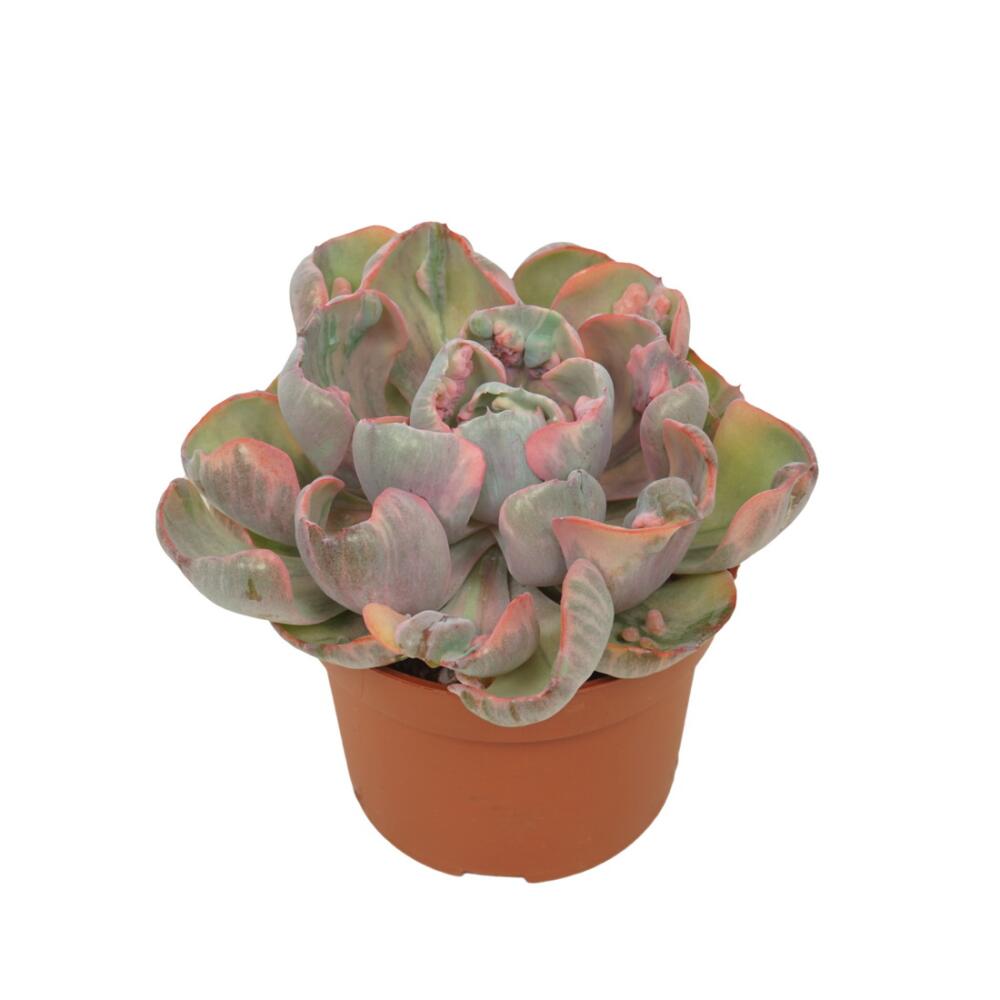
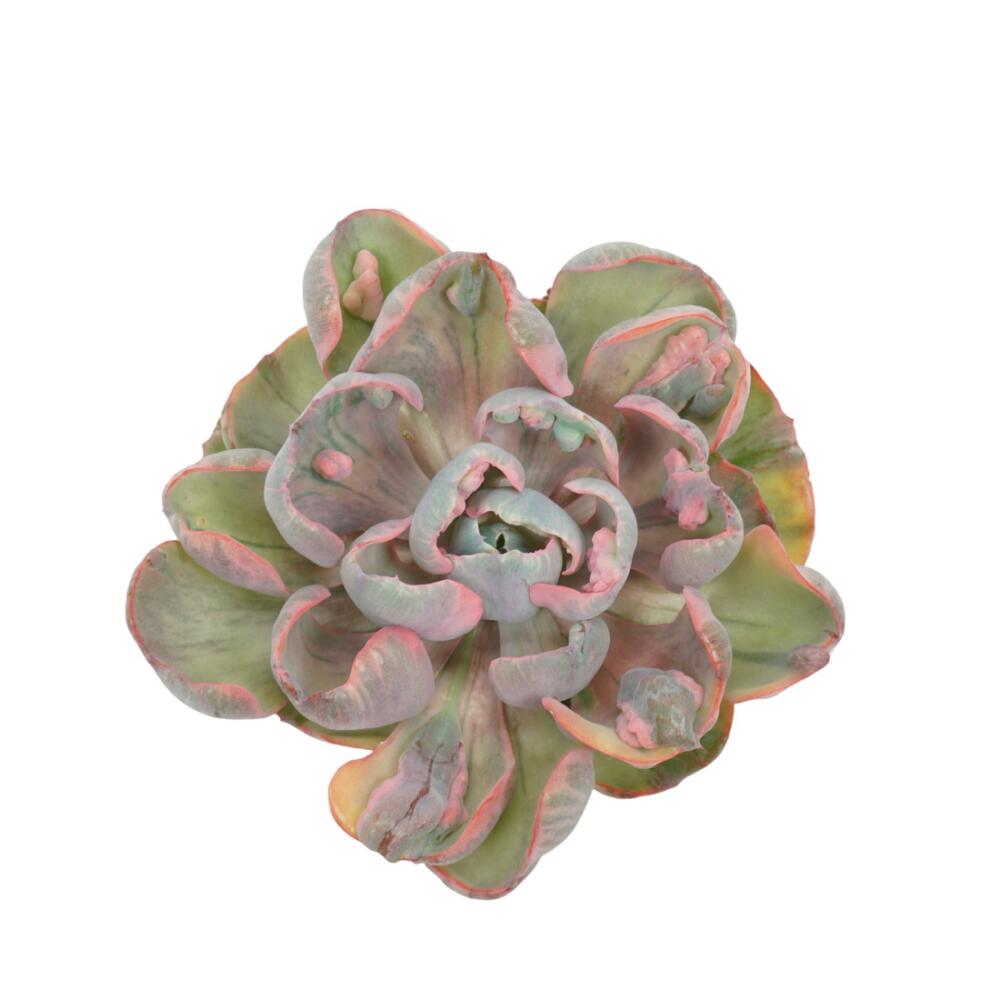
Cleopatra stands out through ruffled edges. Grey-green fleshy leaf surfaces look densely layered; a pink to coral border traces the irregular outlines. Seen from above it differs from a smooth strictly star-shaped Echeveria. The original shows a young compact crown, not promised flowering. Cleopatra remains the trade name of this selection. No particular parent combination or later exact mature size is additionally derived. The actually visible leaf shape and its fine coloured border are enough for a first impression.
Do not hide the edge behind the pot
The assortment size is 10.5 centimetres pot diameter and about fifteen centimetres overall height. A simple cover with an easily reached inner pot leaves the crown visible from the side. Overly tall covers can conceal lower ruffled edges and make soil checks harder. Support the container when unpacking. Do not use leaves as handles even if their firm shape looks robust. Leave enough room between neighbouring plants so the rosette is not rubbed at every watering or covered by a larger leaf.
The form develops with light
A very bright position supports compact growth. Increase stronger sun slowly after a protected growing position. Look at the youngest leaves rather than trying to force existing coloured edges through ever harsher lighting. A sunny summer day behind glass can become very warm. Move outdoors only after frost risk with a gentle transition. The folded leaf edge need not be equally pink everywhere. Light, leaf age and development influence the impression; one weaker border proves no nutrient deficiency.
The folds are not a watering bowl
Check soil and container weight before watering. Substrate may dry largely between waterings. Then water slowly onto soil so no puddle stays in the centre or between tight leaves. Remove excess. Spraying does not replace supplying the root ball. Individual dry older outer leaves belong to observation of the whole plant. If the pot is already wet and heavy, do not water as a precaution. The striking rosette stays eye-catching while still being cared for as a living rooted plant.
The base is easy to check
Free-draining succulent substrate and a container with outlets belong together. Mineral structure helps water drain and air reach roots. When repotting, choose according to actual root-ball needs and handle the dense crown carefully. Feed sparingly according to fertiliser label during growth. Entirely dried old leaves are gently removed if they release. Check hidden bases while doing so. Naturally matt surfaces need no leaf polish; damaged areas do not become smooth through repeated rubbing.
Observe a rosette through the seasons
Cleopatra remains bright and frost-free in winter. With less growth, reassess water needs rather than continuing unchanged summer intervals. A photo from an angle above suits the plant book, showing ruffled margin and dense layering together. Add a side view with the actual little container. Neither current flowering nor exact later height is guaranteed for this trade selection. A note on new leaves is often more helpful: it shows how this particular rosette develops under your light and supply.
One plant, several views
Good to know
Are the leaf edges damaged?
The original shows the characteristic ruffled leaf form of this selection.
Is pink a guaranteed flower colour?
Pink here describes the leaf border; no particular flower is established.
Can water remain in folds?
Water onto soil and avoid standing water between leaves.
How tall does Cleopatra become later?
The offer establishes young overall height; no exact mature height is promised.
Should the matt surface shine?
The natural surface stays unpolished.
Sources and editorial note
- Exotenherz: offer and original images (03.10.2026)
- RHS – Echeverias, light and free-draining substrate (03.10.2026)
- NC State Extension – Rosettes and continued cultivation (03.10.2026)
Shop offer, article number, GTIN, availability and original images checked directly on 02.10.2026; specialist acceptance 03.10.2026. Specialist sources read directly. Specific SKU, dimensions, original images and orderability checked directly in the shop on 03.10.2026. Relevant specialist sections checked; shop name and botanical synonyms remain distinguishable. Currently not orderable: knowledge portrait without purchase link, social drafts without sending approval. No Wawi, server or tool changes. Currently not orderable: knowledge portrait without purchase link; social drafts not approved for sending.