
This plant at Exotenherz
Check the shop offer for current availability, price and what is included.
The linked shop is in German. Product details, availability and delivery information are provided in that shop.
Your care table
| Topic | What to do | Why it helps |
|---|---|---|
| Light | Very bright, also sunny after acclimatisation. | Insufficient light leads to a loose elongated rosette. |
| Water | Water only after the compost has dried sufficiently. | A weekly indication does not replace checking the root ball. |
| Compost | Loosened with mineral ingredients and freely draining. | The small roots should regain air after watering. |
| Rosette | Do not leave water standing in the centre. | Prolonged wetness can damage the plant’s heart. |
| Surface | Do not wipe or spray the powdery coating. | Touch alters the protective natural wax layer. |
| Feed | Use a weak dose during growth according to the product instructions. | Generous supplies do not replace light or dry pauses. |
| Winter | Bright, frost-free and with much more restrained watering. | Water demand falls sharply with little growth. |
| Checks | Check the base and leaf axils for mealybugs. | Distinguish cottony nests from the even natural coating. |
A rosette with a restrained play of colour
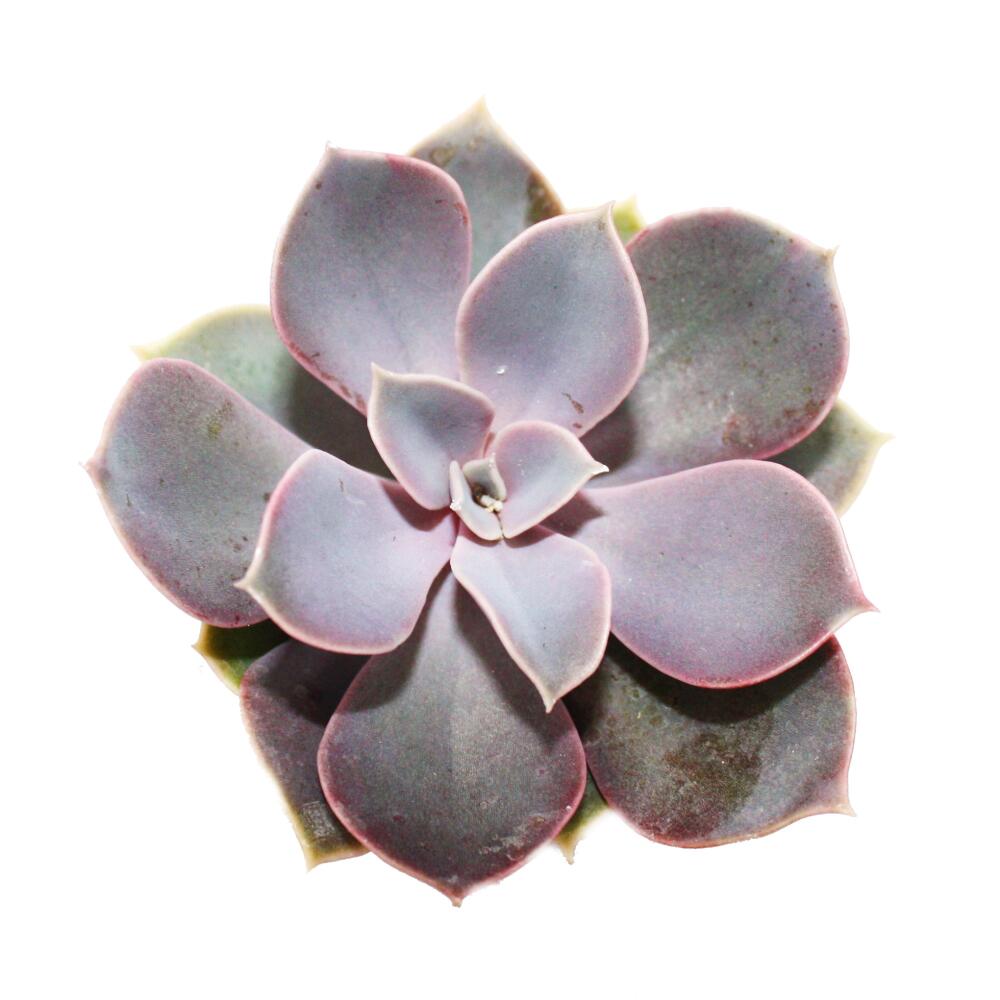
Echeveria Perle von Nürnberg belongs to the stonecrop family. Its fleshy spoon-shaped leaves form a rosette, showing grey to lilac tones with a pinkish sheen. The variety is a horticultural hybrid rather than a distinct Mexican wild species. A fine waxy coating gives the surface its powdery appearance. Light, season and development influence colour; not every leaf looks the same at every moment. As the plant ages, lower leaves may dry out and reveal a short stem.
Here a collection really starts small
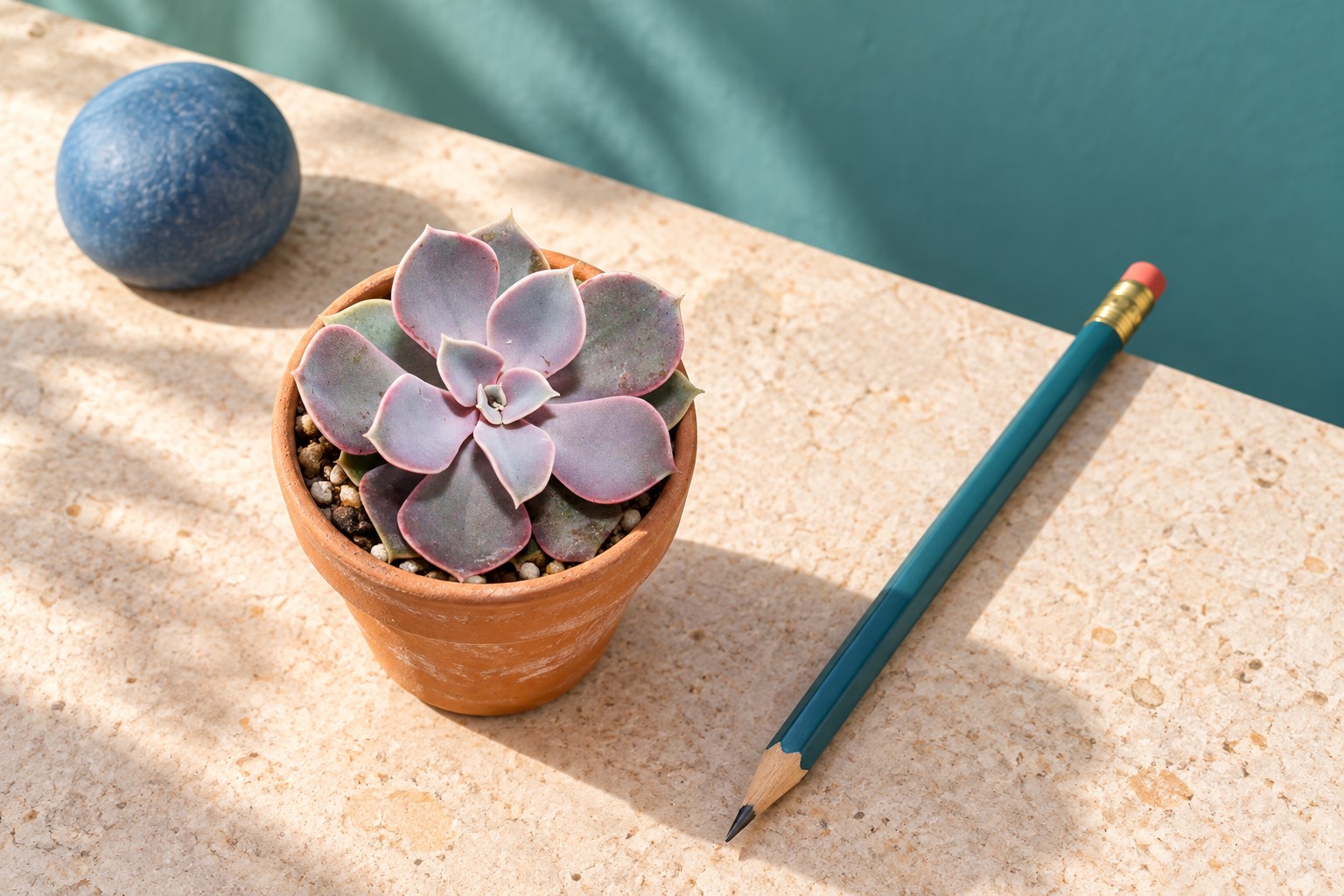
The shop offer states a 5.5 cm pot and approximately 6 to 8 cm overall height at around two years of age. It is a small young plant. The original photograph shows the rosette from above, clearly revealing leaf arrangement. The scene adds a pot within the stated size range and an everyday object for comparison. The rosette is not enlarged into a big tabletop plant. Shop information and the original view remain authoritative for actual delivery; leaf number, colour and form may naturally differ.
Light keeps the rosette in shape
A very bright position is decisive. After slow acclimatisation, the echeveria can also receive sunshine. Do not move directly from darker sheltered cultivation into hot midday sun. In insufficient light, the rosette often becomes looser, new leaves separate and the stem stretches. More water or fertiliser will not make this structure compact again. Improve light first. A sheltered outdoor position is possible in summer if the plant is protected from prolonged rain and later cold. It remains bright and frost-free in winter.
Water thoroughly and then let it truly dry
Use freely draining succulent compost with mineral ingredients and a small pot with free drainage. Water the soil once it has dried sufficiently and allow excess to drain. The shop mentions at most weekly summer watering; this does not require watering every week. Pauses may be much longer in cool weather. Do not allow water to collect permanently in the rosette centre. Supply much less during low winter growth. A cold wet root ball is more dangerous for the small plant than an appropriate dry pause.
Leave the leaf surface as untouched as possible
The powdery coating is not dust to polish away. Frequent handling leaves visible marks; leaf-shine spray is unsuitable. When moving the plant, grasp the pot where possible. Carefully remove loose dry leaves from the lower edge without tearing off healthy ones. During active growth, give a suitable weak-dose fertiliser according to the product instructions. Heavy feeding does not automatically produce prettier colours. Check between leaves and around the base for mealybugs. White cottony clusters differ from an even natural leaf coating.
Patience with flowers and propagation
A strong older rosette can develop flower stems with reddish flowers; this is not a delivery promise for the small offered plant. Later remove dead flower stems selectively. Offsets or leaf cuttings allow vegetative propagation from healthy plants. Small sections need time for cut surfaces to dry before planting and should be watered carefully in freely draining compost. Not every detached piece succeeds. Initially, it is wiser to grow the young rosette steadily and learn its growth than to remove many leaves early for experiments.
One plant, several views
Good to know
How large is this echeveria on delivery?
The offer states a 5.5 cm pot and approximately 6 to 8 cm overall height. It is a small young plant.
Should I clean the grey coating from the leaves?
No. It is part of the natural surface and should remain as untouched as possible.
Why is the rosette becoming looser?
Often there is not enough light. Check position and cultivation; extra water or fertiliser does not solve insufficient light.
Is Perle von Nürnberg hardy?
Bright frost-free overwintering is intended for this cultivation. It does not belong permanently in a frosty outdoor bed like a houseleek.
Sources and editorial note
- Product and delivery contents: Exotenherz
- NC State Extension: plant profile
- Royal Horticultural Society: plant and care information
Sources checked: 15 September 2026. Product information and the contents of delivery follow the linked shop offer. Care advice was checked against the cited specialist sources and should still be adapted to the plant’s condition, position and season.