
This plant at Exotenherz
Check the shop offer for current availability, price and what is included.
Check the selected shop offer for price, availability and delivery contents.
Your care table
| Topic | What to do | Why it helps |
|---|---|---|
| Light | Grow very brightly and increase sun slowly. | Observe new leaves and overall shape. |
| Water | Let soil dry largely between waterings. | Check the little root ball before every watering. |
| Watering point | Onto soil, not into the rosette centre. | Do not collect water between leaves. |
| Drainage | Remove excess and keep the outlet clear. | Avoid lasting wetness. |
| Substrate | Free-draining succulent soil with mineral components. | Air should reach the root base. |
| Repotting | Proceed carefully according to real space needs. | No unnecessarily large amount of wet soil. |
| Fertilising | Sparingly according to label during growth. | Dark markings alone prove no deficiency. |
| Winter | Bright and frost-free, reassess use. | The species is no hardy bedding plant. |
Check the compost and pot weight. The care table explains how far the compost may dry.
Water only when needed. The water should reach the root ball without spilling over the rim.
Remove surplus water from the saucer or cachepot. Then return the plant to a suitable position.
Little triangles form a dense rosette
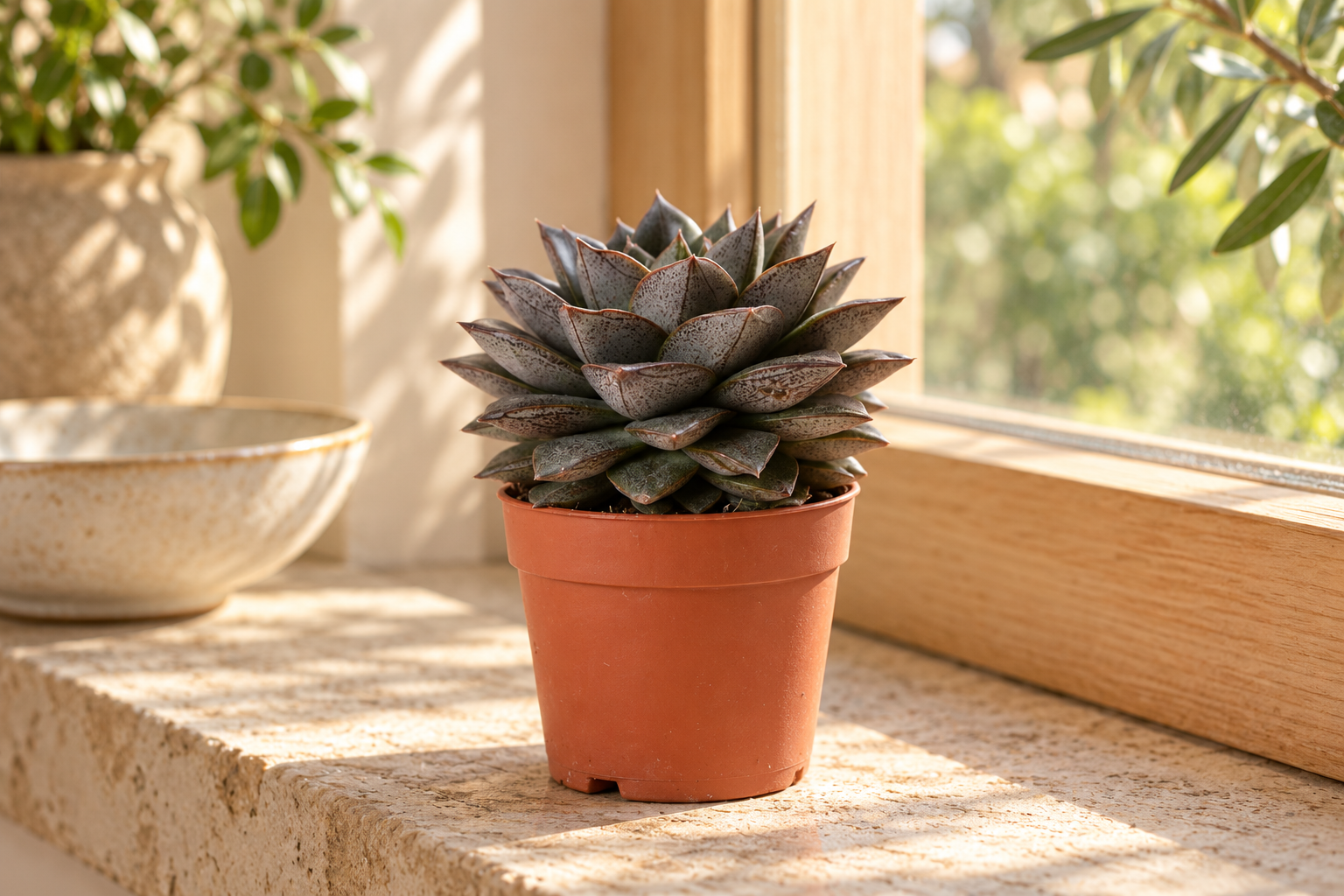
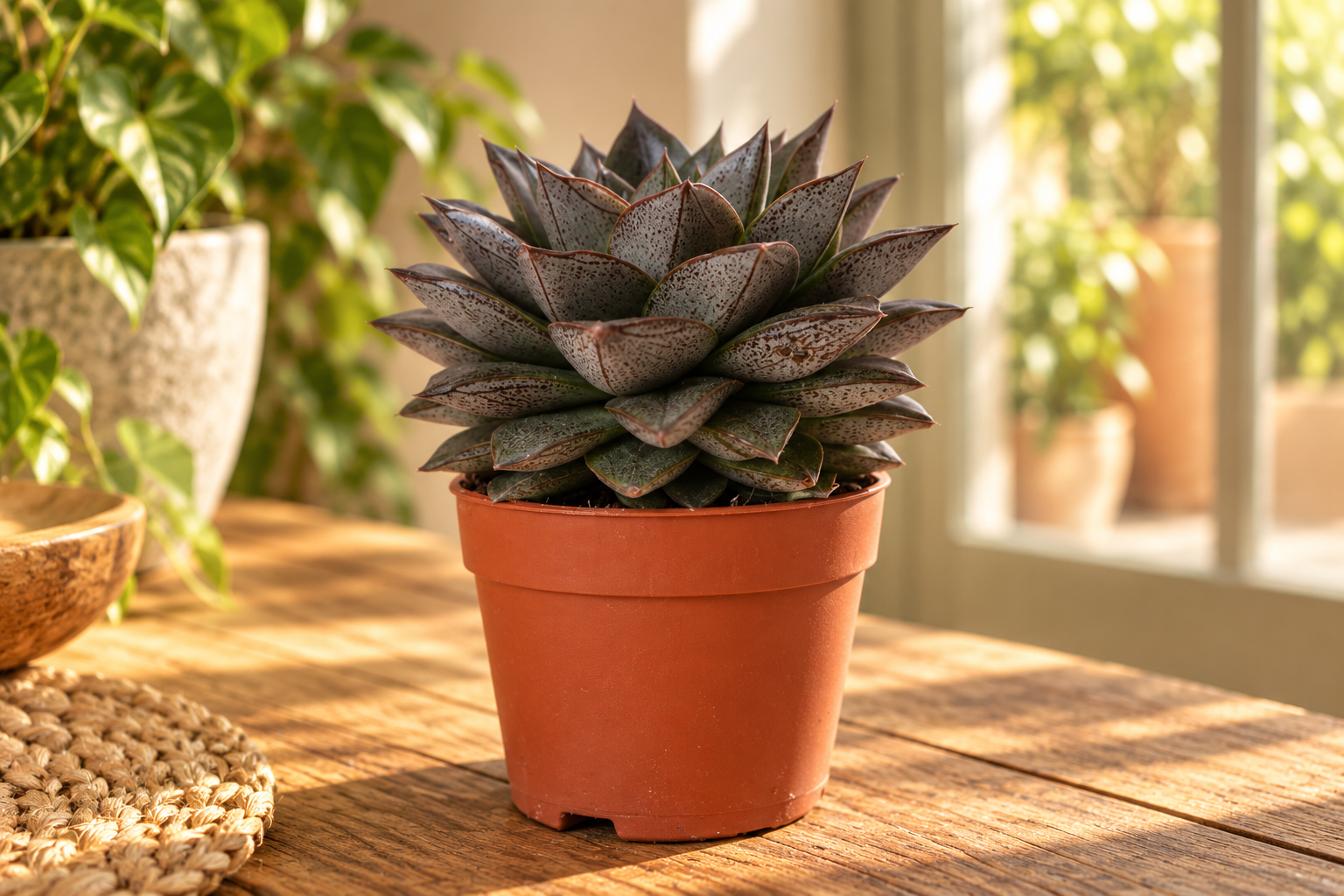
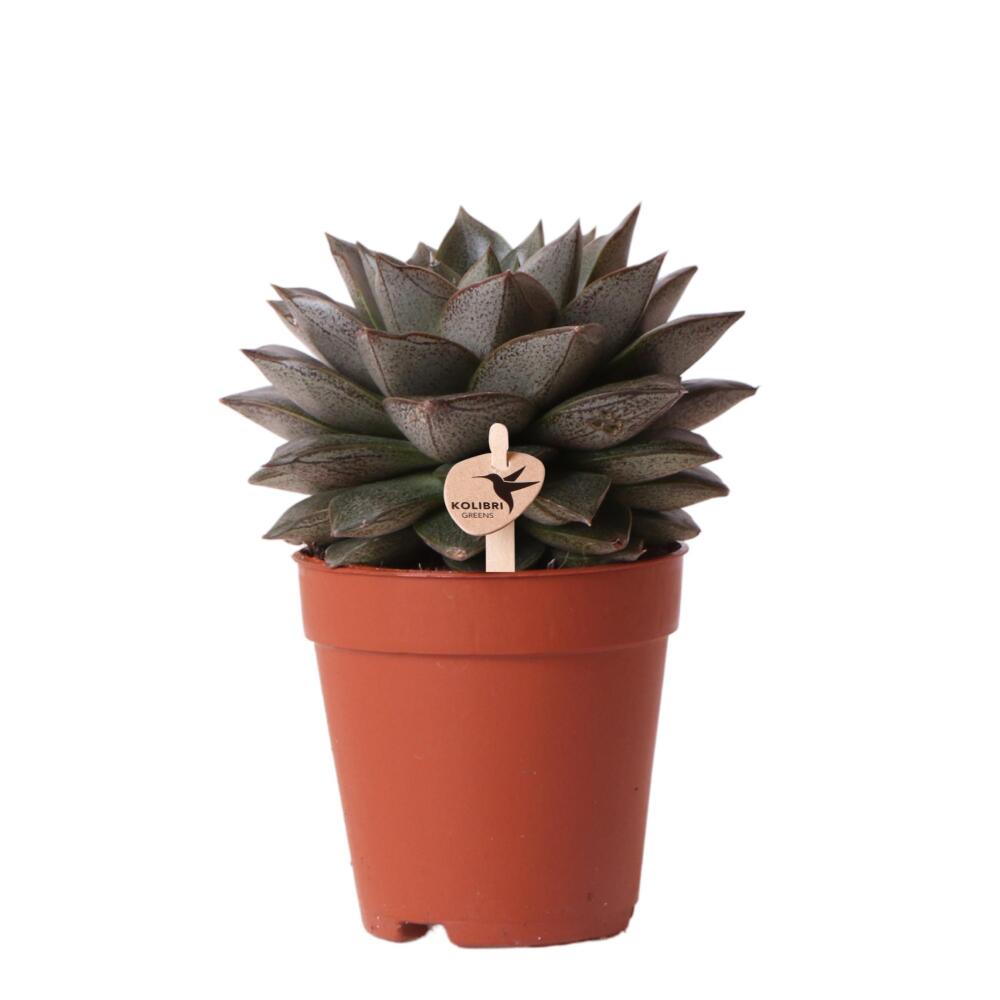
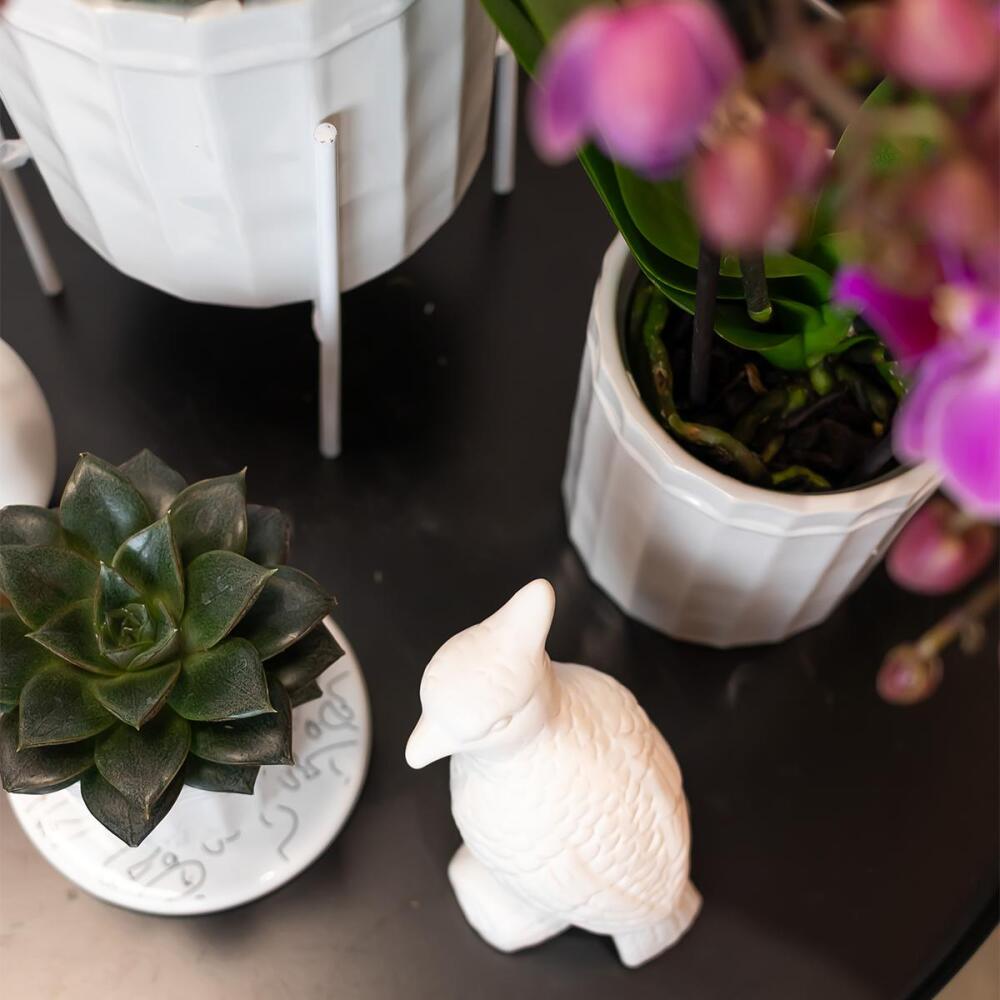
Echeveria purpusorum shows short pointed leaves closely interlocking. Darker brownish to plum-coloured markings lie on the grey-green base colour. A reddish margin may emphasise the triangular shape. Viewed from above, leaf order and points appear especially clear, while a side view explains the low compact form. The shop offer names this species and a 9 cm pot. No additional delivery height is stated. We therefore do not supply it from the photo, container or dimensions of another Echeveria.
A little portrait needs no large cover pot
A simple container can emphasise the angular leaf order well. Keep the rosette visible and removable for checks. Leave some air between neighbouring pots so a watering hand does not constantly pass along the points. Support the container when carrying; the dense-looking crown is no handle. The species is especially interesting for a little table position if plenty of daylight actually arrives. A dark decorative corner may show its form but does not automatically provide a useful permanent growing position.
Light accompanies the new leaf sequence
Grow the species very brightly and introduce stronger sun gradually. After transport, consider fresh leaves and overall shape before changing light strongly. Behind warmed glass a sudden increase may stress it. A possible summer position outdoors is also used gently and only after frost risk. Dark markings on existing leaves are no instruction to place the plant ever hotter. More important is a stable reachable place where new growth and soil can regularly be examined.
The little root zone is occasionally watered thoroughly
Substrate may dry largely between waterings. Check soil and pot weight before watering; afterwards water reaches soil and excess drains completely. No reserve remains between tight leaves or in the rosette centre. Fleshy leaf surfaces store water but do not make roots unnecessary. An old dry outer edge is considered with overall condition. A root ball already heavy and wet does not automatically need extra water merely because one leaf looks less firm.
Drainage instead of an ever-larger cover
Structurally stable succulent substrate with mineral components and an open container outlet support culture. Repot carefully when genuinely needed without pulling the little rosette apart. A very large amount of unrooted soil may stay moist long. Use fertiliser sparingly during active growth according to a suitable label. Entirely dried old leaves may be removed selectively; firm healthy leaves remain. Inspect hidden bases while doing so. Do not polish the natural surface or rub dark markings off as dirt.
Observe form and flowers over time
Echeveria purpusorum is a perennial frost-sensitive succulent. In winter it remains bright and protected with supply adapted to little growth. The species can develop an inflorescence rising above the rosette; such a stage is not promised for the young delivery plant. A picture from above alongside a side view is useful in the plant book. Record new leaves, possible side shoots and position. Even without invented delivery height, this shows how the specific little rosette develops over time and what care it actually receives.
One plant, several views
Good to know
Are the dark spots dirt?
The original shows natural dark leaf markings.
How tall is the delivery plant?
The offer lists the 9 cm pot but no additional height.
Is it a cactus?
As an Echeveria it belongs to the Crassulaceae family and is a succulent.
Is it delivered flowering?
Current flowering is not promised for the assigned offer.
Can I place it in closed glass?
Care needs a checkable root ball, air and free drainage; permanently moist closed glass is unsuitable.
Sources and editorial note
- Exotenherz: offer and original images (03.10.2026)
- RHS – Echeverias, light and free-draining substrate (03.10.2026)
- NC State Extension – Rosettes and continued cultivation (03.10.2026)
- RHS – Echeveria purpusorum, leaf shape and culture (03.10.2026)
Shop offer, article number, GTIN, availability and original images checked directly on 02.10.2026; specialist acceptance 03.10.2026. Specialist sources read directly. Specific SKU, dimensions, original images and orderability checked directly in the shop on 03.10.2026. Relevant specialist sections checked; shop name and botanical synonyms remain distinguishable. Currently not orderable: knowledge portrait without purchase link, social drafts without sending approval. No Wawi, server or tool changes. Currently not orderable: knowledge portrait without purchase link; social drafts not approved for sending.