
This plant at Exotenherz
Check the shop offer for current availability, price and what is included.
The linked shop is in German. Product details, availability and delivery information are provided in that shop.
Your care table
| Topic | What to do | Why it helps |
|---|---|---|
| Light | Bright, sunny after gradual acclimatisation. | Sudden sun can damage the surface. |
| Water | During growth, water thoroughly after good drying. | Roots need water followed by air. |
| Drainage | Remove excess water from the outer pot. | Constant wetness endangers the base. |
| Compost | Freely draining cactus compost with mineral ingredients. | The small root ball should dry evenly. |
| Feed | Weak doses only during growth. | Winter rest does not need extra nutrients. |
| Winter | A bright, cooler, dry and frost-free rest. | Avoid warmth in a dark position and cold, wet conditions. |
| Flowers | Do not knock buds; a short flower life is normal. | Delivery is expressly non-flowering. |
| Checks | Inspect the base for softness and areoles for mealybugs. | Do not confuse natural wool with infestation. |
Check the compost and pot weight. The care table explains how far the compost may dry.
Water only when needed. The water should reach the root ball without spilling over the rim.
Remove surplus water from the saucer or cachepot. Then return the plant to a suitable position.
Quiet details before the large flower
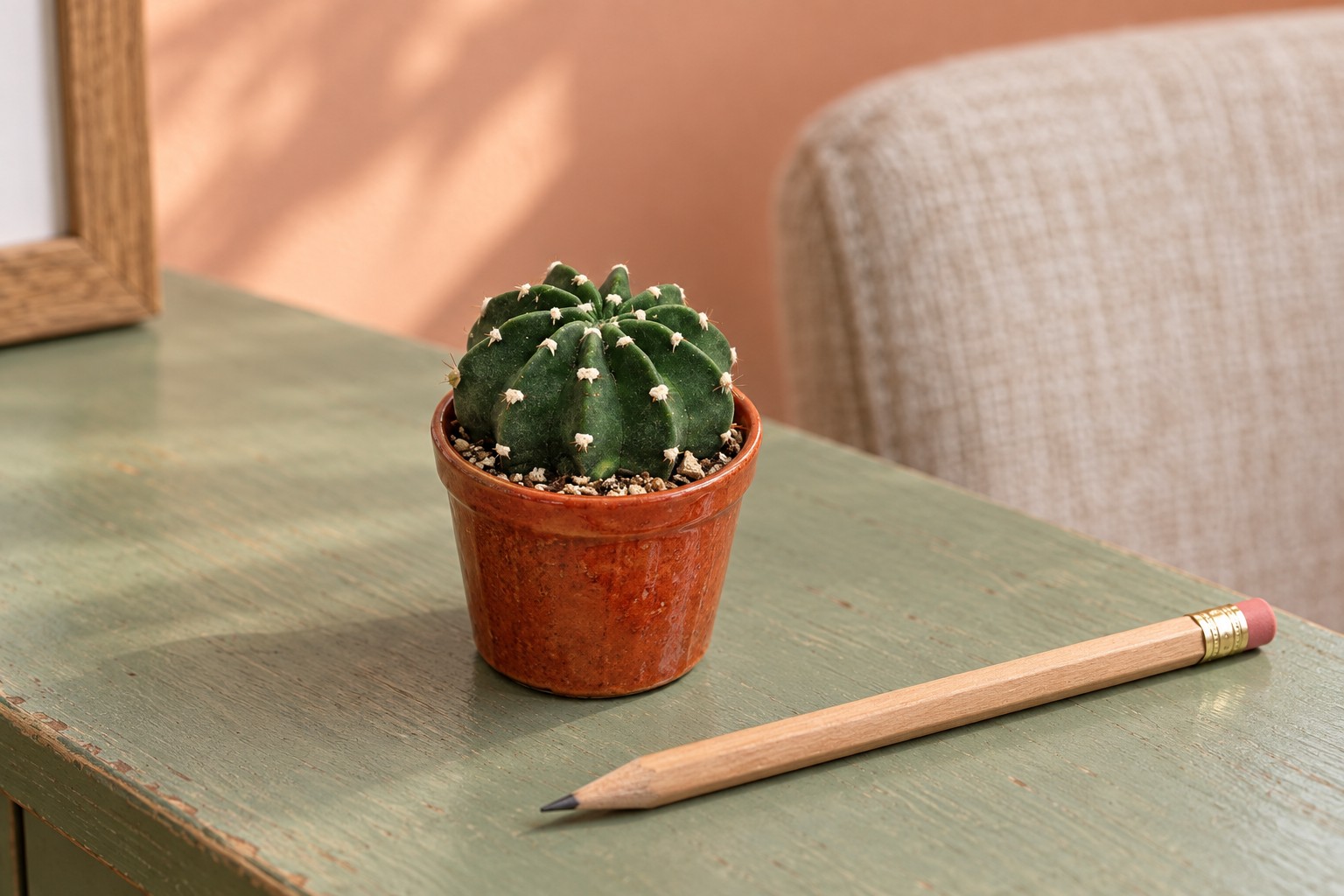
The dark-green body of Echinopsis subdenudata is divided into pronounced ribs. Pale woolly areoles sit on them like small dots; the spines of the offered form are relatively inconspicuous. This understated pattern is precisely what makes the young plant interesting. Kew now treats the name as a synonym of Echinopsis ancistrophora. In the trade, subdenudata remains a useful name for the familiar short-spined form. A label bearing both names therefore helps with later comparisons and prevents a name change being mistaken for a different plant.
A young plant without a flowering promise
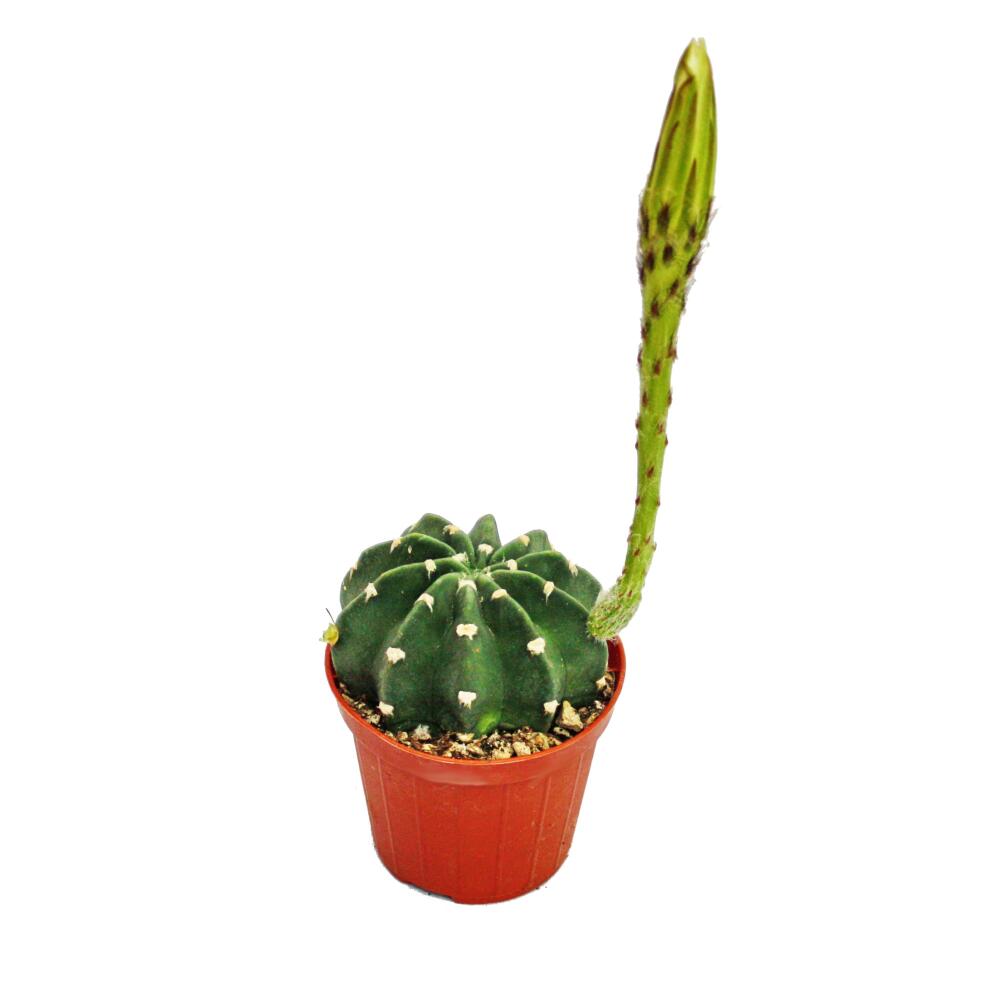
The offer comprises an approximately two-year-old cactus in a 5.5 cm pot, with around 6 to 8 cm overall height. It is expressly shipped non-flowering. The bud in the original photograph shows possible development, not a promised delivery condition. After unpacking, check the pot for wetness, stand the plant securely and give it time to settle in. A small specimen first needs a dependable growing position. Trying to force a large flower immediately through heavy feeding is more likely to weaken balanced development.
Build up brightness without burning the surface
A bright position with sufficient natural light is the foundation. Gradually accustom the cactus to stronger direct sun. Especially after shipping or a darker winter position, sudden exposure to a hot south-facing spot can damage the surface. Turn the pot only moderately and watch the new crown: unusually narrow, pale new growth may indicate insufficient light. A sheltered summer position outdoors is possible. Allow for prolonged rain, toppling pots and unexpectedly cold nights. This is not a hardy rock-garden cactus for every type of weather.
Check the root ball before watering
During growth, water when the compost has dried well. Water should reach the root area and then drain away. Remove any remaining water from the outer pot. Small daily sips often only keep the surface damp and make assessment harder. With a 5.5 cm pot, lifting it is worthwhile: the weight difference between freshly watered and dry soon becomes familiar. The shop’s summer guidance is an upper limit, not a weekly appointment. In cool weather or with little growth, the pause becomes longer. A soft dark base requires a check for rot.
Rest is part of care
In winter, stand bright, frost-free and cooler than in summer. During genuine rest, keep largely dry and do not feed. A constantly warm dark corner is unsuitable because warmth may encourage growth without the necessary light. In spring, do not suddenly water copiously; adjust cautiously with increasing brightness and the start of growth. Freely draining cactus compost with mineral ingredients makes the transition easier to monitor. Repot only when needed into a suitably larger container. Large reserve pots retain moisture unnecessarily long around small roots.
Watch buds and maintain healthy growth
Long flower tubes with large pale funnel-shaped flowers may appear later. Individual flowers are short-lived; their end does not mean a care mistake. Avoid knocking a developing bud. After flowering, carefully remove dried remains. During active growth, give weak-dose cactus fertiliser according to the instructions. Check woolly areoles for additional cottony nests or sticky traces, as mealybugs can be overlooked among the natural wool. Vigorous side shoots can later be used for propagation. First allow the small mother plant an undisturbed growth phase.
One plant, several views
Good to know
Does the plant arrive in flower?
No. The shop expressly ships it non-flowering. The bud in the original photograph shows a possibility, not a delivery promise.
Does this cactus have no spines?
Its spines are short and inconspicuous. Still handle it carefully; it is not described as spineless.
Why does the name ancistrophora also appear?
Kew treats subdenudata as a synonym of Echinopsis ancistrophora. The trade name remains preserved.
How often should it be watered?
Follow the actual root ball and growth: let it dry well during growth and keep largely dry during a cool winter.
Sources and editorial note
- Product and delivery contents: Exotenherz
- Royal Horticultural Society: plant and care information
- Royal Botanic Gardens, Kew: botanical classification
Sources checked: 15 September 2026. Product information and the contents of delivery follow the linked shop offer. Care advice was checked against the cited specialist sources and should still be adapted to the plant’s condition, position and season.