
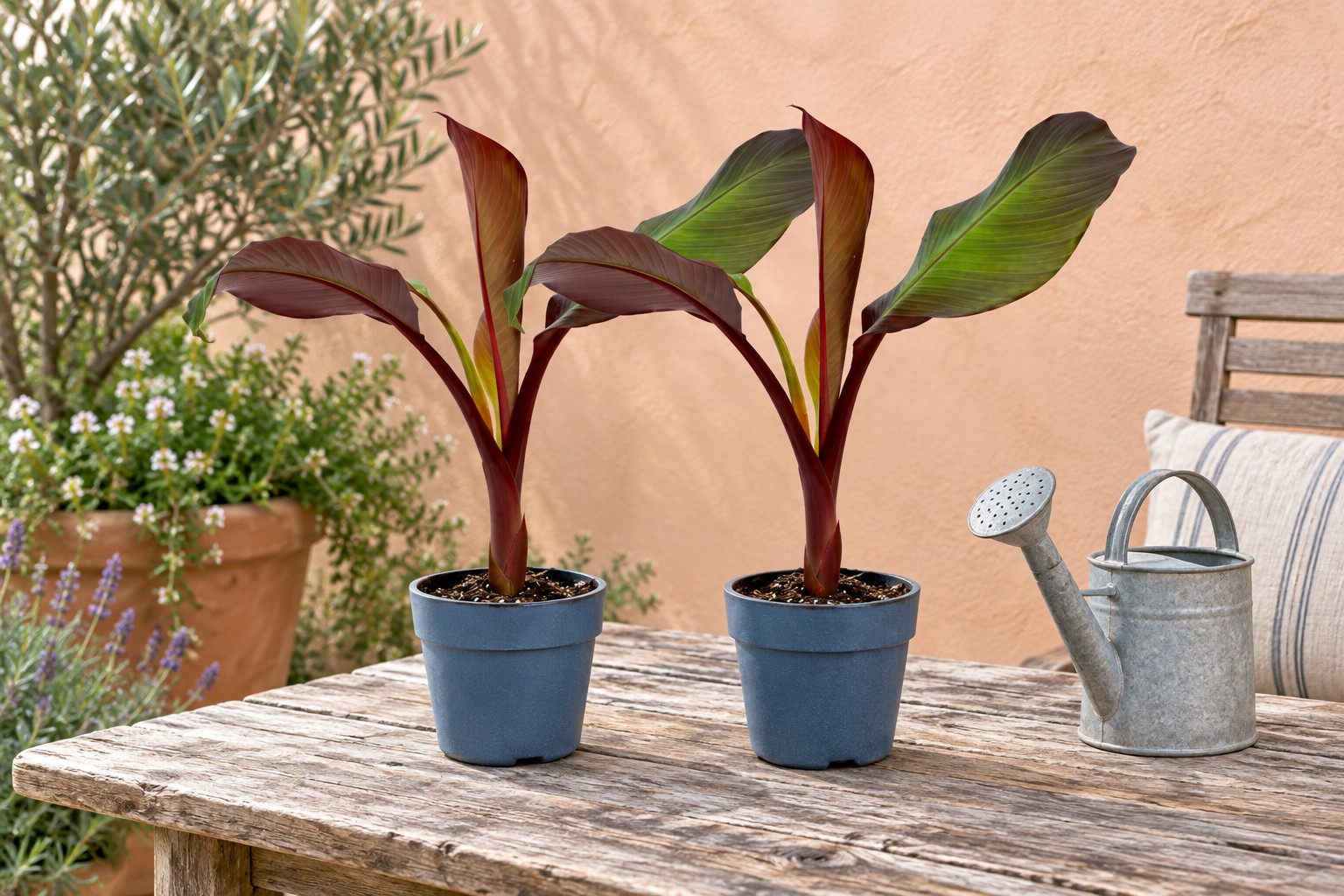
This plant at Exotenherz
Check the shop offer for current availability, price and what is included.
Link to the offer in German. Check the shop for the current price, availability and delivery contents.
Your care table
| Topic | What to do | Why it helps |
|---|---|---|
| Light | Bright warm summer position; acclimatise to sun. | No abrupt intense sunshine after sheltered cultivation. |
| Water | Supply evenly according to need during growth. | Consumption increases with leaf area. |
| Soil | Nutrient-containing, loose and well-drained. | Constantly wet soil weakens roots. |
| Fertiliser | During active growth following product instructions. | Do not force extra feeding during winter rest. |
| Wind | Position with shelter. | Large leaves tear easily in strong wind. |
| Winter | Bring in before frost, bright and frost-free, keeping above about 7 °C. | The shop’s hardy description is not reliable care advice. |
| Quarters | Reduce moisture and ensure air exchange. | Cool wet conditions may encourage rot. |
| Spring | Gradually acclimatise to outdoor light and support new growth. | Do not injure the young leaf centre during care. |
Check the compost and pot weight. The care table explains how far the compost may dry.
Water only when needed. The water should reach the root ball without spilling over the rim.
Remove surplus water from the saucer or cachepot. Then return the plant to a suitable position.
Red-brown leaf veins set the tone
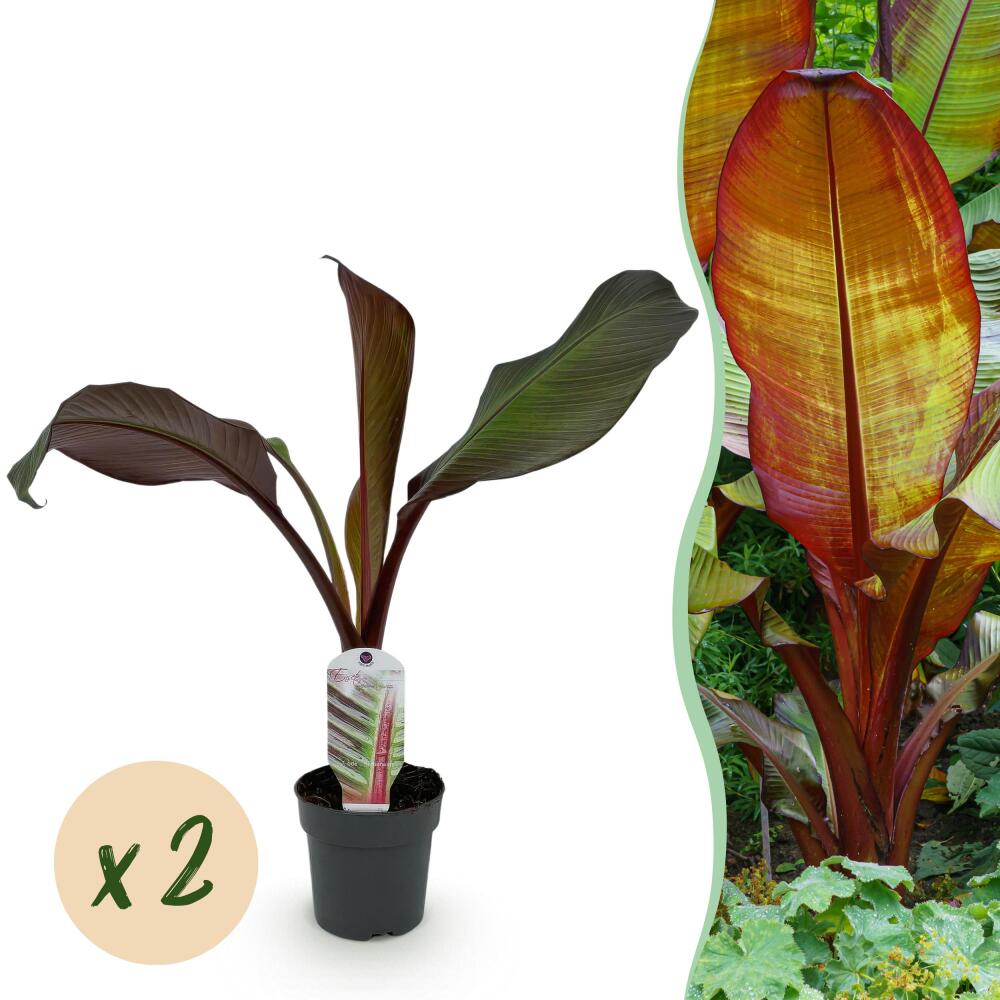
Ensete ventricosum Maurelii belongs to the banana family and is a red-flushed cultivated form of an African species. Green leaf surfaces, darker undersides and reddish midribs change their effect with light and development. The strong apparent trunk consists of densely overlapping leaf sheaths. This makes it a large herbaceous perennial, not a tree. It is presented here as ornamental, not for harvesting ordinary dessert bananas. Its beauty lies in its structure and coloured leaves, long before any possible flowering becomes a subject.
Two small plants to begin with
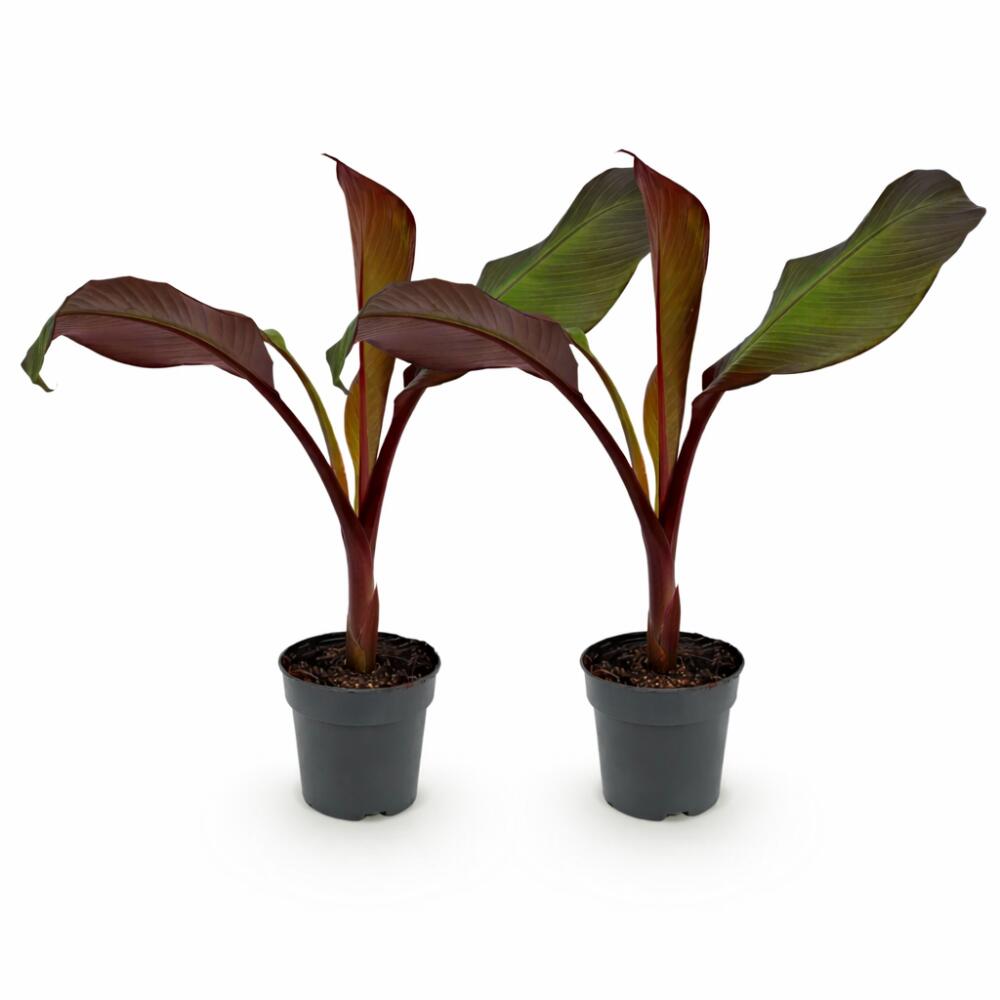
The offered set of two consists of plants in 12 cm pots at about 30 cm overall height. Original images show a few slender young leaves, not yet mighty mature leaf fans. The scene retains this development stage too. Later Ensete may become substantially larger in good conditions and require more standing room and root space. Plan at purchase how the plant will reach its winter quarters in autumn. A small pot is easy to carry; a strong specimen may later be considerably heavier and more cumbersome.
Summer light with protected leaves
A bright warm, wind-sheltered outdoor position is suitable for the summer months. After cultivation under glass, gradually acclimatise to direct sun. Particularly in a warm greenhouse, light shading may help prevent overheating. Soil should contain nutrients and drain well. Move growing plants to a suitable stable container in good time without placing a young plant in excessive quantities of persistently wet soil. Strong wind may tear leaves; a green torn leaf need not be removed immediately for that reason.
Supply vigorous growth evenly
In summer, check the root ball regularly and water thoroughly when needed. Water demand rises with larger leaf area. Complete drying weakens the plant, whereas standing water stresses roots. Remove surplus from the outer pot and keep drainage clear. Feed during active growth following product instructions. If growth stops in cool weather, do not force it with extra nutrition. With yellow leaves, consider natural ageing of lower leaves, light and root condition too. Balanced continuous supply is more helpful than alternating extremes.
Clearly resolve the conflict with the shop description
The shop offer calls the plant hardy. For Ensete Maurelii, this is incorrect as practical outdoor advice: it is frost-sensitive and must be brought in before frost. Bright frost-free overwintering under glass suits the small set plants, for example with a safely maintained temperature above about 7 °C. The cooler and dimmer its position, the less water it uses. Check the root ball and supply only according to need. A mere layer of mulch outside does not replace these winter quarters.
Stay healthy through the rest period
Before bringing it in, remove dead leaves and inspect leaf undersides and sheaths for pests. Allow air exchange in the quarters and watch for soft rotten areas. Water consumption and growth may fall strongly; then stop feeding too. Do not injure the central young rolled leaf. In spring gradually acclimatise again to outdoor light and weather, increasing supply only as growth resumes. Elaborate dry storage of large defoliated specimens is a specialised cultivation method; monitored frost-free pot cultivation is easier to understand for small young plants.
One plant, several views
Good to know
Is red Ensete really hardy?
No. Ensete Maurelii is frost-sensitive and needs frost-free winter quarters. The corresponding shop description is horticulturally corrected here.
Can I cover it outside like Musa basjoo?
A simple cover is no reliable substitute for frost-free overwintering. The two banana species have different winter requirements.
How large do the plants arrive?
The set of two is described with a 12 cm pot each and roughly 30 cm overall height. The plant may later become considerably larger.
Can I keep watering heavily in winter?
No. Supply water according to actual consumption, much less during cool rest. Check the root ball and avoid standing wetness.
Sources and editorial note
- Product and delivery contents: Exotenherz
- National Parks Board Singapore: plant profile
- RHS Plants: plant profile
- Royal Horticultural Society: plant and care knowledge
Sources checked: 15 September 2026. Product information and delivery contents follow the linked shop offer. Care has been checked against the stated specialist sources and remains subject to plant condition, position and season.