
This plant at Exotenherz
Check the shop offer for current availability, price and what is included.
Check the selected shop offer for price, availability and delivery contents.
Your care table
| Topic | What to do | Why it helps |
|---|---|---|
| Light | Enable spring light. | Sun or light partial shade; later woody shade may suit. |
| Soil | Keep humus-rich and fresh. | Moisture should remain available without waterlogging. |
| Planting | Set tubers promptly in autumn. | Very dry stock establishes less easily. |
| Depth | Use about 5 cm as guidance. | Follow the specific package and soil additionally. |
| Spacing | About 5–8 cm in loose groups. | Allow space for later development. |
| Water | Check soil and water as needed. | Do not let dry entirely even after dying back. |
| Foliage | Let mature naturally. | The short green phase belongs to yearly development. |
| Colony | Leave a good position as undisturbed as possible. | Check young shoots for slugs. |
For young plants, feel the soil directly at the root ball. The surface and deeper soil may have different moisture levels.
Water thoroughly after planting; later, water according to the soil, weather and establishment rather than a fixed calendar.
Avoid standing water. For plants in containers, also check that water runs out of the drainage hole.
A flower with a green collar
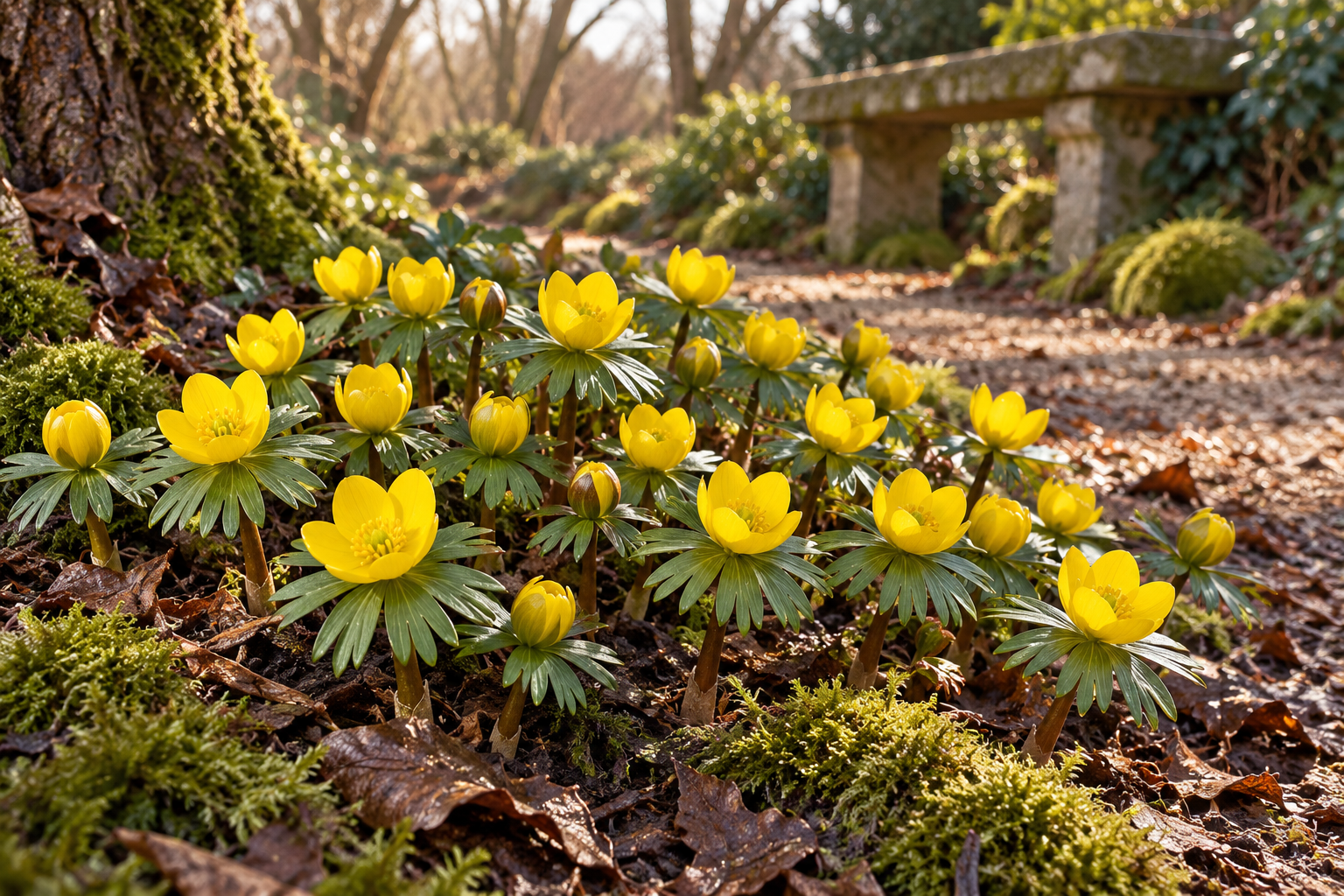
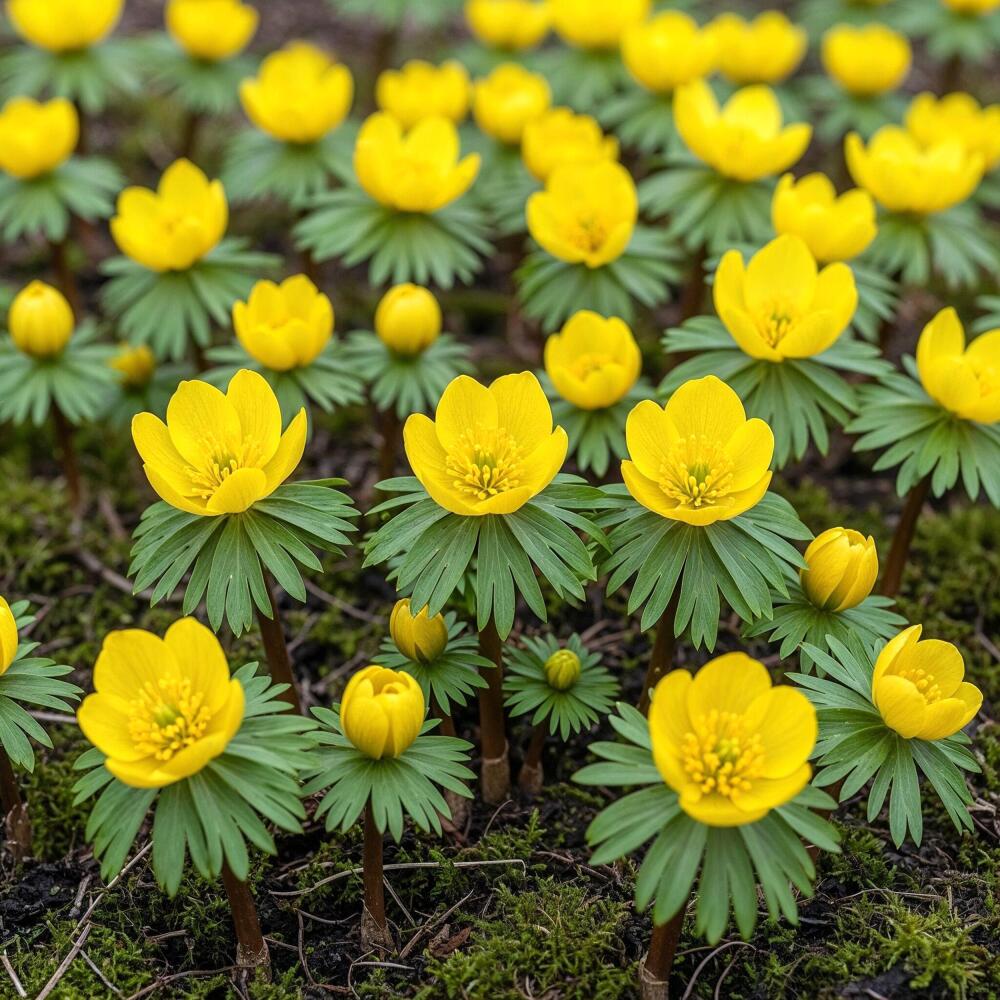
In Cilician winter aconite, a little yellow flower bowl sits above finely divided green bracts. This collar makes the early garden resident unmistakable. Bronze tones may appear at first too. At about ten centimetres high, it suits close views: by the garden path, in front of a seat or among loose planting at a woody edge. The shop uses Eranthis cilicica; the RHS lists corresponding plants under Eranthis hyemalis Cilicica Group. Images show later flowering in the garden, not stock delivered already flowering.
Twenty-five tubers for a little spring position
The offer contains twenty-five underground storage organs to plant. Botanically they are tubers although the shop places them among flower bulbs. The size grade in the offer name is no tuber size measured by us. First find a little area you can see well in early spring. The group can trail off loosely rather than reproducing an exactly filled bowl. Decide its boundaries before planting and mark the area. In summer little of this early appearance eventually remains visible above ground.
Spring light and soil that stays fresh
Sun during flowering and some shade later in the year can fit well together. A position beneath deciduous woody growth often combines both if root competition is not too strong. Humus-rich soil that holds moisture while draining excess is important. A dry hot gravel position differs from a fresh woodland edge. Check your garden after rain and again during dryness. You can then see whether the planned corner really suits the plant or only looks lovely in its first spring photograph.
Plant promptly and gently in autumn
Plant delivered tubers as soon as possible in autumn in workable soil. The specialist supplier gives about five centimetres depth and five to eight centimetres spacing as guidance. Follow the specific package instructions additionally. Very dry tubers may establish less easily; the supplier recommends brief soaking before planting. Use clean water and afterwards do not leave tubers in water for days. Close soil carefully and water in if soil is dry. A discreet marker protects the later invisible place from accidental digging.
Accompany the short green period attentively
During emergence and flowering, soil should not dry entirely. Check especially edges beneath woody plants that may stay dry despite rain. Water near soil when needed and avoid standing water. Intensive fertilising is not the starting point in humus-rich soil; existing reserves and actual development determine possible needs. Basal leaves continue developing after early flowering. Let them mature naturally. Dying back foliage signals dormancy but is no instruction to let the root position become bone-dry all summer.
Leave a good colony as undisturbed as possible
Winter aconites can develop through seeding in a suitable position. This is appealing if you allowed room for the little colony. Do not constantly move a successful planting: the specialist source describes plants as reluctant about frequent transplanting. For necessary changes, separate tubers gently after flowering and continue growing in the prepared place. Watch young shoots for slugs. The plant is ornamental and not intended for consumption; keep curious animals away from tubers and plants.
Record the first garden moment for next year
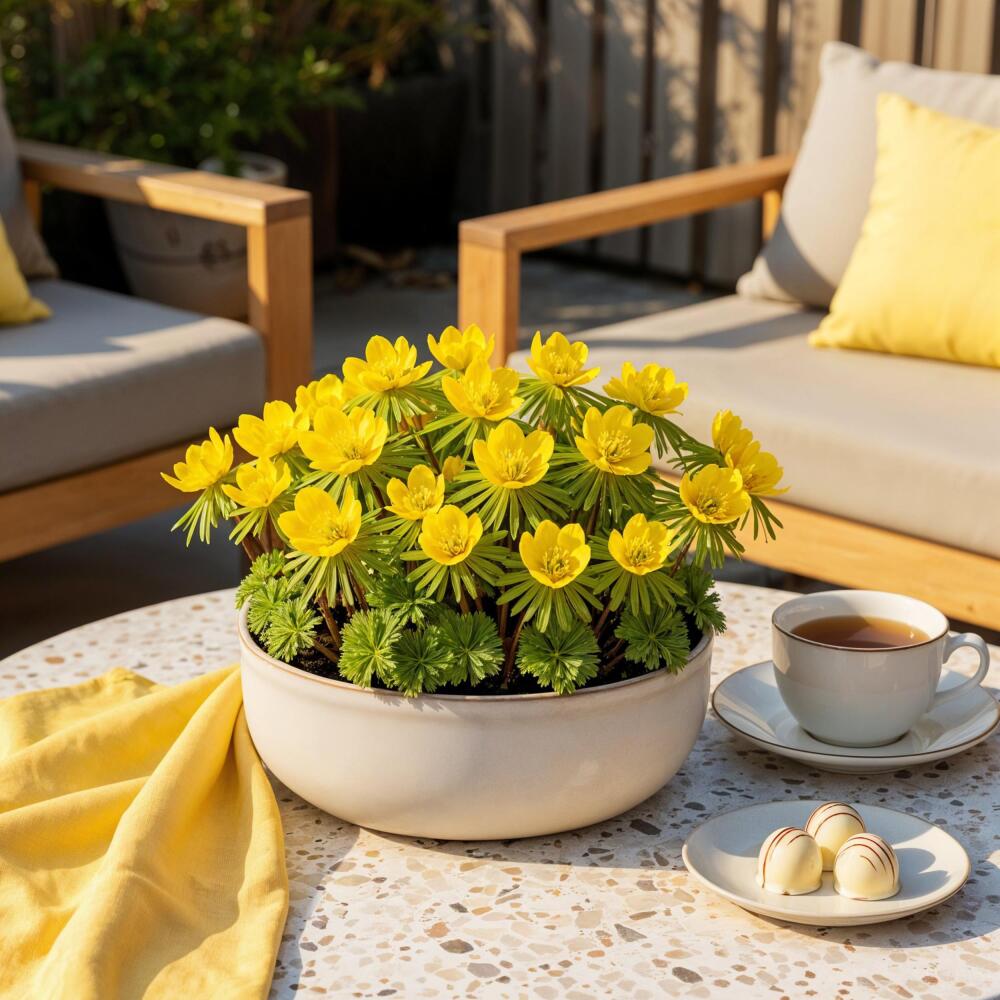
Note in the plant book when the first yellow bowls appear and how long the group stays visible. A photo from the same low perspective later shows whether it spreads or is covered by neighbours. Plan summer design around the marked position. A container is possible but needs reliable drainage and regular moisture checks; it dries differently from garden soil and is more exposed in winter. A well-chosen bed position is often easier to manage for a permanent garden colony than changing table decoration.
One plant, several views

Good to know
Are delivered pieces flowering plants?
No, they are twenty-five tubers to plant.
When does Cilician winter aconite flower?
In late winter to early spring; weather and position influence timing.
How tall does the plant grow?
About ten centimetres when flowering.
What is the green collar beneath the flower?
Finely divided bracts.
May soil dry entirely after flowering?
No. Above-ground dormancy still needs a suitable root position that is not entirely dried out.
Can the group become larger?
In suitable conditions it may develop through seeding. Allow room for this.
Sources and editorial note
- Exotenherz: offer and original images (03.10.2026)
- RHS – Winter aconite Cilicica Group, growth and culture (03.10.2026)
- NC State Extension – Eranthis cilicica through the year (03.10.2026)
- Peter Nyssen – Planting tubers (03.10.2026)
Shop offer, article number, GTIN, availability and original images checked directly on 02.10.2026; specialist acceptance 03.10.2026. Specialist sources read directly. Shop variant, quantity, SKU, current orderability and both original shop images checked directly; no unsupported winter or flowering guarantee. Specialist sources read on 03.10.2026. Images show later flowering, not delivery state. Commercial size grades not adopted as measured bulb or tuber diameter. Specialist acceptance using published Pflanzenwelt portraits; no tool or Wawi changes.