
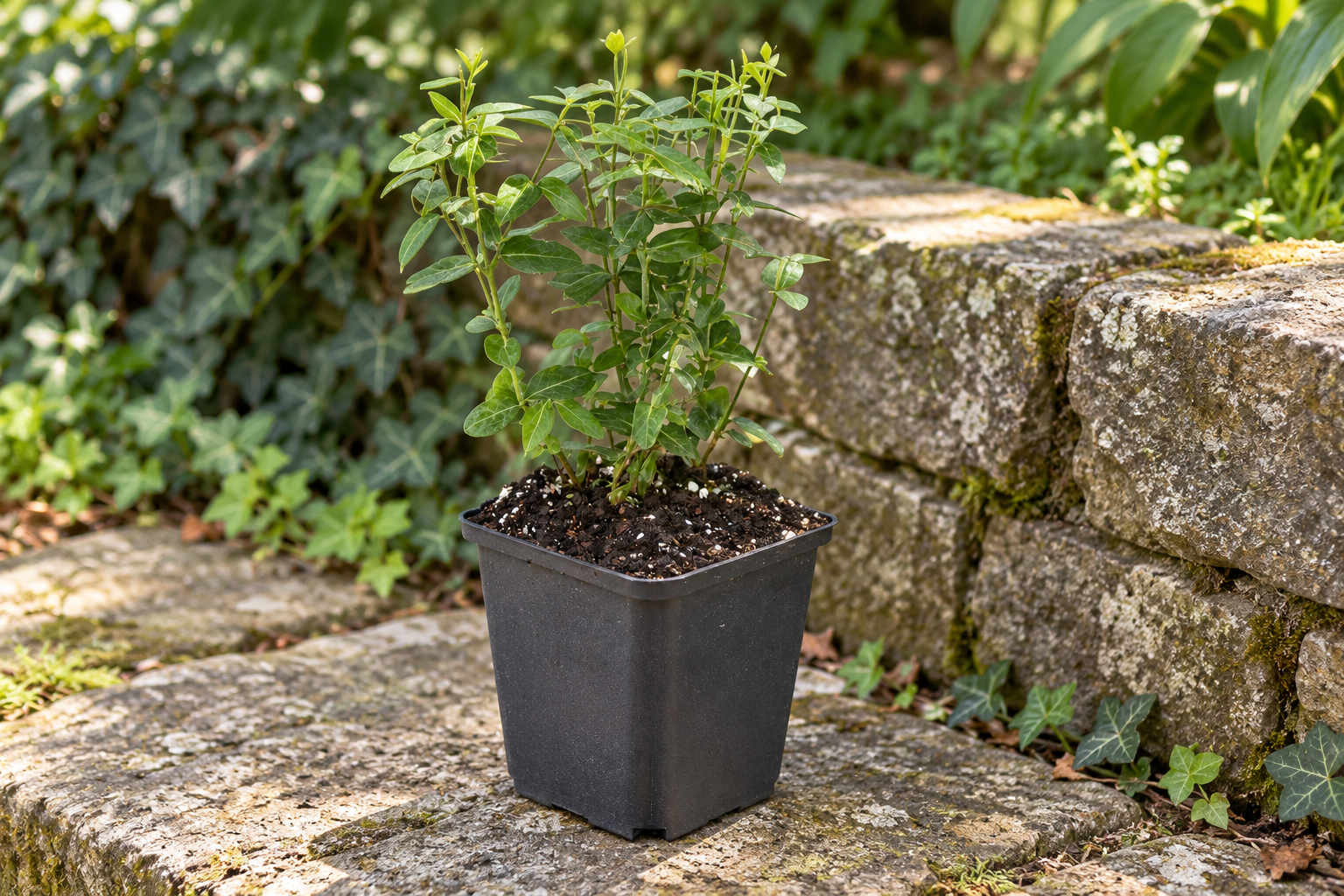
This plant at Exotenherz
Check the shop offer for current availability, price and what is included.
Product and delivery details are given in the individual offer.
Your care table
| Topic | What to do | Why it helps |
|---|---|---|
| Light | Choose sun, partial shade or suitable shade. | The green form adapts; root room must still suit. |
| Soil | Prepare fresh draining soil without permanent wetness. | Very wet roots hinder establishment. |
| Planting | Plant frost-free in spring or early autumn and water in. | Mild moist ground helps root connection. |
| Spacing | Use 35–45 cm as shop guidance for groups. | Later side shoots and shrub width still matter. |
| Water | Check new balls directly during dry periods. | Later drought tolerance does not apply immediately after delivery. |
| Nutrition | Feed sparingly in supplied beds and as needed in containers. | Added food does not replace suitable root conditions. |
| Pruning | Shorten spreading branches individually in spring. | Cut firm leaves can develop brown edges. |
| Climbing and winter | Check shoots and ties; protect small containers. | Direction and winter conditions differ from the bed start. |
| Handling | Wear gloves for work; do not eat plant parts. | Wintercreeper is an ornamental woody plant. |
For young plants, feel the soil directly at the root ball. The surface and deeper soil may have different moisture levels.
Water thoroughly after planting; later, water according to the soil, weather and establishment rather than a fixed calendar.
Avoid standing water. For plants in containers, also check that water runs out of the drainage hole.
A quiet edge of small leaf pairs
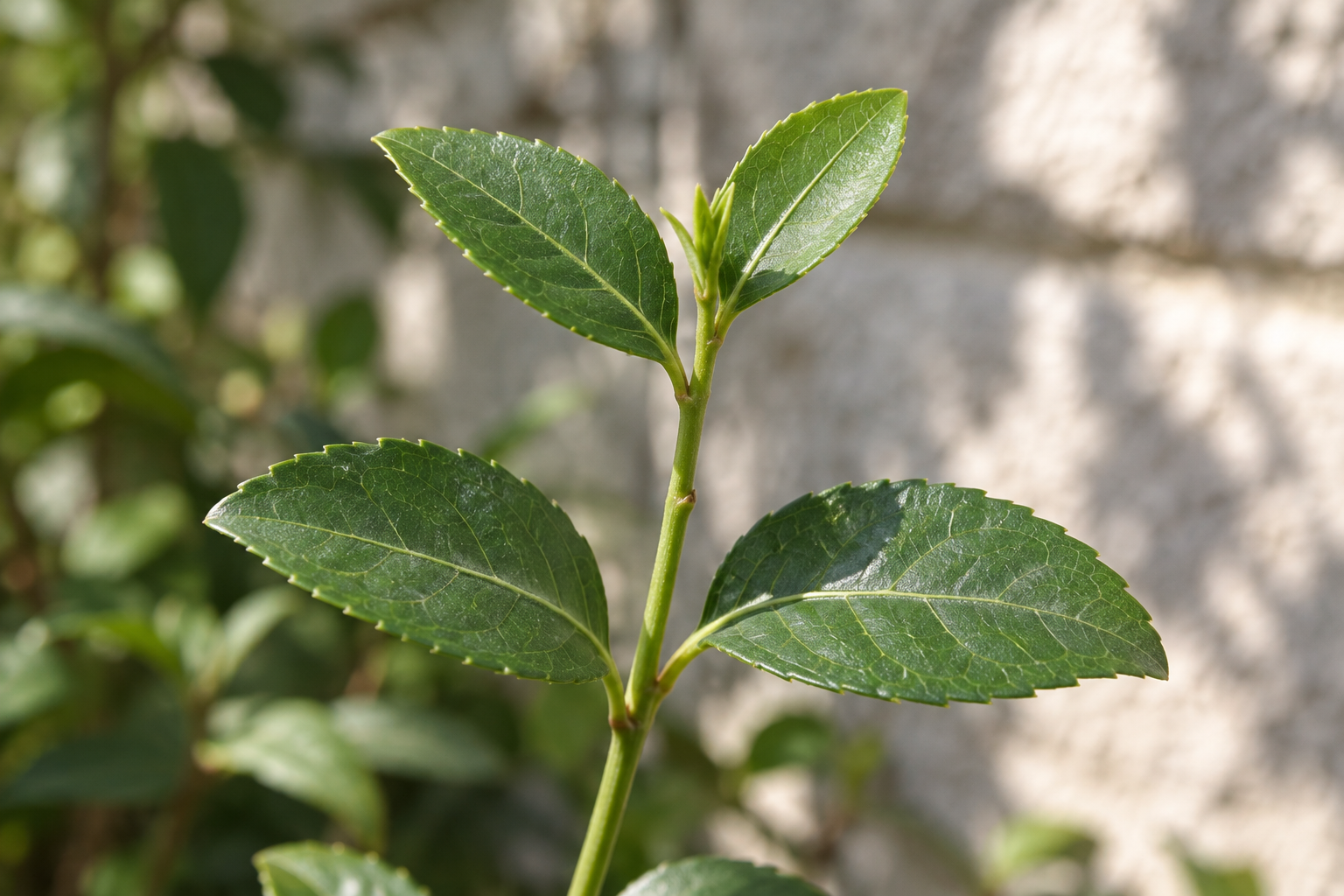
Green wintercreeper carries small firm ovate to elliptical leaves with shallow edge teeth and paler veins. They sit in pairs on young branches without cream-white or yellow edges of coloured garden cultivars. I like this quiet green at a low wall base or old stone edge. The shop calls the plant Euonymus fortunei radicans. This historical botanical assignment is not its own cultivar name: Kew assigns radicans to accepted Euonymus fortunei var. fortunei. The green species form is described here, not an invented extra cultivar Radicans.
The small root ball can become more than a mat
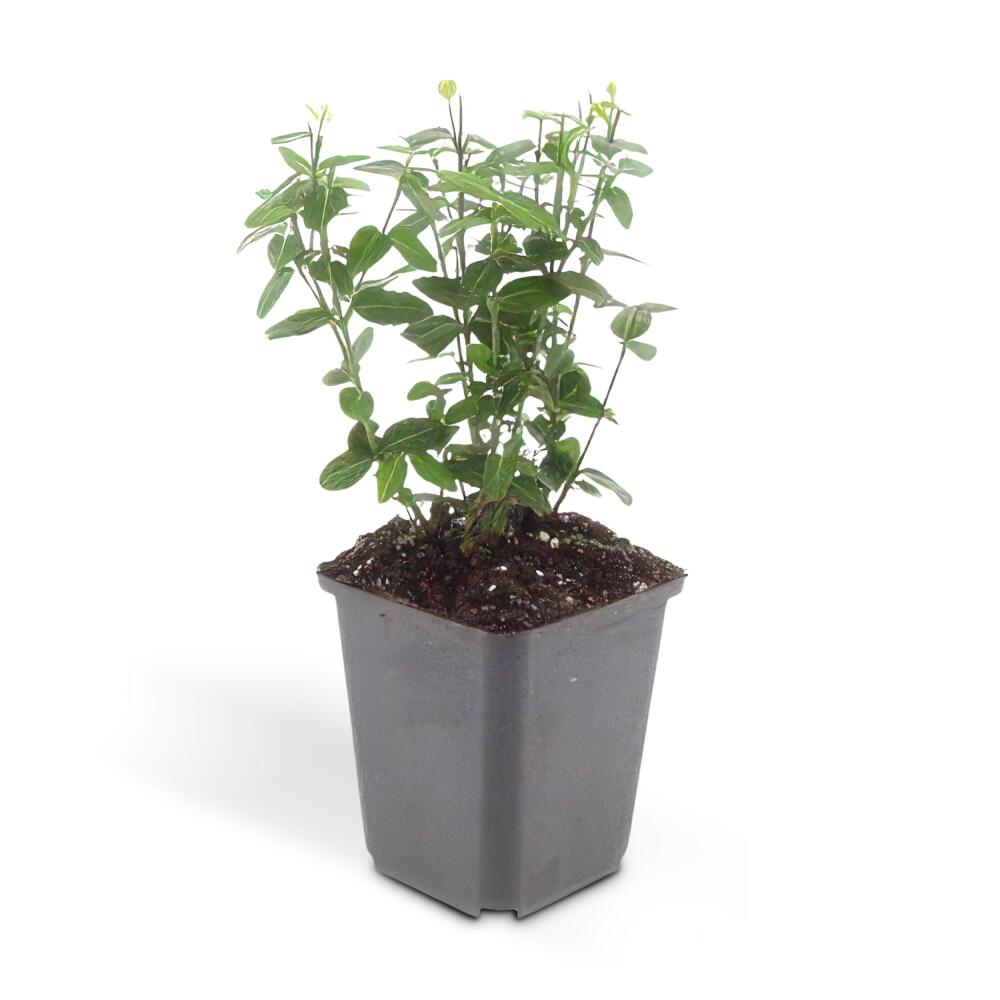
Individual plants are delivered by set choice in 9-cm pots around 10–25 cm total height including pot. Small upright and sideways branches show the beginning, not fixed later garden height. As a spreading shrub the green form can reach roughly 0.5–1 m. Higher climbing growth is also possible on suitable supports. Before planting I therefore decide whether it should stay near ground or deliberately be led upwards. While unpacking I hold the ball rather than releasing it by tugging hard at branches.
Adaptable still means checking the position
Sun to partial shade are suitable starting conditions; deeper shade can also be tolerated. Actual root space matters more than the light label alone. Beneath woody plants and at wall bases, soil can be dry despite looking cool. Conversely, permanently very wet ground is unfavourable. Fresh free-draining soil allows a good start. If heavy soil is compacted, I prepare a larger planting area instead of filling only a small hole with loose soil. An outdoor container needs open holes and substantially more room than the sales pot long-term.
Plant, water in and leave the area open initially
Spring or early autumn usually offer good conditions in frost-free workable soil. Check the ball first, moisten if needed and set at previous level. The shop gives 35–45 cm spacing for groundcover groups. Later side shoots and greater shrub width still need planning. After watering, check root contact and gently keep initially open gaps free of weeds. Young deliveries do not yet form a closed edge. Denser foliage develops from new branches, not burying balls too deeply or immediately applying strong fertiliser.
Watch the first dry periods attentively
New wintercreepers need regular checks during dry weather. Water thoroughly at soil level when the small ball dries and remove excess in a container. Established planting buffers temporary drought better because more roots explore surrounding ground. This does not apply after a few days or equally to a small tub. Evergreen leaves can lose water in winter too. Check for dryness on frost-free days; do not further soak frozen or already wet ground. Less demand after establishing does not mean permanently unobserved care.
Preserve shape through individual cuts
Individual reaching branches can be lightly shortened in mid to late spring. Secateurs preserve most leaf pairs; broad shearing through many firm leaves leaves unnecessary brown edges. For climbing, first guide young shoots suitably and check ties. Without that intention, wall-base branches should not grow upwards unnoticed. Check active nests before heavier work and leave occupied areas undisturbed. Pruning need follows actual development, not the low size of the delivered pot.
Accompany leaves and branches long-term
Inconspicuous pale green summer flowers or later capsules can occur but are not promised ornament for young groundcover groups. The plant is ornamental: do not eat parts and wear gloves for work. Frequent added feed is normally unnecessary in supplied beds; container planting receives moderate supply by growth and product instructions. With many new spots, scale-like deposits or conspicuous feeding marks, I check undersides, ball and position. Green cover stays readable when width, neighbours and structure continue to be guided consciously.
One plant, several views
Good to know
Is Radicans its own cultivar?
Not here. This historical botanical shop assignment is listed by Kew as a synonym of Euonymus fortunei var. fortunei.
Does this plant have cream-white leaf edges?
The checked original is green with paler veins. It is not inferred from coloured cultivar foliage.
Does it automatically stay only 25 cm tall?
No. This describes young delivery including pot. Larger low shrubs and climbing growth are possible later.
Can it climb a wall?
Yes on suitable surfaces. Guide this use deliberately and check growth at its planned boundary.
When should I water young plants?
Check the ball during dry spells and supply thoroughly when soil dries. Weather contributes to the decision.
How do I maintain a tidy low edge?
Shorten reaching branches individually in spring and guide unwanted climbing early instead of assuming delivery height is the limit.
Sources and editorial note
- Exotenherz: parent offer, measurements and original images (accessed 03.10.2026)
- Specialist reference: euonymus-rhs (read directly 03.10.2026)
- Specialist reference: euonymus-kew (read directly 03.10.2026)
- Specialist reference: euonymus-growing (read directly 03.10.2026)
- Exotenherz: checked 6-plant child offer (accessed 03.10.2026)
- Exotenherz: checked 12-plant child offer (accessed 03.10.2026)
- Exotenherz: checked 20-plant child offer (accessed 03.10.2026)
- Exotenherz: checked 40-plant child offer (accessed 03.10.2026)
- Exotenherz: checked 60-plant child offer (accessed 03.10.2026)
Parent offer and every assigned child offer read directly on 03.10.2026; article numbers, GTIN where present in child offers, availability and files separately evidenced. Delivery total height 10–25 cm including 9-cm pot explicitly separated from later garden height. Quantity variants do not count as new plant identity. Specialist sources read directly; complete fargesia-rufa-guide and heidelbeere-jersey-guide compared. Clean original view adopted unchanged; stamped views and composites excluded. Scene depicts one young reference plant regardless of set quantity. Draft; shared page and browser acceptance still pending. Radicans is a historical botanical shop name, not a new cultivar; Kew accepts Euonymus fortunei var. fortunei. Missing green species portrait after explicit Root assignment. Latest clean original gallery used instead of stamped original view 2.