
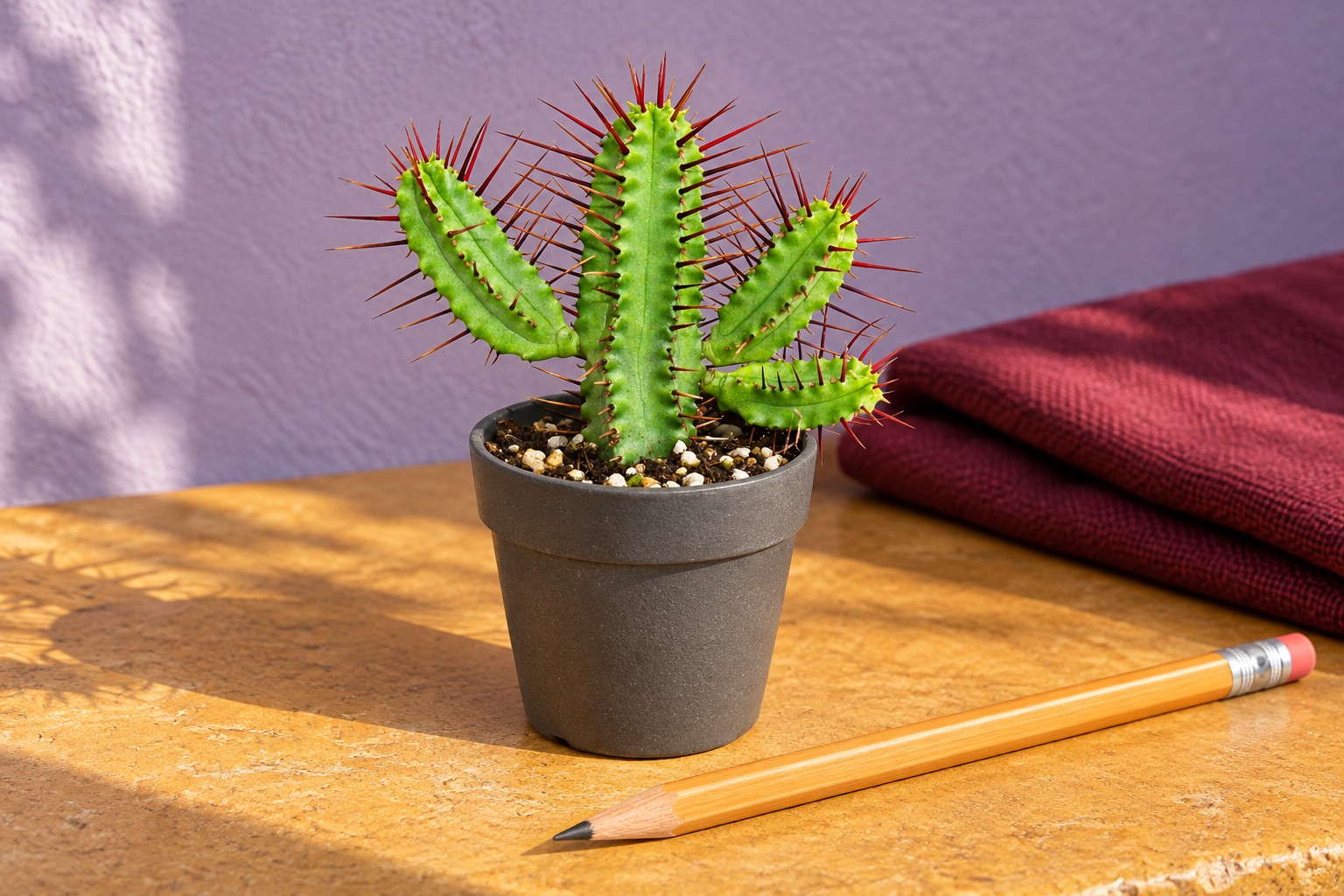
This plant at Exotenherz
Check the shop offer for current availability, price and what is included.
The linked shop is in German. Product details, availability and delivery information are provided in that shop.
Your care table
| Topic | What to do | Why it helps |
|---|---|---|
| Light | Bright to sunny after gradual acclimatisation. | An overly dark position encourages weak stretched growth. |
| Water | Water only after complete drying. | Succulent stems bridge dry pauses. |
| Compost | Very freely draining and loosened with mineral ingredients. | Roots should receive air again after watering. |
| Temperature | Grow in warmth and keep reliably frost-free. | The shop states 18–28 °C as a favourable warm range. |
| Feed | During growth, weak doses every 4–6 weeks according to the product. | No further supply during winter rest. |
| Milky sap | Avoid contact with skin and eyes; use protective equipment for work. | Injured stems can release irritating sap. |
| Position | Stable and inaccessible to children and pets. | Spines and sap require a suitable position. |
| Checks | Check the base and branches for wetness damage or mealybugs. | Examine soft tissue first rather than watering more. |
Check the compost and pot weight. The care table explains how far the compost may dry.
Water only when needed. The water should reach the root ball without spilling over the rim.
Remove surplus water from the saucer or cachepot. Then return the plant to a suitable position.
A cactus appearance from a different plant family
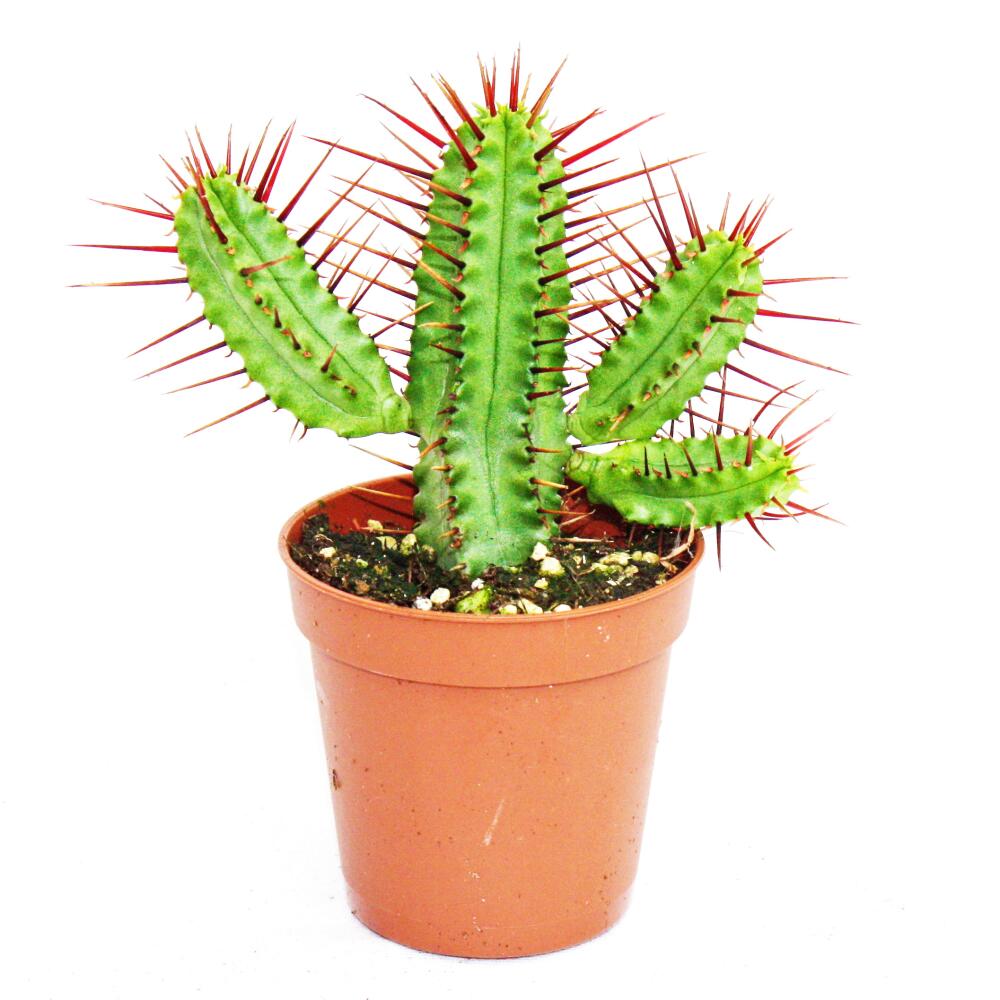
With green ribs and red spines, Euphorbia enopla looks like a small cactus at first glance. Botanically, however, it belongs to the spurge family. Its succulent stems store water and branch over time. Younger reddish spines in particular contrast with the green. Age, light and development can change their colour. A spine becoming darker later is therefore not automatically damaged. Correct identification helps especially with handling: spurge sap requires particular caution.
A small specimen needs a safe place
The shop offer states a 5.5 cm pot and around 8 to 10 cm overall height. The offered plant is small and may show different branching patterns. Choose a stable spot that is not accidentally touched while cleaning or opening a drawer. For spiny miniatures, this matters more than a spectacular position right at a table edge. Children and pets should not reach the plant. A tight outer pot must not trap the nursery pot so firmly that it can only be removed for watering by pulling on the shoots.
Combine brightness and warmth sensibly
A bright to sunny position suits this South African succulent. Gradually accustom it to stronger direct sun, especially after shipping or a darker phase. The shop states 18 to 28 °C as a favourable warm range. Lack of light often shows in weaker stretched new growth; extra feed does not fix this. A sheltered summer stay outdoors is possible if rain and cold nights are avoided. For winter, keep the plant reliably frost-free and bright. Do not treat it like a hardy garden spurge.
Dry pauses instead of constant moisture
Water only once the compost has dried completely. Then supply the root area and allow surplus water to drain. A pot with an unobstructed outlet and a freely draining mix loosened with mineral ingredients make this cultivation reliable. In a small container, drying time varies strongly with warmth and sunshine. Check pot weight rather than assuming daily thirst from small size. Demand falls considerably in a dim winter. With a soft plant base, check the root ball and roots first; indiscriminate extra watering may worsen existing damage.
Avoid sap contact wherever possible
Pruning is normally unnecessary for the young plant’s shape. If an injured stem is removed later, work with clean tools, gloves and suitable eye protection. Do not check the cut surface with fingers. Escaping sap must not reach eyes, skin, food or utensils used for eating. Handle dried plant remains carefully too. When repotting, stabilise the body with a suitable gentle aid and do not grasp between the spines. Preparing the job beforehand is better than reflexively catching a falling plant with a bare hand.
Allow slow growth and check selectively
During growth, give weak feed according to the instructions about every four to six weeks; stop during winter rest. Repot only when needed into a moderately larger container. Inspect stem bases for mealybugs and the base for soft dark patches. Assess individual colour changes on older spines separately. An evenly firm plant with healthy new growth does not need constant intervention. Propagation by stem sections is possible in principle, but involves sap contact and belongs in experienced hands. Beginners should focus on safe care of the existing plant.
One plant, several views

Good to know
Is Euphorbia enopla a true cactus?
No. It is a succulent spurge. Similar growth does not make its irritating milky sap harmless.
Can I simply break a shoot off with my fingers?
No. Injuries may release milky sap. Avoid unnecessary cuts and use suitable protection for necessary work.
Why do older red spines become darker?
Colour may change with age and cultivation. Soft shoots or rapidly appearing patches require separate checks.
Is it suitable for an accessible children’s corner?
Because of spines and irritating sap, keep it out of reach of children and pets.
Sources and editorial note
- Product and delivery contents: Exotenherz
- Royal Horticultural Society: plant and care information
- Royal Horticultural Society: plant and care information
Sources checked: 15 September 2026. Product information and the contents of delivery follow the linked shop offer. Care advice was checked against the cited specialist sources and should still be adapted to the plant’s condition, position and season.