
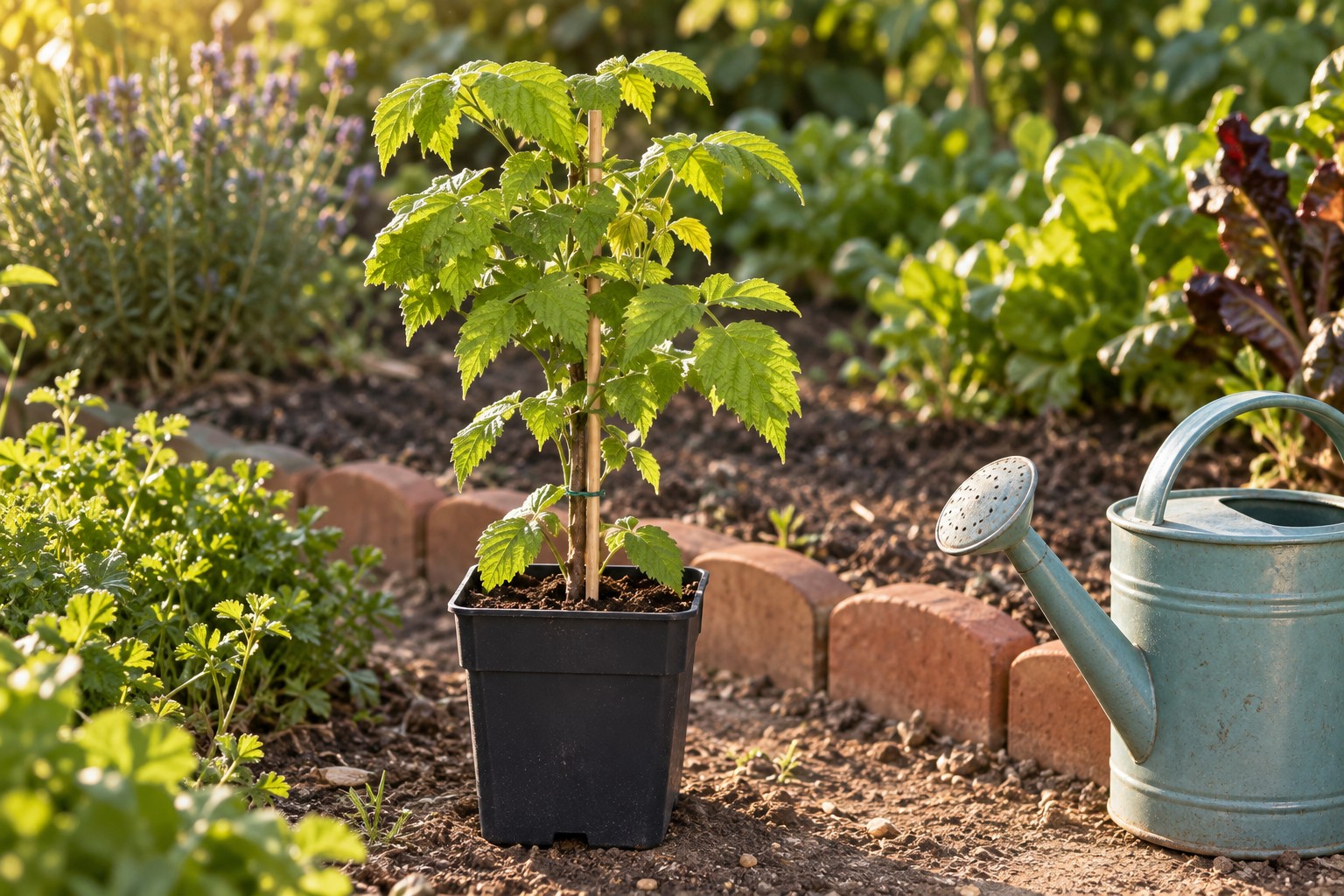
This plant at Exotenherz
Check the shop offer for current availability, price and what is included.
Product details, availability and delivery information in the shop.
Your care table
| Topic | What to do | Why it helps |
|---|---|---|
| Position | Sunny to very bright, with air between the canes. | Light and a loose structure encourage healthy fruits. |
| Water | Even soil moisture, especially while establishing and fruiting. | Neither permanently wet soil nor severe dry periods are favourable. |
| Soil | Humus-rich and well drained; protect roots when weeding. | Raspberries are sensitive to unfavourable root conditions. |
| Nutrients | In spring, as needed and according to product instructions. | Overfeeding can encourage soft, excessive growth. |
| Simple pruning | For an autumn-only harvest, remove all canes close to ground level in late winter. | The new generation of canes then takes over fruiting. |
| Two crops | Only by selectively retaining suitable canes from the previous year. | This system requires confident distinction between shoot parts. |
| Harvest | Pick golden-yellow berries that release easily without squeezing. | Do not wait for red colour; the fruits are soft. |
| Winter | Leave the rootstock outdoors and protect containers sufficiently. | A heated room does not suit the annual rhythm. |
Check the compost and pot weight. The care table explains how far the compost may dry.
Water only when needed. The water should reach the root ball without spilling over the rim.
Remove surplus water from the saucer or cachepot. Then return the plant to a suitable position.
Yellow berries are ripe in this variety
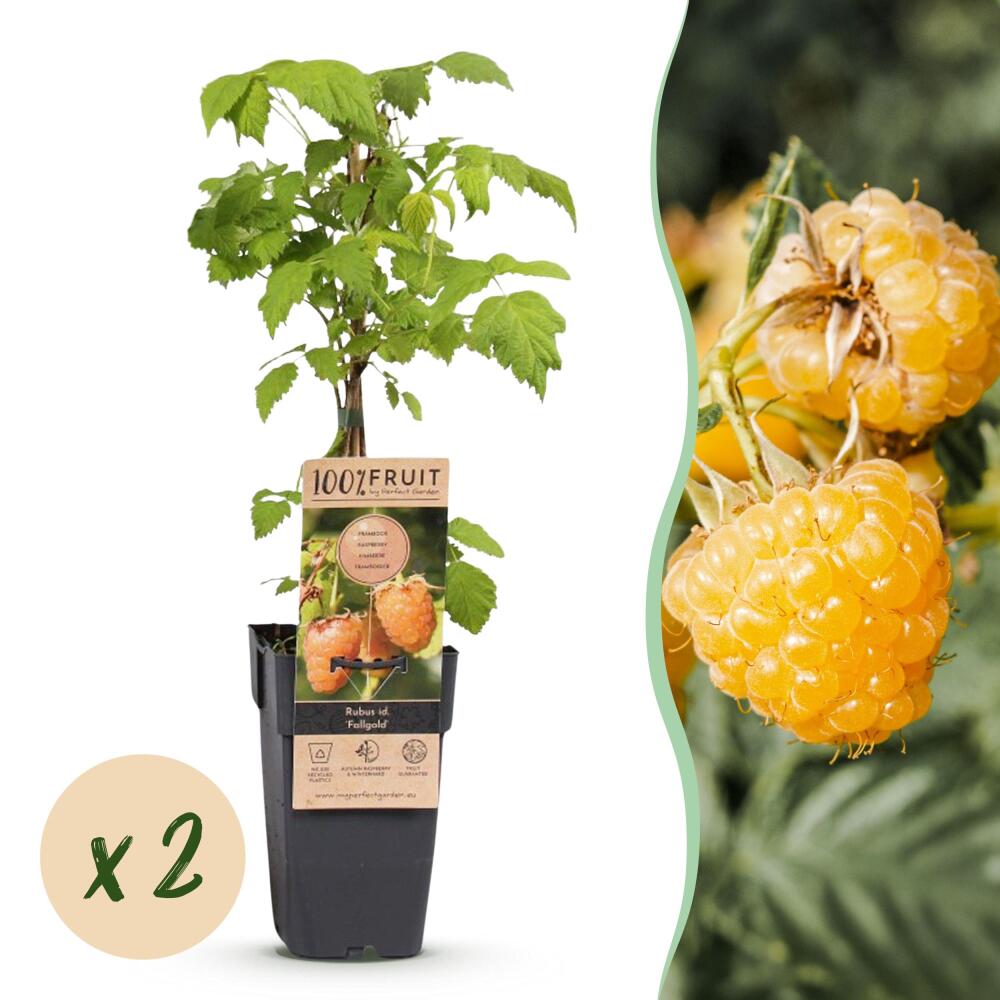
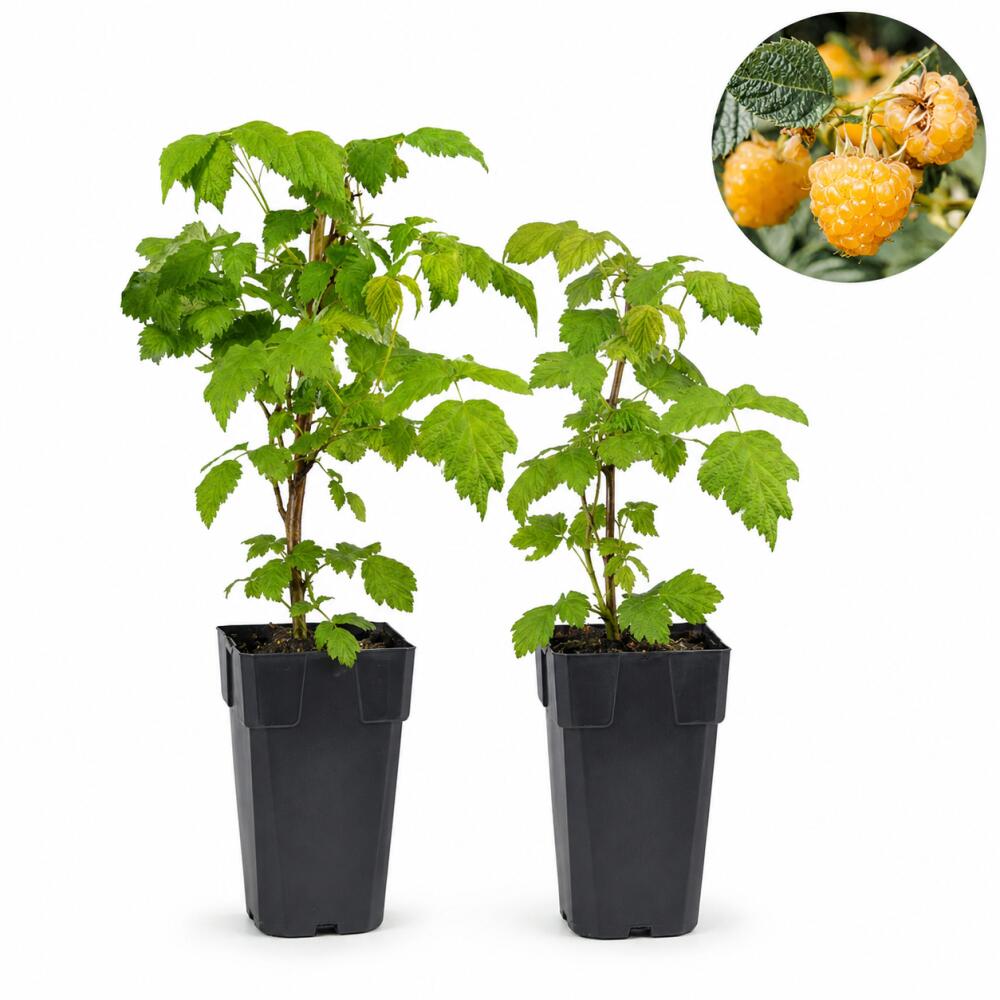
With Fallgold, you can expect golden-yellow raspberries without having to wait for a red colour. The variety is also often written Fall Gold. The fruits are delicate and especially suited to eating straight away and fresh desserts. Their soft flesh requires gentle harvesting. From a gardening perspective, it is equally interesting that this raspberry can fruit on young canes. This opens up a simple, easily understandable approach to care.
Young plants need a permanent position
The offer contains two plants, each in a 15 cm pot and approximately 50 cm in total height. They are the beginning of a berry planting, not an already complete fruiting hedge. Choose a position where new canes can develop and where you can easily reach the berries later. A small pot on a table looks attractive temporarily but dries out quickly. For further cultivation, garden soil or a correspondingly generous container is necessary.
Choose a cropping system deliberately
For a straightforward autumn harvest, canes can be removed close to ground level in late winter. The new canes then bear fruit in the following late summer or autumn. For double cropping, suitable cane wood that has not yet been completely harvested is retained for an earlier crop; this requires more differentiation when pruning. Two harvest phases do not automatically mean more or better fruits. Especially at the beginning, a simple annual rhythm is often the more pleasant solution.
Provide sun and water consistently
A bright, preferably sunny and airy position supports fruit quality and leaf health. The soil should hold moisture but not become waterlogged. Raspberry roots react poorly to permanently wet conditions. During establishment, check the original pot root ball particularly carefully and add water slowly as needed. A shallow mulch layer can help moderate strong swings between dry and wet. Avoid deep hoeing between the canes so that young roots remain undisturbed.
Organise canes and harvest fruit carefully
Simple support makes it easier to keep new canes upright and separate from one another. Remove excess weak shoots selectively rather than allowing a dense tangle to develop. Ripe yellow berries come away easily from the receptacle; having to tug or squeeze is a signal to look more closely. Harvest preferably when dry and into small shallow containers. Sort out soft or damaged fruits promptly. The remaining berries will stay appetising for longer.
The plant stays alive after the season
Above-ground canes and the perennial rootstock have different life cycles. Cutting back for an autumn harvest therefore does not mean that the whole plant must be bought anew each year. It overwinters outdoors. In containers, protect the roots and check moisture on frost-free days. With unusual cane dieback or weak new growth, first check the position, wetness and possible damage. More fertiliser applied to a disturbed root zone is rarely the appropriate first measure.
One plant, several views
Good to know
Are yellow raspberries still unripe?
In Fallgold, yellow to golden colour is characteristic of the variety. Ripeness is also indicated by the fruit coming away easily from the receptacle.
Does Fallgold have yellow flowers?
The distinctive feature concerns the fruits. The typical raspberry flower is pale or whitish; the shop’s yellow statement should not be adopted as a reliable flower description.
Must I aim for two crops?
No. An autumn-only harvest is an easily understood care approach. The canes are then removed close to ground level in late winter.
Does the plant die after pruning?
No. In a healthy raspberry, the perennial rootstock remains and produces new canes.
Sources and editorial note
- Product and delivery contents: Exotenherz
- Oregon State University Extension: raspberry cultivation
- Penn State Extension: raspberry varieties
- Royal Horticultural Society: plant and care information
Sources checked: 16 September 2026. Product information and the contents of delivery follow the linked shop offer. Care advice was checked against the cited specialist sources and should still be adapted to the plant’s condition, position and season.