
This plant at Exotenherz
Check the shop offer for current availability, price and what is included.
Link to the offer in German. Check the shop for the current price, availability and delivery contents.
Your care table
| Topic | What to do | Why it helps |
|---|---|---|
| Light | As sunny and airy as possible. | The compact clump suits open, bright planting positions. |
| Water | Supply according to need during establishment. | Only once rooted does the grass tolerate dry periods better. |
| Soil | Well-drained, rather lean, preferably sandy or stony. | Compacted wet ground remains a problem even beneath gravel. |
| Fertiliser | Only sparingly and when genuinely needed. | Abundant feeding does not replace a suitable position. |
| Winter | Ensure drainage; check during frost-free dry conditions. | Persistent winter wetness may harm the clump. |
| Spring | Carefully remove dead blades. | Do not tear out healthy new growth. |
| Rejuvenation | Divide older bare-centred clumps and plant healthy outer sections. | Blue fescue does not retain its form indefinitely without renewal. |
| Containers | Check small pots regularly in sun and wind. | Limited root space dries faster. |
Check the compost and pot weight. The care table explains how far the compost may dry.
Water only when needed. The water should reach the root ball without spilling over the rim.
Remove surplus water from the saucer or cachepot. Then return the plant to a suitable position.
A small dome of blue-green blades
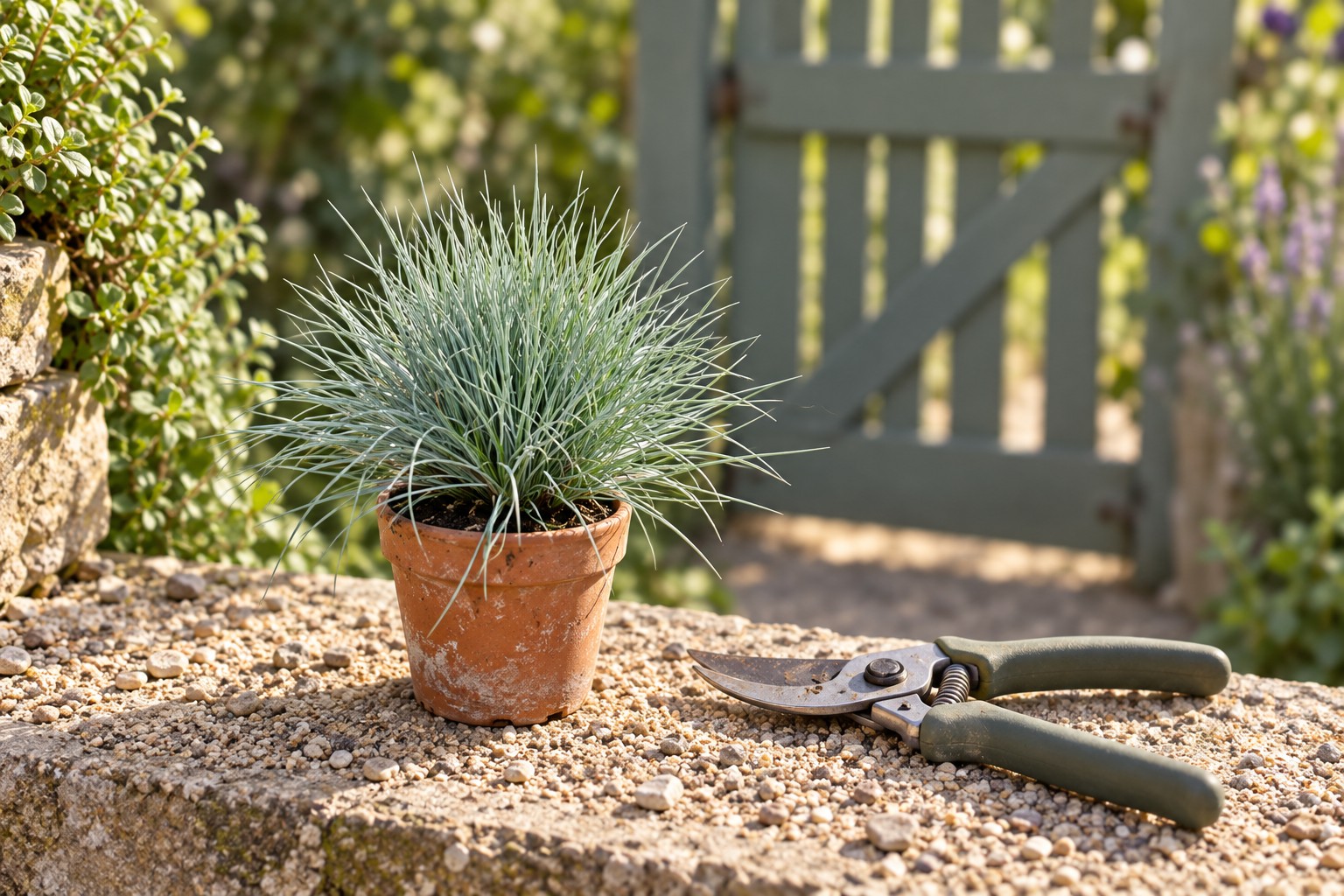
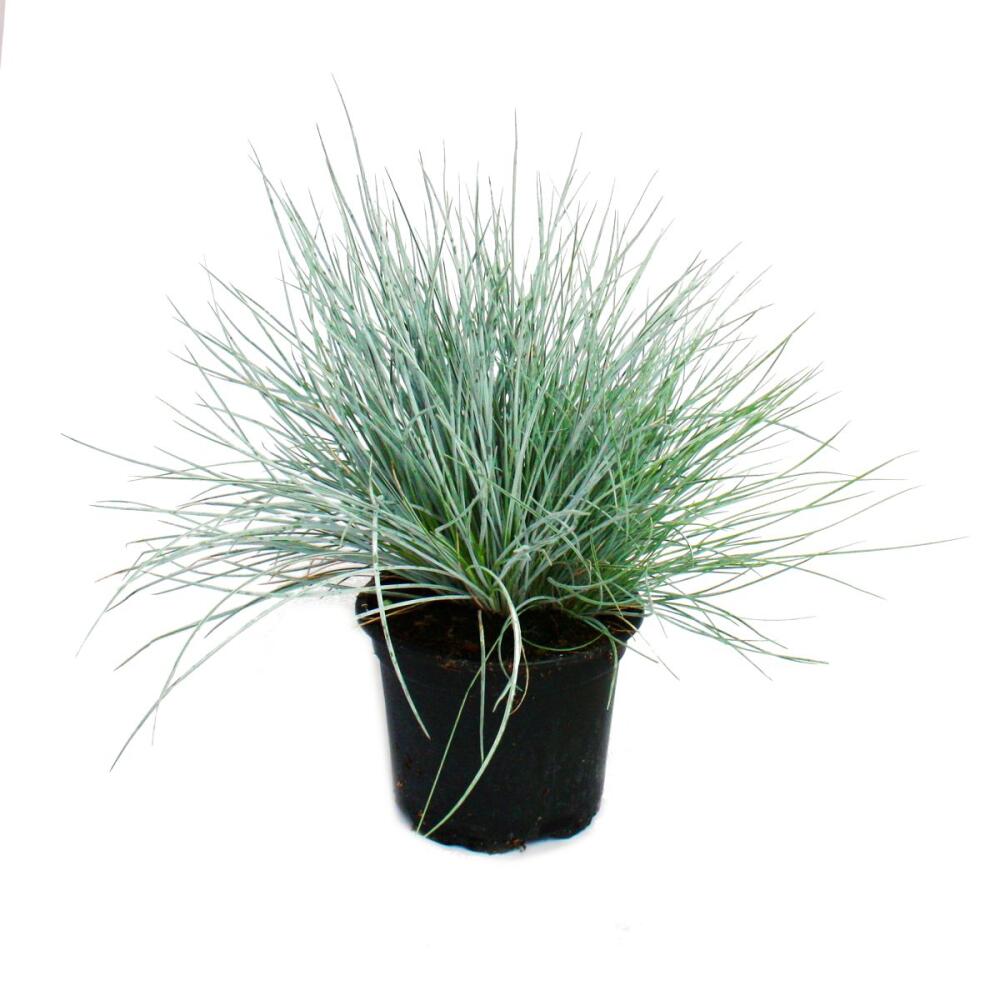
Festuca glauca belongs to the grass family. Fine narrow blades extend upwards and sideways from the clump’s centre. This forms a compact dome that remains clearly visible between stones or at a border edge. Loose panicles may rise above the foliage in late spring and early summer. Colour changes with plant, position and season. Blue fescue is not a decoration that stays uniformly blue, but a living, developing grass.
Distinguish delivery size from its garden effect
The offered plant arrives in a 9 cm pot at about 10–15 cm overall height. It is small and suits establishing a planting, not an already mature large grass cushion. Later the clump may become broader, with flower panicles rising further above it. Small garden shears give the scene a size reference. Several plants can be arranged rhythmically but should receive enough room to develop. A single clump also looks effective in a well-drained small container.
Choose sun and a lean structure
A sunny position and well-drained, rather lean soil suit it well. Very nutrient-rich soil that stays moist makes its compact impression easier to lose. In gravel or rock gardens, water must still drain below the visible surface; gravel over compacted soil does not solve the problem. Hot humid summers may stress the grass. Choose an airy position and avoid packing it closely between vigorous neighbours. Blue colouring is also not equally intense in every plant.
Establishment needs more attention than later
Supply newly planted clumps according to need until roots have explored their surroundings. Do not let them dry out completely during this phase. Later blue fescue tolerates drier conditions better. A small pot still needs regular checking, particularly in sun and wind. Water the root area and avoid persistent wetness. Free drainage is especially important during rainy winter days. Drought tolerance does not mean a limited container can stay without water indefinitely.
Remove old blades and rejuvenate clumps
In spring carefully comb out or remove dead blades without tearing out healthy new growth. Spent panicles may be cut off if desired. Older clumps may become bare in the middle and lose vigour. Dividing and replanting healthy outer sections then makes more sense than increasingly strong feeding. The divisions need an establishment phase again. Regular observation maintains a clear dome shape; a grass planted once does not remain equally attractive indefinitely without rejuvenation.
Consider winter and containers
Blue fescue is a winter-tolerant garden grass, yet its blades may brown during cold periods. This does not automatically mean the whole plant is lost. Check new growth in spring. Position containers so surplus rain can drain away. Check root-ball moisture in prolonged dry, frost-free periods. Feed sparingly only when cultivation calls for it. A soft rotting clump on wet soil needs better conditions, not extra nutrients.
One plant, several views
Good to know
How large is blue fescue when it arrives?
About 10–15 cm overall height in a 9 cm pot. Its later garden effect develops only after establishment.
Why is the clump turning brown in the middle?
Older clumps may become bare inside. Dividing healthy outer sections can rejuvenate the planting; first rule out wetness problems.
Does it need any water at all?
Yes, particularly during establishment and in a small container. Rooted plants tolerate drier conditions better.
Does it always stay blue in winter?
Not necessarily. Cold can brown blades; assess new growth in spring.
Sources and editorial note
Sources checked: 15 September 2026. Product information and delivery contents follow the linked shop offer. Care has been checked against the stated specialist sources and remains subject to plant condition, position and season.