
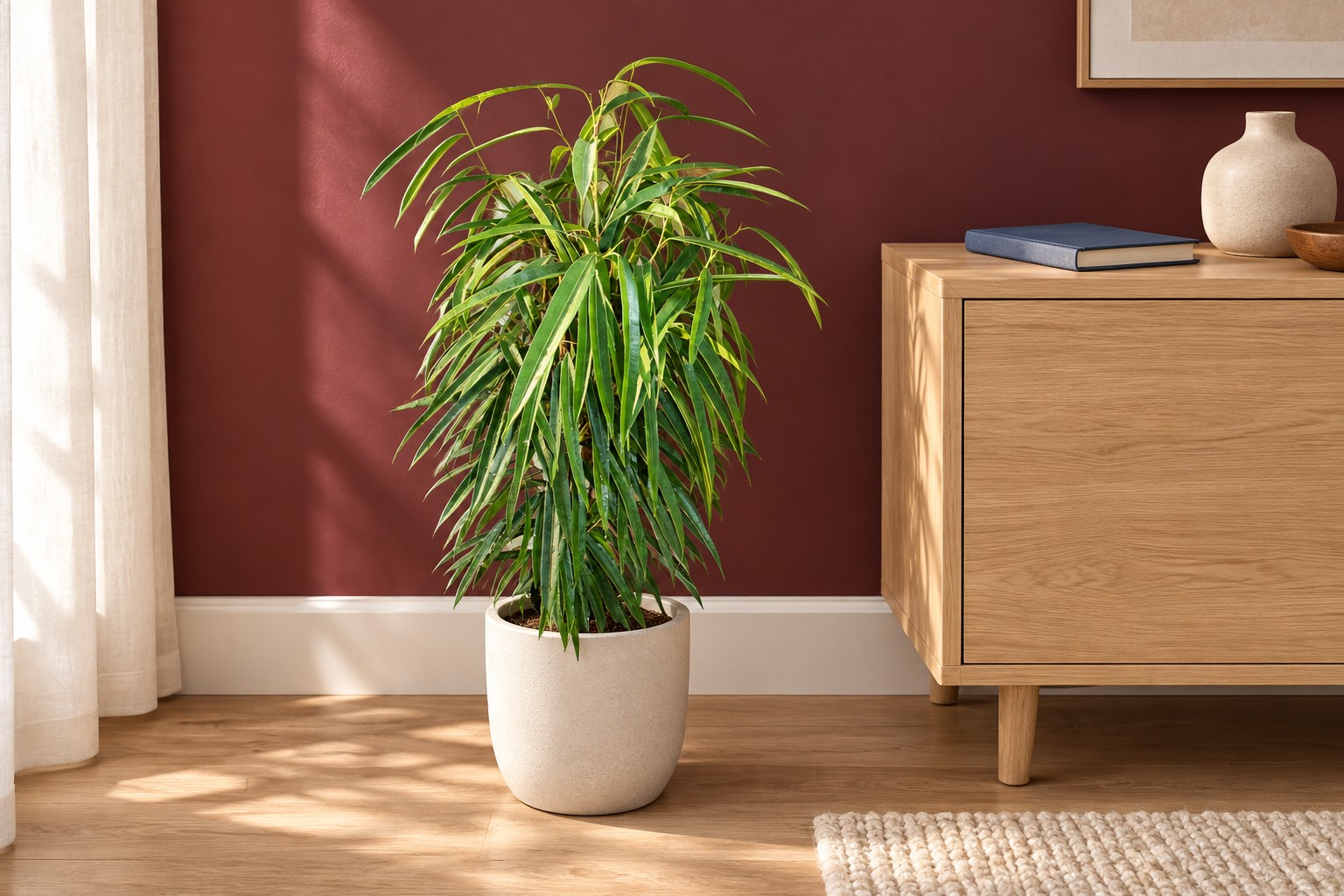
This plant at Exotenherz
Check the shop offer for current availability, price and what is included.
The linked shop is in German. Product details, availability and delivery information are provided in that shop.
Your care table
| Topic | What to do | Why it helps |
|---|---|---|
| Light | Bright indirect light to partial shade. | Provide enough daylight for dense growth. |
| Water | Let the upper centimetres dry slightly and check moisture below. | Avoid waterlogging and complete drying of the root ball. |
| Compost | Use a humus-rich, well-drained potting mix. | Roots need even moisture and air. |
| Feeding | During growth, feed moderately according to product instructions. | Existing fertiliser and actual activity matter more than fixed intervals. |
| Temperature | Keep in a warm, quiet indoor position without cold draughts. | Protect roots from cold floors too. |
| Pruning | Shorten long shoots gently during healthy growth. | Avoid milky sap contact and work cleanly. |
| Leaf care | Remove dust carefully without bending leaves. | Distinguish pale markings from new damage. |
| Problems | With substantial leaf fall, check several causes. | A single symptom does not prove a lack of water. |
Check the compost and pot weight. The care table explains how far the compost may dry.
Water only when needed. The water should reach the root ball without spilling over the rim.
Remove surplus water from the saucer or cachepot. Then return the plant to a suitable position.
A fig with particularly narrow foliage
Specialist plant profiles often assign Alii to Ficus maclellandii; Ficus binnendijkii Alii is also widespread in the trade. The long, narrow leaves hang loosely, forming a soft-looking crown. This distinguishes the form from small-leaved weeping fig and broad-leaved fiddle-leaf fig. All belong to the mulberry family. In warm native regions, the underlying figs grow into trees, while indoor growth remains limited by light, root space and occasional pruning.
Looking closely at the particular leaf pattern
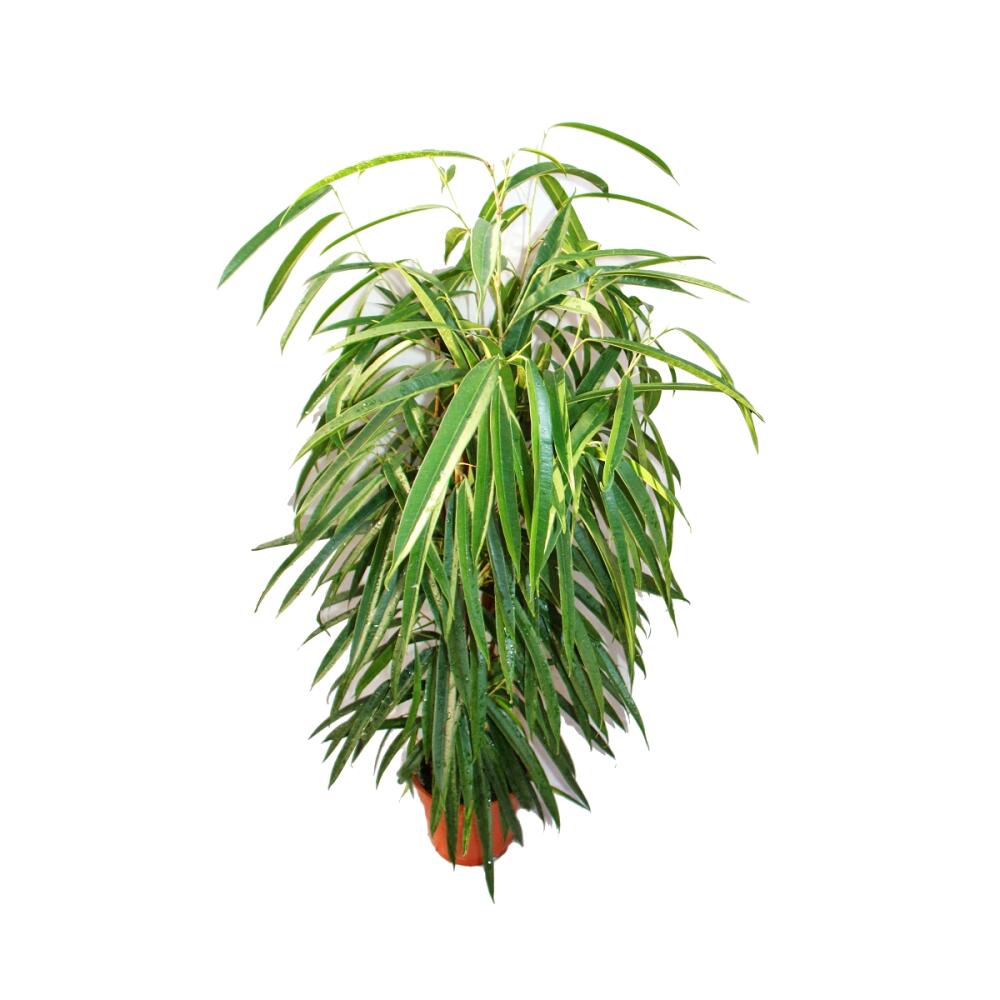
The selected delivery form measures approximately 60–80 cm in a 17 cm pot. The shop photo shows long green foliage with pale edge areas; it gives no additional variety name. Our scene follows this pictured specimen without inventing another cultivar name. The current shop offer remains decisive for ordering. The narrow silhouette works well beside low furniture. Individual leaf lengths and the density of growth vary in living plants.
Providing bright, quiet light
A bright position with indirect light provides a good foundation. Partial shade is tolerated but generally leads to slower growth and lower water use. Avoid hot direct sun after shipping. The tree should not stand in the cold airflow from a frequently opened door. Small adjustments are possible, but constant moves make acclimatisation harder. Turn the pot a little occasionally if the crown clearly leans towards the light. Provide sufficient daylight and warm roots in winter too.
Between drought stress and a wet root ball
Let the upper centimetres of compost dry slightly and check the root ball before watering again. Then water evenly when needed and let excess drain. Constant wetness is as unsuitable as repeated complete drying. A light pot after shipping may need different care from a large, still-damp winter root ball. Leaf fall therefore does not automatically mean thirst. Check actual moisture before adding more water to the outer pot.
Guiding crown and roots gently
A well-drained, humus-rich mix supports container growing. When clearly well rooted, move to a suitable next size. During growth, feed moderately according to fertiliser instructions, reducing with little activity. Sources give different feeding intervals; the product, existing fertiliser and actual growth are decisive. Overlong shoots can be shortened with clean tools. Watch for escaping milky sap and avoid skin contact. Shaping through pruning supports long-term development, not immediate thickening of a weakened tree.
Distinguishing leaf fall from pale marks
Individual old leaves may fall. If loss increases, check moisture, temperature, changes of position and leaf undersides together. Scale insects, mealybugs or whiteflies may appear on shoots or undersides. Pale edges in the pictured pattern should be distinguished from newly formed spots. Remove dust carefully with a damp cloth without bending the narrow leaves. The ficus is ornamental; its milky sap can irritate, and nibbling pets should not reach it.
One plant, several views
Good to know
Why does the shop use a different botanical name?
Alii is often sold as Ficus binnendijkii; specialist profiles usually assign the cultivated form to Ficus maclellandii. Both names help with searching.
Is the pale leaf edge invented in the image?
No, the scene follows the selected shop photo with pale edge areas. An additional variety name is not established in the offer.
Should I water more immediately when leaves fall?
Check the compost first. Wetness, dryness, position changes and pests may call for different measures.
How does the plant keep its shape?
Good light and even care provide the foundation. A healthy ficus can be pruned moderately when needed under suitable growing conditions.
Sources and editorial note
- Product and delivery contents: Exotenherz
- NC State Extension: plant profile
- Royal Botanic Gardens, Kew: botanical classification
Sources checked: 15 September 2026. Product information and the contents of delivery follow the linked shop offer. Care advice was checked against the cited specialist sources and should still be adapted to the plant’s condition, position and season.