
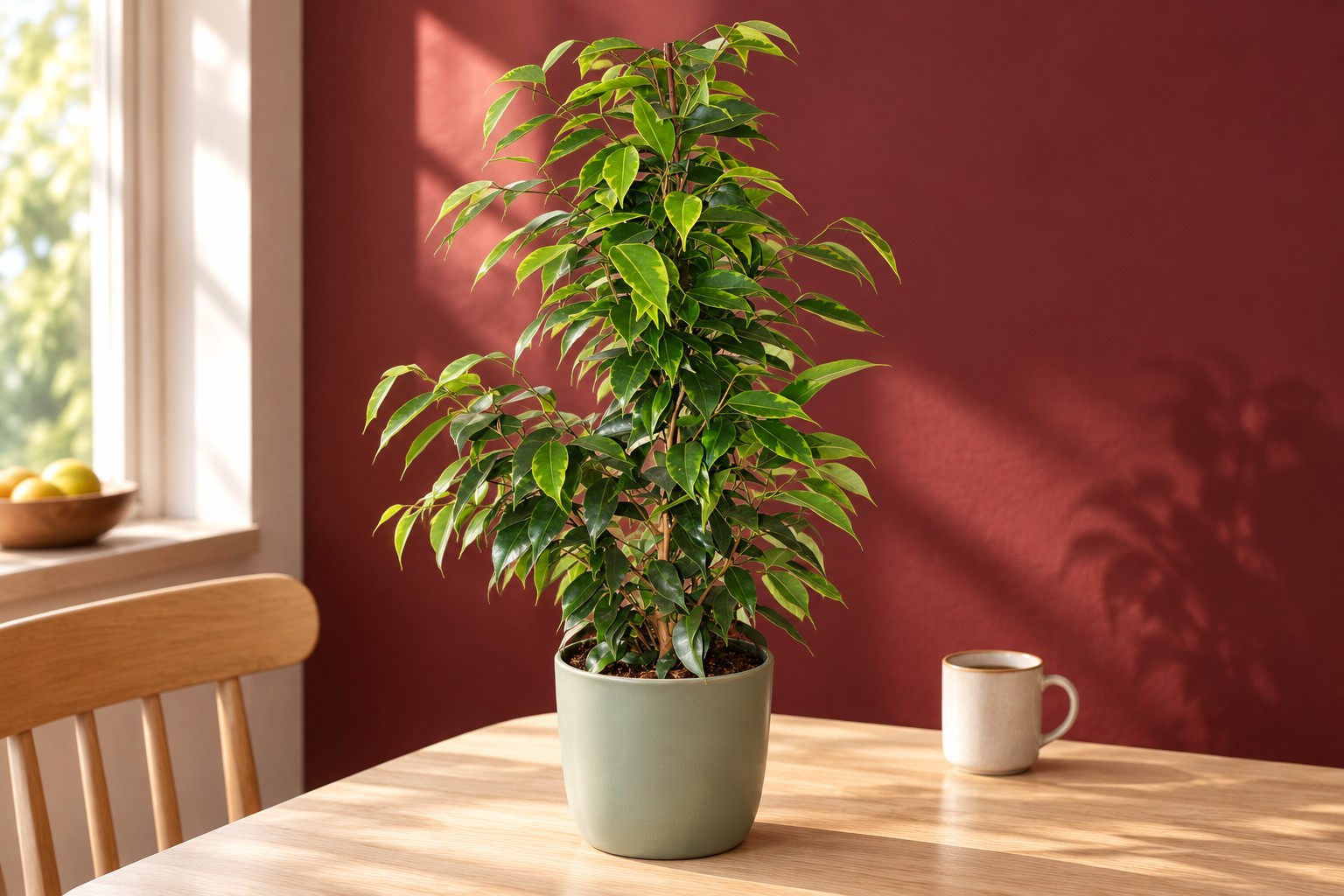
This plant at Exotenherz
Check the shop offer for current availability, price and what is included.
Link to the offer in German. Check the shop for the current price, availability and delivery contents.
Your care table
| Topic | What to do | Why it helps |
|---|---|---|
| Position | Bright, protected from draughts and as consistent as possible. | Changes in light may trigger temporary leaf drop. |
| Water | Keep moderately moist and let the surface dry slightly. | Avoid standing water and complete root-ball dryness. |
| Compost | Loose potting compost in a container with free drainage. | Roots need a controllable water supply. |
| Nutrients | Feed weakly during growth according to product dosage. | Adapt to actual activity in the low-light winter. |
| Indoor climate | Keep warm and avoid cold draughts. | The tropical indoor tree is very sensitive to frost. |
| Pruning | Shorten individual overlong shoots purposefully; wear gloves. | Constant heavy shearing creates unnecessary stress and releases milky sap. |
| Repotting | Give a little more room when well rooted. | An oversized container without roots dries slowly. |
| Checking | Compare leaf drop with position and root-ball condition. | Do not automatically water more; also check branches for pests. |
Check the compost and pot weight. The care table explains how far the compost may dry.
Water only when needed. The water should reach the root ball without spilling over the rim.
Remove surplus water from the saucer or cachepot. Then return the plant to a suitable position.
Fine leaves rather than heavy leaf surfaces
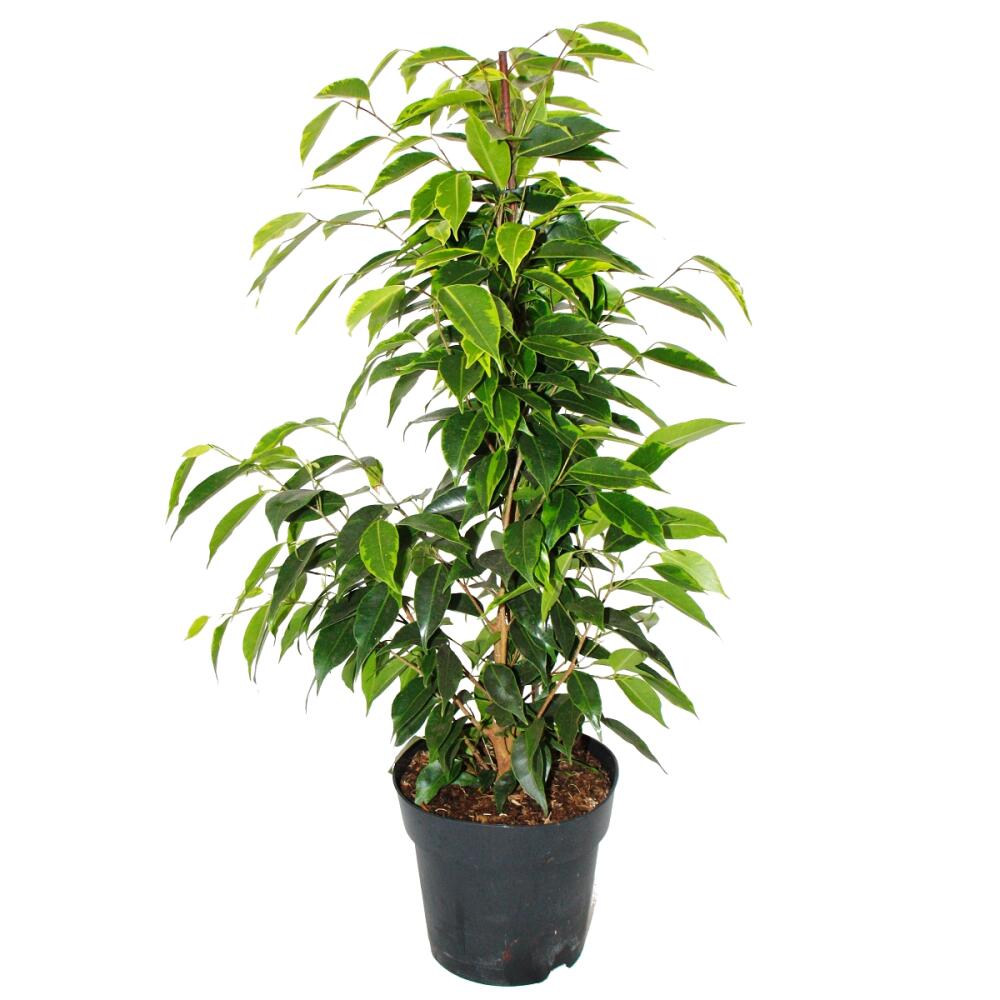
Ficus benjamina is characterised by small, pointed leaves and fine branching. Weeping fig belongs to the mulberry family and is native to Southeast Asia and Australia, among other places. As a houseplant it can accompany you for many years. The linked offer shows Anastasia with light- and dark-green leaf patterns. Its effect comes from many small details: leaf tips, young shoots and differently lit green surfaces combine into a living crown.
Understand the offered variety
A 17 cm pot and roughly 60–70 cm overall height are stated for Anastasia. This is a compact format for a bright shelf or stable plant position. Other weeping fig varieties can have darker, smaller or differently patterned foliage. Such differences are not treated as mere pot-size differences. Our scene depicts the specific pale markings of the offer. The plant can grow further later and may need more room and adjusted training.
Consistency helps it settle
Weeping fig sometimes responds to changing light conditions by shedding leaves. A well-chosen, as consistent as possible position therefore makes acclimatisation easier. Brightness without cold draughts suits it better than frequent moves between a window, hallway and dark living-room corner. Not every fallen leaf demands immediate new action. First check whether the plant has just been transported or moved and whether fresh growth still looks healthy.
Find the middle ground between dry and wet
Keep the root ball moderately moist and let the surface dry somewhat. Avoid both complete root-ball dryness and persistent water in the decorative pot. Before another application, lift the inner pot and check deeper in the compost. Densely rooted plants can drink faster in summer, while a cooler winter position reduces demand. If leaves fall, extra water is useful only when the root ball is actually too dry. Leaf drop alone is not a reliable moisture meter.
Care gently for crown and root space
Loose potting compost with good drainage provides a solid foundation. Repot when rooting is substantial; a larger reserve pot without roots makes moisture monitoring harder. Feed sparingly according to fertiliser instructions during growth and reduce or pause when winter activity is low. Shorten overlong shoots purposefully instead of repeatedly shearing the whole crown hard. Gloves protect against milky sap during cutting. Afterwards dispose of trimmings safely and clean the work surface.
Read leaf drop and find pests early
If leaf loss is conspicuous, first check for a possible move, cold air and water balance. Leaf undersides and branch bases are good places to look for scale insects, mealybugs and fine webbing. One old yellow leaf should be assessed differently from suddenly widespread damage to new growth. A close look with occasional careful dust removal is enough for regular care. Weeping fig is not an edible fig tree; plant parts and released sap must not enter the mouth or eyes.
One plant, several views
Good to know
Why does my weeping fig shed leaves after moving?
It can respond to changed light conditions. Also check water balance and draughts and avoid further hurried moves.
What is special about Anastasia?
The offer describes a form patterned in light and dark green. Other weeping fig varieties may look different.
Does more frequent watering help leaf drop?
Only if the root ball is actually dry. Extra water in wet compost may worsen the cause.
Is it equivalent to an edible fig?
No. Ficus benjamina is offered here as an ornamental plant, not a fruit tree.
Sources and editorial note
Sources checked: 15 September 2026. Product information and delivery contents follow the linked shop offer. Care has been checked against the stated specialist sources and remains subject to plant condition, position and season.