
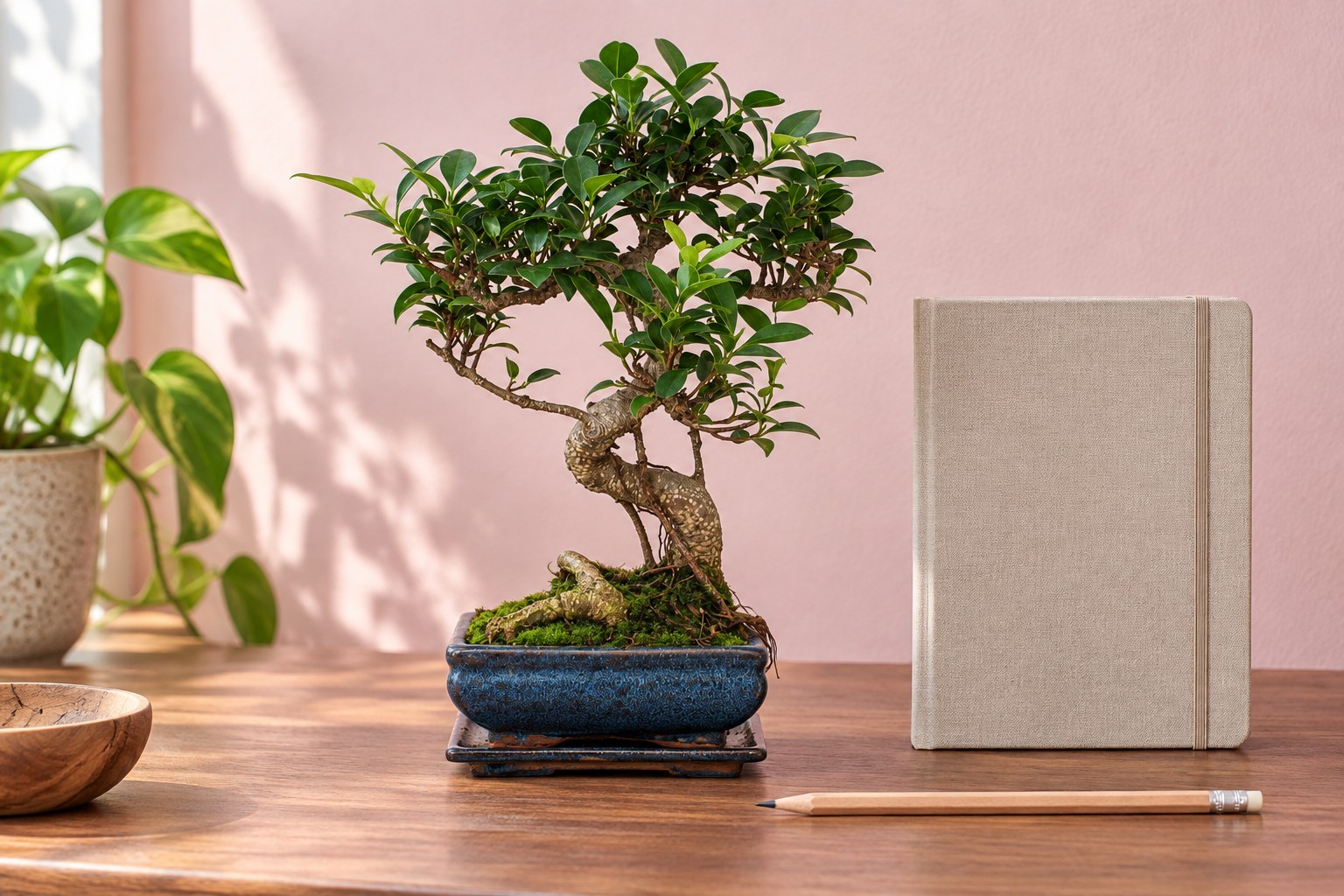
This plant at Exotenherz
Check the shop offer for current availability, price and what is included.
Link to the offer in German. Check the shop for the current price, availability and delivery contents.
Your care table
| Topic | What to do | Why it helps |
|---|---|---|
| Light | Bright with plenty of natural daylight. | A dark room corner weakens even a small tree. |
| Water | Water thoroughly when soil is only slightly moist. | Small bowls dry at different speeds depending on weather. |
| Drainage | Empty the saucer after watering. | Persistent standing water displaces air in the root zone. |
| Temperature | Warm and protected from cold draughts. | The tropical bonsai needs no cold winter rest. |
| Fertiliser | During active growth following product instructions. | Little light and weak growth limit demand. |
| Pruning | Selectively organise new shoots with clean tools. | Light should reach inside the crown too. |
| Repotting | Into structurally stable bonsai compost when needed. | Heavy root pruning should be done expertly only on a healthy tree. |
| Checks | Regularly inspect leaves and branch forks for pests. | Early detection makes targeted action easier. |
Check the compost and pot weight. The care table explains how far the compost may dry.
Water only when needed. The water should reach the root ball without spilling over the rim.
Remove surplus water from the saucer or cachepot. Then return the plant to a suitable position.
A tree whose form keeps living
A bonsai is a living tree grown in a shaped cultivation form. Its curved trunk, visible root bases and small glossy leaves already convey the impression of a tree crown in a limited space. Figs belong to the mulberry family and grow much larger in their natural surroundings. Care, root space and pruning create the compact form. It does not remain unchanged by itself. That is its appeal: each new shoot can refine the structure without the tree losing its individual character.
Interpret the trade name and delivery form correctly
The shop calls this bonsai Ficus retusa. This trade name is not always used consistently for fig bonsai; Ficus retusa and Ficus microcarpa are botanically distinct species. No certain equivalence is therefore made here. The offer describes a roughly six-year-old tree at about 22 cm overall height in a bowl roughly 13 × 8 cm. Age and measurements are approximations. You receive a comparable individual plant; trunk form and bowl colour may differ from the photo. Care follows the tropical fig cultivation offered.
Warmth and plentiful light provide security
Choose a bright warm position with sufficient daylight. Bonsai need light for their leaves too; as permanent decoration deep in a dark room they lose strength. Set up a new position as calmly as possible and avoid cold draughts. Individual leaves may drop after a move. Check position and moisture before responding with extra measures. A sheltered summer stay outdoors is possible once conditions are reliably warm. Acclimatise gradually to direct sun and bring it back inside before cool nights.
The shallow bowl needs its own watering routine
Check soil regularly by finger test and pot weight. When it is only slightly moist, water thoroughly and slowly until the inner root ball is supplied too. Excess water must drain; empty the saucer afterwards. The entire bowl should not stay dried out, but equally should not stand constantly in water. In warm sunshine, daily checks may be needed. A short immersion can rewet a root ball that has become drier, but does not replace moisture checks and is no fixed weekly obligation.
Nourish growth and gently organise the crown
During visible growth, use suitable fertiliser following product instructions. Feed more cautiously with little light and no new growth. Fertiliser does not make a weakened dry tree healthy. First observe new shoots, then shorten them selectively with clean tools so light reaches the inner crown too. Do not radically prune, repot and change position all at once. When repotting, use loose structurally stable bonsai compost. Extensive root work requires experience and a strong actively growing tree.
Notice small changes early
Check leaf undersides, branch forks and trunk for scale insects, mealybugs or spider mites. Sticky deposits and fine webs merit attention. Yellow leaves, however, may have several causes, such as changed light, dryness or overly wet roots. First check growing conditions and the root ball. Milky sap may emerge during pruning; avoid skin contact where possible and clean tools afterwards. The tropical fig bonsai stays bright and warm through winter. A cold rest like that of native deciduous trees does not suit this offered indoor cultivation.
One plant, several views
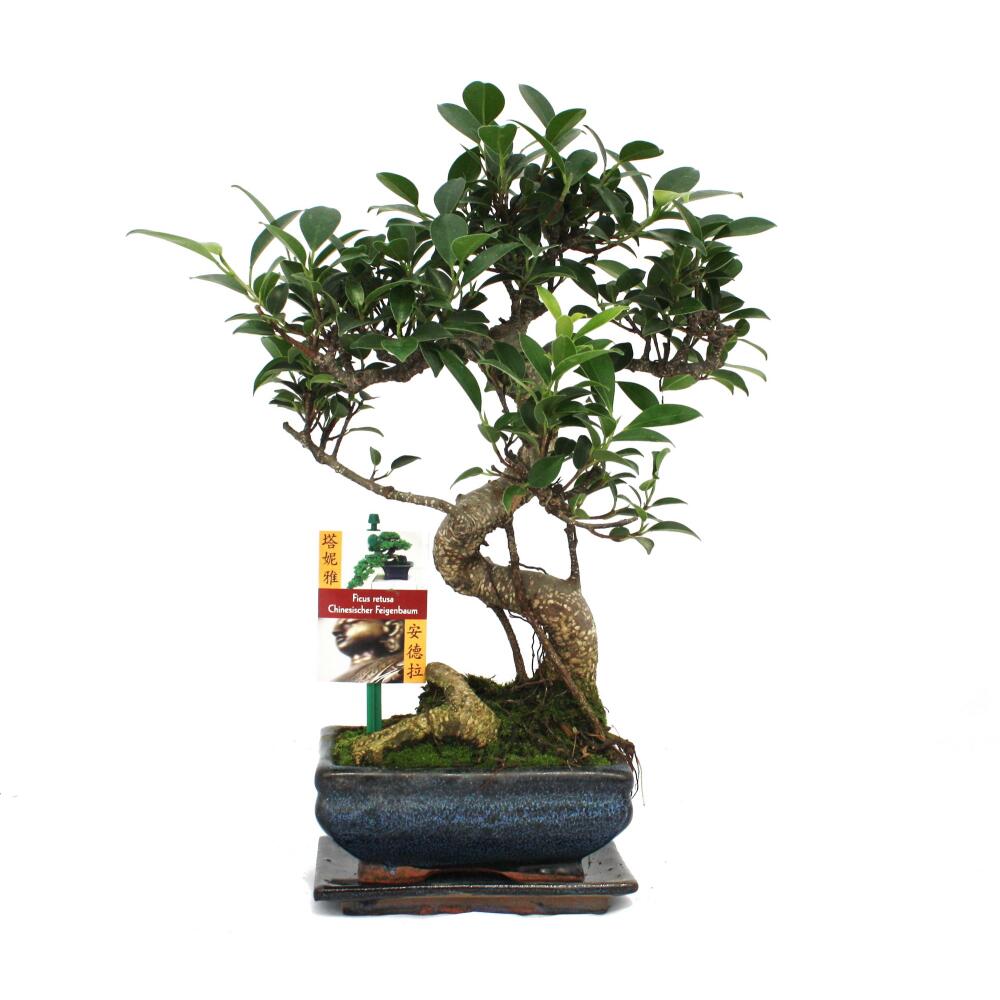
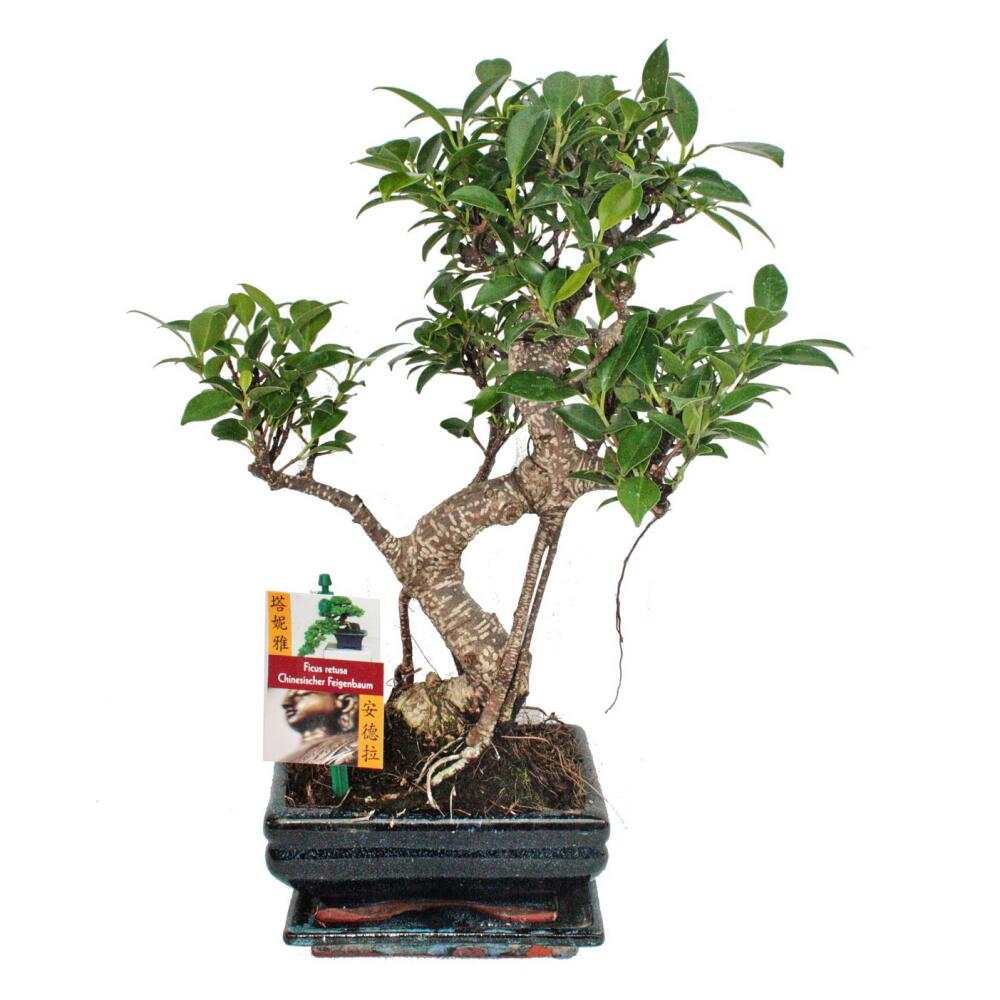
Good to know
Is Ficus retusa the same as Ficus microcarpa?
No. They are botanically distinct species. The exact species of this commercial offer is therefore not presented as certainly determined.
Must I give it an immersion bath every week?
No. Current root-ball moisture is decisive. Excess water must drain after thorough watering.
Will the tree stay equally small without pruning?
Its design needs ongoing care. New shoots continue to grow and are organised to match the intended structure.
Can the bonsai stay outside in winter?
That is unsuitable for this tropical fig bonsai. It overwinters bright and warm in sheltered indoor conditions.
Sources and editorial note
- Product and delivery contents: Exotenherz
- Royal Horticultural Society: plant and care knowledge
- Royal Horticultural Society: plant and care knowledge
- Royal Botanic Gardens, Kew: botanical classification
Sources checked: 15 September 2026. Product information and delivery contents follow the linked shop offer. Care has been checked against the stated specialist sources and remains subject to plant condition, position and season.