
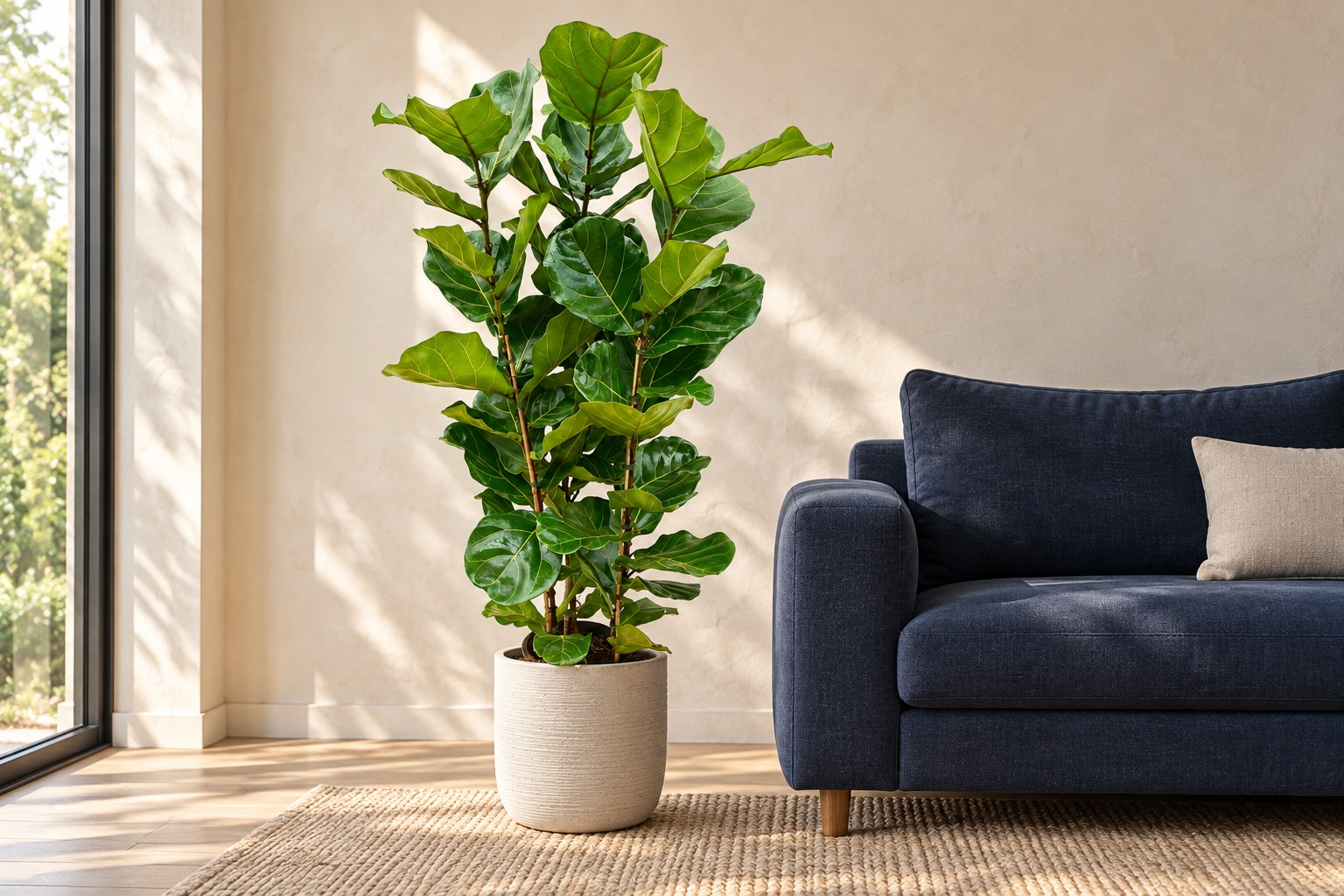
This plant at Exotenherz
Check the shop offer for current availability, price and what is included.
Link to the offer in German. Check the shop for the current price, availability and delivery contents.
Your care table
| Topic | What to do | Why it helps |
|---|---|---|
| Position | Bright with indirect light and space for the leaves. | Dark room corners slow the plant despite its decorative effect. |
| Water | Let the upper layer dry somewhat and also check the root-ball centre. | Large pots often stay moist inside for longer. |
| Compost | Loose, structurally stable potting compost with drainage. | Air in the root ball and free drainage protect roots. |
| Nutrients | Use weak doses every two to three weeks during growth. | Follow product instructions; pause during rest or root damage. |
| Temperature | About 18–25 °C, protected from draughts and heating air. | Strong fluctuations can encourage leaf drop. |
| Leaf care | Clean with a soft damp cloth while supporting the leaf. | Remove dust without damaging the surface. |
| Repotting | Gently move up one pot size when well rooted. | Do not put it into an oversized tub as a precaution. |
| Checking | Assess spots together with roots and position. | One type of damage does not always have only one cause. |
Check the compost and pot weight. The care table explains how far the compost may dry.
Water only when needed. The water should reach the root ball without spilling over the rim.
Remove surplus water from the saucer or cachepot. Then return the plant to a suitable position.
A recognisable silhouette
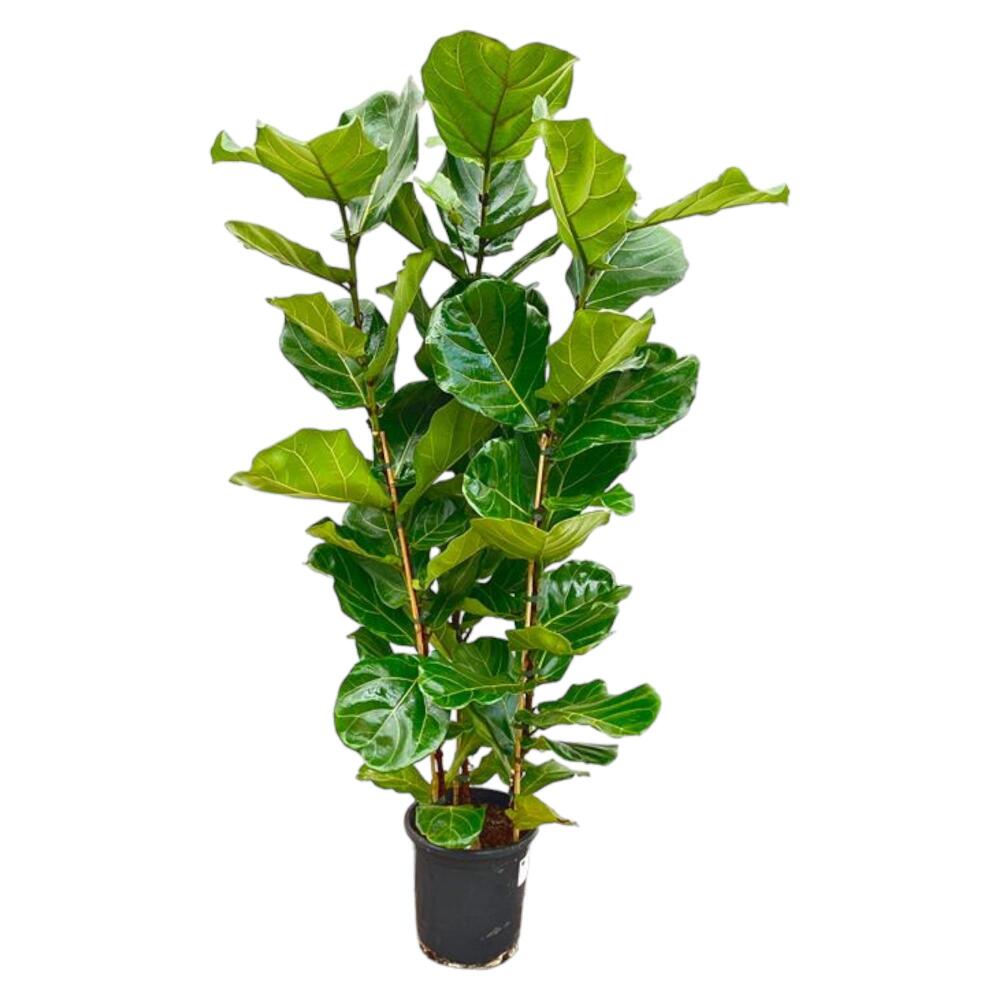
Broad leaves with outlines recalling a fiddle give Ficus lyrata its name. Strong veins and slightly wavy surfaces contrast clearly with delicate palms or hanging vines. The species comes from tropical West and Central Africa and belongs to the mulberry family. Indoors the foliage is the focus; fruits or flowers are rare in houseplant cultivation and not a prerequisite for healthy development.
The room does not grow with the tree
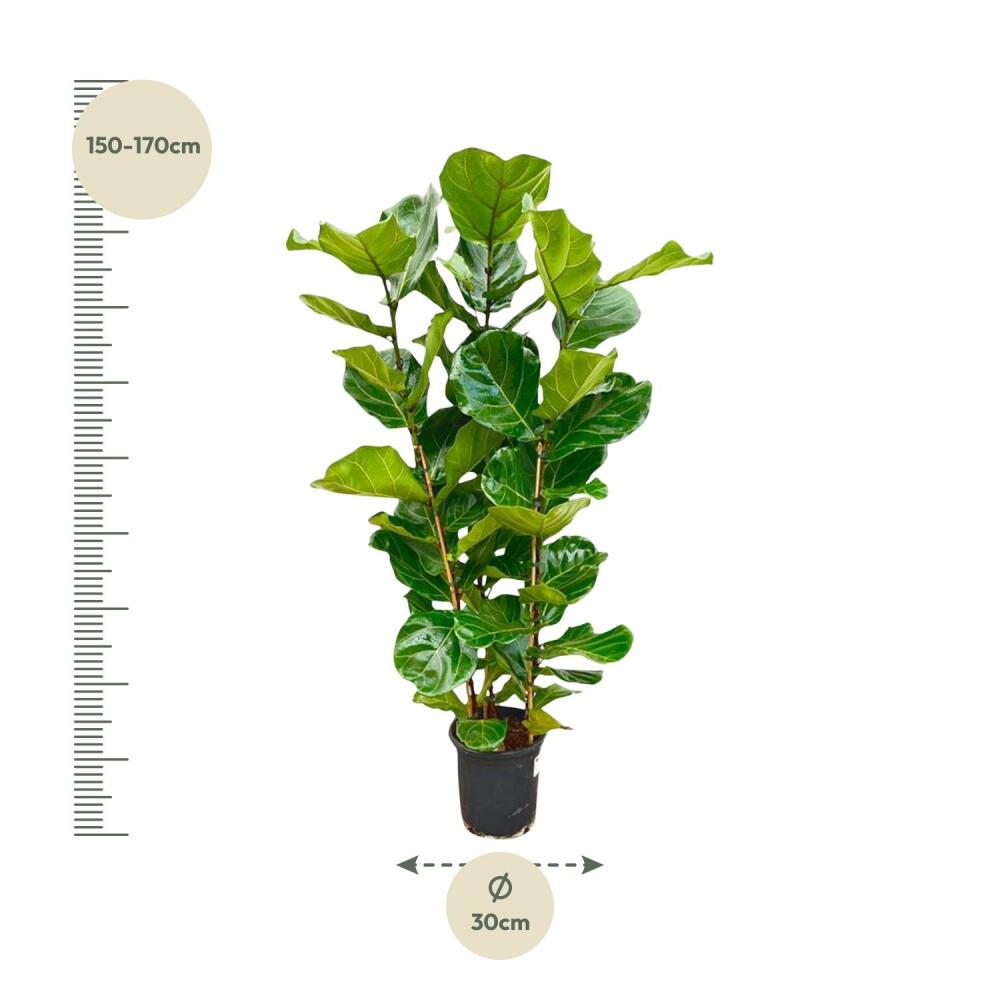
The linked offer describes a specimen plant in a 27 cm pot, about 140 cm tall overall. Allow lateral space for the leaves when furnishing the room. A fiddle-leaf fig can look good beside a sofa if enough daylight reaches it there. It must not be squeezed between furniture. The scene follows delivery size. Later growth is possible but depends on cultivation and pruning; the offered height is not a guaranteed final size.
Find and retain a good position
Bright indirect light follows the recommendation for this houseplant. A position behind a light curtain may suit it if it does not remove too much brightness. Avoid sudden intense midday sun after delivery, cold draughts and direct heating warmth. The shop’s approximately 18–25 °C offers a guide. Observe the actual position throughout the day. A room can look welcoming while a plant behind a deep sofa stands almost entirely in shade.
Large pots dry from outside to inside
Before watering, check the upper compost layer and moisture deeper in the root ball. In the large 27 cm pot, the centre may still hold water even when the surface is dry. Water slowly across the compost when needed and remove remaining water from the decorative pot. Neither repeated complete drying nor persistent wetness suits it well. Demand sometimes falls substantially after a move. Initially note when water was actually needed; this develops a feel for the plant rather than a rigid weekly schedule.
Care for leaves and observe roots
Large leaf surfaces can be cleaned carefully with a soft damp cloth. Support each leaf from underneath and do not rub young growth hard. Leaf-shine products are unnecessary. Repotting becomes useful when the root ball is well rooted or compost has compacted. A loose, structurally stable potting mix and drainage are essential. Feed weakly during growth; the offer states intervals of two to three weeks in spring and summer.
Spots are not an unambiguous diagnosis
Brown areas and leaf drop can have different causes: water stress, unfavourable temperature changes, strong sun or pests are possible areas to check. Examine root ball, position and leaf undersides together. Old damage will not disappear even after its cause is resolved; healthy new growth is a better success check. Pruning releases milky sap that may irritate. Work with gloves and keep plant parts out of reach of children and pets. Fiddle-leaf fig is ornamental, not a fig for snacking.
One plant, several views
Good to know
Can fiddle-leaf fig stand in the middle of a room?
Only if enough bright daylight or suitable plant lighting reaches it. Free space alone is not sufficient.
How large is the linked offer?
About 140 cm overall height in a 27 cm pot. This is the delivery size class, not a final-size guarantee.
Why is it developing brown spots?
Check water balance, temperature, sun and pests. Without these checks the cause cannot be determined reliably.
Can I treat leaves with a shine product?
A soft damp cloth is sufficient. Handle fresh leaves particularly carefully and support them while wiping.
Sources and editorial note
Sources checked: 15 September 2026. Product information and delivery contents follow the linked shop offer. Care has been checked against the stated specialist sources and remains subject to plant condition, position and season.