This plant at Exotenherz
Check the shop offer for current availability, price and what is included.
Check the selected shop offer for price, availability and delivery contents.
Your care table
| Topic | What to do | Why it helps |
|---|---|---|
| Light | Bright to medium-bright indirect daylight. | Low foliage needs light; strong direct sun may damage leaves. |
| Watering | Moisten rootball when the surface dries slightly. | Repeated complete drying causes wilting; constant wetness strains roots. |
| Drainage | Keep holes clear and remove excess from outer pot. | Air needs to reach roots again after watering in an open pot. |
| Surroundings | Avoid heating airflow and cold draughts; do not keep leaves constantly wet. | Dry heat and lasting leaf wetness cause different strains. |
| Substrate | Choose loose humus-rich soil with good drainage. | Shallow roots need moisture and airy structure together. |
| Feeding | Provide moderate feeding only during growth according to instructions. | Fresh soil often has nutrients; overfeeding does not strengthen red veins. |
| Stems | Selectively shorten long tips; root healthy cuttings separately. | The creeping plant may widen and stays manageable through gentle shaping. |
| Winter | Keep frost-free and bright; check the root ball rather than a calendar. | Less light often reduces use but does not remove moisture need. |
Check the compost and pot weight. The care table explains how far the compost may dry.
Water only when needed. The water should reach the root ball without spilling over the rim.
Remove surplus water from the saucer or cachepot. Then return the plant to a suitable position.
Red paths across rounded leaves
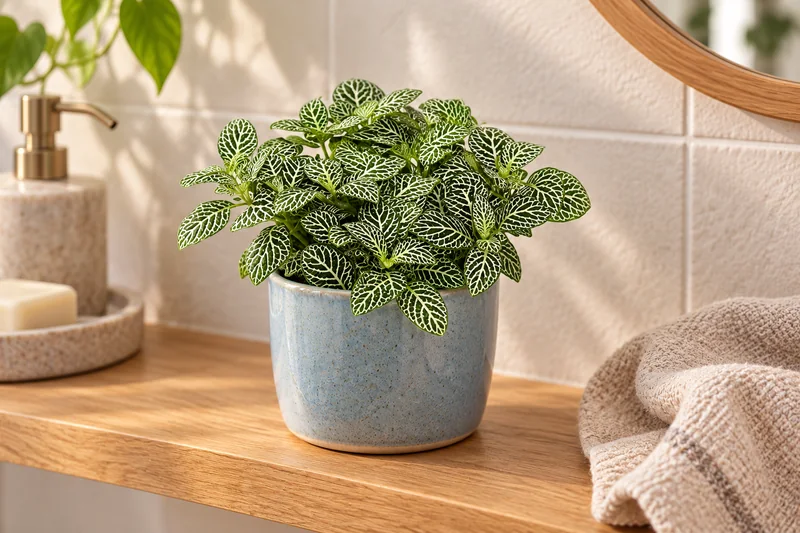
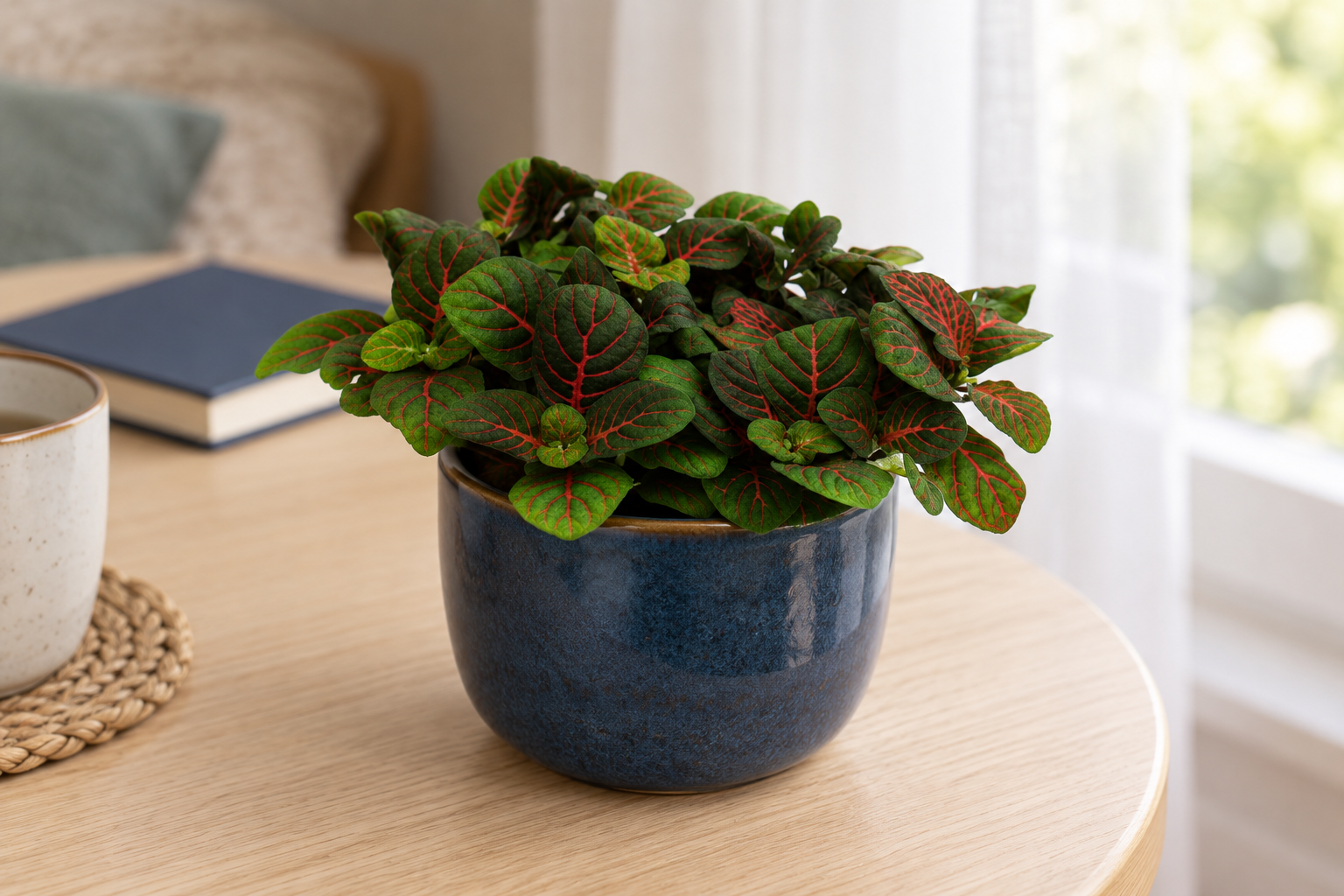
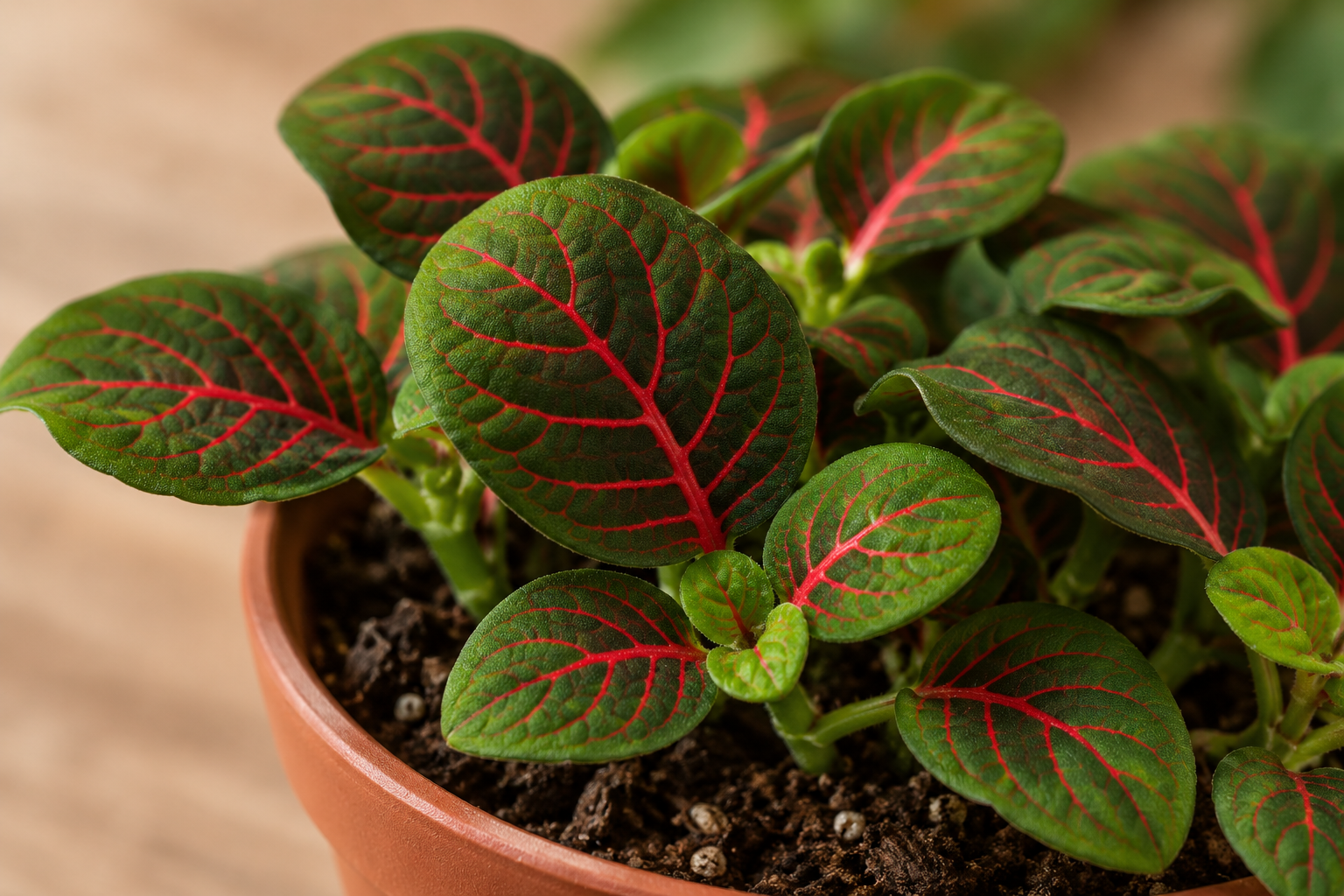
Bubble Red works through lines on leaves rather than their size. A red midrib divides dark green to olive surfaces; fine side veins branch to the edge. Small oval leaves are slightly domed and end in soft tips. They sit densely on short stems, forming a low cushion. A bright reading table allows close viewing. A quiet background highlights markings without putting the plant in a dark corner. Some leaves look lighter than others, giving the small bush depth without requiring identical leaves. Gently turn the pot when checking rather than pulling apart dense leaves. This preserves the delicate structure while allowing underside observation.
A named fittonia in a manageable pot
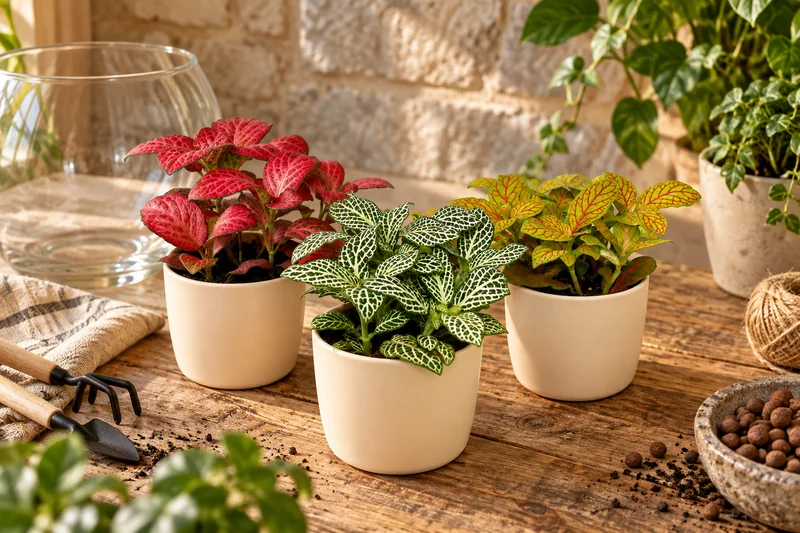
Bubble Red is a named selection of Fittonia albivenis, listed by the Royal Horticultural Society. Fittonias belong to the acanthus family; the species is known from South American tropical rainforests. Low stems may grow sideways and root at soil contact. The offered 12 cm pot with approximately 15 cm total height describes the young plant including container, not an unchanging future height or width. Hold the pot when unpacking and slowly remove wrapping from leaves. Check the root ball first: it may still be moist enough after transport. Immediate extra watering without checking does not help. Patterns belong to living leaves and are improved by neither rubbing nor heavy fertilisation. An inflorescence is not needed to enjoy this selection.
Gentle daylight reveals the leaf network
Bright indirect daylight suits Bubble Red. Red markings are visible while strong direct sun may damage leaves. A translucent curtain often helps near a bright window. Actual light reaching the plant matters: a lovely shelf deep in a room may be too dark. Watch summer sun and keep the small pot outside hot rays behind glass. A spot beside heating brings dry warm air to the low crown; cold ventilation draughts also strain it. Indoor cultivation stays frost-free. Do not force dark colour through an even darker place. Looser new stems are reason to check light before providing extra nutrients.
Keep the small rootball reliably moist
Shallow roots need moisture and air. Check surface and pot weight together. As the upper layer starts drying slightly, gently moisten soil; the entire rootball should not repeatedly dry completely. Water beneath foliage and drain excess through holes. Lift the nursery pot from its outer container if needed and remove collected water. A fixed weekday poorly matches need: the same small pot dries faster on a bright warm day than in low winter light. If leaves wilt, inspect the root ball first. A light dry pot needs a different response from heavy wet soil with damaged roots. Repeated collapse is not a recommended watering signal to deliberately wait for.
Support air humidity without flooding leaves
Fittonias can be grown at moderate household humidity, but direct dry heating airflow is unfavourable. A bright place among suitable plants may help if the small crown is neither shaded nor tightly enclosed. Frost-free gently ventilated surroundings matter more than daily wetting of leaves. Spraying does not replace rootball watering. Constantly wet leaves and stagnant humid air are not improvements either. Cultivation shown here is an open pot. For later planting in glass, rethink light, air exchange and missing drainage; open-pot routines cannot simply transfer. Look for dead leaves among short stems and carefully remove them. Clean gaps make the next shoots easier to observe.
Shallow roots get loose soil and room
Humus-rich loose houseplant compost should retain moisture yet release excess water. A heavy compacted mass makes this balance difficult. Open holes matter more than a thick stone layer beneath a closed container. Repotting makes sense when roots fill the existing ball or soil has lost structure. Choose an only slightly larger pot and do not plant deeper. Excess unrooted wet soil around fine roots unnecessarily complicates care. During active growth, restrained feeding according to suitable houseplant fertiliser instructions suffices; consider pre-fertilised fresh soil. More fertiliser does not automatically strengthen red lines. Shorten long single stems with clean tools. Healthy stem cuttings may root separately in a small pot with controlled moisture.
Winter calls for light, roots and fresh growth
Bubble Red remains frost-sensitive in winter and gets no cold dry dormancy. Less daylight often slows growth and water use. Keep checking soil rather than retaining summer quantities. Feeding follows actual growth and does not continue habitually during a low-light pause. Yellow leaves in wet soil require root and drainage checks; dry brown edges also call for checking the root ball, direct sun and heating. Inspect undersides for small animals, fine webs or cottony areas and initially separate a suspicious plant from neighbours. Pictures of the same pot side and brief light-location notes help in the plant book. Healthy new growth shows better than unchanged colour of an old leaf whether targeted corrections helped.
One plant, several views
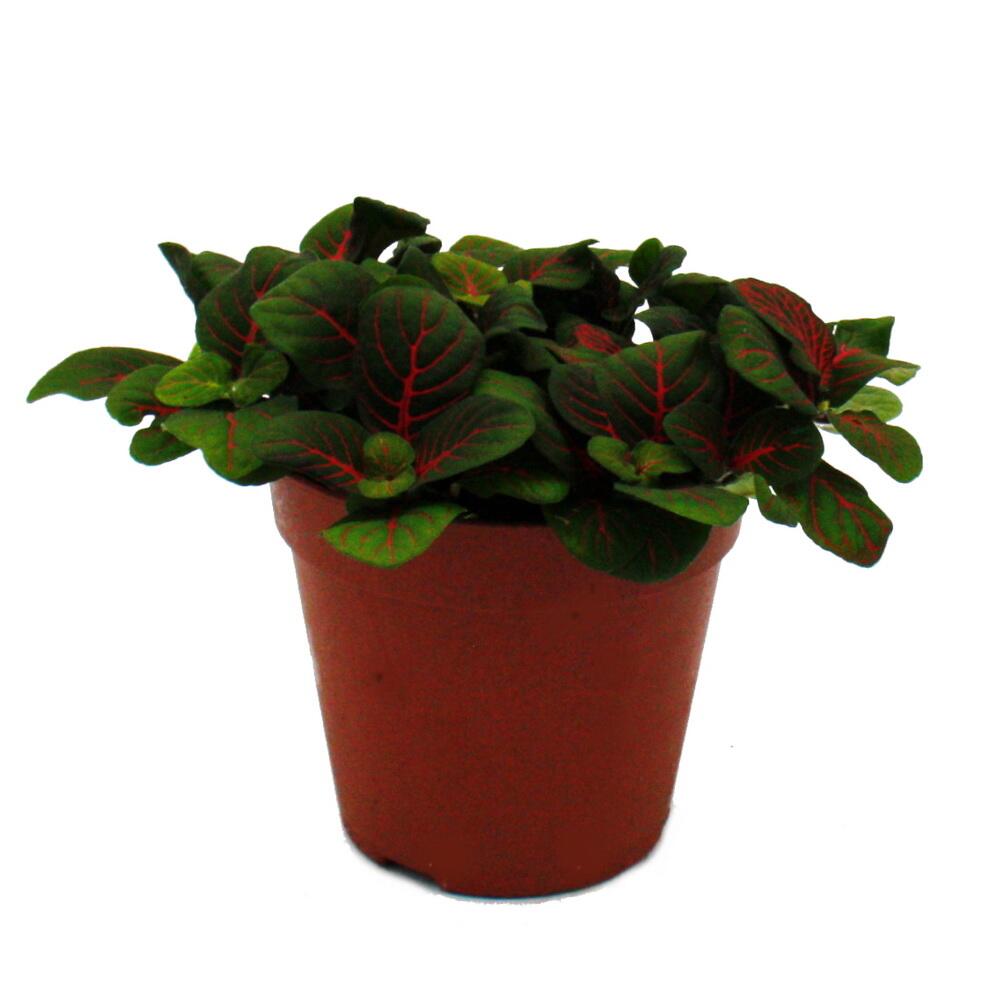
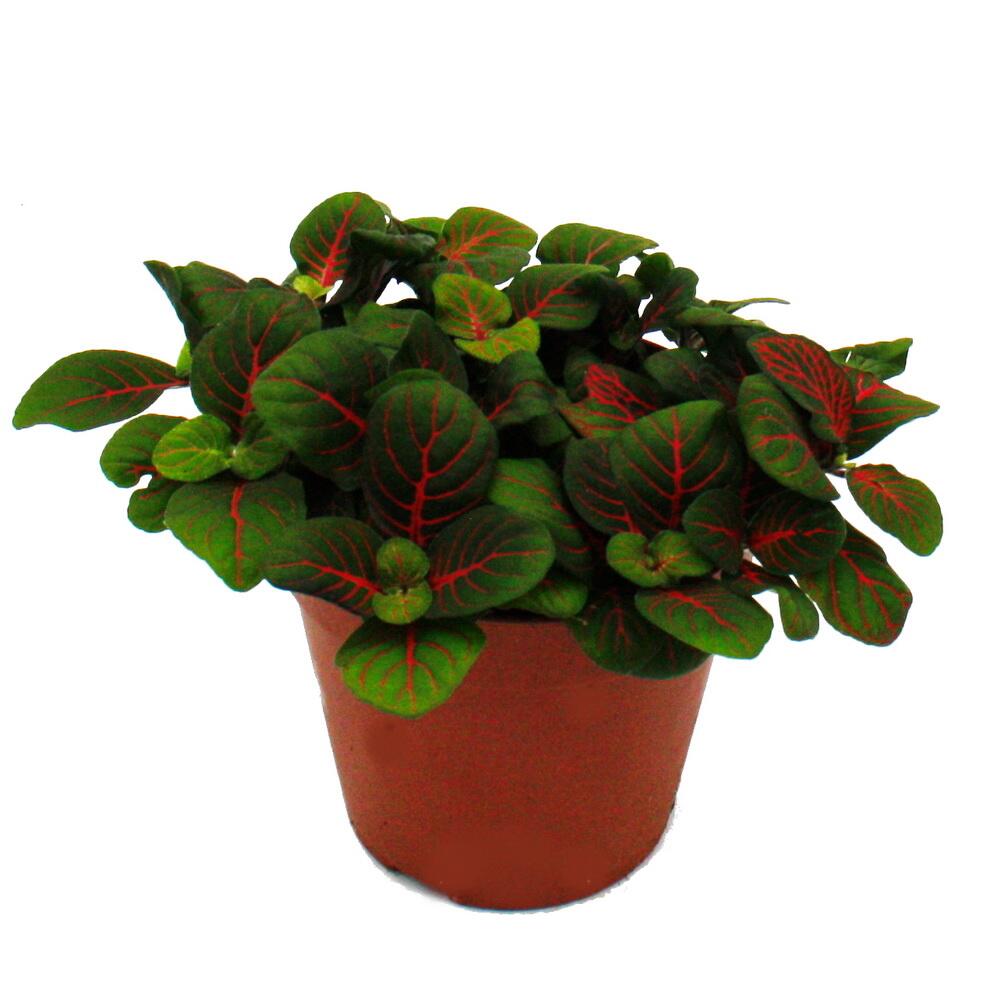
Good to know
Is Bubble Red just any red fittonia?
Bubble Red is a named selection of Fittonia albivenis. Our offer and RHS record use this name.
Is 15 cm its later height?
No. It is approximate total height of the offered young plant including pot. Stems may spread sideways later.
Should I wait until all leaves go limp?
No. Check earlier. Slightly dry surface soil may signal water need; avoid strong repeated drying.
Does extra fertiliser make red veins more intense?
Markings belong to the selection. Light, healthy roots and moderate feeding are more useful than heavy fertilisation.
Can it stand on a dark shelf?
A markedly low-light position is unsuitable. Choose brighter indirect light or suitable plant lighting.
Does it absolutely need closed glass?
No. An open draining pot with reliable moisture is possible. Glass needs different water and air-exchange rules.
Sources and editorial note
- Exotenherz: complete own offer and unchanged original gallery
- RHS: Fittonia albivenis Bubble Red, named accepted name
- NC State Extension: Fittonia albivenis, complete botany and cultivation guidance
Source comparison: 4 October 2026. Complete own shop offer and clean original gallery read and viewed. Offer dimensions describe the young offered plant, not later final size.