This plant at Exotenherz
Check the shop offer for current availability, price and what is included.
Link to the offer in German. Check the shop for the current price, availability and delivery contents.
Your care table
| Topic | What to do | Why it helps |
|---|---|---|
| Light | Grow outdoors in sun to very bright light. | Strong shoots need enough light. |
| Water | Allow the upper soil to dry a little and provide consistent water during growth. | Young shoots react to severe dry spells. |
| Drainage | Avoid waterlogging in pot and border. | Wet winter soils threaten the root area. |
| Soil | Use loose, humus-rich herb compost with good structure. | Moisture and air must reach roots. |
| Harvest | Take healthy tips and leave enough green growth. | The plant needs leaf mass for new shoots. |
| Fertiliser | During growth, feed moderately according to a suitable label. | Excessive feeding is not needed for herb flavour. |
| Winter | Protect small pots and recognise dieback as a rest phase. | The perennial overwinters in its root area. |
| Propagation | Maintain the French form through suitable division or cuttings. | Seed does not automatically yield the same aromatic cultivated form. |
Check the compost and pot weight. The care table explains how far the compost may dry.
Water only when needed. The water should reach the root ball without spilling over the rim.
Remove surplus water from the saucer or cachepot. Then return the plant to a suitable position.
French tarragon is a deliberate choice of form
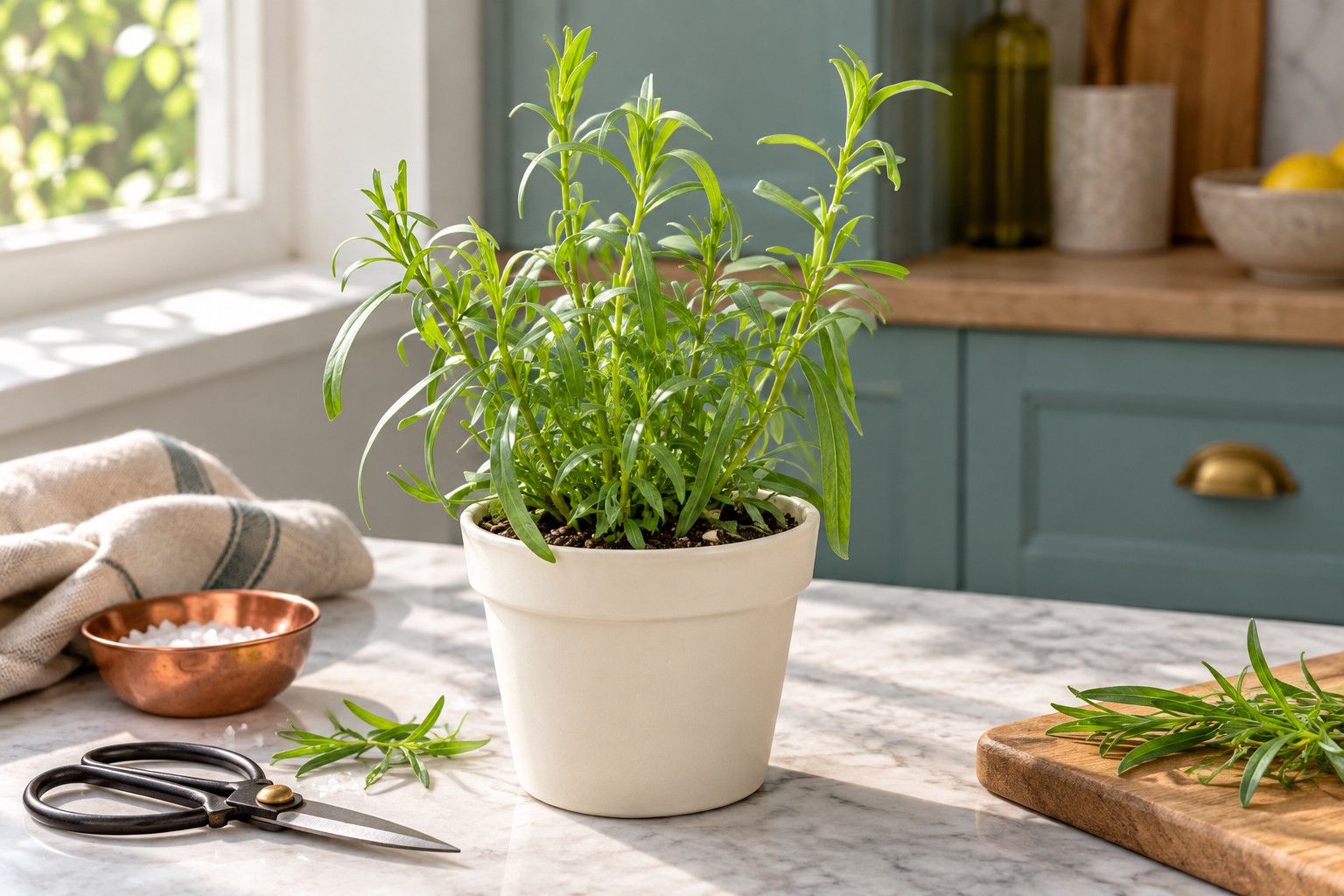
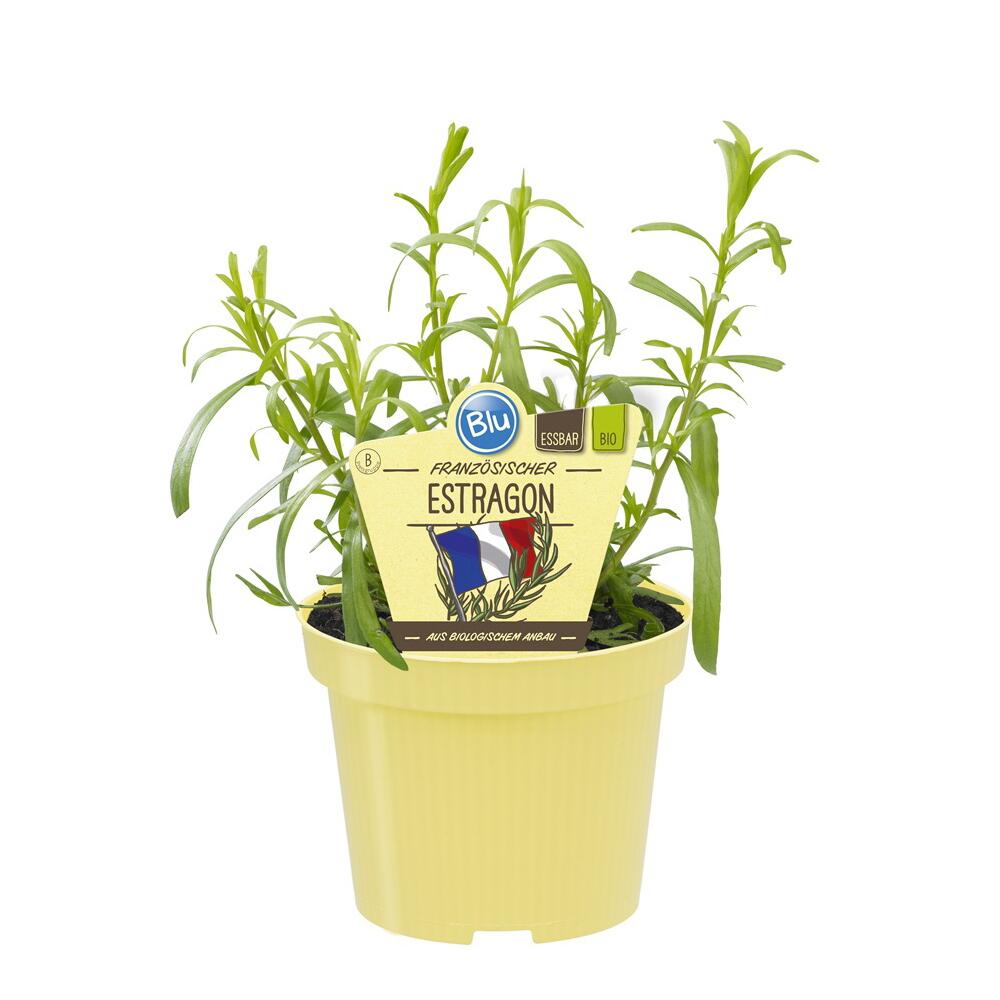
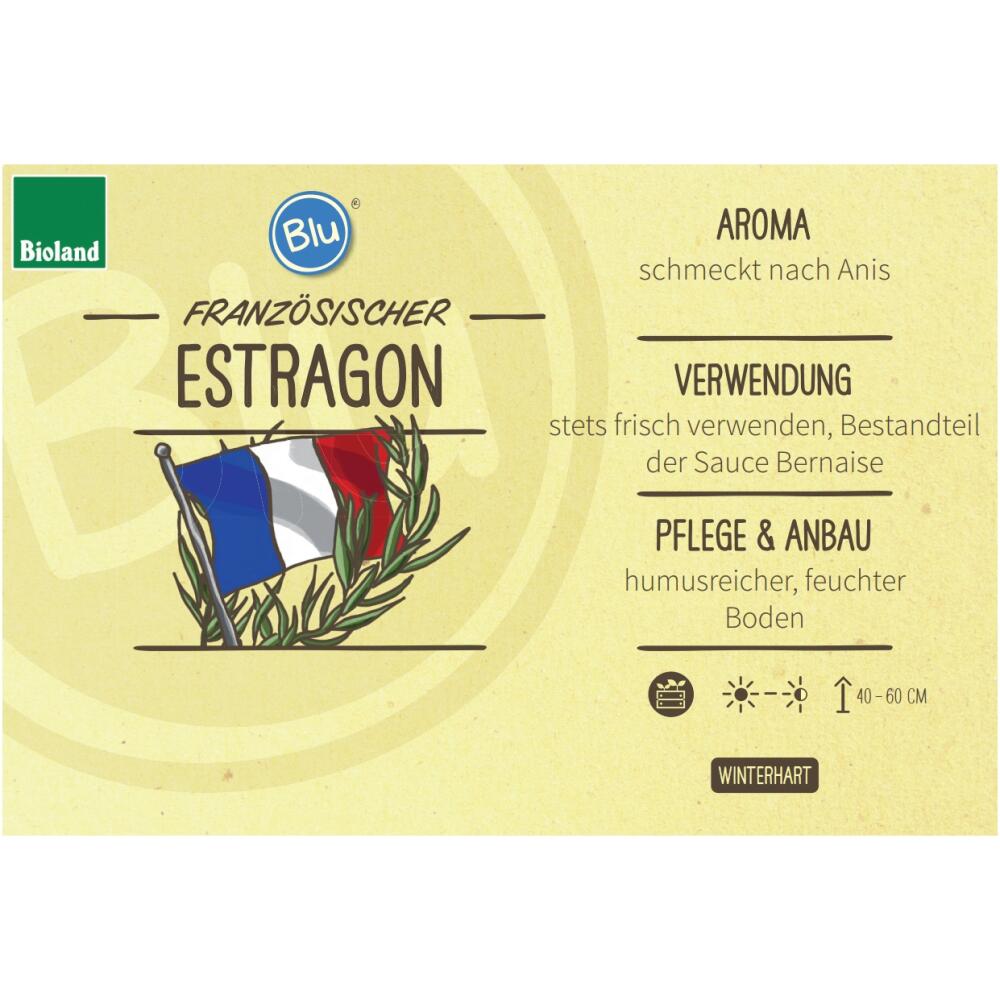
Artemisia dracunculus includes forms with different aromas. The shop offer explicitly describes French tarragon. Its narrow leaves have a delicate anise-like flavour that may differ from other forms offered as tarragon. This cultivated form is normally maintained by division or cuttings; a random seed packet does not automatically produce the same plant. It belongs to the daisy family and grows back from its root area as a perennial.
Start in an herb pot
The particular offer lists organic quality in a 12 cm pot. No confirmed overall height is stated, so the proportions of the original photograph remain the basis of the illustration. A larger container of its own or a suitable place in an herb border later gives roots space. Do not immediately harvest the young plant completely. Decorative pot, kitchen decoration and tools in the scene serve only for presentation. The organic designation applies to this offer described that way.
Light and airy soil
A sunny to very bright position with well-drained soil suits it. In a pot, use a loose, humus-rich herb mix and clear drainage holes. Gradually acclimatise to strong outdoor light after transport. Densely standing shoots should be able to dry after rain. Very heavy, wet soil is particularly problematic in winter. A dark room is not a good permanent solution for a vigorous harvesting plant.
Provide moisture without waterlogging roots
Check the upper compost and water when it has dried a little. During growth, provide the root ball consistently; repeated severe drying weakens young shoots. Water must also drain. A large container holds greater reserves than a small delivery pot. Assess yellow or limp foliage together with moisture, light and roots. Blanket daily watering is no more suitable than complete neglect.
Harvest with consideration for new growth
Cut healthy young tips with clean tools and leave enough foliage. Regular small harvests suit a young plant better than radical cutting back. For kitchen use, select and clean only reliably identified plant parts suitable according to product and treatment instructions. During growth, feed moderately according to a suitable herb fertiliser label. Older strong plants can be divided in spring if the clump becomes dense or declines.
Winter rest is not a care mistake
Above-ground shoots may die back in autumn. The root area stays alive and needs a well-drained position. Protect small pots from severe freezing and prolonged wetness, checking occasionally on frost-free days. Remove dead parts according to development. In spring, look carefully for new shoots before declaring a pot lost. French tarragon is a rewarding perennial kitchen companion when its rest phase is respected.
One plant, several views
Good to know
Is every tarragon equally aromatic?
No. The offer states French tarragon; other forms can differ noticeably in aroma.
Can I simply grow the same plant from any seed?
Not reliably. The French cultivated form is usually maintained vegetatively.
Is the pot dead in winter if foliage disappears?
Not necessarily. Above-ground shoots may die back while the root area overwinters.
How much can I harvest from the young plant?
Initially take only small amounts of healthy tips and leave sufficient green foliage.
Sources and editorial note
Sources checked: 15 September 2026. Product information and delivery contents follow the linked shop offer. Care has been checked against the stated specialist sources and remains subject to plant condition, position and season.