
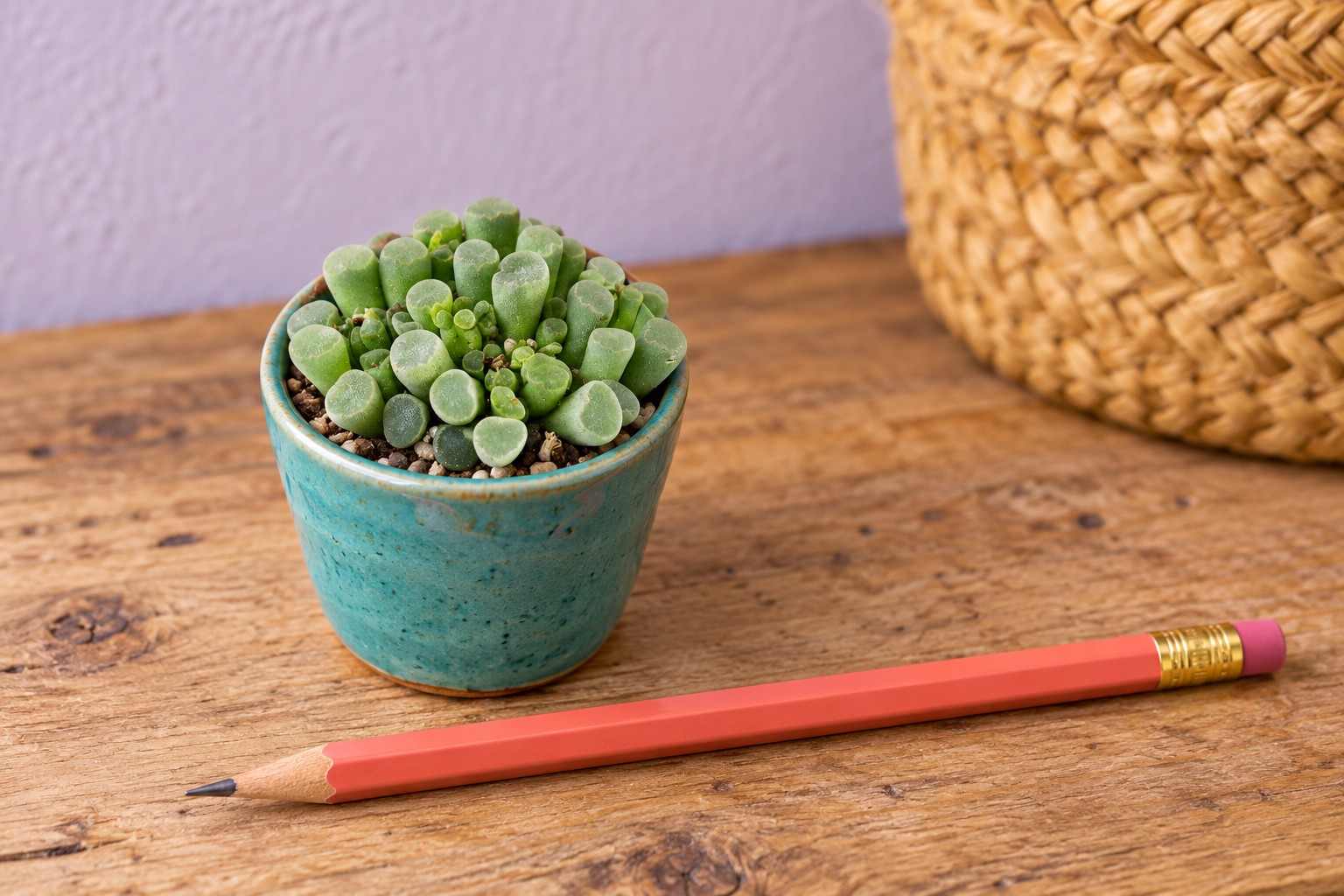
This plant at Exotenherz
Check the shop offer for current availability, price and what is included.
The linked shop is in German. Product details, availability and delivery information are provided in that shop.
Your care table
| Topic | What to do | Why it helps |
|---|---|---|
| Light | Very bright; introduce stronger sun gradually. | The miniature must not suddenly overheat behind hot glass. |
| Summer water | During active growth, water sufficiently again after drying. | Frithia comes from a summer-rainfall region and should not be constantly deprived then. |
| Drainage | Let water drain promptly and empty the outer pot. | An adequate supply does not mean standing wetness. |
| Compost | Loose, strongly mineral with a small organic proportion. | Fine roots need air and manageable moisture. |
| Winter rest | During rest, keep dry, bright and frost-free. | The annual rhythm differs from summer care. |
| Feed | During growth, feed sparingly and weakly according to the product. | A small root ball is sensitive to excessive supply. |
| Leaf windows | Do not polish, squeeze or cut the tips. | The translucent end surfaces are part of the natural function. |
| Checks | Watch leaf bases, roots and possible mealybugs. | Distinguish shrinkage during rest from soft damaged tissue. |
Check the compost and pot weight. The care table explains how far the compost may dry.
Water only when needed. The water should reach the root ball without spilling over the rim.
Remove surplus water from the saucer or cachepot. Then return the plant to a suitable position.
Through a leaf window into the plant
Frithia pulchra has short thick leaves with flattened translucent tips. These windows let light enter deeper leaf tissue. The low group therefore resembles a collection of small green columns. It belongs to the ice-plant family. This window name has no botanical connection to the large Monstera, also called window-leaf in German. The special structure is easily recognised from slightly above. Do not polish the surface or remove an imagined coating; intact leaf tips are an essential part of the plant.
A miniature with clear origins
The offer is an approximately two-year-old plant in a 5.5 cm pot, with around 6 to 8 cm overall height. The visible green part remains correspondingly low. Its natural home is South Africa’s Magaliesberg, a summer-rainfall region. The general image of a southwestern African stony desert that is dry all year therefore leads care in the wrong direction. The original photograph shows possible pink flowers with a pale centre. Flowering delivery cannot be inferred from it. In everyday cultivation, healthy firm leaves and a dependable annual rhythm matter more than forced flowering.
Plenty of light without abrupt overheating
Choose a very bright position and gradually accustom the plant to direct sun. A small pot behind a hot pane can warm up strongly. Good air movement helps without exposing the plant to a cold draught. During summer stays outdoors, drainage must work reliably and shelter must be possible during prolonged poor weather. Closed damp glass is unsuitable. Natural occurrence in rocky places also does not establish reliable frost tolerance for a small cultivated pot. For cultivation here, winter remains frost-free.
In summer, do not treat it like resting living stones
Frithia grows in summer and then needs an adequate water supply. Water the freely draining root ball again after it dries rather than drying the plant out completely for a long time. Excess must be able to drain immediately. A loose strongly mineral compost with a small organic proportion makes this easier. Permanent water in the outer pot remains unsuitable. The combination of warm growth, small roots and a small pot calls for regular checking. Rigid Lithops rules must not be adopted without assessment: similar storage leaves do not imply an identical growth and rest calendar.
Support a dry winter rest deliberately
During resting winter cultivation, keep dry and do not continue feeding. The plant may shrink a little. This is initially an adaptation, not a reason to flood it immediately. Continue checking overall condition, light and temperature, however. A warm position where growth continues does not simply fit an unchanged cold dry-rest schedule. In spring, resume supplies gently with increasing brightness and visible growth. During growth, sparing weak-dose feeding according to product instructions is sufficient. Avoid high salt concentrations in a tiny pot.
Handle roots, flowers and leaf groups gently
When repotting, do not pull the low leaf group apart. Use a suitable container with drainage, preserve healthy roots and do not plant arbitrarily deeper. Small quantities of loose mineral grit on the surface keep the plant’s base airier than a thick damp organic coating. Check for mealybugs, soft leaf bases and unusually rapid collapse. Seed and vegetative propagation are possible but require patience and clean cultivation. For beginners, learning about the existing group over a complete annual cycle is worthwhile. Sufficiently strong plants can then also show their bright flowers.
One plant, several views
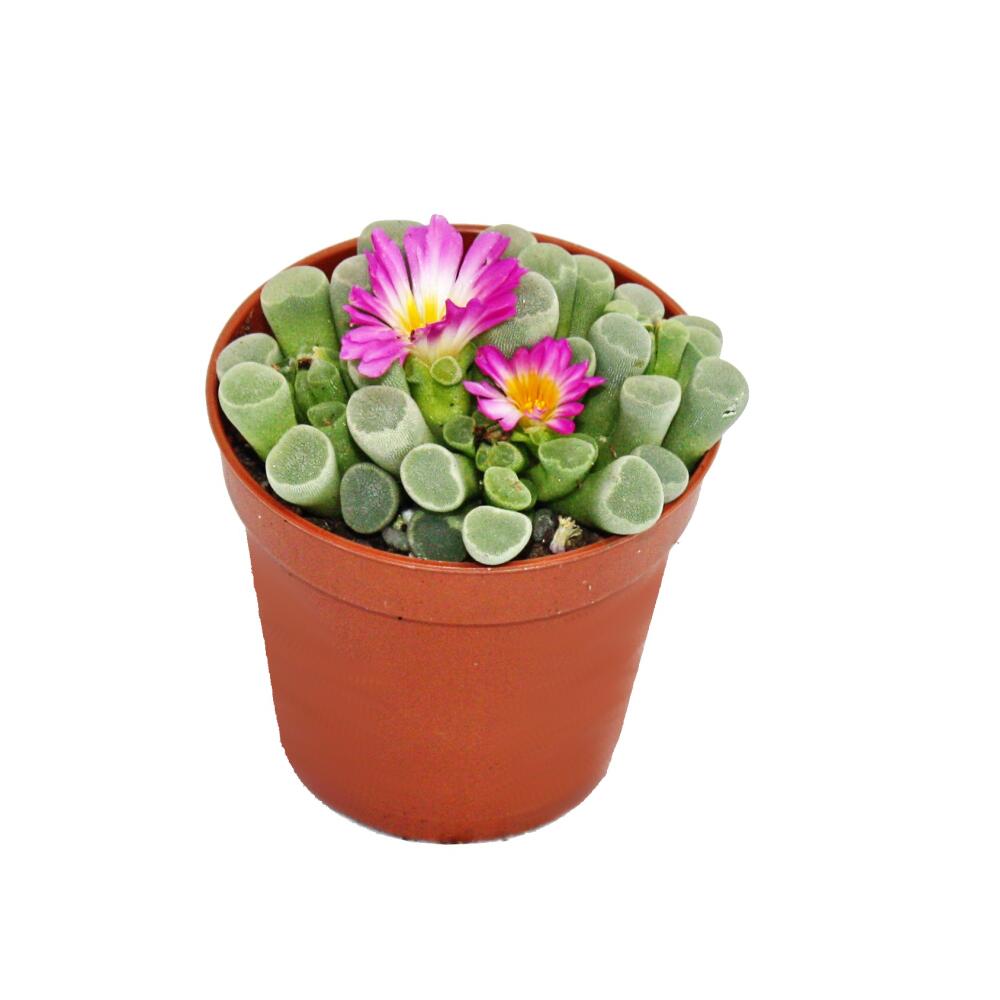
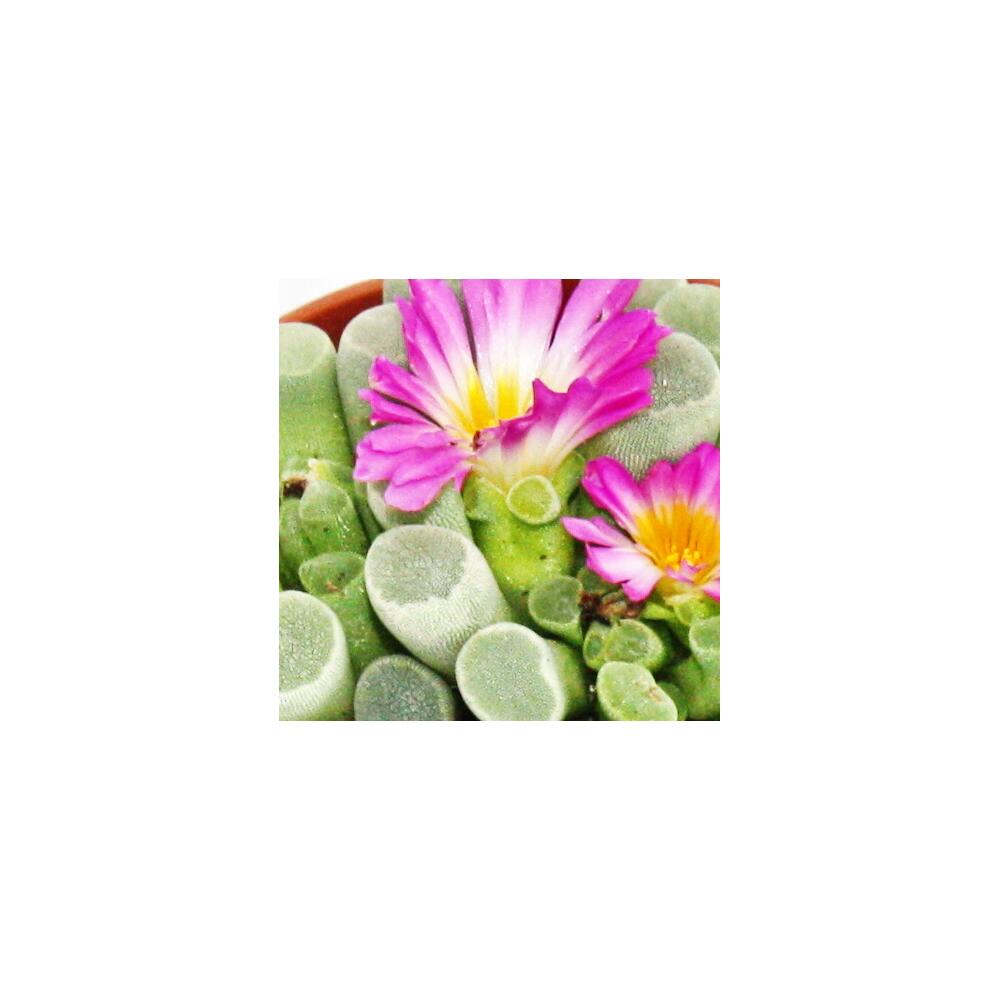
Good to know
Is Frithia the same window-leaf plant as Monstera?
No. Here the German name refers to the translucent leaf tips of a small succulent.
Can I leave it dry for months in summer?
During active summer growth, Frithia needs sufficient supplies in well-drained compost. Permanent drying is not suitable standard care.
Can I adopt my Lithops care?
Not unchanged. Frithia has its own annual rhythm with summer growth and dry winter rest.
Why do the leaves shrink in winter?
During rest, the plant may use water reserves and shrink. Assess condition, light and temperature too; soft rotten leaf bases need separate consideration.
Sources and editorial note
Sources checked: 15 September 2026. Product information and the contents of delivery follow the linked shop offer. Care advice was checked against the cited specialist sources and should still be adapted to the plant’s condition, position and season.