
This plant at Exotenherz
Check the shop offer for current availability, price and what is included.
Check the selected shop offer for price, availability and delivery contents.
Your care table
| Topic | What to do | Why it helps |
|---|---|---|
| Position | Choose a bright well-drained garden position. | Underground waterlogging remains a problem even without visible foliage. |
| Planting | Set bulbs carefully in early autumn. | Sensitive planting stock should root before winter. |
| Depth | Check about 30 cm depth as species guidance. | Overly wet subsoil is not suitable. |
| Spacing | Allow about 30 cm as an initial guide. | Later daughter bulbs may form a larger group. |
| Water | Supply during new growth according to actual soil moisture. | Free drainage remains crucial. |
| Nutrients | Feed according to label as growth begins. | Starting only after flowering may miss the annual cycle. |
| Foliage | Keep after flowering until dieback. | Healthy leaves support the following bulb stage. |
| Inspection | Examine shoots for slugs and lily beetles. | Careful observation reveals early feeding damage. |
For young plants, feel the soil directly at the root ball. The surface and deeper soil may have different moisture levels.
Water thoroughly after planting; later, water according to the soil, weather and establishment rather than a fixed calendar.
Avoid standing water. For plants in containers, also check that water runs out of the drainage hole.
Bells with a green headdress
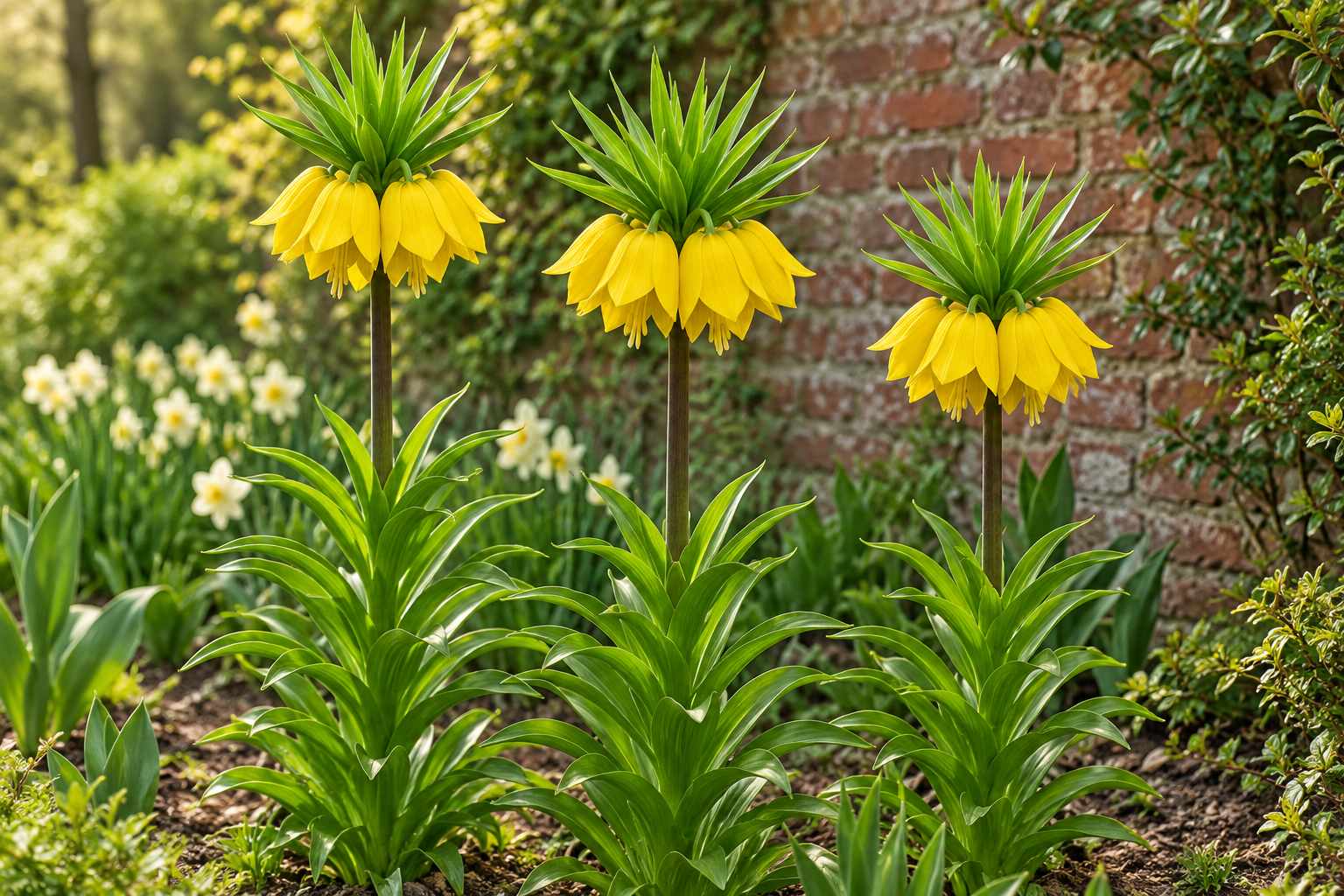
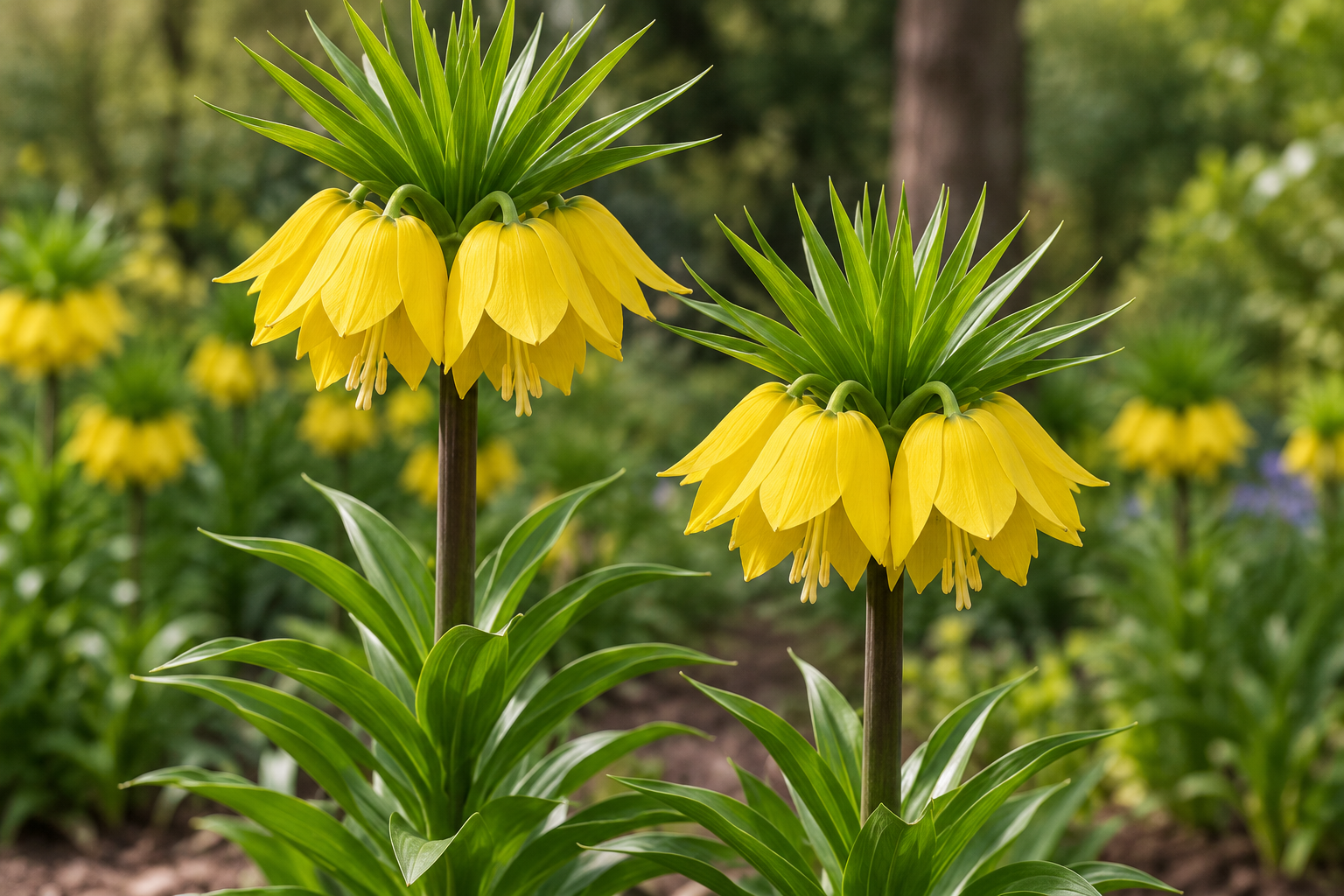
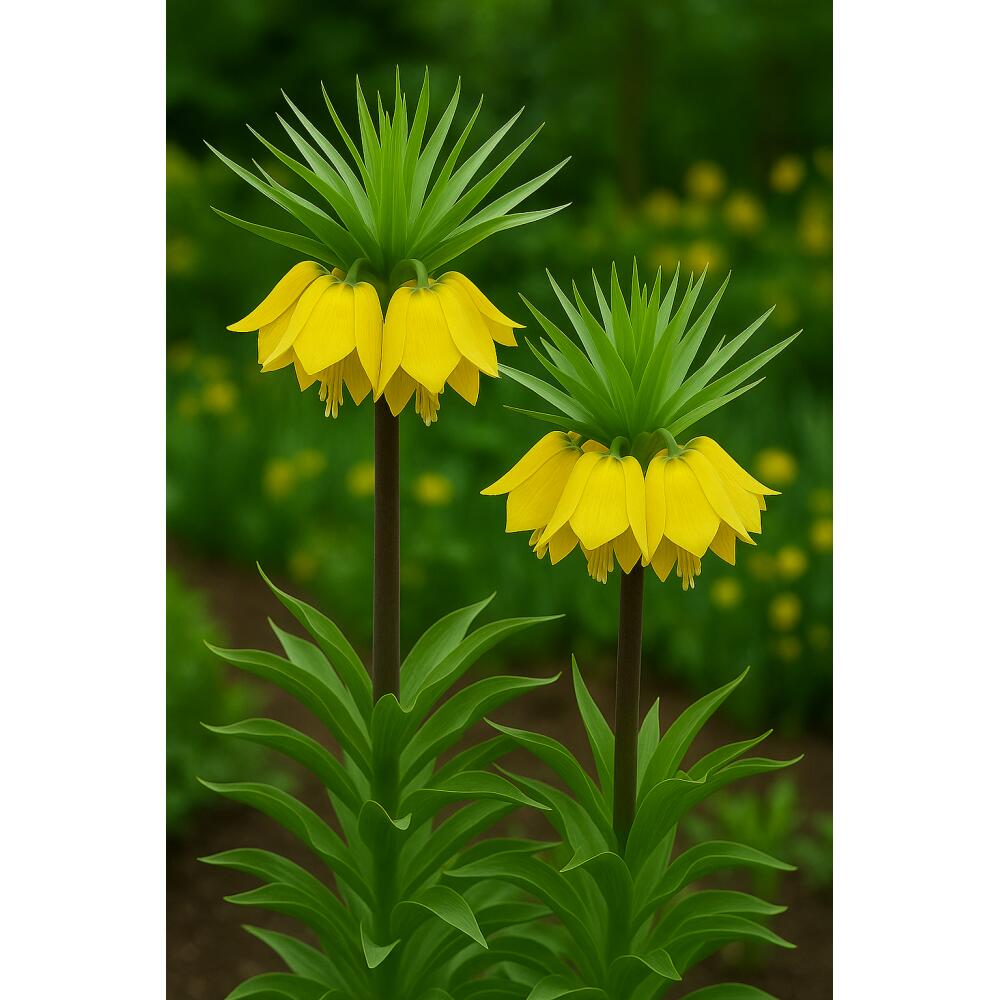
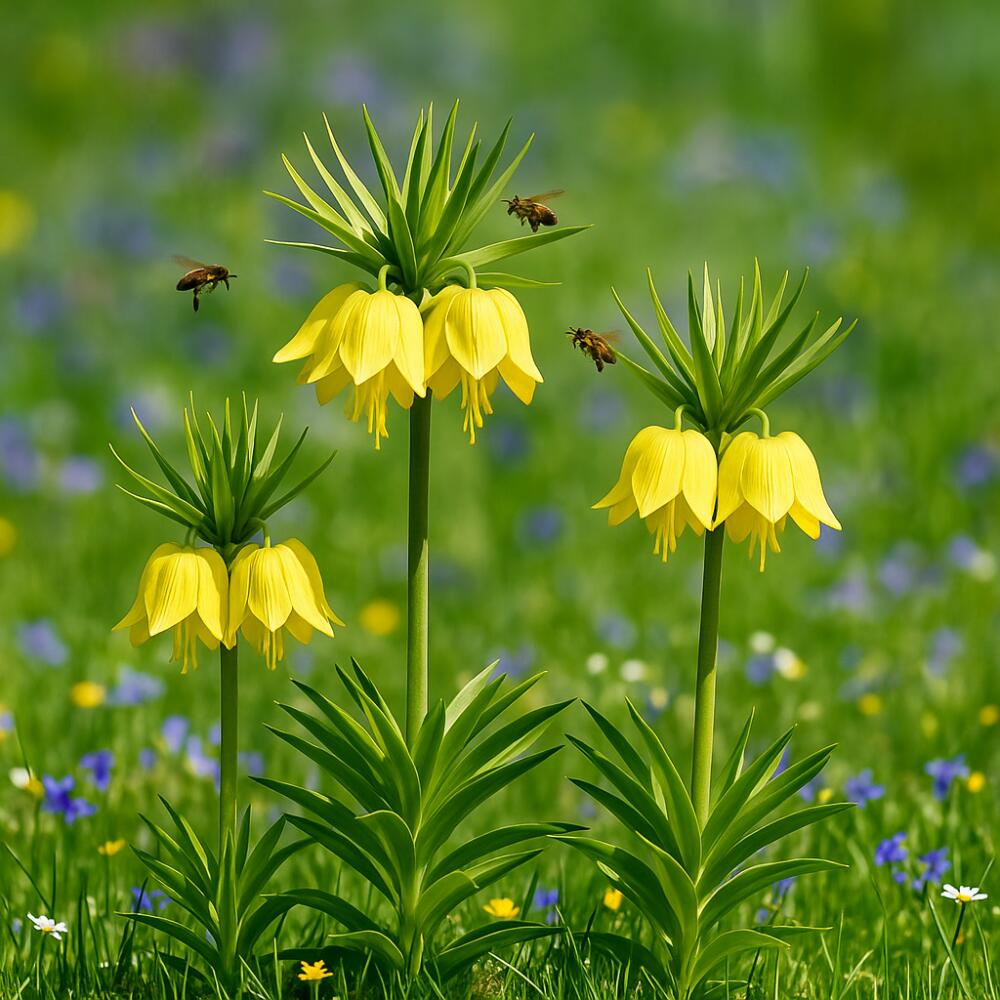
Lutea creates a clear yellow accent in spring. Several large hanging bells sit at the top of an upright stem, above which stands a striking tuft of narrow green leaves. Further down, elongated leaves accompany sturdy new growth. The plant looks like a small structure with several levels. Bells and leafy crown are clearly distinguished against a calm wall. Yellow crown imperial is neither a tulip nor a low snake’s-head fritillary, although both are also bulbous plants.
The five bulbs need a planned position
The assortment offer includes five bulbs for planting. The image shows a later flowering stage, not ready-planted containers or a guaranteed number of simultaneous flowering stems. Handle bulbs carefully. Choose the planting position before unpacking and keep kitchen supplies separate from ornamental planting stock. The later height of about ninety centimetres according to the cultivar profile is a planning value, not delivery height. A position close to a path may look impressive but should allow enough sideways space for foliage and future groups.
The position must suit below ground too
A bright to sunny garden area with deep nutrient-containing and well-drained soil offers a reasonable start. Check especially how the subsoil looks after rain. An attractive border surface helps little if water stands deeper down. General crown imperial care recommends deep planting, about thirty centimetres, with similar spacing. The specific packaging and soil conditions belong in the decision. If soil at that depth is too wet, do not simply plant shallower; another suitable position or a well-drained raised bed is more sensible.
Connect autumn planting with spring nourishment
Plant stock early in autumn while soil can be worked. The bulb can then develop roots before winter. Later spring shoots show when the next care stage begins. Supply the root zone as needed; wet soil receives no precautionary extra portion. Nutrients follow soil, growth and fertiliser label. Suitable nourishment for crown imperial starts with new shoots rather than only after flowering. Respecting its marked annual cycle helps more than repeating the same care step every week.
Foliage remains important after the bells
Keep green leaves after flowering until they finish their annual cycle. The planting position then becomes quieter above ground; a small marker prevents accidentally digging into bulbs when planting other plants. Watch for slugs and lily beetles in spring, and check young leaves. If an established group flowers weakly later, check soil and density. Moving during dormancy may help, but needs time for renewed development. No specific annual flower count is promised.
Record a large spring shape in the plant book
Photograph a whole stem and then the hanging bells. Record the start of growth, flowering date and soil moisture after rain beside them. Photographs also show how crown imperial fits with lower neighbours. A future comparison need not always show the same flower count to be useful. Ornamental bulbs are not eaten; gloves are sensible when handling. The plant book joins practical observations with enjoyment of an unusual spring form.
One plant, several views
Good to know
What does the assortment offer contain?
Five bulbs for planting, not already flowering crown imperials.
Is Lutea the same as Maxima Lutea?
The portrait follows the confirmed name Lutea and does not equate it with Maxima Lutea.
How tall does Lutea eventually grow?
The cultivar profile describes about 90 cm; position and cultivation may influence growth.
Why must I check deep soil?
Bulbs are planted deeply. Water must not remain standing there.
Can I cut foliage immediately after flowering?
Healthy green foliage stays until natural dieback.
Sources and editorial note
- Exotenherz: offer and original images (03.10.2026)
- RHS – Lutea crown imperial, cultivar form and height (03.10.2026)
- RHS – accompany crown imperial through the garden year (03.10.2026)
Shop offer, article number, GTIN, availability and original images directly checked on 02.10.2026; specialist acceptance 03.10.2026. Specialist sources read directly. Specific shop article, SKU, dimensions and both unchanged original views checked on 03.10.2026. Currently not orderable: knowledge portrait without purchase connection or social sending approval. Specialist sources read directly; trade name and general species care kept separate. Accept text and images against published reference portraits. No Wawi or tool changes. Currently not orderable: knowledge portrait without purchase link; social drafts not approved for sending.