
This plant at Exotenherz
Check the shop offer for current availability, price and what is included.
Check the selected shop offer for price, availability and delivery contents.
Your care table
| Topic | What to do | Why it helps |
|---|---|---|
| Light | Plant warm and sunny. | Dark flowers benefit from a calm background. |
| Soil | Choose humus-rich soil with good drainage. | Permanently wet bulbs are unfavourable. |
| Planting | Set carefully in autumn. | A slightly sideways position does not replace drainage. |
| Depth | Allow about 15 cm and consider packaging. | Real bulb and soil remain decisive. |
| Water | Supply as needed during growth. | A warm wall position may dry more quickly. |
| After flowering | Keep green leaves until natural dieback. | The active period does not end with the last bell. |
| Winter | Consider regional cold and container protection. | H4 is not a general guarantee for every site. |
| Dividing | Move daughter bulbs in late summer when needed. | Mark the dormant planting position first. |
For young plants, feel the soil directly at the root ball. The surface and deeper soil may have different moisture levels.
Water thoroughly after planting; later, water according to the soil, weather and establishment rather than a fixed calendar.
Avoid standing water. For plants in containers, also check that water runs out of the drainage hole.
Many little bells instead of a single crown
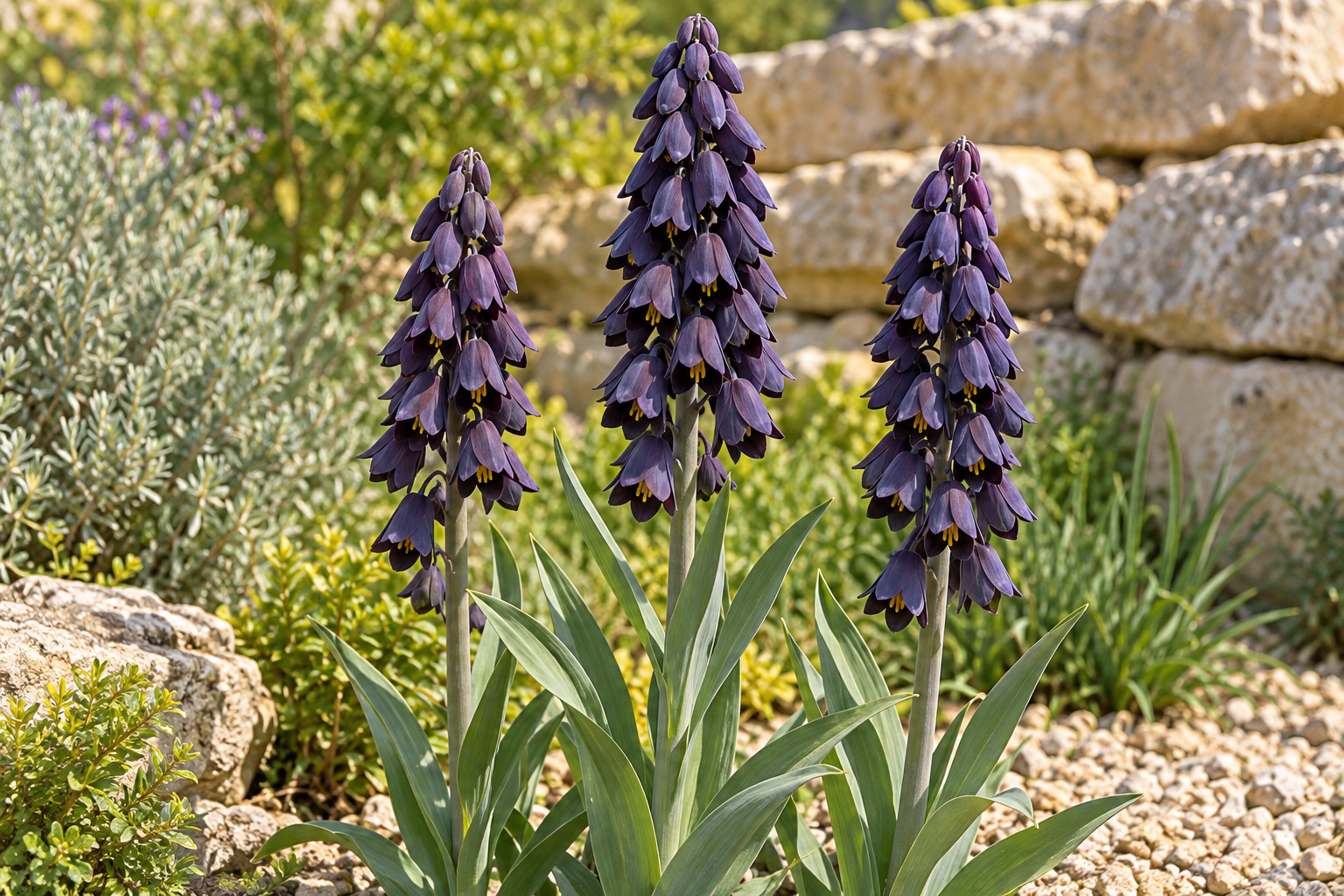
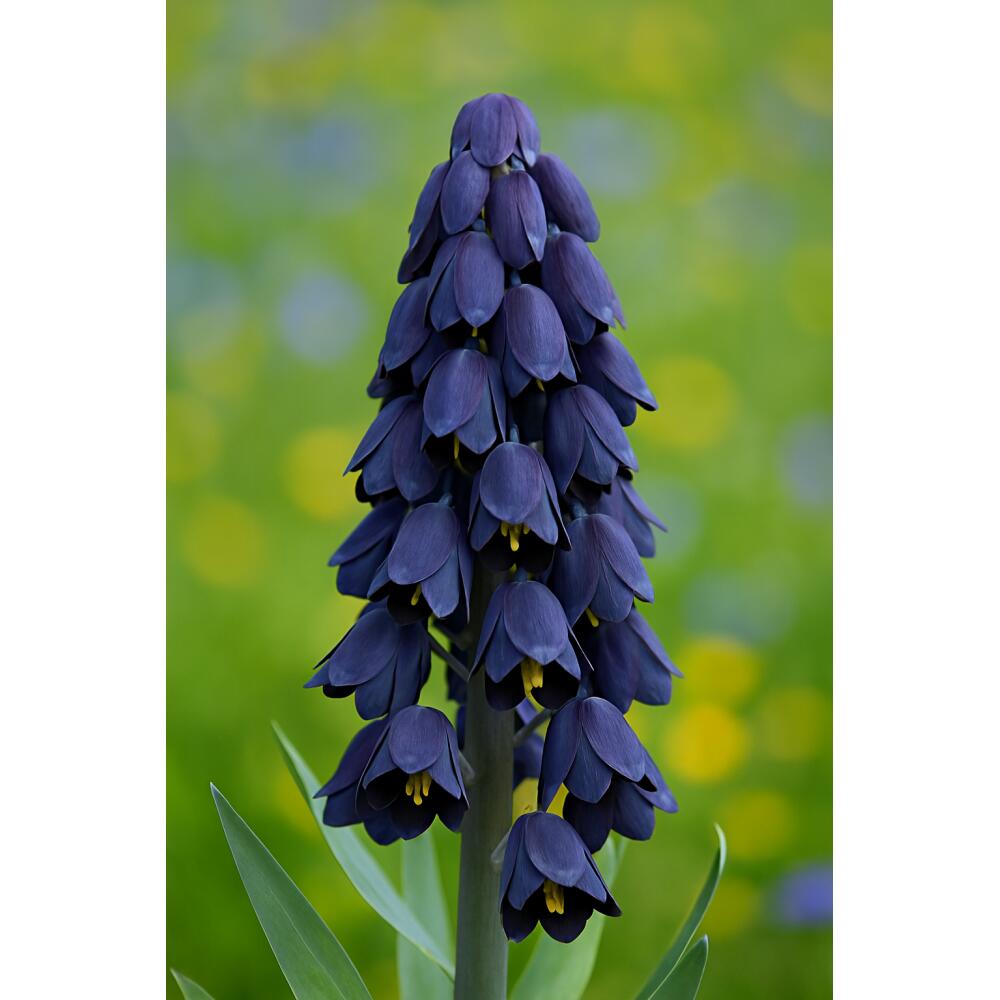
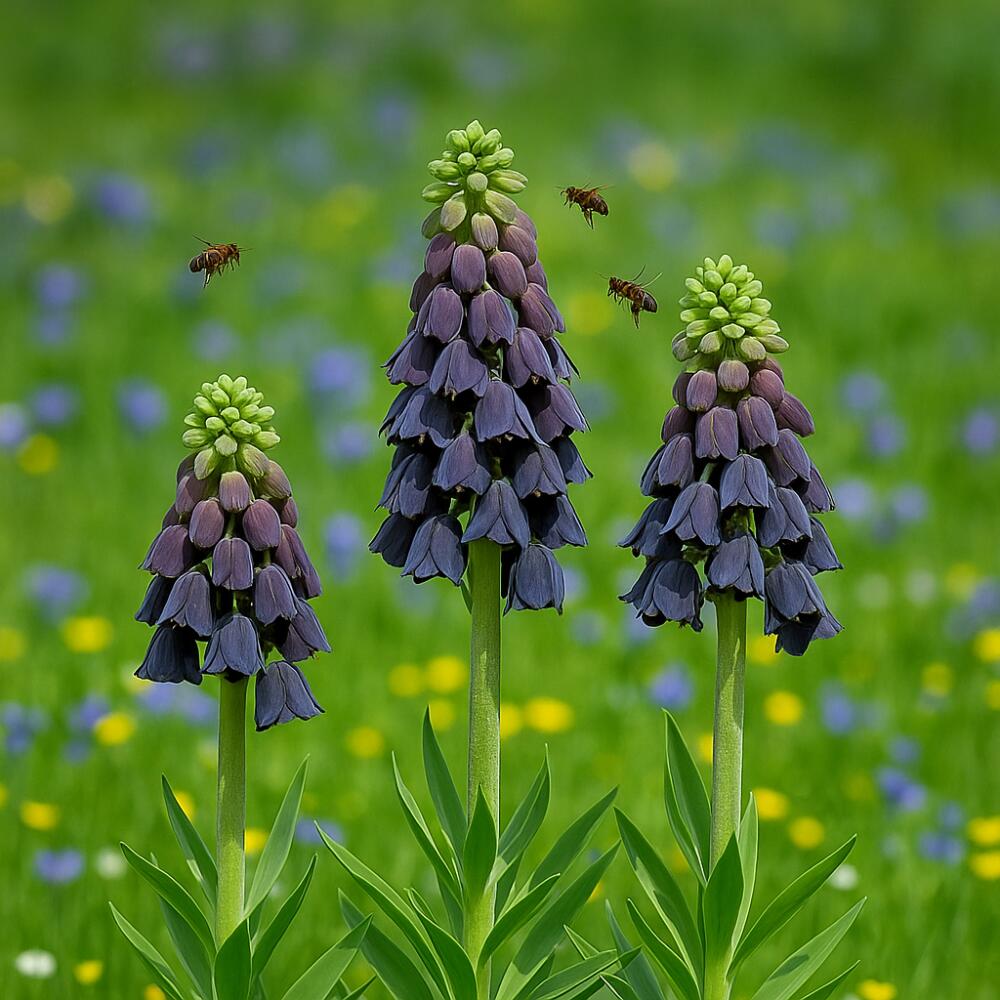
Fritillaria persica bears numerous narrow hanging bells along an upright flower raceme. Dark violet to brown-violet may look almost black depending on the light. Grey-green elongated leaves accompany the lower stem. Unlike the classic orange crown imperial, this species has no single group of bells beneath a striking green leaf tuft. Its effect comes from the long upright line and many small flowers. At about fifty to a hundred centimetres tall, it creates a distinctive spring accent, for example against a pale wall or beside calm silvery foliage.
Five bulbs for a deliberately chosen position
The shop lists five bulbs for planting. Images show later flower stems, not a flowering delivery. First plan whether plants should form a group or occupy several places. Leave enough later space between stems for foliage and care; a later plant’s width is guidance, not a fixed universal spacing. A trade size class does not automatically describe measured diameter. Tall dark flowers particularly benefit from a clear viewpoint. Too many competing shapes directly beside them may visually obscure their fine bell structure.
Combine sun and warmth with good soil structure
A warm sunny garden position with humus-rich free-draining soil suits this species. It tolerates warmer positions than some other Fritillaria but still requires care during growth. A sunny wall may support the scene while a wet hollow remains unfavourable. Check drainage throughout the root zone. A shallow container is not a convincing permanent solution for tall stems and underground parts. If using a suitable deep container, plan stability, drainage and later winter care before planting.
Work with the actual bulb in autumn
Plant in autumn when soil is workable and handle bulbs carefully. The specialist supplier gives about fifteen centimetres depth for medium to larger bulbs. Packaging guidance and specific soil complete the decision. A slightly sideways position is recommended there so water does not collect in a hollow, but cannot compensate for poor drainage. Close the soil gently and water in a little under dry conditions. Mark the site. Dormant summer bulbs without visible growth are easy to overlook during other garden work.
Water and nutrients during the green period
Check soil moisture during shoot and leaf growth, especially in a container or beside a warm wall. Water during prolonged dryness without creating permanently wet soil. Nutrients may be supplemented during growth according to the fertiliser label and existing reserves. Assess the whole position first. A dark flower stem is not a sign of inadequate nourishment; it is part of the plant’s effect. When flowering finishes, green leaves initially stay. Care is adjusted to above-ground dormancy only at natural dieback.
Assess hardiness regionally and in containers
RHS rates the species H4 under British conditions. This does not assure survival of every severe winter unprotected at every German position. Consider local climate, wind and winter moisture. Roots in containers are exposed differently from those in garden soil, making suitable sheltered overwintering particularly important. Avoid a general temperature figure as the only guide. In spring, regular looks at leaves and stems help notice feeding damage early. Do not eat bulbs and wear gloves when handling.
Get to know the dark line over several years
Fritillaria persica is perennial and its above-ground parts die back after the active season. Healthy daughter bulbs may be carefully redistributed in late summer when needed. Otherwise leave a suitable planting as undisturbed as possible and assess development over several years. Weak flowering is considered together with winter conditions, light, soil and previous leaf care. Photographs in different light are interesting for the plant book: brown-violet, dark purple and an almost black effect may show the same flower. Colour remains an observation of a living plant, not a rigid expectation for every image.
One plant, several views

Good to know
What does the offer contain?
Five bulbs for planting.
Is Fritillaria persica the same species as orange crown imperial?
No. It bears many smaller bells along a long flower raceme.
How tall does it grow?
About 50–100 cm at flowering, depending on cultivation and development.
Why do some flowers look almost black?
Dark brown-violet tones change their effect with the light.
Does it survive every winter everywhere?
No. Regional conditions and root protection in containers must be considered.
What happens in summer?
Above-ground parts die back after the active period; the bulb remains as a perennial storage organ.
Sources and editorial note
- Exotenherz: offer and original images (03.10.2026)
- RHS – Fritillaria persica and hardiness (03.10.2026)
- RHS Plants – Fritillaria persica, planting and care (03.10.2026)
- RHS – cultivate bulbous plants (03.10.2026)
Shop offer, article number, GTIN, availability and original images directly checked on 02.10.2026; specialist acceptance 03.10.2026. Specialist sources read directly. Shop variant, quantity, SKU, current orderability and both original shop images directly checked. Specialist sources read on 03.10.2026. Images show later flowering, not delivery condition. Trade size classes not adopted as measured bulb or tuber diameter. Specialist acceptance with published Pflanzenwelt portraits; no tool or Wawi changes.