
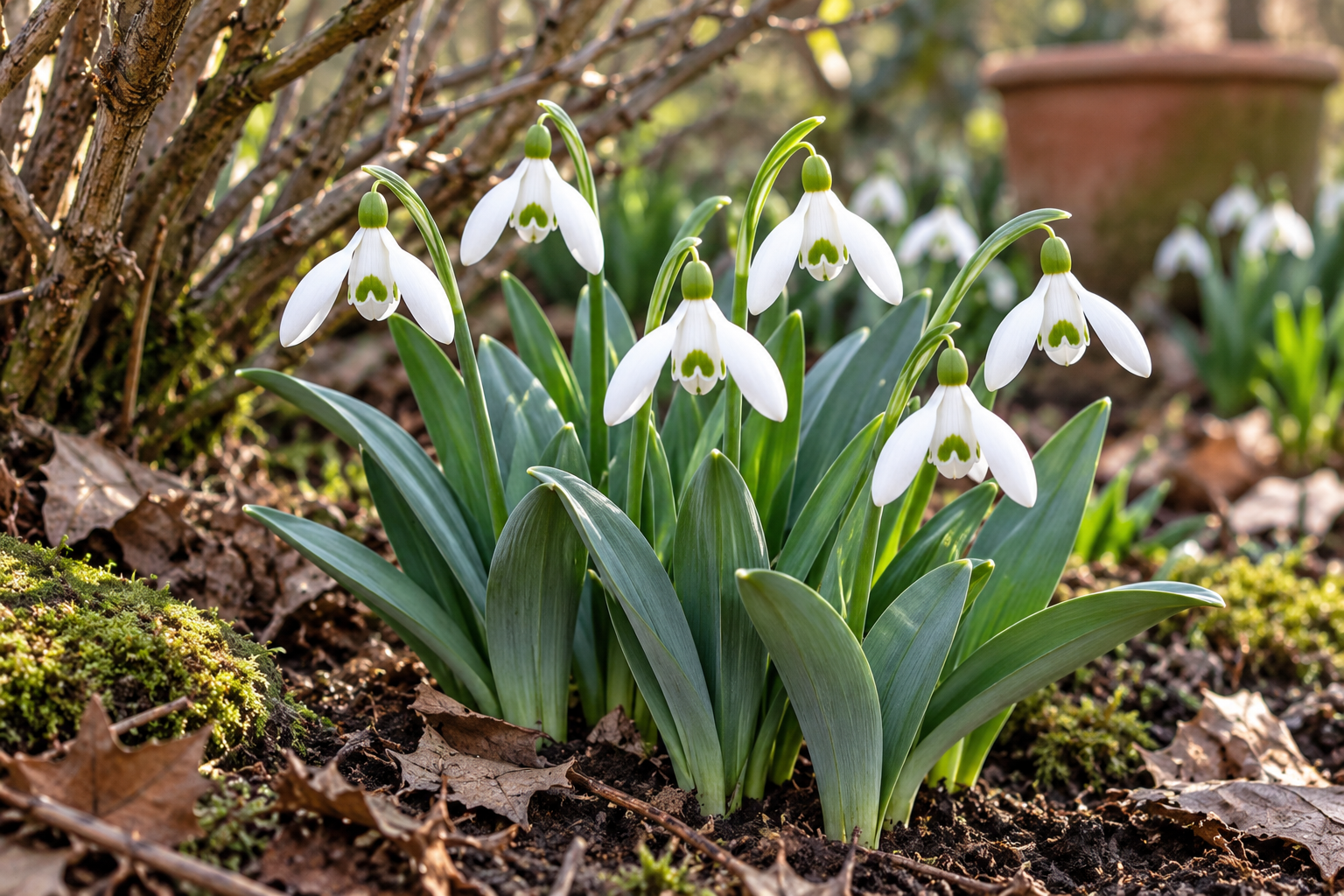
This plant at Exotenherz
Check the shop offer for current availability, price and what is included.
Product and delivery details are given in the individual offer.
Your care table
| Topic | What to do | Why it helps |
|---|---|---|
| Light | Choose light partial shade. | Deciduous woody plants can combine early light and later shade. |
| Soil | Prepare humus-rich moisture-retaining soil with good drainage. | The root area should not dry out even in summer. |
| Planting | Plant fresh autumn bulbs promptly after receipt. | Long dry storage makes establishment harder. |
| Depth | Around 10 cm; consider the package and real bulb. | Leafy divisions follow their previous planting level. |
| Spacing | About 10 cm as an initial guide. | The group may develop later. |
| Water | Check moisture in drought and allow excess to drain. | Even a shady woody border edge can dry out. |
| Foliage | Retain until natural yellowing. | The leafy phase supplies the bulb. |
| Division | Divide gently as foliage dies back and replant soon. | Divisions should not remain dry for long. |
For young plants, feel the soil directly at the root ball. The surface and deeper soil may have different moisture levels.
Water thoroughly after planting; later, water according to the soil, weather and establishment rather than a fixed calendar.
Avoid standing water. For plants in containers, also check that water runs out of the drainage hole.
Early flowers with broader leaves
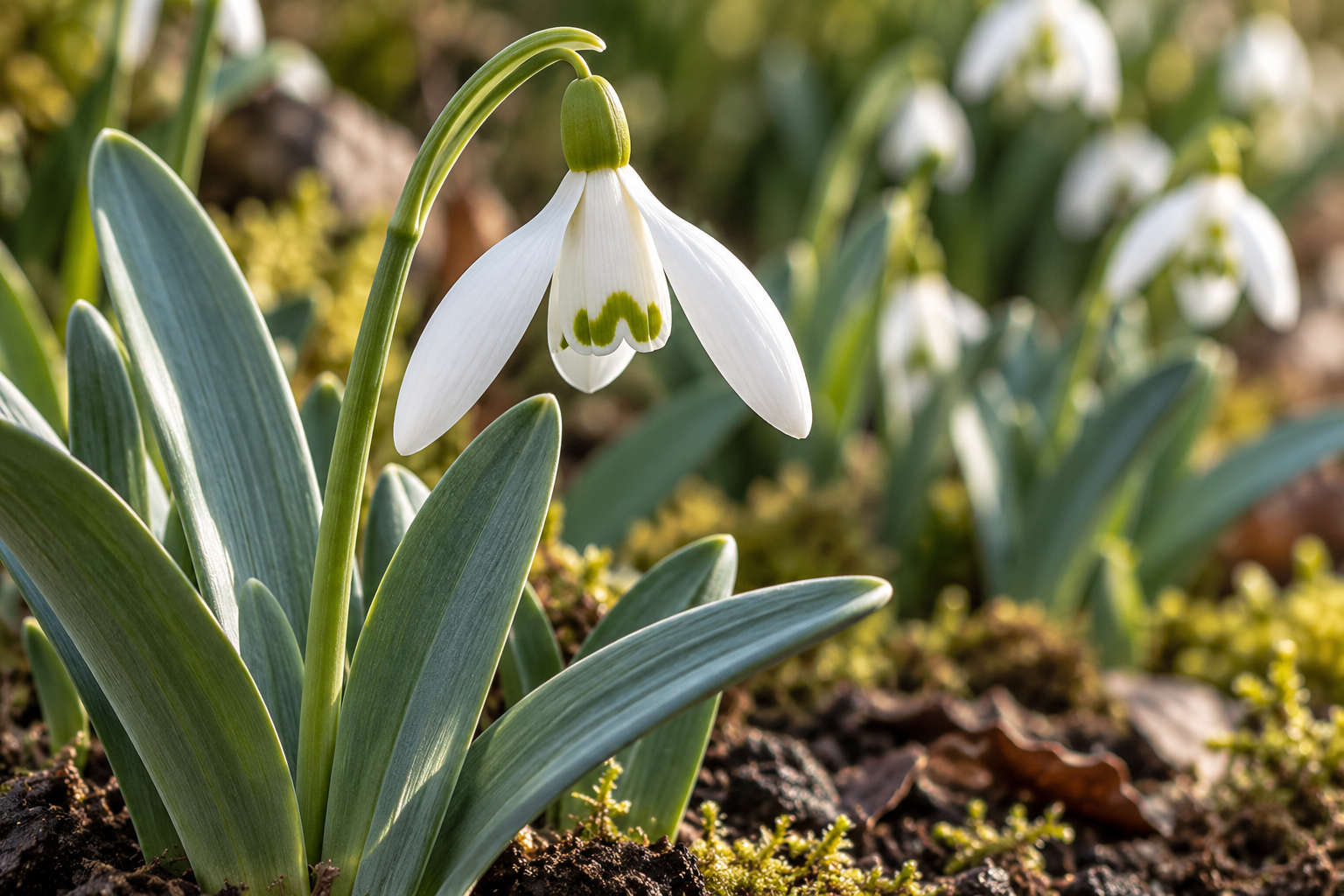
Galanthus elwesii shows white nodding bells while the gardening year still feels quiet. Three longer outer flower segments surround three shorter inner ones bearing green markings. Foliage also belongs to its character: broad grey-blue leaves differ from the very narrow green leaves of some other snowdrops. In flower the species can reach roughly 20 to 30 centimetres. A small group beneath lightly shading deciduous shrubs reveals these shapes well. Its timing falls in late winter to early spring, shifting with position and weather rather than following a fixed calendar day.
Twenty-five bulbs receive a prepared place
The offer lists 25 bulbs for planting. The images show a later flowering phase, not a flowering delivery. Plan the place before receipt if possible. Snowdrop bulbs should not lie dry for long; plant fresh stock promptly. Divide the quantity into loose groups visible from a path. Around ten centimetres spacing is an initial guide for the bed. Leave room alongside perennials that will grow strongly later and account for future garden work. A small marker helps in summer when above-ground parts have died back and the group seems to have disappeared.
Partial shade with moisture around the roots
Choose humus-rich soil in light partial shade that holds moisture yet drains. Beneath deciduous woody plants, light may suit before they leaf out. Their roots can nevertheless dry the soil more than its shady appearance suggests. Check actual soil moisture especially in summer. The species should not stand in completely parched soil even during dormancy. A place beside a hot wall with dry gravel follows a different growing idea. A suitable garden bed often makes moisture, cooler soil and winter drainage easier to combine than a small shallow bowl.
Distinguish autumn bulbs from green divisions
The offer contains bulbs for autumn planting. Plant promptly after receipt in workable soil, roughly ten centimetres deep and following package instructions. The tip points upwards. Gently settle soil around them and water if it is dry. A trade size grade is not a measured diameter. With snowdrops you often also read about planting in the green after flowering. This means already leafy divisions, not the delivery state of this bulb offer. Both methods belong to cultivation, but must not be confused when ordering or following planting instructions.
Moisture still matters after flowering
During sprouting and the green leafy phase, the plant needs suitable soil moisture. Spring rain may suffice; longer drought requires checking the root area and watering if needed. Summer dormancy is not an invitation to let the place dry out completely either. Still avoid waterlogging. After heavy rain check that water drains. Nutrients depend on soil and existing reserves. In containers, supplement according to a fertiliser label if appropriate. More fertiliser does not fix a dry woody border edge. Consider water movement, root competition and light together before trying to alter care solely with extra products.
The leaf phase preserves the next spring
After the white flowers, leaves remain green and continue supplying the bulb. Do not cut them off immediately, and mow a group in grass only after natural yellowing. Dead remnants can be removed later. In a mixed bed, later neighbouring foliage can accompany the transition, provided snowdrops are not completely shaded too early. The bulbs are harmful if eaten. Store separately from food and wear gloves when handling. A photograph of the grey-blue leaves in the plant book helps recognise the group without open flowers and observe its annual phase more precisely.
Gently maintain dense groups
The species is perennial and may form a larger group over the years. If plants become too dense, healthy stands can be divided as foliage dies back after flowering. Keep roots together as far as possible and replant divisions in suitable new places without lengthy dry storage. Their previous planting level guides the new depth. This differs from planting dry autumn bulbs. With weak flowering, first check competition, summer dryness and previous leaf care. A well-chosen quiet garden corner lets you get to know the group through several seasons rather than only its short flowering moment.
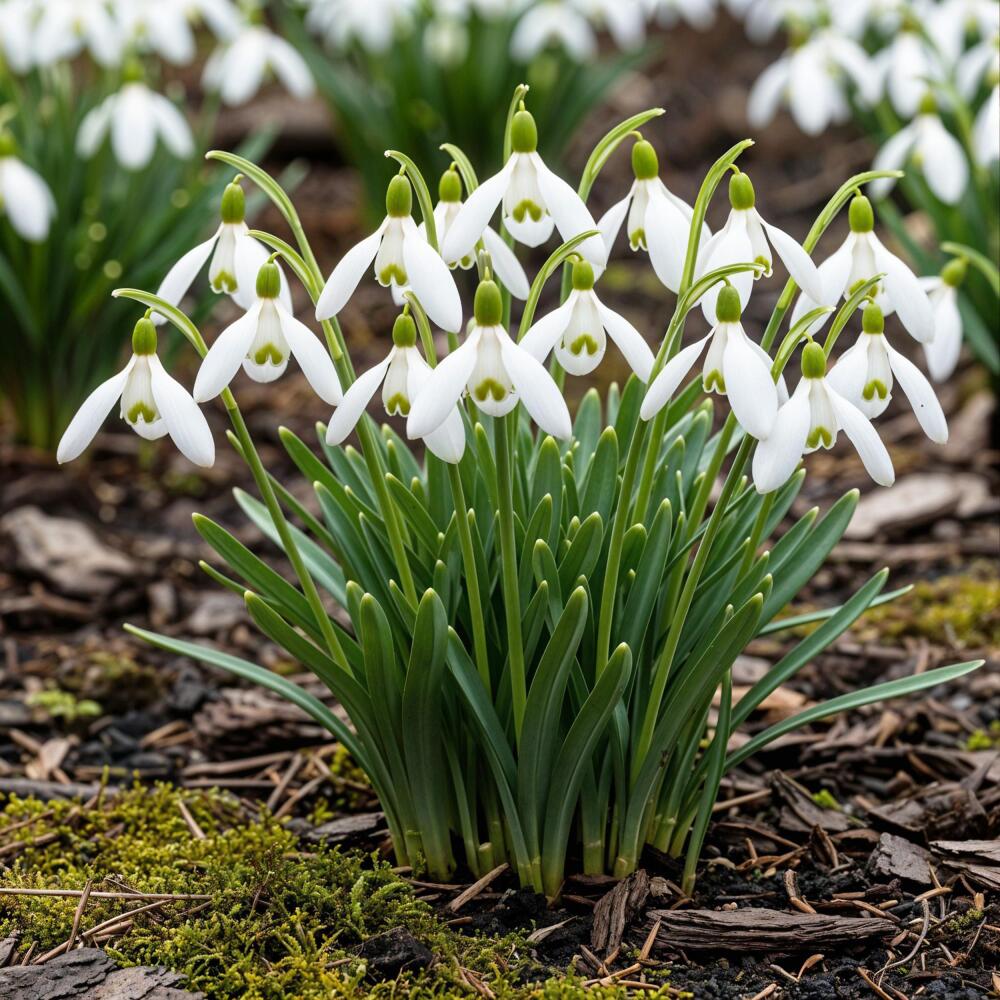
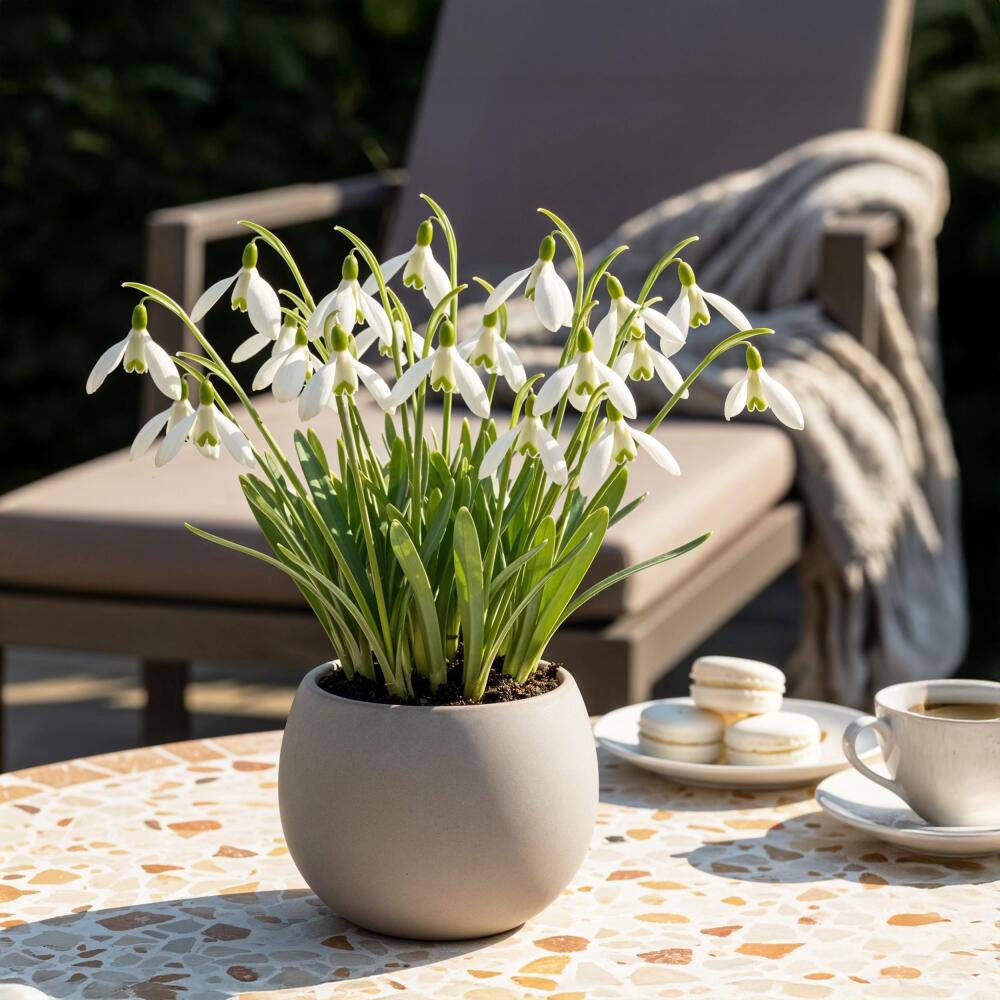
One plant, several views
Good to know
What distinguishes Galanthus elwesii?
The species has broad grey-blue foliage and green-marked inner flower segments.
Can I store the bulbs dry for weeks?
It is better to plant fresh stock promptly after receipt in a prepared place.
How many bulbs are in the offer?
25 bulbs for planting.
Is planting in the green the same offer?
No. It means already leafy divisions; bulbs are offered here.
Should the soil become dry in summer?
Even in dormancy the species prefers humus-rich soil that does not dry out completely.
When do I divide a dense group?
When foliage dies back after flowering; protect roots and replant divisions promptly.
Sources and editorial note
- Exotenherz: offer and original photographs (03.10.2026)
- RHS – Galanthus elwesii: species characteristics and position (03.10.2026)
- RHS – planting and dividing snowdrops (03.10.2026)
- RHS Plants – Galanthus elwesii: planting depth and spacing (03.10.2026)
Shop offer, article number, GTIN, availability and original images checked directly on 02.10.2026; specialist acceptance on 03.10.2026. Specialist sources read directly. Shop variant, quantity, SKU, current orderability and both original shop photographs checked directly. Specialist sources read on 03.10.2026. Pictures show later flowering, not delivery state. Trade size grades are not adopted as measured bulb or tuber diameters. Specialist acceptance based on published Pflanzenwelt portraits; no tool or Wawi changes.