
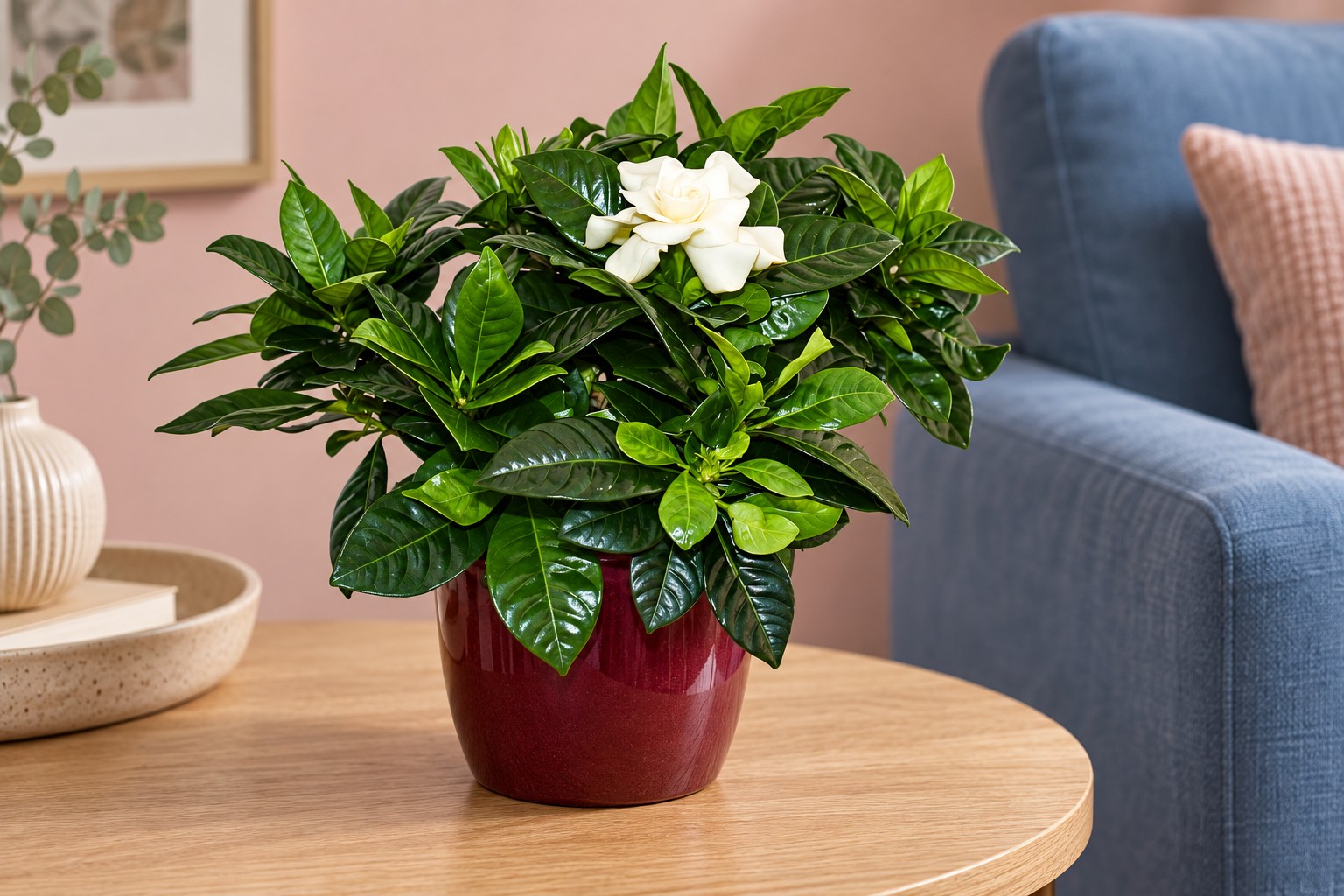
This plant at Exotenherz
Check the shop offer for current availability, price and what is included.
Link to the offer in German. Check the shop for the current price, availability and delivery contents.
Your care table
| Topic | What to do | Why it helps |
|---|---|---|
| Light | Keep bright and filtered, protected from hot midday sun. | Enough light supports buds and healthy foliage. |
| Water | Keep evenly and slightly moist, using low-lime water. | Lime and severe dry spells make supply harder. |
| Drainage | Remove remaining water completely. | Waterlogging damages sensitive roots. |
| Compost | Use suitable acidic, loose soil. | An appropriate pH supports nutrient uptake. |
| Fertiliser | Feed during growth according to a suitable label. | Yellow leaves first require investigation of the cause. |
| Buds | Avoid abrupt changes of position and temperature. | Buds are sensitive to stress. |
| Pruning | Lightly reshape after flowering phases only if needed. | New tips can carry later developing flowers. |
| Winter | Keep bright and frost-free, adjusting moisture to consumption. | The potted plant has no blanket garden-frost guarantee. |
Check the compost and pot weight. The care table explains how far the compost may dry.
Water only when needed. The water should reach the root ball without spilling over the rim.
Remove surplus water from the saucer or cachepot. Then return the plant to a suitable position.
Scent and glossy foliage belong together
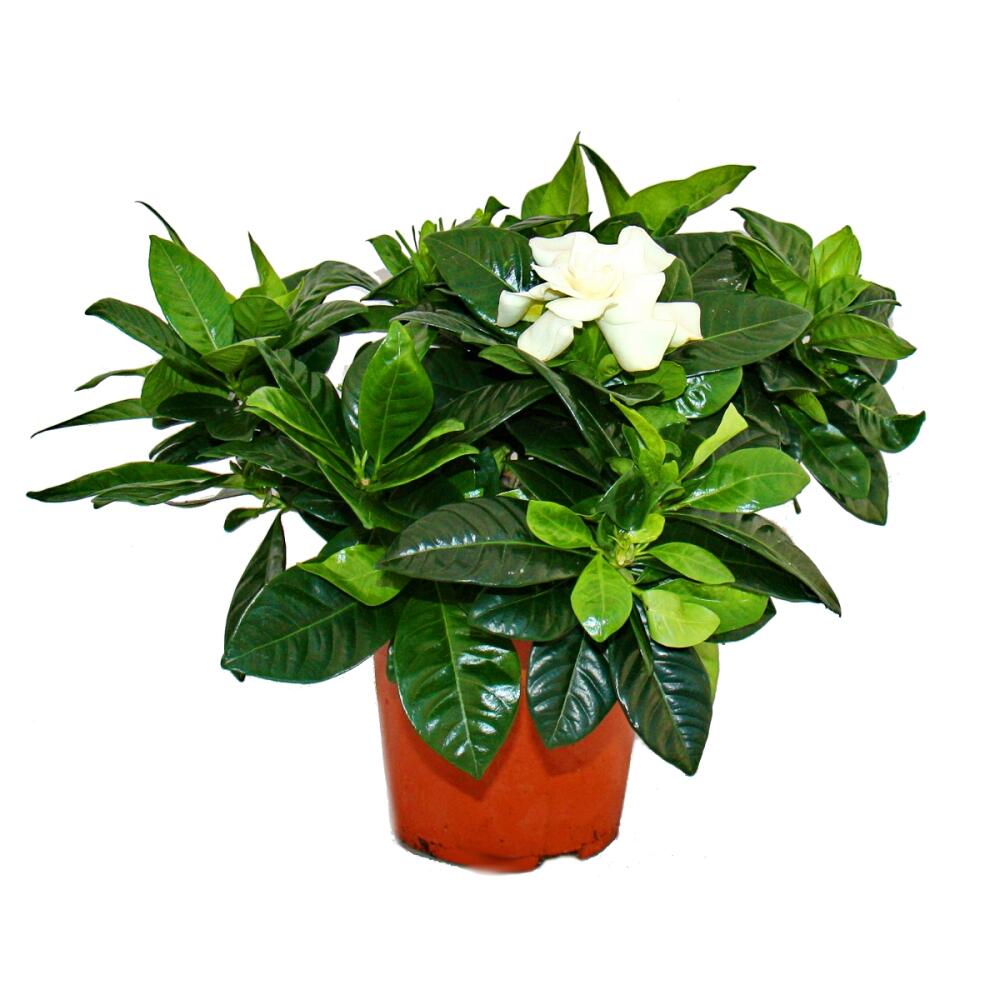
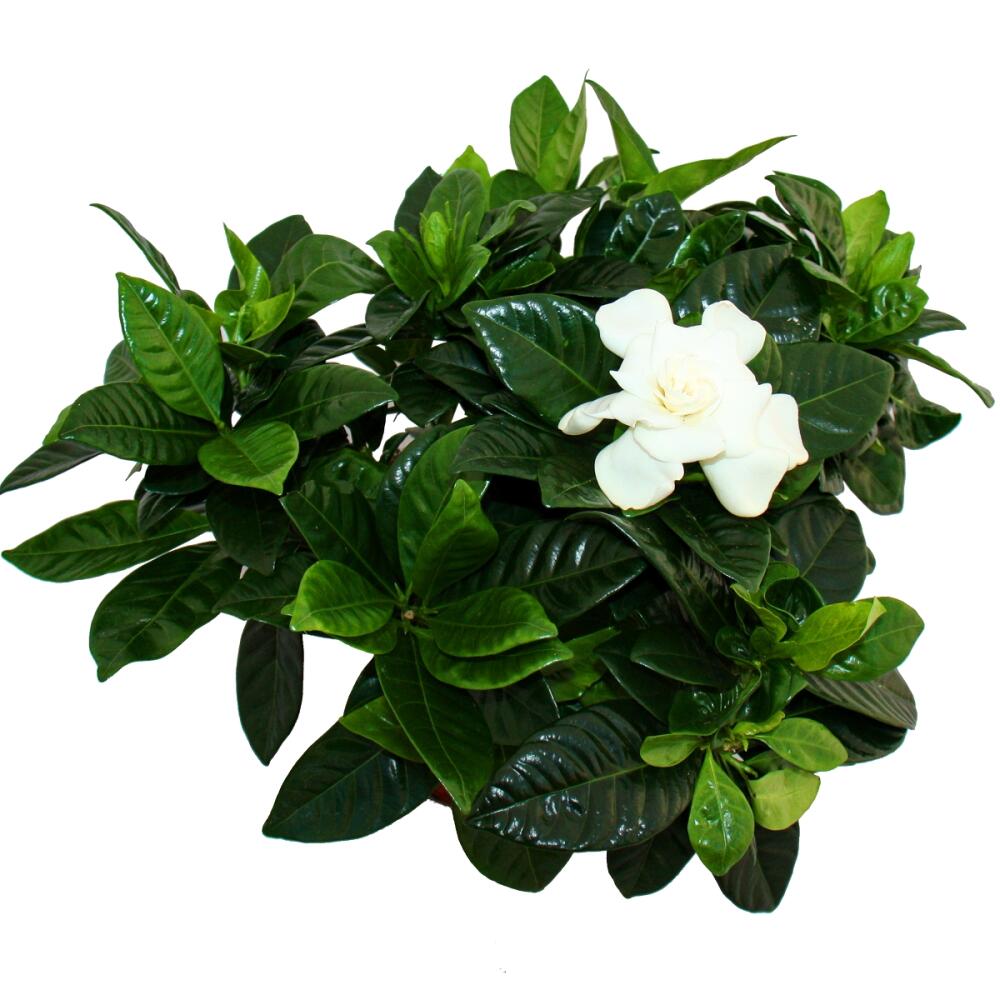
Gardenia jasminoides carries firm glossy leaves and striking pale flowers. With age, flowers may turn from white to cream and later yellowish before fading. The garden form in the offer has double flowers; no additional variety name is confirmed. The shrub belongs to the madder family and, despite the name Cape jasmine, is not a true jasmine. Even a single open flower can have a distinct scent.
A small flowering shrub with changing development
The linked offer comes in a 12 cm pot and states approximately 20–25 cm overall height. The scene shows the compact plant with one flower in keeping with the original photograph. Bud number and stage naturally change. A bright side table may suit presentation if enough daylight actually reaches it. Decorative pot and furnishings are display examples. For long-term care, a suitable position matters more than the prettiest dark decorative corner.
Consistent conditions protect buds
Plenty of filtered daylight is favourable. Avoid hot direct midday sun, cold draughts and dry heated air. A sheltered outdoor summer spot is possible after gradual acclimatisation. Frequent abrupt changes of position can stress buds. Balanced humidity helps, but flowers should not be constantly sprayed wet. Keep bright and frost-free in winter. No blanket outdoor winter hardiness is promised for this potted plant.
Low-lime water and even moisture
If possible, water with low-lime, room-temperature water once the surface dries slightly. The root ball should not repeatedly dry completely. Excess water must also drain reliably. Yellow leaves with greener veins may indicate impaired nutrient uptake under an unfavourable pH. They do not automatically prove an isolated iron deficiency. First check water quality, compost, root moisture and position instead of combining different fertilisers on suspicion.
Acidic compost as the working foundation
Use suitable acidic, loose compost for lime-sensitive plants and a pot with drainage holes. Give only slightly more space when repotting and handle roots carefully. Feed during growth according to an appropriate label, allowing for fresh pre-fertilised compost. Cleanly remove faded flowers. Light shaping is done when needed after a flowering phase; constantly shortening new tips can remove future buds.
Small checks before major intervention
Inspect leaf undersides and stems for scale insects, mealybugs or spider mites. With bud drop, first trace dry spells, persistent wetness and temperature changes. More water is not always the answer. Carefully remove leaf dust without crushing flowers. The plant is cared for as an ornamental, not used for consumption or home remedies. A well-observed gardenia rewards patience but requires somewhat more attention than an undemanding succulent.
One plant, several views
Good to know
Why do buds fall off?
Check dryness, persistent wetness, temperature changes and frequent repositioning. Bud drop does not always have the same cause.
Does every yellow leaf need iron fertiliser?
No. Water quality, pH, roots and other causes must be checked first.
Why do white flowers turn yellowish?
Flower colour may change with natural ageing. Distinguish this from new damage to buds or leaves.
Can I use ordinary lime-rich soil?
Gardenias need suitable acidic compost. Lime-rich conditions can impair nutrient uptake.
Sources and editorial note
Sources checked: 15 September 2026. Product information and delivery contents follow the linked shop offer. Care has been checked against the stated specialist sources and remains subject to plant condition, position and season.